
Two features separate an electric toothbrush that helps from one that just costs more: a pressure sensor and a two-minute timer. Everything above that price point buys modes, screens and apps, and neither the long-term owners nor the dental professionals in the 71 discussion threads we read could point to evidence that any of it cleans better. So this page leads with the cheapest brushes that have both features, then says plainly what each price step buys. If you already know which brand you want, our Sonicare model guide and Oral-B model guide go model by model; if you are deciding whether to go electric at all, our manual toothbrush picks cover the other side.
How We Evaluated
The criteria, in the order the evidence ranks them:
- Pressure sensor and timer, not modes. These are the only two features endorsed by owners, hygienists and dentists alike in the threads we read. A brush without a pressure sensor is here once, labelled as such, because its price and Seal status earn it a place.
- Independent evidence, with the sponsor’s evidence labelled. For the oscillating-versus-sonic question we read the two independent syntheses and the manufacturer-funded one, and we tell you which is which in the buyer’s guide.
- Total cost, heads included. The most-upvoted comment in our entire research corpus was about replacement heads, not handles. Each pick states its per-head price from a read of the head listing on the day we wrote this.
- A review floor of 4.0 stars and 1,000 ratings, read live. Every count and rating here comes from a same-day read of the exact listing our link points at. One premium Sonicare sits at 3.9 stars and is discussed below rather than carded. The 4100 is the one card below that floor on count: as of September 2026 Amazon sells it through a newer bundle listing of the same handle, 4.5 stars on 582 ratings, where the listing it replaced had gathered about 23,000.
- Durability as owners report it. Failure stories, multi-year ownership reports and the maintenance habits that separate them, across all 71 threads.
- ADA Seal status checked against the ADA’s own roster, not the listing’s badge.
Behind the picks: 71 Reddit threads with 5,333 comments read in full, mostly from r/BuyItForLife with r/Dentistry and r/DentalHygiene alongside, plus six peer-reviewed reviews and the ADA’s guidance pages, each cited where it is used. Two cautions we owe you. The dental professionals quoted are self-identified in their comments, not credential-verified. And this product category attracts a lot of planted praise: we discounted comments that carried affiliate links, that repeated another account’s text word for word, or that arrived months after a thread had gone quiet, and we say so wherever it changed a verdict.
Philips Sonicare 4100: Editor’s Pick
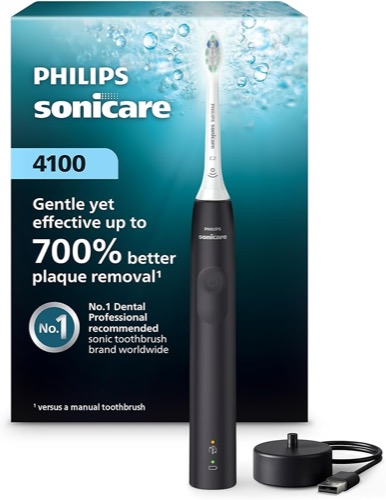
Philips Sonicare 4100 Rechargeable Electric Toothbrush
Best for: Most people: the cheapest Sonicare in our lineup with a pressure sensor and timer, and the model long-term owners recommend most often
- Pressure sensor that pulses when you press too hard
- Two-minute timer with 30-second quadrant pacer
- Brush-head replacement reminder, per the listing
- Accepts every Sonicare click-on head
- About $56, with one brush head and a head case in the box
- +The single most-recommended model across the 71 owner threads we read, and the one a self-identified dentist on r/Dentistry points to by name
- +Pressure sensor and two-minute pacer, the two features owners and professionals agree on, at the lowest price of any Sonicare in our research that has both
- +Takes every Sonicare click-on head, so you can shop heads by price rather than by model
- −The one power button also cycles intensity, which several owners found awkward
- −Longevity reports are split: owners recommending it expect five years or more; one owner reports handles dying at around 18 months
(Affiliate link) · Free shipping on eligible Prime items
Why We Recommend It
The 4100 is the specific model named most often across our research, 79 mentions in 29 threads, and the reasoning behind those mentions is consistent. “Sonicare 4100. It’s usually $40 and should last 5-10 years. You don’t need a model with 42 brushing settings and a ton of accessories for $200,” one r/BuyItForLife owner wrote. A self-identified dentist on r/Dentistry put the same case with the evidence attached: “Research shows Sonicare and Oral B work equally well, it’s just preference. Get the cheapest Sonicare or oral B you can find that has a pressure sensor.”
That is exactly what the 4100 is. It has the pressure sensor, the two-minute timer, the 30-second pacer and a head-replacement reminder, and at about $56 it is still the cheapest Sonicare we priced that has the sensor. The price has moved since those owners bought: as of September 2026 Amazon sells the 4100 as a bundle with a brush head case rather than the bare $40 handle, and the Oral-B Pro 1000 below now undercuts it at about $50 if the round oscillating head suits you. It takes any Sonicare click-on head, so the ongoing cost is set by which head you buy, not by the handle; the everyday C2 head worked out at about $10 each at our read, which is the one real cost of choosing a Sonicare over an Oral-B Pro.
Potential Downsides
The complaints are specific rather than damning. The single power button doubles as the intensity switch, which one owner called “annoying with the way I use mine”, and a few owners wished they had stretched to the next model for that reason alone. Longevity is the bigger split. The recommendations assume five years and up, but a dissent worth reading in full: “These things die every ~18 months if not sooner. The latest 4100 came from Target and is noticeably weaker than the one we bought in 2024.” We could not reconcile the two camps from the threads; the maintenance section below covers the habit, leaving it on the charger, that two self-identified dentists blame for early battery death.
One more fact for people who care about it: Philips’ Sonicare handles do not appear on the ADA’s Seal of Acceptance roster at our late-August read of the full list, though its Power Flosser does. The Oral-B Pro 1000 and the Aquasonic below both hold the Seal.
(Affiliate link) · Free shipping on eligible Prime items
Oral-B Pro 1000: Best Oscillating-Rotating
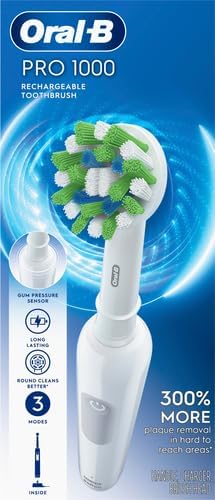
Oral-B Pro 1000 Rechargeable Electric Toothbrush
Best for: Anyone who prefers the round oscillating head, wants the ADA Seal by model name, and does not want to pay for modes
- Oscillating-rotating round head, the most-studied powered-brush design
- Pressure sensor that stops pulsation when you press too hard
- Two-minute timer with quadrant pacing
- Listed by model name on the ADA Seal of Acceptance
- Around $50
- +Named by model on the ADA Seal of Acceptance, and the largest review base of the two major brands here at more than 62,000 ratings
- +Owners tie its durability to a nickel-metal-hydride battery that tolerates being left on the charger better than lithium cells
- +Cheapest heads of the two majors: CrossAction heads work out at about $4.60 each
- −Louder and, by many accounts, harsher-feeling than a sonic brush; some owners with sensitive gums prefer the Sonicare feel
- −The hollow round heads collect mold faster than flat sonic heads if you do not dry them
(Affiliate link) · Free shipping on eligible Prime items
Why We Recommend It
If the 4100 is the community’s sonic pick, the Pro 1000 is its oscillating one, and it carries the strongest durability argument in our research. In a thread mourning a twenty-year-old Braun handle, a 74-upvote reply pointed straight at this model: “Braun still makes an updated version of this model, it is branded under Oral-B and it’s like $50”, with the reason attached: “The reason these last so long is the NiMH battery, much more robust and tolerant to over-discharging than a lithium ion battery.” Another reply in the same thread: “don’t let them upsell you on a more expensive model tbh, the $49.99 version does everything you need.”
It also has the paperwork. The ADA lists the Pro 1000 by name among the models covered by its Seal of Acceptance for Oral-B’s oscillating-rotating-pulsating brushes (ADA Seal listing), and the oscillating-rotating design is the one with the largest evidence base in the Cochrane review of powered brushes, 27 of the trials it pooled (Cochrane review). Heads are the cheapest of any major brand here: a four-pack of CrossAction heads was about $18 at our read, about $4.60 each.
Potential Downsides
Feel is the main one. Oscillating heads are louder and, in the words of a self-identified retired dentist who prefers the other camp, “the cleaning is harsher”; several owners with gum sensitivity switched to a sonic brush for that reason, and our sensitive teeth picks go into that choice. The pressure sensor is also less visible than the light ring on the iO models: it stops the pulsation rather than lighting up.
The other recurring complaint is mold. “Just be aware the oral b heads are hollow and they grow mold inside very quickly, you have to clean them religiously,” one owner wrote, and r/DentalHygiene members report the same problem on the iO line. Pull the head off after brushing and let both parts dry. And one owner came looking for a replacement “after just five years”, which is a fair reminder that the twenty-year Brauns were built differently.
(Affiliate link) · Free shipping on eligible Prime items
Oral-B iO Series 3: Best Upgrade
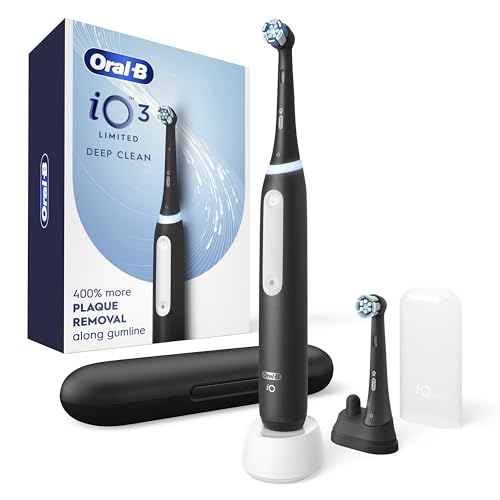
Oral-B iO Series 3 Limited Deep Clean Electric Toothbrush
Best for: Readers who want the quieter, gentler iO magnetic drive without the screen, the app, or the flagship price
- iO magnetic drive: quieter, with micro-vibrations, per the listing
- Pressure sensor that signals too hard, too soft and just right
- Three modes: Daily Clean, Sensitive, Whitening
- Two heads and a travel case in the box
- Around $110
- +The iO tier owners call the sweet spot: the same drive as the flagship without the display and app that owners in our research repeatedly say they stopped using
- +Covered by the ADA Seal for the iO Series, and the largest review base of any iO listing we read at nearly 19,000 ratings
- +Ships with two heads and a case, which offsets the iO head price for the first year
- −iO heads cost roughly double Oral-B's older CrossAction heads, about $9.60 each at our read
- −Owners in two communities report mold inside iO heads and handles unless both are dried after every use
(Affiliate link) · Free shipping on eligible Prime items
Why We Recommend It
The iO line is Oral-B’s newer magnetic drive, and owners who have used both describe the difference mostly in feel, though one ten-year Oral-B owner a year into an iO3 claims both: “Gentler on gums while cleaning better and doesn’t drip toothpaste out the little hole on the base of the brush head. Quieter also,” wrote a ten-year Oral-B owner a year into an iO3. The reason to buy this tier and not a higher one is that Oral-B sells every iO tier on the same iO drive; the listings differ in modes, display and app, and one owner’s summary in our research was that the iO3 and the iO9 are “the same mechanical action”. “For me Oral-B iO3 is the sweet spot, great cleaning, no pointless gimmicks, and doesn’t cost stupid money,” another owner wrote, in a 2025 thread that predates the flood of promotional comments we describe in the buyer’s guide.
We link to the iO3 Limited Deep Clean listing specifically because it carries nearly 19,000 ratings; the other iO3 listing we read sits under 1,000, and the largest iO5 pool we found was about 4,400. It ships with two heads and a travel case, which matters because iO heads are the expensive part. The ADA’s Seal covers the iO Series as a line (ADA Seal listing).
Potential Downsides
Heads. Oral-B’s iO Ultimate Clean heads were about $19 for two at our read, about $9.60 each, double the Pro 1000’s CrossAction heads and in line with Sonicare’s. Our Oral-B brush head guide covers the cheaper iO options. Mold is the other one, and it is reported more for iO than for the Pro line: “The current IOs have an issue of mold growing in both the toothbrush head and handle,” one r/DentalHygiene member wrote, and another in the same thread agreed: “You have to stay on it.” Dry the head and the handle stem after every brush.
(Affiliate link) · Free shipping on eligible Prime items
Philips Sonicare 5300: Best Mid-Range Sonic
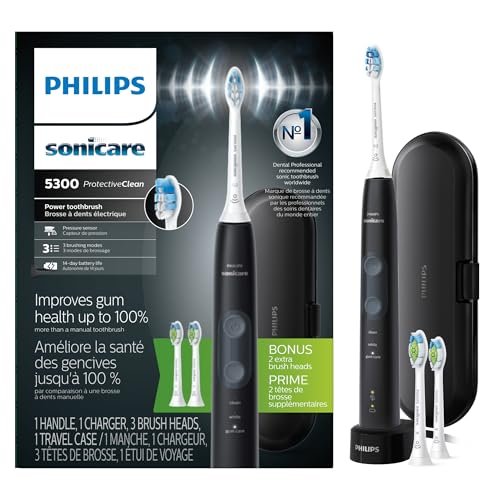
Philips Sonicare 5300 Rechargeable Electric Toothbrush
Best for: Sonicare buyers who want gum-care and whitening modes and three heads in the box on top of the 4100's basics
- Three modes: Clean, White, Gum Care
- BrushSync reminder tells you when the head is worn; up to two weeks per charge, per the listing
- Pressure sensor and two-minute pacer, as on the 4100
- Three brush heads in the box, per the listing
- Around $110
- +Tied for the highest rating in this lineup at 4.5 stars, on more than 22,000 ratings
- +Three heads in the box covers the first nine months to a year of replacements at the ADA interval
- +Same click-on head system as the 4100, so the ongoing cost is identical
- −Owners and professionals in our research say the extra modes do not clean better than the 4100; you are paying about $55 more for modes and two extra heads
- −One owner reported a handle failing after about a year of two people swapping heads on it every day; a single report, but a plausible wear point for shared handles
(Affiliate link) · Free shipping on eligible Prime items
Why We Recommend It
This is the Sonicare for people who read the 4100 section, agreed with it, and still want the modes and the extra heads. The BrushSync light tells you when a head is worn, which is the practical answer to the ADA’s advice to replace heads “every three to four months or more often if the bristles are visibly matted or frayed” (ADA). The 5300 also shares the highest rating in this lineup, 4.5 stars, on more than 22,000 ratings, and it uses the same click-on heads as the 4100, so the running cost does not change. One owner who chose it over the 4100 explained the appeal simply: “It has an extra button for extended cleaning, which I use and use the last 30 seconds for the tongue.”
Potential Downsides
The 5300 has only eight mentions in our 71 threads, against 79 for the 4100, and the difference is not an accident: owners do not think the extra $55 buys a better clean, and neither do the professionals quoted in the buyer’s guide. Buy it for the three heads and the White and Gum Care modes if you want them, not for a better clean.
One durability report deserves a mention because it names a specific cause. A couple sharing one handle, swapping heads every day, had the 5300 last “about a year or so” before it broke. It is a single report, so we do not present it as a pattern, but if two people share a handle it is worth considering a second handle instead; two 4100s cost about what one 5300 costs, and each person gets their own.
(Affiliate link) · Free shipping on eligible Prime items
Oral-B iO Series 7: Best Premium
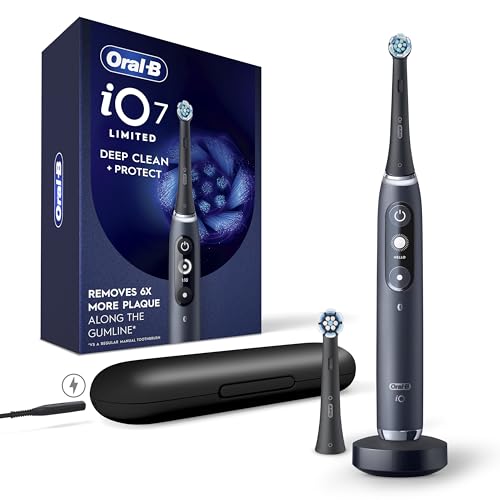
Oral-B iO7 Limited Deep Clean + Protect Electric Toothbrush
Best for: Readers who have decided to spend more and want the one premium tier with multi-year owner reports behind it
- iO magnetic drive with five modes
- Interactive display with pressure feedback
- Charging travel case, two heads in the box
- Covered by the ADA Seal for the iO Series
- Around $230
- +The premium brush with the cleanest longevity record in our research: two independent five-year ownership reports
- +Covered by the ADA Seal for the iO Series; 4.5 stars across more than 3,400 ratings
- +The charging travel case means no dock on the bathroom counter
- −No independent evidence that it cleans better than the iO3 below it; the higher iO tiers add a display, modes and an app on the same iO drive
- −One owner's 2022 unit stopped holding charge after four years, and iO head prices apply
(Affiliate link) · Free shipping on eligible Prime items
Why We Recommend It
We looked for a premium brush that earns its place on evidence rather than on a feature list, and the iO7 is the only one that came close. Its case is longevity. “My Oral-B iO Series 7 has served me well for 5 years and counting,” one owner wrote; “I’ve been using Oral b io7 for like 5 years and going very strong,” wrote another, independently. The most-upvoted iO7 comment in our corpus is about the clean rather than the software: “It cleans so much better than my old sonic care. I don’t use the app but there is one.”
That last clause is the pattern for every premium brush we read about. The owners who bought the app tell the same story: they stopped using it. What the iO7 gives you that the iO3 does not is a display, more modes, and a charging case that means no dock on the counter, plus the same ADA Seal coverage for the iO line. If those are worth around $120 to you, this is the premium tier with the best-documented owner record on this page.
Potential Downsides
We could find no independent study showing that a pricier model from the same brand cleans better than its entry model, and Oral-B’s own claim that its “most advanced” brush beats its traditional ones comes from a meta-analysis of the company’s private trial archive, written by its employees and funded by the company (P&G-funded meta-analysis). The premium tier is a preference purchase, and the iO9 above it has a worse organic record than this one: two separate owners reported iO9 batteries dying, one within a year and again on the replacement. The iO7’s own record has one battery complaint: “I bought in 2022, and the battery is no longer properly charging. I guess four years isn’t bad, but I was hoping it would last longer.”
(Affiliate link) · Free shipping on eligible Prime items
Aquasonic Black Series: Cheapest to Own
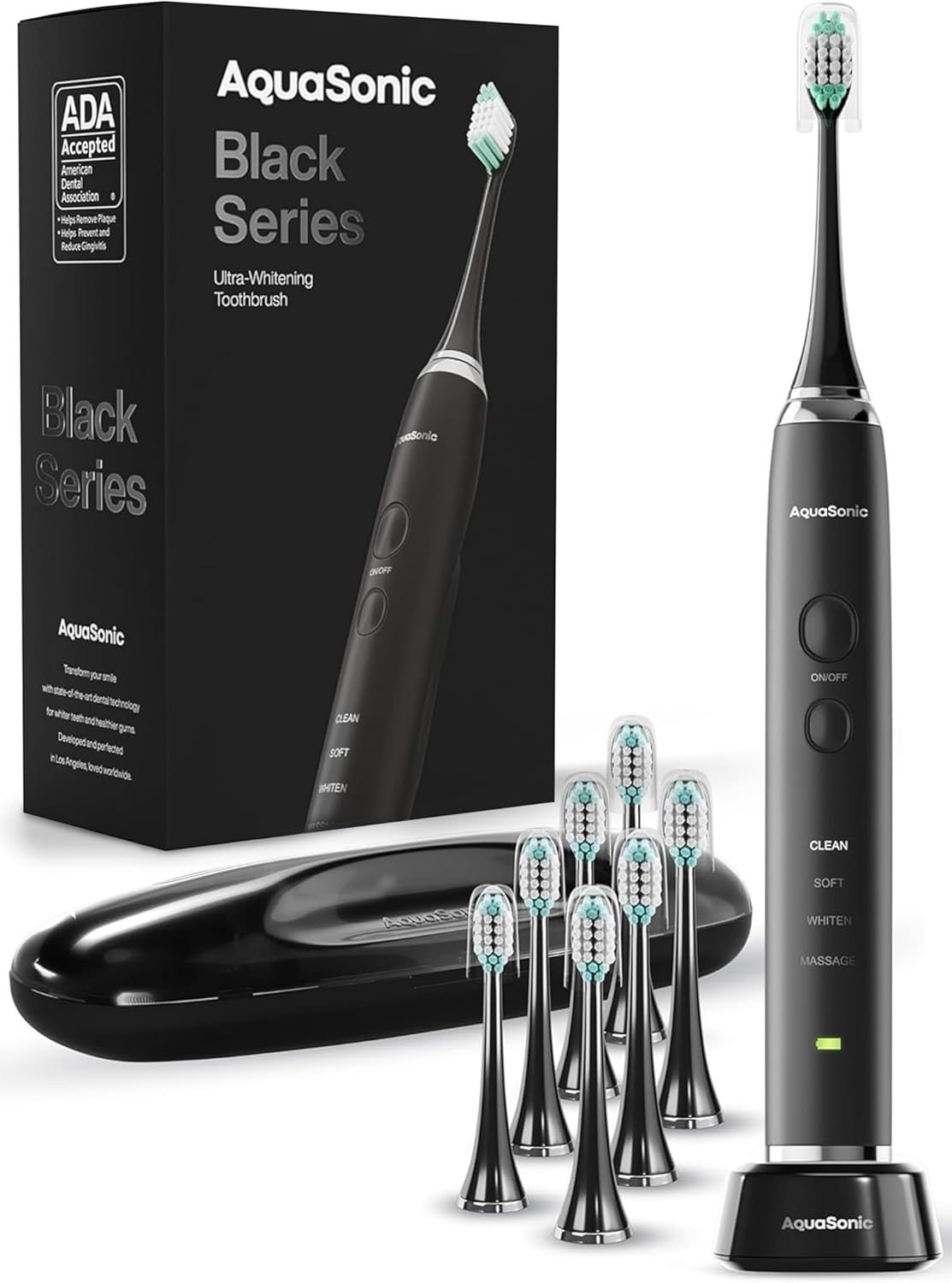
Aquasonic Black Series
Best for: Buyers who want the ADA Seal and a sonic brush for around $40, and can accept a lesser-known brand with much cheaper heads
- Holds the ADA Seal of Acceptance
- Eight heads and a travel case in the box
- Replacement heads about $2.50 each
- Four modes and a vibrating two-minute timer; no pressure sensor
- Around $40
- +Holds the ADA Seal of Acceptance, which is more than Philips' own Sonicare handles can say at our late-August read of the roster
- +Eight heads in the box covers two years or more at the ADA's replacement interval, and replacement packs work out at about $2.50 a head
- +Owners with four- and five-year units exist in the threads we read, and the handle accepts Sonicare-style heads
- −No pressure sensor, the one feature that owners, hygienists and dentists in our research all endorse
- −The highest-scoring praise for this brand arrived with affiliate links attached; we counted only the plain ownership reports
(Affiliate link) · Free shipping on eligible Prime items
Why We Recommend It
Most cheap sonic brushes have no community record at all; Aquasonic has one, and it survived our filtering. Setting aside every comment that carried a link, we were left with plain ownership reports like “I’m on year five with mine” and “I bought an AquaSonic toothbrush and it’s lasted me 4 years with no issues,” plus the point that makes the brand useful: “I then got a like $30 Aquasonic off Amazon. Compatible with the Sonicare brushes.”
Two things push it onto this page. The AquaSonic toothbrush holds the ADA Seal of Acceptance (ADA Seal listing), a pass-or-fail bar for safety and plaque and gingivitis efficacy that Philips’ Sonicare handles do not currently appear on. And the cost of ownership is the lowest here by a distance: eight heads in the box, and genuine replacement heads at about $20 for eight at our read, about $2.50 each, a quarter of the price of Sonicare or iO heads and about half the Pro 1000’s.
Potential Downsides
No pressure sensor. That is the one feature owners, hygienists and self-identified dentists in our research all endorse, and the reason this brush is the last card rather than the first. If you know you brush hard, or a dentist has mentioned recession, spend the extra on the 4100 or the Pro 1000.
The second caveat is about the praise. Fifty of the 61 Aquasonic comments we read had one upvote or fewer, and several of the highest-scoring carried affiliate links to the product, so we treated the brand’s popularity as unproven and relied only on the plain multi-year reports above. The 137,000-plus ratings on the listing are real, but a rating count that large on a lesser-known brand is worth reading a few pages of, not just admiring.
(Affiliate link) · Free shipping on eligible Prime items
What Owners Report vs What the Evidence Says
| What people report in the threads we read | What the sources support |
|---|---|
| “Both are good but the replacement head cost is straight up criminal.” (r/BuyItForLife, the most-upvoted comment in our research at 614 upvotes) | It is the real running cost. At the ADA’s replacement interval of every three to four months (ADA), a Sonicare or iO user buys three to four heads a year at around $10 each; the table in the buyer’s guide prices each pick |
| “Research shows Sonicare and Oral B work equally well, it’s just preference.” (self-identified dentist, r/Dentistry, 11 upvotes) | The independent evidence agrees. A 2021 systematic review in the ADA’s own journal, 24 trials and 2,998 patients, concluded that “the evidence does not suggest the superiority of either OR or SS toothbrushes for plaque or gingival index reduction” (JADA review) |
| “Dentist here, I only recommend an oscillating head (oral b) and not sonic (Colgate/phillips), studies consistently show they remove more plaque” (r/BuyItForLife, 38 upvotes) | The studies that show a large oscillating advantage come from a meta-analysis of Procter & Gamble’s own trial archive, written by its employees and funded by the company (P&G meta-analysis). The independent network meta-analysis found only “moderate certainty for a very small benefit” for oscillating over sonic, and only for plaque after a single brushing (network meta-analysis) |
| “Above $40 you are paying for features that don’t matter to the average person and marketing.” (r/BuyItForLife, 54 upvotes) | We found no independent trial showing that a pricier model from the same brand cleans better than its entry model. The only such claim is the manufacturer’s own, from the same P&G-funded analysis |
| “Do you like your gums? Then stick with Sonicare style brushes.” (self-identified retired dentist, r/BuyItForLife, 26 upvotes) | Not established either way. The largest systematic review on brushing and recession concluded that “the data to support or refute the association between toothbrushing and gingival recession and NCCLs remain largely inconclusive” (J Clin Periodontol review), and the JADA review above found little to no difference in adverse events between the two designs |
| “Sounds like you miss spots, not like your brush is lacking.” (r/BuyItForLife, about 200 upvotes) | Consistent with the ADA’s position that “either manual or powered toothbrushes can be used effectively” (ADA), and with the Cochrane finding that the powered-brush advantage, while real, is modest: an 11% plaque reduction at one to three months (Cochrane review) |
Buyer’s Guide: Choosing an Electric Toothbrush
Oscillating (Oral-B) or Sonic (Sonicare)?
This is the question most of the 71 threads were really asking, and the owners split down the middle: comments naming only Sonicare, 709; naming only Oral-B, 650. The self-identified dentists split too, sometimes in the same thread. One recommends only oscillating heads because “studies consistently show they remove more plaque”; a retired one says the oscillating style “certainly works, but the cleaning is harsher”; a third, describing ten years running clinical trials, pushes back on that: multiple reviews “haven’t found a meaningful difference in gum recession outcomes between the two.”
The published evidence sides with the third. The 2021 systematic review in the Journal of the American Dental Association pooled 24 trials and found “little to no difference” in plaque and gingival index reduction between oscillating-rotating and side-to-side brushes at four weeks (JADA review). An independent 2022 network meta-analysis ranked oscillating first but sized the edge as “a very small benefit”, measured on plaque after one supervised brushing (network meta-analysis). The large numbers you will see quoted for oscillating brushes, a 72% versus 54% transition to gingival health, come from a meta-analysis run on Procter & Gamble’s private trial archive by its own employees (P&G meta-analysis); that does not make them wrong, but it is not independent evidence, and no equivalent independent trial set exists.
So choose on feel. Oscillating heads are small, round and noisier; sonic heads are shaped like a manual brush and buzz rather than spin. The most-upvoted professional comment in our corpus, from a self-identified dentist with 151 upvotes, settles it the way we would: “Whichever one you will use for 2 mins each time, 30s a quadrant.” The same comment carries the one piece of advice on this page that costs nothing: “Most dental office will have a trial to see if you like it.” Our Oral-B vs Sonicare comparison goes deeper on the two systems.
The Two Features Worth Paying For
A pressure sensor and a two-minute timer. That shortlist appears almost word for word from owners, hygienists and dentists across 33 threads, and it is the whole of what the professionals ask for: “It doesn’t have to have Bluetooth, just make sure it has a pressure sensor that lights up if you brush too hard and is rechargeable.”
The timer earns its place because uninstructed adults with a manual brush average 87 seconds, well short of the ADA’s two minutes, while powered-brush users average 143 seconds (systematic review of brushing duration); the review does not isolate the timer as the cause, but the two-minute target is the ADA’s (ADA), and a pacer is the simplest way to hit it. The pressure sensor’s case is more cautious than the marketing. The ADA recommends soft bristles and gentle pressure because both “may help reduce the risk of gingival injury”, hedged deliberately, and the best systematic review on brushing and recession calls the evidence “largely inconclusive” (J Clin Periodontol review). Most people have no way to gauge their own force, and owners describe the sensor as the thing that told them: “I opt for the cheapest model that has the pressure sensor only because I’m an aggressive brusher and was giving myself gum erosion from pressing too hard.”
Five of our six picks have a sensor. The Aquasonic does not, and says so on its card.
What Each Price Step Buys
Around $50 to $56 buys everything the evidence supports: the Pro 1000 or the 4100, both with sensor and timer. Around $110 buys the iO3’s quieter magnetic drive, or the 5300’s extra modes and heads. Around $230 buys the iO7’s display, extra modes and charging case. None of those steps comes with independent evidence of a better clean, and the owners who took them are candid about it: “My wife and I have fancy diamondclean toothbrushes that connect to your phone and all that and we got over those features very quickly. Absolute waste of money. Timer, and mayyybeee hard brushing minder if you’re hard on your gums are the two features I’d say are most important.”
Hygienists in our research were, if anything, blunter than the owners: “I tell them go ahead and waste your money on the $200 Cadillac model, but all you need is $30-$40 for a brush with a 2 minute timer which they all have at this price point and a pressure monitor/sensor.” We carry the mid and premium tiers on this page because some readers want the case, the quiet or the display, and because the iO7’s longevity record is real. We do not carry them because they clean better.
Brush Heads: The Real Cost of Ownership
The most-upvoted comment in all 71 threads was about heads, not handles, and the folk remedy came right behind it at 327 upvotes: “Costco is the way to go. Usually buy them on sale and get 8 for $50 which lasts a long time for me.” At the ADA’s replacement interval of three to four months, that is three to four heads a year. From our same-day reads of the genuine head listings:
| Pick | Genuine head we priced | About per head | About per year (3–4 heads) |
|---|---|---|---|
| Oral-B Pro 1000 | CrossAction, 4-pack | $4.60 | $14–18 |
| Oral-B iO3 and iO7 | iO Ultimate Clean, 2-pack | $9.60 | $29–38 |
| Sonicare 4100 and 5300 | C2 Optimal Plaque Control, 3-pack | $10.25 | $31–41 |
| Aquasonic Black Series | Genuine Standard, 8-pack | $2.50 | $7.50–10 |
Those are the prices on the day we read them and they move; our Sonicare brush head guide and Oral-B brush head guide cover the cheaper and specialty options for each system. Over five years, the head bill on a Sonicare or an iO3 is larger than the handle was, which is why the Pro 1000 and the Aquasonic are cheaper to own than their sticker prices suggest.
Third-party heads are the one question the community has not settled, and both sides carry hundreds of upvotes. A 218-upvote comment reads “knock off sonicare heads on Amazon or aliexpress. WAY cheaper”; the reply beneath it, at 175: “The knockoff ones are not as soft as the official sonicare ones so they are worse for your enamel.” A third owner who used knock-offs for years then bought genuine ones “in a pinch” reported “They’re so much better; I haven’t looked back.” We have no study that settles it. If you go generic, buy soft, and replace at the first sign of splayed bristles.
How Long Should One Last?
Owners’ expectations have reset. Threads about Braun and Sonicare handles dying at 13, 20, even “20ish” years drew hundreds of upvotes each, while current handles are typically reported at two to five years. The mechanism most owners blame is the switch to sealed lithium batteries, and the most-upvoted reply on that subject is not a defence of the industry but an engineering point: “It’s the easiest way to make it waterproof.” Sealed does not mean irreplaceable; owners describe replacing cells on several models, including the iO, and a dedicated battery-replacement site was linked nine times in our threads.
The counter-examples exist and we carry them: “My sonicare diamond clean just turned 12 years old,” at 85 upvotes. What separates the twelve-year handles from the two-year ones, in the owners’ telling, is mostly habit, which is the next section.
Three Habits That Change the Outcome
Keep it off the charger between top-ups, two self-identified dentists advise. Both said it independently, and neither manufacturer’s manual was checked for this page. “Don’t leave it on the charger 24/7. #1 because it gets gross #2 batteries aren’t made to be on the charger 24/7,” wrote one; the other advised topping the brush off “every few days” and leaving it off the base. The Pro 1000’s older nickel-metal-hydride battery is the exception owners cite as tolerant of it.
Dry the head and the handle. Mold came up in 36 of 71 threads, and it is worse on Oral-B’s hollow round heads and inside iO handles. Pull the head off after brushing, rinse the stem, and let both dry apart.
If two people share a handle, buy two. The one 5300 failure report in our corpus came from a couple swapping heads every day. It is a single report, but two 4100s cost about what one 5300 costs.
Named Often, Not Carded
AutoBrush and other U-shaped mouthpiece brushes. The AutoBrush carries the ADA Seal of Acceptance, and it is not the brush in the 2020 study usually quoted against it. We still did not card it: the independent trials of mouthpiece-style brushes published since, silicone and nylon, found they removed less plaque than an ordinary brush used normally, and none tested the AutoBrush itself. Our AutoBrush guide covers who it does suit.
Oral-B iO Series 9 is the brush most likely to be recommended to you by a promotional comment, and once we removed the duplicated ones its organic record is mixed to negative: two separate owners reported battery failure, one within a year and again on the warranty replacement. It runs the same iO drive as the iO3 and adds a display, more modes and the app; one owner in our research called it “the same mechanical action” as the iO3. The iO7 above it has a better record for less money.
Oral-B iO Series 5 sits between the iO3 and iO7 and adds the app. Its owners are mildly positive, and the app is exactly what they report abandoning: “the novelty quickly wore off after maybe less than 5 uses, so I never used the app again.” The iO5 listing with the largest pool we found carries about 4,400 ratings at around $150; we did not card one, because the tier adds a display and the app owners describe abandoning, not a different clean.
Philips Sonicare DiamondClean 9500 and 9900 Prestige. The 9900 sat at 3.9 stars at our read, under our 4.0 floor, and the only plain owner report we found described a handle replaced twice under warranty for rattling. The DiamondClean 9500 had two mentions in 71 threads, and the DiamondClean line’s owner reports lean negative on durability, though the twelve-year unit quoted above was one. If you want a premium Sonicare, our Sonicare model guide covers the line model by model.
Suri, quip and Philips One. Suri is mentioned often, 115 times across 37 threads, and endorsed weakly: almost none of those comments were upvoted, and one owner reported two failures in a row. Quip splits sharply: “Don’t get Quip. I would stick to Sonicare or Oral B,” at 34 upvotes, against two plain reports of units running six years and more; read together, quip is a low-power brush that lasts. Philips One, the AAA-battery Sonicare, is loved for price and travel and criticised for the clean: “the ‘Philips One’ travel version does NOT work just as well, it’s a different system.” Our travel electric toothbrush picks cover that category properly.
Bitvae, usmile, VOOM, Marlincare, Fairywill. We looked for these budget brands in all 71 threads and in a separate search of Reddit and found essentially nothing: one unranked mention of Bitvae, one usmile comment inside a thread we had already flagged for planted content, nothing at all for VOOM or Marlincare, and for Fairywill a single substantive report, of two handles sent back several times under warranty for suddenly failing to vibrate. Absence is not condemnation, but it means there is no community record to write from, so they are not carded here. Our budget electric toothbrush picks take that shelf on its own terms.
Manual or Electric?
The Cochrane review of 56 trials found that powered brushes reduce plaque by 11% at one to three months and 21% beyond that, and gingivitis by 6% and 11%, over manual brushing, and added that “the clinical importance of these findings remains unclear” (Cochrane review). The ADA’s position is that “either manual or powered toothbrushes can be used effectively,” and that people with dexterity problems, or with braces, “may find a powered toothbrush easier to use” (ADA). The owners in our research say the same thing in fewer words: technique beats hardware. If you brush two minutes, gently, on every surface, our manual toothbrush picks will serve you; the electric brush’s real advantage is that the timer and the sensor make those two habits harder to skip.
Who Should Choose Differently
Sensitive teeth or gums: our sensitive teeth picks weigh feel and mode choice more heavily than this page does. Receding gums, or a dentist’s warning about brushing pressure: the receding gums page leads with the sensor. Gum disease under treatment: the periodontal disease page. Braces: the braces page. Children: the kids’ electric toothbrush page. Limited grip or a tremor: the ADA names dexterity as a reason to go powered, and a fatter handle with a single button, which is what the Pro 1000 and the 4100 are, is easier to use than a slim handle with a menu.
When to See a Dentist
A new brush does not fix bleeding gums, persistent bad breath, sensitivity that arrived suddenly, or a tooth that hurts on pressure; those belong in front of a dentist, and the receding gums guide explains what a dentist can do that a brush cannot. If you have been told you brush too hard, take the sensor seriously and ask the dentist to watch you brush at the next visit; the owners in our research who brushed too hard mostly found out at the chair.
Frequently Asked Questions
Which is better, Sonicare or Oral-B?
Neither, by the independent evidence. The 2021 systematic review in the ADA’s journal found “little to no difference” in plaque and gum-index reduction between oscillating-rotating and side-to-side brushes (JADA review), and the 71 owner threads we read split almost evenly between the two brands. Choose the head shape and feel you will use for two minutes twice a day. Be aware that a dentist’s office recommendation can be a retail relationship: “It honestly just depends which company got to your dentists office first,” as one hygienist’s relative put it, at 60 upvotes.
Is an expensive electric toothbrush better than a cheap one?
Not in any way we could source. No independent trial compares a brand’s premium model with its entry model, and the one claim that the “most advanced” model cleans better comes from the manufacturer’s own funded analysis of its own trials (P&G meta-analysis). Above the pressure-sensor tier you are buying quiet, a case, a display or an app. Owners who bought those features repeatedly report not using them.
What features actually matter?
A pressure sensor, a two-minute timer with a 30-second pacer, and a rechargeable battery. That is the entire list from the professionals in our research. Modes, Bluetooth, screens and UV cases were dismissed by owners and professionals alike, and the ADA’s guidance is about time, soft bristles and gentle pressure, not features (ADA).
Can I use third-party brush heads?
You can, and the community disagrees about whether you should. The savings are real; the counter-argument, at 175 upvotes: “The knockoff ones are not as soft as the official sonicare ones so they are worse for your enamel.” We found no study that settles it. If you buy generic heads, choose soft bristles, check them for splaying sooner than the three-to-four-month interval, and replace at the first sign of wear. Aquasonic handles accept Sonicare-style heads, which is one route to a cheap sonic head that is not a knock-off.
How long should an electric toothbrush last?
Current handles are typically reported at two to five years by the owners we read, against ten to twenty for older Braun and Sonicare models. The three habits that owners and two self-identified dentists tie to a longer life: keep it off the charger between top-ups, dry the head and handle after use, and do not share one handle between two people. Sealed batteries can often be replaced; it is a repair, not a myth.
Should I leave my toothbrush on the charging base?
No, according to two self-identified dentists in our research who said so independently: “batteries aren’t made to be on the charger 24/7.” Charge it, take it off, and top it up every few days. The Oral-B Pro 1000’s older battery chemistry is the one owners describe as tolerant of a permanent dock.