
A manual toothbrush used with good technique does the job: the ADA says either a manual or a powered toothbrush can be used effectively and does not recommend one over the other. What matters is soft bristles, the right head size for your mouth, and two minutes of short, gentle strokes at a 45-degree angle to your gumline. We compared six manual toothbrushes across a range of prices and designs to find the best option for every priority, from budget-friendly mainstream picks to specialist brushes for sensitive gums and eco-conscious buyers. For electric options, see our best toothbrush for receding gums and best toothbrush for braces roundups. If you are weighing electric instead, our electric toothbrush guide covers the evidence and the picks at each price.
What dental communities actually recommend: In Reddit’s dental forums, the two manual brushes users and hygienists name most often are the Curaprox CS 5460 and the Nimbus Extra Soft: both for ultra-soft, densely packed bristles that stay gentle on receding gums. The recurring expert refrain, though, is that technique beats brand: a soft brush used for a full two minutes at a 45-degree angle to the gumline outperforms any premium brush used carelessly. Our picks below reflect both—the brushes the community keeps coming back to, and the technique that makes any of them work.
How We Evaluated Manual Toothbrushes
We compared manual toothbrushes across five criteria:
- Bristle softness: The ADA recommends soft bristles for everyone. Medium and hard bristles can cause gingival abrasion and enamel damage over time. We only included soft or extra-soft options.
- Bristle density and design: Higher bristle counts and tapered designs generally clean more thoroughly with less pressure. We prioritized brushes with thoughtful bristle engineering.
- Head size and ergonomics: Smaller heads reach back molars more easily. Handle design should feel comfortable without encouraging excessive grip pressure.
- Durability: How quickly do bristles fray, splay, or lose their shape? We checked user reports on longevity.
- Value: Cost per brush, accounting for multi-pack pricing and how frequently replacement is needed.
We cross-referenced dentist and hygienist recommendations, clinical studies, and user forum feedback to identify products that consistently perform well.
Oral-B Pro Clean Cross Action (Soft, 6 Count) — Editor’s Pick
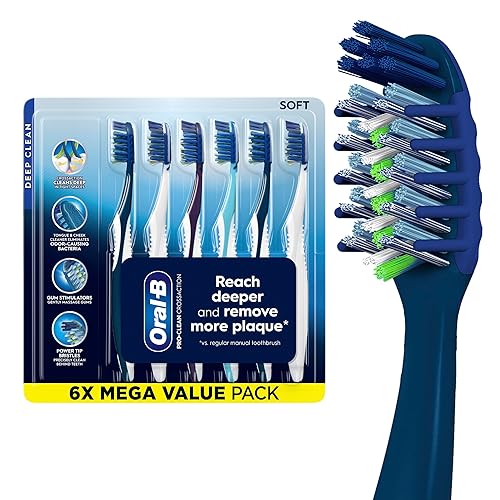
Oral-B Pro Clean Cross Action (Soft, 6 Count)
Best for: Most people who want a well-designed, affordable manual toothbrush whose CrossAction bristles Oral-B says reach deeper to remove more plaque between teeth than a regular manual toothbrush: the best mainstream option
- CrossAction bristles that Oral-B says reach deeper to remove more plaque between teeth than a regular manual toothbrush
- Soft bristles with rounded tips to protect gums and enamel
- Ergonomic non-slip handle for comfortable grip without encouraging excess pressure
- Built-in tongue and cheek cleaner, which Oral-B says removes odor-causing bacteria
- +CrissCross bristles angled at 16 degrees, which Oral-B says attack plaque from the right angle
- +About $3 per brush in the six-pack, one of the most cost-effective picks in the roundup
- +Genuinely soft, round-tipped bristles, plus power tip bristles that Oral-B says reach behind back teeth
- −Tightly packed tufts can make the soft bristles feel slightly stiffer than Nimbus or Curaprox
(Affiliate link) · Free shipping on eligible Prime items
Why We Recommend It
The Oral-B Cross Action is the best manual toothbrush for most people; it combines Oral-B’s CrossAction bristle design, whose CrissCross bristles Oral-B says are clinically proven on its Pro-Health brush to remove more plaque than a regular manual toothbrush, with a price that’s hard to beat. The CrissCross bristle pattern is angled at 16 degrees, which Oral-B says attacks plaque from the right angle. At about $3 per brush in a six-pack, it’s one of the most cost-effective ways to maintain proper oral hygiene.
Dental professionals frequently recommend Oral-B’s manual line as a reliable, accessible option. The soft bristles live up to the label (some brands’ “soft” bristles feel closer to medium), and the brush has a built-in tongue and cheek cleaner, which Oral-B’s Amazon listing says removes odor-causing bacteria.
Key Features
- CrossAction bristles that Oral-B says reach deeper between teeth than a regular manual toothbrush
- Soft, round-tipped bristles
- Ergonomic handle with non-slip grip
- Built-in tongue and cheek cleaner
- Six-pack provides a full year of replacements on a two-month schedule, well inside the ADA’s three-to-four-month replacement guidance
Who It’s Best For
Most adults who want a dependable daily toothbrush without spending premium prices. A reliable default choice if you don’t have specific needs like extreme sensitivity or gum recession.
Potential Downsides
Some dental reviewers note the bristle tufts are packed tightly, which can make the “soft” bristles feel slightly stiffer than competitors like Nimbus or Curaprox.
(Affiliate link) · Free shipping on eligible Prime items
NIMBUS Extra Soft Toothbrushes (Regular Head, 5-Pack) — Best for Sensitive Gums
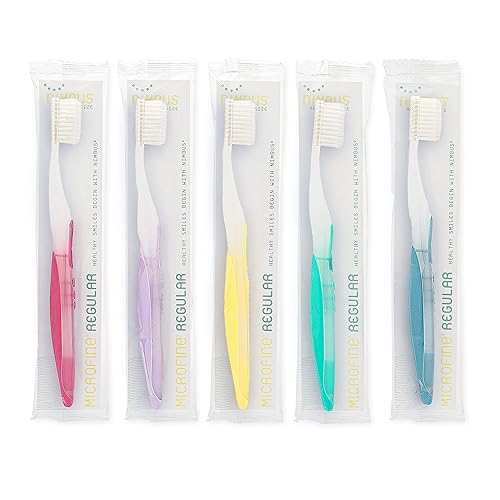
NIMBUS Extra Soft Toothbrushes (Regular Head, 5-Pack)
Best for: People with gum recession, sensitivity, or post-surgical healing who need the gentlest possible bristles
- Periodontist-designed tapered bristles that flex below the gumline
- Extra-soft bristle grade — significantly gentler than standard 'soft' brushes
- Tapered bristle tips reach into sulcus and interproximal spaces
- +Periodontist-designed extra-soft bristles flex below the gumline without irritating sensitive or receding gums
- +Noticeably gentler than what most brands label as "soft"
- +Highest-rated brush in the roundup at 4.8 stars across 12,000+ reviews
- −Only sold in multi-packs, no single-brush option
- −Head leans slightly large, which may not suit smaller mouths
(Affiliate link) · Free shipping on eligible Prime items
Why We Recommend It
Nimbus was designed by a periodontist specifically for patients with gum recession, sensitivity, and post-surgical healing—and it shows. The tapered bristles flex below the gumline without causing irritation, making it possible to clean thoroughly around exposed roots and sensitive tissue where standard brushes cause pain. With over 12,000 reviews and a 4.8-star rating, it’s the highest-rated toothbrush in our roundup.
The extra-soft grade is noticeably gentler than what most brands label as “soft.” Users transitioning from medium-bristle brushes may initially feel like Nimbus isn’t cleaning effectively; but plaque removal depends on bristle contact time and technique, not bristle stiffness. Dental professionals consistently recommend softer bristles for better long-term gum health.
Key Features
- Periodontist-designed for sensitive and receding gums
- Extra-soft tapered bristles
- Regular and compact head sizes available
- Five-pack for extended value
- Colors vary by pack
Who It’s Best For
People with active gum recession, post-periodontal-surgery patients, anyone experiencing gum bleeding or sensitivity during brushing, and people transitioning from hard or medium brushes who need to break the habit of aggressive scrubbing.
Potential Downsides
Only available in multi-packs: no single-brush option. No ADA Seal of Acceptance (though this is a pay-to-play certification that many excellent brushes lack). The head size leans slightly large, which may not suit people with smaller mouths. Nimbus recommends replacing it every 3 months, within the ADA’s three-to-four-month guidance.
(Affiliate link) · Free shipping on eligible Prime items
Curaprox CS 5460 Ultra-Soft Toothbrush — Best Premium
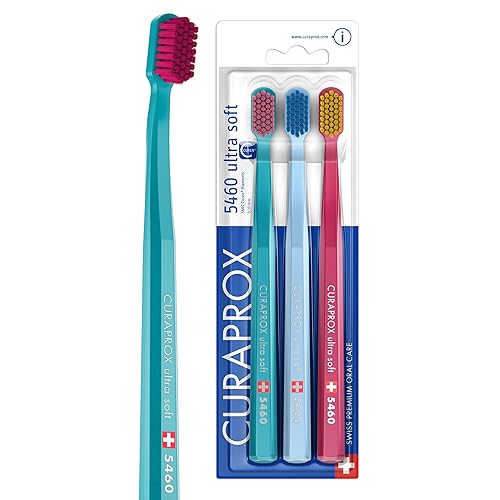
Curaprox CS 5460 Ultra-Soft Toothbrush
Best for: People willing to invest in a premium brush with significantly more bristles and a handle Curaprox says helps you brush at the correct angle
- 5,460 ultra-fine Curen® filaments, roughly 7x more bristles than a typical toothbrush
- Octagonal handle that Curaprox says helps you hold the brush at the 45-degree angle the ADA suggests at the gumline
- Curen® bristles maintain shape when wet, unlike standard nylon which softens unpredictably
- +5,460 ultra-fine Curen filaments, roughly seven times more than a typical brush, for more contact with less pressure
- +Octagonal handle that Curaprox says helps you hold the brush at a 45-degree angle to the gumline
- +Curen filaments hold their shape when wet, unlike standard nylon
- −At around $10 per brush as of this writing, roughly 3x the cost of a basic drugstore toothbrush
- −Curaprox recommends replacing it every 2-3 months, a little sooner than the ADA's 3-4 months
(Affiliate link) · Free shipping on eligible Prime items
Why We Recommend It
The Curaprox CS 5460 has 5,460 bristles: roughly seven times more than the 500-800 in a typical toothbrush. That density means each stroke contacts more tooth surface with less pressure required, and the ultra-fine Curen® filaments conform to tooth contours rather than bending away. The result is a noticeably different brushing experience: gentle but thorough, almost massage-like on the gums.
The octagonal handle is a subtle but clever design choice; Curaprox says it helps you hold the brush at about 45 degrees to the gumline, which is the angle the ADA suggests for cleaning along the gumline and the starting position of what dentists call the Bass technique. A small 2021 clinical study published in the Journal of Research in Medical and Dental Science, which followed 90 patients with gum inflammation, found that the CS 5460 improved oral hygiene compared to a conventional manual toothbrush: roughly 1.2-fold using the brush on its own, rising to about 3.3-fold when paired with an interdental monobrush.
Key Features
- 5,460 ultra-fine Curen® (polyester) bristles
- Octagonal handle that Curaprox says helps you hold a 45-degree angle
- Curen® filaments maintain shape when wet
- Swiss-designed, available in 30+ colors
- Compact head size suits most mouths
Who It’s Best For
Anyone who values premium oral care and wants a handle designed to help with brushing angle. Particularly recommended by hygienists for patients with gum recession or those who struggle with brushing too hard.
Potential Downsides
At around $10 per brush as of this writing, it costs roughly 3x more than a basic drugstore toothbrush. There’s a learning curve: users accustomed to firm bristles may initially feel the ultra-soft brushing is insufficient (it isn’t). Curaprox recommends replacing it every 2-3 months, a little sooner than the ADA’s three-to-four-month guidance.
(Affiliate link) · Free shipping on eligible Prime items
MOUTHWATCHERS Dr. Plotka’s Flossing Toothbrush (Soft, 4-Pack) — Best Antimicrobial
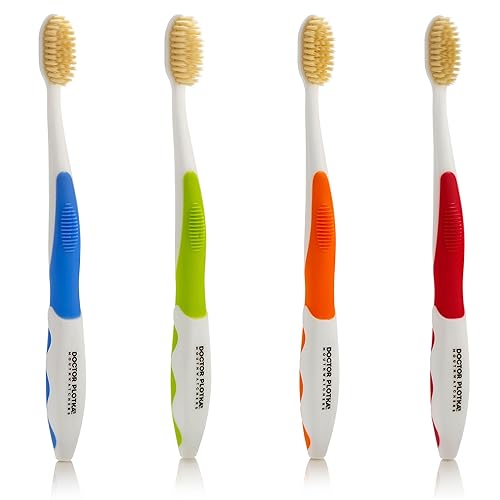
MOUTHWATCHERS Dr. Plotka's Flossing Toothbrush (Soft, 4-Pack)
Best for: People concerned about bacteria buildup on bristles — the only manual toothbrush with antimicrobial bristle technology
- Dual-layered flossing bristles with antimicrobial silver-infused tips
- Outer bristles are 10x thinner than standard, reaching into spaces between teeth
- Bristles resist bacterial growth between uses — stays cleaner between brushings
- +Silver-infused antimicrobial bristle tips resist bacterial growth between uses, unique in the manual toothbrush market
- +Ultra-thin outer bristles, 10x thinner than standard, reach interproximal spaces better than flat-trim designs
- +Four-pack at a competitive price point
- −The "flossing" claim is not literal, it doesn't replace actual floss
(Affiliate link) · Free shipping on eligible Prime items
Why We Recommend It
MOUTHWATCHERS takes a different approach than most manual toothbrushes: dual-layered bristles where the outer ring is 10x thinner than standard, designed to flex between teeth like floss. The silver-infused antimicrobial tips are unique in the manual toothbrush market; they resist bacterial colonization between uses, addressing a genuine (if often overlooked) hygiene concern. Toothbrushes can harbor bacteria within hours of use, and antimicrobial bristles reduce that buildup.
The “flossing” claim shouldn’t be taken literally (no toothbrush replaces actual flossing), but the ultra-thin outer bristles do reach interproximal spaces better than conventional flat-trim designs. The four-pack at a competitive price point makes it an easy upgrade from basic drugstore brushes.
Key Features
- Dual-layered bristles: standard inner + ultra-thin outer “flossing” bristles
- Silver-infused antimicrobial tips
- Soft bristle grade
- Four-pack with assorted colors
- Designed by Dr. Ronald Plotka, DDS
Who It’s Best For
People who want enhanced interdental reach from their toothbrush and are concerned about bristle hygiene between uses. A good middle ground between basic brushes and premium options like Curaprox.
Potential Downsides
The “antimicrobial” and “flossing” marketing claims may set expectations too high: this is still a toothbrush, not a replacement for dental floss. Some users expected firmer bristles and were surprised by the soft feel.
(Affiliate link) · Free shipping on eligible Prime items
RADIUS Source Floss Brush (Super Soft, 3-Pack) — Best Eco-Friendly
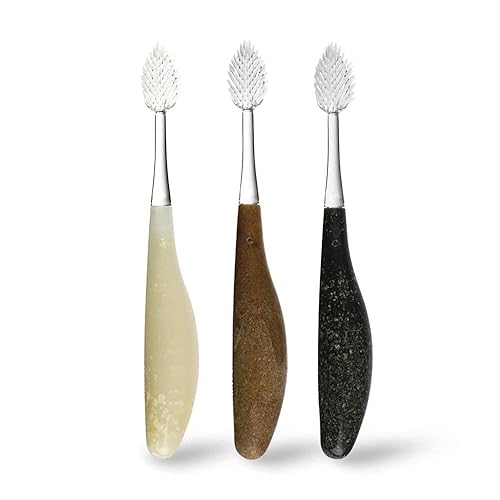
RADIUS Source Floss Brush (Super Soft, 3-Pack)
Best for: Environmentally conscious brushers who want a sustainable design with replaceable heads to reduce plastic waste
- Plant-based handle made from cornstarch, cellulose, and hemp fibers
- Replaceable heads reduce plastic waste by up to 93% compared to discarding entire brushes
- Wide brush head covers more surface area per stroke for faster, more thorough brushing
- +Plant-based handle plus replaceable heads cut plastic waste by up to 93%
- +ADA-Accepted and BPA-free
- +Wide head covers more surface area per stroke
- −Wide head can be too large to reach behind back molars in smaller mouths
- −Premium pricing (around $10 plus $8 for replacement heads), well above drugstore alternatives
(Affiliate link) · Free shipping on eligible Prime items
Why We Recommend It
An estimated 3.5 billion plastic toothbrushes are discarded annually, and most take 500+ years to decompose. The RADIUS Source addresses this with a plant-based handle (cornstarch, cellulose, hemp) and replaceable heads: you keep the handle and swap just the bristle head every 3 months, reducing plastic waste by up to 93%. It’s BPA-free and ADA-Accepted, which means it meets the ADA’s standards for safety and efficacy.
The wide brush head is polarizing; some love the broader coverage per stroke, while others find it too large for comfortable access to back molars. If you’ve avoided bamboo brushes because of quality concerns about their bristles (a valid criticism: most use nylon bristles that aren’t truly biodegradable), the RADIUS Source offers a more practical sustainability compromise.
Key Features
- Plant-based handle: cornstarch, cellulose, hemp fibers
- Replaceable brush heads (sold separately)
- ADA-Accepted
- Super-soft bristles
- Wide head design for broader coverage
- BPA-free
Who It’s Best For
Eco-conscious buyers who want to reduce their plastic footprint without sacrificing brushing quality. A practical alternative to bamboo brushes, which often have quality and biodegradability limitations.
Potential Downsides
The wide head divides opinion; it provides good coverage but may be too large for people with smaller mouths, making it harder to reach behind back molars. Premium pricing (~$10 plus $8 for replacement heads) is significantly higher than drugstore alternatives. The handle material feels different from conventional plastic, which takes some getting used to.
(Affiliate link) · Free shipping on eligible Prime items
Colgate 360 Whole Mouth Clean (Soft, 3-Pack) — Most Widely Available
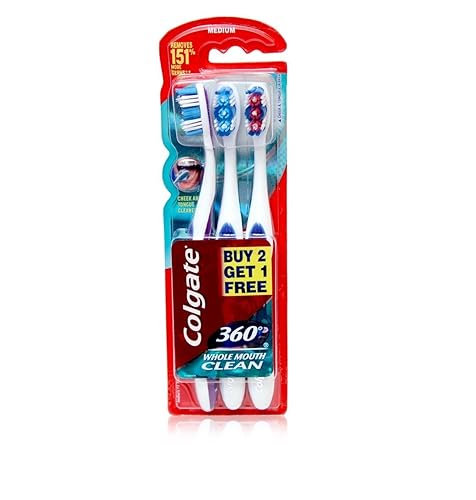
Colgate 360 Whole Mouth Clean (Soft, 3-Pack)
Best for: People who want a multi-feature drugstore toothbrush with a tongue and cheek cleaner built in — available at virtually every retailer
- Built-in tongue cleaner on the back of the brush head
- Cheek cleaner integrated into the bristle design
- Polishing cups for surface stain removal
- +Built-in tongue cleaner, cheek-cleaning bristles, and polishing cups, the most feature-packed drugstore option
- +Available at virtually every drugstore and retailer, at a budget-friendly price
- −Lowest rating in the roundup at 4.0 stars; the "soft" bristles feel closer to medium
- −Larger head makes it harder to reach back teeth in smaller mouths
(Affiliate link) · Free shipping on eligible Prime items
Why We Recommend It
The Colgate 360 packs more features into a single brush head than any other manual toothbrush: a tongue cleaner on the back, cheek-cleaning bristles on the sides, and polishing cups among the main bristles. For people who want a one-tool solution for whole-mouth cleaning, it’s the most convenient option available, and you can find it at virtually every drugstore, grocery store, and retailer in the country.
The 360 isn’t the gentlest option on this list: its “soft” bristles feel stiffer than Nimbus or Curaprox, and the larger head may not suit everyone. But for the majority of adults without significant sensitivity or gum issues, it’s a capable daily driver at a budget-friendly price.
Key Features
- Integrated tongue cleaner on brush head back
- Cheek-cleaning bristles
- Polishing cups for stain removal
- Soft bristle grade
- Three-pack for value
Who It’s Best For
People who want a feature-rich drugstore toothbrush without seeking out specialty brands. Good for travelers who need a reliable brush available at any store, and for people who value the convenience of a built-in tongue cleaner.
Potential Downsides
The 4.0-star rating is the lowest in our roundup, and for a reason: the “soft” bristles feel closer to medium compared to truly soft options like Nimbus or Curaprox. The head is on the larger side, making it harder to reach back teeth in smaller mouths. Colgate has also been criticized for discontinuing popular models without notice.
(Affiliate link) · Free shipping on eligible Prime items
Buyer’s Guide: Choosing the Right Manual Toothbrush
Always Choose Soft (or Extra-Soft) Bristles
This is the single most important takeaway: the ADA recommends soft-bristled toothbrushes for everyone. Medium and hard bristles cause gingival abrasion (wearing away gum tissue) and enamel microabrasions that accumulate over years. Despite this, medium and hard bristles remain widely sold because many people believe harder brushing means cleaner teeth—it doesn’t.
If you’re currently using a medium or hard brush, switching to soft bristles may initially feel like you’re not cleaning as effectively. That feeling is misleading. Plaque is a soft biofilm that yields to gentle pressure; scrubbing harder doesn’t remove more plaque, it just damages gums. Give soft bristles two weeks before judging.
Is a Manual Toothbrush as Good as Electric?
Close, with proper technique and consistent two-minute brushing. The ADA does not recommend one over the other, and ADA consumer adviser Dr. Matt Messina told Consumer Reports that you can brush very effectively with a manual toothbrush. Research reviews summarized by Consumer Reports give powered brushes a slight edge on plaque removal, and their timers and pressure sensors can help with technique, but a manual brush used well for two minutes still does the job.
One situation where electric may help: people with limited dexterity (arthritis, injuries) who find it hard to hold the angle and keep up short, gentle strokes by hand.
The Bass Technique (the ADA’s 45-Degree Method)
Most people have never been taught proper brushing technique. The ADA suggests a 45-degree angle at the gumline with short, gentle strokes, for two minutes twice a day with a soft brush, and notes that several techniques exist without naming one as best. This 45-degree, short-stroke pattern is what dentists call the Bass technique (the “modified” Bass version adds a sweep of the bristles from the gum toward the biting edge after each set of strokes):
- Hold the brush at a 45-degree angle to the gumline
- Use short, gentle back-and-forth strokes, not hard horizontal scrubbing
- Brush the outer, inner, and chewing surfaces of all teeth
- For front teeth, tilt the brush vertically and use gentle up-and-down strokes
- Spend at least 2 minutes total: 30 seconds per quadrant
- Apply minimal pressure: let the bristles do the work
A 2024 systematic review in PLOS One found only limited evidence on brushing technique and could not show that the Bass technique removes more plaque than other methods, and its authors conclude that either the Fones (circular) or the Bass technique may be recommended for plaque. Since the ADA names no single best technique, its 45-degree, short-stroke instruction is a reasonable place to start. Curaprox says the CS 5460’s octagonal handle helps you hold the brush at that 45-degree angle.
When to Replace Your Toothbrush
The ADA recommends replacing your toothbrush every 3-4 months, or sooner if bristles are frayed, splayed, or no longer spring back into shape. Some makers set a shorter schedule: Curaprox recommends replacing its CS 5460 every 2-3 months. Nimbus recommends every 3 months for its extra-soft brush. Whatever the brand, check soft and extra-soft bristles often and replace the brush once they splay.
FAQ
How often should I replace my manual toothbrush?
Every 3-4 months per ADA guidelines, or sooner if bristles are visibly worn. The key sign: if bristles no longer stand upright and spring back into shape, the brush has lost its cleaning effectiveness. Some makers set a shorter schedule for ultra-soft brushes: Curaprox recommends replacing its CS 5460 every 2-3 months.
Can a manual toothbrush clean as well as an electric?
It can come close. The ADA states that both manual and powered toothbrushes can effectively remove plaque when used properly. Research reviews summarized by Consumer Reports give powered brushes a slight edge on plaque removal, but with either type the key variables are technique (a 45-degree angle with short, gentle strokes), duration (2 minutes), and consistency (twice daily).
Why do stores still sell medium and hard bristle toothbrushes?
Consumer demand driven by the persistent myth that harder bristles clean better. Every major dental organization recommends soft bristles exclusively, but the perception that “more scrubbing = cleaner teeth” remains widespread. If your dentist has ever told you to brush more gently, switching from medium to soft bristles is one of the most impactful changes you can make.
What’s the best toothbrush for receding gums?
Extra-soft brushes like the Nimbus Extra Soft and Curaprox CS 5460 are specifically designed for people with gum recession. Their ultra-fine bristles flex below the gumline without causing further irritation to exposed root surfaces. See our dedicated best toothbrush for receding gums roundup for more options.
Are bamboo toothbrushes effective?
Bamboo handles are a genuine sustainability improvement, but the bristles remain a weak point. Most “eco-friendly” bamboo toothbrushes use nylon bristles that are not truly biodegradable, and users frequently report shorter, less dense bristles compared to conventional brushes. If sustainability is your priority, the RADIUS Source’s replaceable-head design may be a more practical compromise: reducing plastic waste by up to 93% while maintaining bristle quality.
Do I need a tongue cleaner on my toothbrush?
A tongue cleaner can help reduce bacteria that contribute to bad breath. The Colgate 360 includes one built into the brush head, which is convenient but not as effective as a dedicated tongue scraper. Oral-B’s Amazon listing says the Cross Action has a built-in tongue and cheek cleaner as well. If bad breath is a concern, see our best tongue scraper roundup for more targeted options.