
Quick Answer
Neither brand wins on the independent evidence. The independent head-to-head review, a 2021 systematic review in the Journal of the American Dental Association covering 24 trials and 2,998 patients, concluded that “the evidence does not suggest the superiority of either OR or SS toothbrushes for plaque or gingival index reduction” (JADA review), where OR is Oral-B’s oscillating-rotating design and SS is the side-to-side motion Sonicare uses. The well-known Cochrane numbers, 11% less plaque and 6% less gingivitis at one to three months, compare powered brushes with manual ones, not Oral-B with Sonicare (Cochrane review). The ADA’s position is that “either manual or powered toothbrushes can be used effectively” (ADA). So the real decision is how each brush feels in your mouth, what the replacement heads cost, and how often you want to charge it.
Oral-B vs Sonicare at a Glance
| Feature | Oral-B | Philips Sonicare |
|---|---|---|
| Cleaning technology | Oscillating-rotating (some models add pulsation) | Side-to-side sonic vibration |
| Head-to-head evidence | No superiority shown in the independent 2021 JADA review | No superiority shown in the independent 2021 JADA review |
| Brush head shape | Small, round head | Elongated, traditional shape |
| Genuine head cost | About $4.60 (CrossAction); about $9.60 for iO heads | About $10.25 (C2 Optimal Plaque Control) |
| Entry model with a pressure sensor | Pro 1000, about $50 | 4100, about $56 |
| Battery between charges | A week to ten days on the Pro 1000, by owner reports | Up to two weeks on the 4100 and 5300, per their listings |
| Noise and feel | Louder; owners describe a firmer, more active feel | Quieter; owners describe a gentler feel |
| Brush head compatibility | Standard heads fit the non-iO rechargeable handles; iO heads fit iO only | One click-on system across nearly every modern handle |
| Common complaint | Mold inside the hollow heads if they are not dried | Cost of genuine replacement heads |
The Model to Start With From Each Brand
Each brand's Editor's Pick from our full roundups: both have a pressure sensor and a two-minute timer, and both sit in the $50 to $56 range.
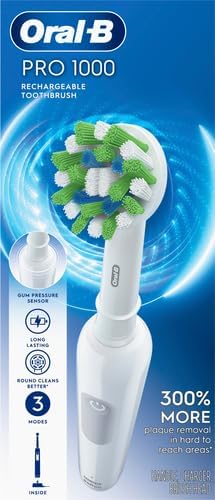
Oral-B Pro 1000 Rechargeable Electric Toothbrush
Our Oral-B Editor's Pick: named on the ADA Seal listing, about $50
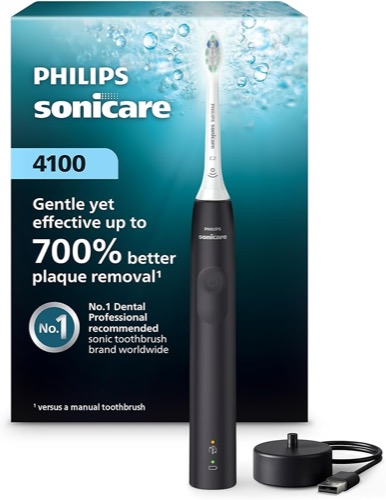
Philips Sonicare 4100 (Black)
Our Sonicare Editor's Pick: the model owners in our research name most often
Affiliate links. Dental Roundup may earn a commission at no extra cost to you.
Cleaning Technology: How They Actually Differ
This is the fundamental difference between the two brands, and everything else flows from it.
Oral-B uses an oscillating-rotating mechanism: the small, round brush head rotates back and forth, with some models adding pulsating movements. The head is small and round; you position it on each tooth and let it clean.
Sonicare uses side-to-side sonic vibration on an elongated head shaped like a manual brush. Philips describes the effect as Sonicare Fluid Action, driving fluid between teeth and along the gumline; that is the company’s description of its mechanism, not an independent finding.
On which one cleans better, the independent evidence says neither. The 2021 systematic review in the Journal of the American Dental Association pooled 24 trials and found “little to no difference” in plaque and gingival index reduction between oscillating-rotating and side-to-side brushes at four weeks (JADA review). An independent 2022 network meta-analysis ranked oscillating first but sized the edge as “a very small benefit”, measured on plaque after one supervised brushing (network meta-analysis). The large numbers you will see quoted for oscillating brushes, a 72% versus 54% transition to gingival health, come from a meta-analysis run on Procter & Gamble’s private trial archive by its own employees (P&G meta-analysis); Procter & Gamble owns Oral-B, so that is not independent evidence, and no equivalent independent trial set exists.
What is settled is powered versus manual. The Cochrane review of 56 trials found that powered brushes reduce plaque by 11% at one to three months and 21% beyond that, and gingivitis by 6% and 11%, over manual brushing, and added that “the clinical importance of these findings remains unclear” (Cochrane review). Those figures are often repeated as an Oral-B-over-Sonicare result. They are not one.
What owners report is about feel rather than efficacy. A self-identified retired dentist in the threads we read for our electric toothbrush guide put the Sonicare case strongly: “Do you like your gums? Then stick with Sonicare style brushes.” A commenter self-identified as a dentist with ten years of running clinical trials pushed back that multiple reviews “haven’t found a meaningful difference in gum recession outcomes between the two”, and a systematic review on brushing and recession agrees that the data “remain largely inconclusive” (J Clin Periodontol review). Those professionals are self-identified in their comments, not credential-verified. The practical reading: people with sensitive gums often prefer the sonic feel, people who like a brush that feels like it is working often prefer the round head, and neither preference is wrong.
Brush Head Cost: The Hidden Long-Term Expense
Replacement heads are where the two brands separate on cost. The ADA advises replacing a head “every three to four months or more often if the bristles are visibly matted or frayed” (ADA), which is three to four heads a year per person.
From the reads of the genuine head listings in our electric toothbrush guide:
| Handle | Genuine head we priced | About per head |
|---|---|---|
| Oral-B Pro 1000 | CrossAction, 4-pack | $4.60 |
| Oral-B iO line | iO Ultimate Clean, 2-pack | $9.60 |
| Sonicare 4100 and 5300 | C2 Optimal Plaque Control, 3-pack | $10.25 |
Those are the prices on the day we read them, and they move. For a household of two replacing heads at the ADA interval, three years is 18 to 24 heads:
- Oral-B (standard heads): about $83–110 over 3 years
- Oral-B (iO heads): about $173–230 over 3 years
- Sonicare (C2 heads): about $185–246 over 3 years
So a standard Oral-B is the cheapest of the three to own, and moving to the iO line gives most of that advantage away. Over a few years the head bill on a Sonicare or an iO is larger than an entry handle cost in the first place.
Third-party heads are cheaper again, and the owner community has not settled whether they are a good idea. One widely upvoted comment recommends knock-off Sonicare heads as “WAY cheaper”; the reply beneath it, at 175 upvotes: “The knockoff ones are not as soft as the official sonicare ones so they are worse for your enamel.” We have no study that settles it. If you go generic, buy soft bristles and replace at the first sign of splaying.
Before you buy a multi-pack of replacement heads, check fit first: standard Oral-B heads fit rechargeable handles except iO and Pulsonic, while Sonicare click-on heads fit the modern click-on families; Philips does not list them for Philips One, Sonicare for Kids handles, or the old screw-on lines. Our guides to which heads fit which Oral-B handles and which heads fit which Sonicare handles break it down by handle, and our Oral-B brush head guide and Sonicare brush head guide cover the cheaper and specialty options for each system.
Price Range: Entry-Level to Premium
Both brands span a wide price range, and in both the entry model with a pressure sensor is the one our roundups pick.
Oral-B starts with the Pro 1000 (Affiliate link) at about $50: the oscillating-rotating head, a pressure sensor that stops the pulsations when you press too hard, and a quadrant timer. The iO Series 3 (Affiliate link) at about $110 moves to the quieter iO magnetic drive with a visible pressure sensor and a light-ring timer, and takes the more expensive iO heads. Above that, our Oral-B roundup found the tiers add a display, an app and a faster charger rather than a better clean, and it explains why we do not card the flagship iO Series 9.
Sonicare starts lower with the 1100 (Affiliate link) at about $20, which has the timer but no pressure sensor. The 4100 (Affiliate link) at about $56 adds the pressure sensor, a second intensity setting and a head replacement reminder. One note on its star rating: as of September 2026 Amazon sells the 4100 through a newer listing of the same handle, 4.5 stars on 595 ratings, so read the average as an early signal. The 5300 (Affiliate link) at about $110 adds White and Gum Care modes, three heads and a travel case. Our Sonicare roundup covers the tiers above it and why the Prestige 9900 is not carded.
Where the value peaks: at the bottom, for both brands. We could find no independent study showing that a pricier model from either brand cleans better than its entry model, and the one claim of that kind comes from the manufacturer’s own funded analysis of its own trials (P&G meta-analysis). The features the owners and self-identified dental professionals in our research keep asking for make a short list: a pressure sensor, a two-minute timer with a quadrant pacer, and a rechargeable handle. The Pro 1000 and the 4100 both have all three.
Smart Features and App Ecosystems
Both brands sell app-connected brushing at the top of their ranges, and both generate strong opinions.
Oral-B’s app arrives on the upper iO tiers. The iO Series 7G in our Oral-B roundup has an app that tracks how and where you brush in real time, five modes on a handle display and a 3-hour fast charger, all per its listing. The practical criticism is that the tracking needs a phone in the bathroom to do its job.
Sonicare’s app coaching starts at the 7300 in our Sonicare roundup. Below that, the 4100 and 5300 carry the feature that works without a phone: a brush head replacement reminder, which the 5300’s listing calls BrushSync. At the top, Philips sells the Prestige 9900 on a system it calls SenseIQ, which its listing describes as sensing pressure, motion and coverage up to 100 times a second; we have no independent evidence of what that changes.
Our take: Smart features are where marketing has most outpaced evidence. No independent trial shows an app-connected model cleaning better than the same brand’s entry model, and owners who bought those features repeatedly report not using them. The features that change daily brushing (pressure sensors, timers with quadrant pacers and head replacement reminders) work without an app and are on the entry and mid-range models from both brands.
If app-based coaching motivates you, both ecosystems are capable. If you’re indifferent to apps, don’t let smart features influence your brand choice; they’re not why either brand cleans your teeth well.
Battery Life
Sonicare has the edge here, going by what each side can document.
Sonicare: the 4100’s listing says one charge lasts for two weeks, the 5300’s says up to two weeks, and the 7300 is rated at up to 21 days.
Oral-B: the Pro 1000 and iO Series 3 listings quote no battery figure. Owners in our research report roughly a week to ten days on the Pro 1000, less as it ages. The Pro 1000 uses an older nickel-metal-hydride battery, which owners describe as more tolerant of being run flat than a lithium cell, and they tie its long service life to it.
For daily home use the difference is minor. For travel, a Sonicare that holds two weeks means the charger can stay at home for most trips. If travel is the deciding factor rather than brand loyalty, our best travel electric toothbrush roundup looks beyond just these two brands at compact, long-battery models built around that constraint.
Noise and Comfort
This is where personal preference plays the largest role, and it’s the factor most likely to determine long-term satisfaction.
Oral-B’s oscillating-rotating heads are louder and, by several owner accounts, harsher-feeling than a sonic brush. The small round head cleans one tooth at a time. The iO line’s magnetic drive is the quieter, gentler version of the same motion.
Sonicare’s sonic vibration is quieter, and owners describe the feel as gentler. Several owners with gum sensitivity in our research switched from an oscillating brush to a sonic one for that reason.
The recurring Oral-B complaint is mold. “Just be aware the oral b heads are hollow and they grow mold inside very quickly, you have to clean them religiously,” one owner wrote, and r/DentalHygiene members report the same problem on the iO line, inside the handle as well as the head. The hollow round heads collect it faster than flat sonic heads if they are not dried. With either brand, pull the head off after brushing and let both parts dry.
If you have sensitive teeth or gums, the sonic feel is often more comfortable. For a deeper look at options for sensitivity, see our best electric toothbrush for sensitive teeth roundup, which includes models from both brands.
Verdict: Which Brand Should You Choose?
Choose Oral-B if:
- You prefer the small round head and a brush that feels like it’s actively working on each tooth
- Running cost matters: standard CrossAction heads are the cheapest genuine heads of the two brands
- You don’t mind charging about weekly and a louder brushing experience
- You want a model named on the ADA Seal listing; the Pro 1000 is (ADA Seal listing)
If Oral-B is the pick, our standalone Pro 1000 review walks through the entry model most people should actually buy.
Choose Sonicare if:
- You prefer a gentler, quieter brushing experience
- Longer battery life matters (especially for travel)
- You want one click-on head system across nearly every handle you might buy now or later
- You have sensitive teeth or gums and want a softer-feeling action
If Sonicare is the pick, our Sonicare 4100 review covers the brand’s comparable entry model in more depth.
The bottom line: The independent trials do not pick a winner, so pick on feel, head cost and charging. If you’ve never used either brand, start with the entry model that has a pressure sensor, the Oral-B Pro 1000 (Affiliate link) or the Sonicare 4100 (Affiliate link), and let your own experience decide. The highest-scoring professional comment in our Sonicare research picks neither brand: “Whichever one you will use for 2 mins each time, 30s a quadrant.” For model-specific picks within each brand, see our best Oral-B electric toothbrush and best Sonicare toothbrush roundups.
Want the Step-Up? The $110 Tier From Each Brand
Same cleaning action as each brand's entry model. What you pay for is feel and what comes in the box.
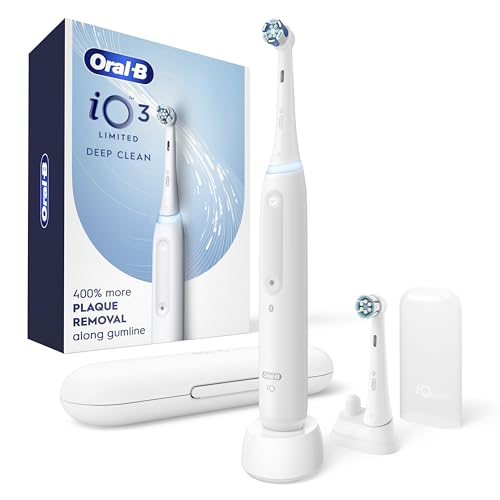
Oral-B iO Series 3 Limited Deep Clean (White)
The iO our Oral-B roundup says to buy: note the pricier iO heads
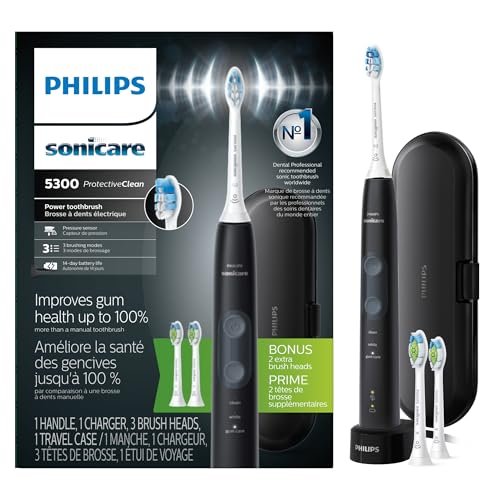
Philips Sonicare 5300 (Black)
Our Sonicare Best Step-Up: about a year of heads included
Affiliate links. Dental Roundup may earn a commission at no extra cost to you.
Evidence Receipt
- Head to head, “the evidence does not suggest the superiority of either OR or SS toothbrushes for plaque or gingival index reduction”: 2021 systematic review, 24 trials and 2,998 patients (JADA review).
- Powered brushes reduce plaque by 11% at one to three months and gingivitis by 6%, compared with manual brushing, not with each other (Cochrane review).
- The large oscillating-brush advantage figures come from a Procter & Gamble analysis of its own trial archive (P&G meta-analysis).
- “Either manual or powered toothbrushes can be used effectively”, and heads should be replaced every three to four months (ADA).
- Prices and battery claims were read from each product’s Amazon listing on 2026-09-18; head prices are from the listing reads in our electric toothbrush guide, last updated 2026-09-02.
Frequently Asked Questions
Do dentists recommend Oral-B or Sonicare?
Dentists are split, on the record. In the threads we read, one self-identified dentist recommends only oscillating heads, a self-identified retired dentist says to “stick with Sonicare style brushes”, and a third says “Research shows Sonicare and Oral B work equally well, it’s just preference.” The independent evidence sides with the third: the 2021 JADA review found “little to no difference” between the two designs (JADA review). Be aware that an office recommendation can also be a retail relationship: “It honestly just depends which company got to your dentists office first,” as one hygienist’s relative put it.
Can I switch from Oral-B to Sonicare (or vice versa)?
Yes, with a brief adjustment period. Switching between the round oscillating head and the sonic head changes how the brush feels in your mouth, so expect an adjustment period. Sonicare’s EasyStart feature, on the models that have it, ramps the power up over the first 14 uses to ease the transition. The head-to-head trials give no clinical reason not to switch, so go with whichever feel you prefer.
Are Oral-B iO heads compatible with older Oral-B models?
No. The Oral-B iO series uses its own brush head attachment that is not backwards-compatible with pre-iO models (Pro, Smart, Genius series). Pre-iO rechargeable handles share the standard round head system, but iO heads are a separate ecosystem, and they cost about twice as much per head. Our Oral-B fitment guide lists which heads fit which handles.
Is the Cochrane review still relevant?
Yes, for the question it answers. The Cochrane review of powered toothbrushes pooled 56 trials and found powered brushes beat manual ones on plaque and gingivitis, while adding that “the clinical importance of these findings remains unclear” (Cochrane review). It does not rank Oral-B against Sonicare, although it is often quoted as if it did. For that question the 2021 JADA review of 24 head-to-head trials is the one to read, and it found no superiority for either design.
How often should I replace brush heads for either brand?
The ADA’s interval is “every three to four months or more often if the bristles are visibly matted or frayed” (ADA). The Sonicare 4100 and 5300 include a head replacement reminder, and the Oral-B iO Series 3 has a refill change alert, per their listings. With either brand, if the bristles are visibly splayed it’s time, regardless of the calendar.
Which brand is better for braces?
Both brands work with braces, though each requires some adaptation. Oral-B’s small round head can be easier to position around individual brackets. Sonicare’s broader head covers more surface area but may require more careful angling to clean around orthodontic hardware. The ADA notes that people with braces “may find a powered toothbrush easier to use” than a manual one (ADA). For detailed recommendations, see our best electric toothbrush for braces roundup.