
The Short Answer
For most families, no: no independent trial shows a mouthpiece brush matching an ordinary one, and this one costs more than twice as much as a good kids’ electric brush. The AutoBrush is a legitimate product with a real ADA Seal of Acceptance, and it is not the brush in the 2020 study people quote against it. But most of the independent trials of mouthpiece-style brushes we found, silicone or nylon, had them removing less plaque than ordinary brushing. The exceptions are a nylon brush run three times longer than its maker instructs and one small care-home pilot of a different machine. None tested the AutoBrush itself. It sells for about $89.
It can still be the right purchase in one situation: a child (or adult) who will not tolerate a normal brush at all, where the honest comparison is this or nothing. Four of the six owners who described their routine in any detail use it alongside a regular brush, and none of the six claims it cleans as well as one. Treat it as a supplement and it has a place.
What the ADA Seal Does and Doesn’t Tell You
The Seal is real. The ADA’s Seal listing for the autobrush U-shaped Toothbrush Series states that the acceptance “is based on its finding that the product is safe and has shown efficacy in removing plaque and helping to prevent and reduce gingivitis, when used as directed.” The word is Accepted, not approved, a correction one Reddit asker received when they put the question in exactly those terms.
The Seal rests on data the company submits and the ADA reviews. The ADA told Consumer Reports that a product “must submit clinical and laboratory study data to the ADA demonstrating its safety and efficacy, which is then reviewed by the ADA Council on Scientific Affairs to ensure all claims made about the product are backed by rigorous scientific evidence”. That is a real review. It is still a review of studies the company paid for, not an independent trial, and nothing in the Seal statement compares the brush with an ordinary one. Consumer Reports describes three studies funded by AutoBrush between 2022 and 2023 as finding that the brush removed plaque, with two also finding reduced gingivitis. We have not been able to read those studies in full, so we repeat only that description of them.
So the Seal tells you the AutoBrush is safe and does remove plaque. It is a floor, not a ranking: it does not say the brush cleans as well as an ordinary one, and that is the question a parent is actually asking.
What Independent Studies Found
The study most often quoted against the AutoBrush is a 2020 Italian crossover trial. It did not test the AutoBrush. It tested a silicone-bristled unit from a Shenzhen manufacturer on 22 students, in a single brushing session without toothpaste, and found the result “not significantly different from no brushing” (International Journal of Environmental Research and Public Health, 2020). The authors’ likely explanation was silicone bristles too short to reach the tooth and gum surfaces. The AutoBrush uses nylon and silicone bristles, per Consumer Reports’ description of the mouthpiece.
That would be the end of it if mouthpiece brushes had since tested well. They have been tested since, nylon ones included, and the results are mixed at best:
| Study | Brush tested | What it found |
|---|---|---|
| Innsbruck, 2021 | A “ten seconds” mouthpiece device with silicone bristles, 20 adults | 11.37% plaque reduction against 31.39% for uninstructed manual brushing |
| Innsbruck, 2023 | Y-Brush, nylon bristles, 20 people | Worse than manual at the maker’s 5 seconds per jaw; comparable at 15 seconds per jaw. Too short to cover the second molars in 95% of people, and the gum margin went uncovered on 30.67% of teeth |
| Florence, 2024 | Y-Brush (nylon) and a U-shaped brush | The nylon brush beat no brushing, lost clearly to two minutes of manual brushing, and was not significantly different from the U-shaped brush |
| Leuven, 2025 | A U-shaped electric brush (bristle material not stated in the abstract), 26 dental students brushing each other’s teeth in caregiver and care-receiver roles | A manual brush and a three-headed manual brush both removed more plaque; the U-shaped brush scored better for comfort |
| Jeddah, 2025 | A manual U-shaped brush with silicone bristles, 56 children aged 8 to 12 | Not significantly different from no brushing, or from a regular manual brush; a battery-powered regular brush beat all three |
Three limits on reading that table. None of these studies tested the AutoBrush, and our PubMed search in September 2026 turned up no independent trial of it. And only one study involved children, who were aged 8 to 12 and used a non-powered brush; nobody has published a trial in the 3-to-5 age group the kids’ AutoBrush is sold for. And most of these trials measure a single brushing session, several of them after days without brushing; the two studies that ran for weeks of daily use, both described in the adults section below, did not find the mouthpiece doing worse than the brush it was compared with.
Where these brushes fall short, the recurring reason is fit: a fixed mouthpiece does not reliably reach the gum line or the back molars of a mouth it was not moulded for. That matches what a self-identified dentist told a parent on r/toddlers: “I have heard from colleagues that these don’t brush along the gum lines well so there is often plaque/calculus along the gum lines in kids who use them. I would rather you use a regular toothbrush imperfectly”.
Why Parents Buy One Anyway
The forum threads we read (122 Reddit threads across 11 communities, archive copies read in September 2026) make the appeal clear, and it is not laziness. In four separate threads the problem is a child who clamps down on the brush and will not let go. A mouthpiece survives a clamped jaw. One parent of a boy of almost two and a half wrote that he “can clamp down to his little heart’s content and the toothbrush can still do its thing”, and added: “Is it as good as regular brushing? Highly unlikely. But if, for sensory or whatever reasons, brushing is a battle or not happening then I’d say it’s definitely better than nothing.”
“Better than nothing” is the verdict that keeps recurring in those threads, from owners and dental professionals alike. For nylon-bristled brushes it is a fair summary of the research too; the silicone ones tested did not clear even that bar.
Buy It If, Skip It If
It can be worth it if:
- Your child is 3 or older, refuses a conventional brush outright, and the realistic alternative tonight is no brushing. A commenter flaired as a pediatric dentist, answering the parent of a child with sensory difficulties, put it this way: “Normally I don’t recommend the full arch brushes (like auto brush), but if she will put the whole thing it this is an instance where it can be helpful.”
- Your child bites down on the brush and will not let go. This is the case the mouthpiece is actually bought for. Try the free fixes below and a brush they can safely chew first; if brushing is still not happening, a mouthpiece as one of the day’s brushings is defensible.
- You are an adult for whom ordinary brushing has broken down for sensory or mental-health reasons (more on that below).
- You will keep a normal brush in the routine for at least one brushing a day.
Skip it if:
- Your child tolerates a normal brush, even badly. The dentist quoted above would rather see imperfect ordinary brushing, and the fit findings in the trials point the same way.
- Your child is under 3. The smallest size is sold for ages 3 to 5.
- Teeth are crowded, protruding, or waiting on braces. A fixed mouthpiece fits an average arch, and the one parent who asked about this in our threads never got an answer.
- You expect it to replace brushing. Another commenter flaired as a pediatric dentist, who treats many patients with sensory issues, was blunt about the ceiling: “Better than nothing, yes. But not much better.”
What to Try Tonight, Free
Brushing videos during brushing, taking turns (“you brush mine, I brush yours”), naming the foods you are hunting for, letting the child press the button, and, for the toddler who will not open up, the hold one parent describes with the child lying back between your legs. One commenter’s advice before spending anything: ask the child’s dentist what they are actually seeing.
If you are holding your child down to brush, or you see bleeding gums or marks on the teeth that do not brush off, that is a conversation for their dentist and not a product question. The American Academy of Pediatric Dentistry emphasises establishing a dental home early, which means a regular dentist who already knows your child.
What Owners Say After the Novelty
Six owners in our research described their routine in any detail. Four of them use the AutoBrush alongside a conventional brush; the other two, both adults who had barely been brushing, do not mention one. A parent on r/toddlers: “it does not completely clean the teeth. So you need to go in with an electric toothbrush after.” A parent on r/Parenting: “I think it does a decent job but I don’t fully trust it so at least once a day there’s at least some regular tooth brushing.” One of the most enthusiastic adult owners still uses a normal brush to reach the very back teeth.
The most encouraging report comes from an adult who checked their own results with a plaque-disclosing tablet and showed their dentist, who “was impressed for what it was and said it’s fine for one of your two daily brushes. But it by no means replaces regular brushing.”
The physical complaints are consistent: the heads are bulky, a strong gag reflex is a problem, and one new owner reported a slightly sore jaw. If you try one, disclosing tablets are the cheapest way to see what it is missing in your child’s mouth.
What to Buy Instead
The cheapest thing to try first is a three-sided manual brush, which wraps the tooth on three sides in one pass. It is the alternative a commenter flaired as a pediatric dentist suggested to the parent of a child with sensory difficulties, that parent chose it over the AutoBrush, and in the Leuven trial above a three-headed manual brush removed more plaque than the U-shaped one. We do not link one.
The brush below is our suggestion, not something parents in the threads asked for. It rests on two things: the one children’s trial above, where a battery-powered ordinary brush beat the U-shaped one (in 8-to-12-year-olds, not preschoolers, and battery-powered is not the same as sonic), and the one parent who came back to report the fight over. It costs well under half what the AutoBrush does. Our full comparison is in the best electric toothbrush for kids roundup.
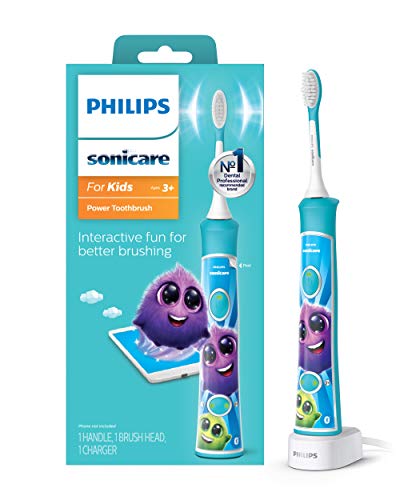
Philips Sonicare for Kids Rechargeable Toothbrush
Best for: Children 3 and up who will accept a brush in their mouth but fight the two minutes
- Built-in two-minute timer with 30-second intervals
- Connects to the free Philips Sonicare kids app with interactive brushing games
- Two intensity settings (low for younger kids, full power as they adjust)
(Affiliate link) · Free shipping on eligible Prime items
(Affiliate link) · Free shipping on eligible Prime items
The one parent in our research who came back to report the fight resolved had bought no mouthpiece at all. A dad who asked whether U-shaped brushes were a gimmick came back two weeks later having bought nothing: “I found making it fun helped… We’ve had multiple days in a row with a solid all teeth getting brushed. We also are using a kids electric with Bluey on it.”
For an adult looking at the AutoBrush because brushing feels like too much work, the equivalent is a light sonic brush with a timer. One owner in the hypermobility community we read picks a Sonicare because it is “light enough that you can hold it with two fingers”. Our best electric toothbrush guide explains the pick below.
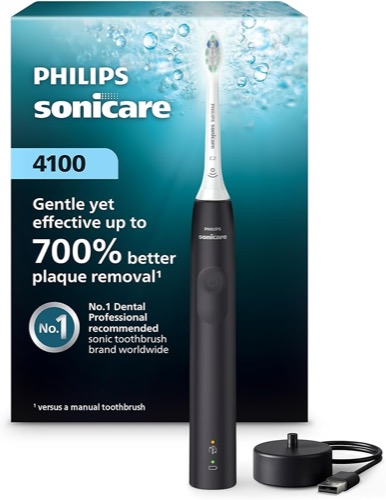
Philips Sonicare 4100 Rechargeable Electric Toothbrush
Best for: Adults who want the brush to do the motion and keep the time for them
- Pressure sensor that pulses when you press too hard
- Two-minute timer with 30-second quadrant pacer
- Accepts every Sonicare click-on head
(Affiliate link) · Free shipping on eligible Prime items
(Affiliate link) · Free shipping on eligible Prime items
As of September 2026 Amazon sells the 4100 through a newer bundle listing of the same handle, 4.5 stars on 582 ratings, where the listing it replaced had gathered about 23,000.
Adults: Sensory Needs and Limited Grip
These are two different cases, and the evidence treats them differently.
Sensory and mental-health barriers. The strongest owner testimony anywhere in our research comes from autistic adults for whom brushing had stopped for months or years. One wrote that after two years with the AutoBrush, their “hygienist complimented my teeth, and my gums didn’t even hurt!” For someone going from no brushing to daily brushing, a mouthpiece brush that feels tolerable is a real improvement, and for a nylon-bristled brush the research above supports “better than nothing.” Owners warn about the bulk and the gag reflex. A three-sided manual brush comes up in the same communities as a quieter alternative for people who cannot stand a motor.
Limited grip, strength or reach. Here the case is weaker than the marketing suggests. Across 50 threads in disability, multiple sclerosis and hypermobility communities, we found nobody who owned a U-shaped brush. What people there say works is sitting down with elbows supported, a grip aid on an ordinary brush, or a smaller, lighter brush. The research is thin and points both ways. In a four-week home-use trial, 15 people with Down syndrome (mean age 31) using a mouthpiece brush unassisted did no better than with an oscillating brush, and the authors called plaque control with both “unsatisfactory” (Clinical Oral Investigations, 2025). They call for studies of caregiver-assisted use, and for better-fitting mouthpieces. A smaller, non-randomised pilot in a long-term care home had residents aged 38 to 82 use a different countertop automatic brush, the Willo, daily for three weeks; it reduced plaque and gingivitis significantly more than their regular brushing had, though about half of them did not want to switch (Special Care in Dentistry, 2024). One commenter flaired as a general dentist does carve out “people with severe hand mobility issues” as the group an AutoBrush suits, and Consumer Reports opens its review with a staff member in that position who values the independence it gives her.
Under 3 and Toothpaste
Under 3. The smallest AutoBrush is sold for ages 3 to 5. For a toddler who bites the brush, a small sonic brush built for ages 1 to 3, such as the Papablic toddler brush (Affiliate link), is sold for that age, and our best toddler toothbrush page covers the options and the technique.
How much toothpaste? Nobody in 122 threads answered this, and it matters. The ADA recommends a smear of fluoride toothpaste the size of a grain of rice for children under 3 and a pea-sized amount from 3 to 6. Consumer Reports describes the AutoBrush instructions as “three dollops of paste to the top and bottom of the mouthpiece”. If your child cannot yet spit reliably, ask their dentist how to square those two before you start.
Who Is Answering This Question Online
Part of the reason this question is hard to research is that the people answering it often have something to sell. In the threads we read, an account named for the company (“we offer smaller-sized brush heads”) answered a parent in a dental advice community and described the brush as “approved” by the ADA; a commenter introducing themselves as the AutoBrush founder replied to a lukewarm owner review; a seller answered a parent’s question as a fellow parent; and the top-voted reply in the largest toddler thread we found was a product link posted 19 months later, which outscored the dentist’s answer. Nine of the 21 threads asking this question got no reply we could read.
The same is true in the other direction: several of the flattest dismissals we read come from one repeat commenter, and the one allied-health professional in the threads, a child’s occupational therapist, suggested trying one.
None of that makes the product bad. It does mean the most visible answers are not neutral ones. We are not neutral either: the two Sonicare brushes and the toddler brush above are affiliate links, and we earn nothing if you buy an AutoBrush. That is why every study and thread here is linked or described closely enough for you to check.
Evidence Receipt
- ADA Seal: read on the ADA’s own listing in September 2026; its operative sentence is quoted above.
- Consumer Reports, June 2025: we read the free portion (how the brush works, the ADA’s statement, the description of the company-funded studies). Its tester verdict is for members only, so we do not characterise it.
- Eight independent studies, 2020 to 2025: all linked above; abstracts read on PubMed, the 2020 paper in full. Three tested the nylon Y-Brush, three tested silicone-bristled units, one does not state the material in its abstract, and one was a care-home pilot of a different countertop machine. None tested the AutoBrush.
- What a normal powered brush buys you: the 2014 Cochrane review found powered brushes reduced plaque by 11% at one to three months against manual brushing.
- Forum research: 122 Reddit threads across 11 communities over five years, read as archive copies. Professional status on Reddit is self-described; where we name a profession it is the commenter’s own statement or the flair recorded on their comment, and all of it is anecdote.
- Prices: about $89 for either AutoBrush model and about $35 for the Sonicare for Kids at our September 2026 reads. We do not link the AutoBrush: its listings sit under the review count we require before recommending a product.
FAQ
Q: Is the AutoBrush actually ADA approved? A: It is ADA Accepted, which is the term the ADA uses. The Seal means the ADA’s scientific council reviewed data the company submitted and found the brush safe and effective at removing plaque and helping with gingivitis when used as directed. It does not compare the brush with an ordinary one.
Q: Do U-shaped toothbrushes work? A: Silicone-bristled ones performed no better than not brushing in the trials that tested them. Nylon-bristled ones do remove plaque, but in independent trials they removed less than an ordinary manual brush unless used for longer than the maker’s instructions, and they tend to miss the gum line and back molars.
Q: Can my child use an AutoBrush instead of a regular toothbrush? A: We would not. Most of the owners who described their routine keep a regular brush in it, and the dental professionals who are open to the AutoBrush describe it as a fallback for someone who cannot manage anything else.
Q: Is the AutoBrush good for autistic kids or adults? A: It can be, if a normal brush is not happening at all. Owners with sensory difficulties describe it as the thing that got them brushing again. Expect a bulky mouthpiece, and keep some ordinary brushing in the week if you can.
Q: Does it work with crooked teeth or before braces? A: Probably less well. The mouthpiece is a fixed shape, and the trials that measured fit found it missed the gum margin and back molars even in ordinary mouths.
Q: What is a cheaper way to make brushing less of a fight? A: A kids’ electric brush with a timer and an app or a favourite character, brushing videos, and taking turns. Those are the fixes parents in our research reported working, and they cost a fraction of the price.