
The Short Answer
Gum recession does not reverse on its own. Once gum tissue pulls back from a tooth, it does not grow back naturally, and untreated recession tends to keep creeping further over time. What treatment can do is slow or stop the progression and, in the right cases, cover the exposed root surgically.
The right approach depends on two things: how severe the recession is, and what is driving it. Mild cases are usually managed without surgery through a professional deep cleaning, better brushing technique, and fixing the underlying cause. Moderate to severe cases—or a desire to have an exposed root physically covered—are typically referred to a periodontist for a gum graft consultation, according to the Cleveland Clinic.
Many people arrive here stuck between two unsatisfying answers from the dental chair: wait until it is bad enough to graft, or pay for surgery now. The useful middle ground is knowing how to gauge your own severity, identify the cause, stop the bleeding (literally and financially), and understand when surgery is warranted. That is what this guide covers.
First, How Bad Is It Really?
By far the most common worry we see people voice is some version of the same question: how bad is my recession, and do I actually need a graft? A lot of that anxiety comes from staring at 1 to 3 millimeters of exposed root and assuming the worst. It helps to know how clinicians actually grade recession.
Periodontists use one of two systems. The older Miller classification sorts recession into Classes I through IV; the newer Cairo system uses recession types RT1 to RT3. Both are described in the periodontal literature (Miller and Cairo classification review, PMC). You do not need the jargon. The single most useful question underneath both systems is this: is the gum and bone between your teeth still intact, or has it been lost too?
That one distinction largely predicts whether a surgeon can fully cover the root again. When the tissue between the teeth is intact, full root coverage is usually predictable; as recession deepens and that between-teeth tissue is lost, the odds of complete coverage drop (Treatment of Gingival Recession review, PMC).
| How clinicians grade it | In plain terms | Can the root be fully re-covered? |
|---|---|---|
| Miller I / Cairo RT1 | Recession hasn’t reached the fold where gum meets cheek; tissue between teeth is intact | Usually predictable |
| Miller II / Cairo RT1 | Recession reaches or passes that fold; tissue between teeth still intact | Often achievable |
| Miller III / Cairo RT2 | Some tissue or bone between the teeth has been lost | Partial coverage likely; full is less predictable |
| Miller IV / Cairo RT3 | Severe loss between the teeth, or teeth are out of position | Full coverage usually isn’t achievable |
Your dentist also measures pocket depth—how deep the space is between gum and tooth when probed, which is a different measurement from how far the gum has receded. For context, a healthy pocket measures about 1 to 3 millimeters when checked with a thin probe, per the Cleveland Clinic. Gingivitis is judged mainly by whether the gums bleed when probed, not by depth alone, under the 2017 World Workshop definitions (Chapple et al. 2018); a pocket of 4 millimeters or deeper, especially one that bleeds, falls outside that gingivitis definition unless swollen gums have created a false pocket, and needs a dentist’s assessment; periodontitis is diagnosed from attachment and bone loss rather than from a single depth number (Papapanou et al. 2018). Low numbers on both measures sit at the more reassuring end, but only a clinician’s read tells you where you actually stand.
When is it urgent? Recession alongside loose or “wiggly” teeth or signs of bone loss warrants a prompt evaluation rather than watchful waiting. Significant pain is worth flagging too—recession itself usually isn’t painful, so pain often points to a different problem that needs a look. Mild recession that isn’t actively advancing, on the other hand, is often simply monitored, with the focus on removing whatever is driving it. Only a dentist or periodontist can classify your specific case, but walking in with this framework helps you ask sharper questions and make sense of a second opinion.
Why Are Your Gums Receding? Fix the Cause First
Recession becomes more common with age. The Cleveland Clinic notes that roughly 88% of people over 65 have it on one or more teeth. But age itself is not the mechanism; it is the accumulated effect of specific, often fixable causes. Getting the cause right matters because treating recession without addressing what caused it tends to mean it comes back.
The common drivers, per the Cleveland Clinic and a peer-reviewed periodontal review (PMC), are:
- Gum (periodontal) disease — bacterial infection that destroys the gum and supporting bone, and a common cause.
- Brushing too hard — heavy pressure or a hard-bristled brush physically wears the gum line back over time.
- Plaque and tartar buildup — untreated, these feed the inflammation that drives recession.
- Tobacco use — smoking and chewing tobacco contribute to gum damage.
- Clenching and grinding — persistent excessive force on teeth (occlusal trauma) is linked to the fiber strain and thin-bone changes that can precede recession (PMC). Dental professionals in online communities frequently flag grinding, and its overlap with sleep issues, as an overlooked contributor.
- Thin gum tissue — some people are simply born with a thin gum type that is more vulnerable.
- Uncontrolled diabetes and some systemic conditions — named in the periodontal literature among the modifiable factors that leave gum tissue more vulnerable to recession (PMC).
- An aberrant frenum — the small band of tissue connecting lip to gum can pull on the gum line when it attaches too close to it.
- Tooth position and past orthodontics — crooked teeth load the gums unevenly. Worth saying clearly for anyone carrying guilt about braces: moving teeth does not cause recession on its own, but moving them through thin bone can set up the conditions for it (PMC).
Fixing the cause is the part that generic advice skips. If you brush hard, the fix is technique and a gentler brush; if you clench, it is a night guard; if it is gum disease, it is a professional cleaning and bacterial control. We link the specific tools for each below.
Can Receding Gums Grow Back?
This is the question people most want a yes to, and the answer is no. “Unfortunately, receding gums can’t grow back,” as the Cleveland Clinic puts it. Gum tissue does not regenerate on its own once it has receded, and home remedies marketed as “regrowing” gums—oil pulling, aloe, green-tea rinses—should not be relied on to regrow lost tissue.
Left alone, recession also tends to progress; the periodontal literature describes untreated recession drifting further over time even in motivated patients (PMC). So the realistic goal is not regrowth. It is to stop or slow the progression through better daily care and professional treatment, and, where coverage is wanted and feasible, to have a surgeon graft new tissue over the root.
Non-Surgical Treatment: Where Most People Start
For mild to moderate recession, especially when gum disease is involved, treatment usually begins without surgery.
Scaling and root planing (a deep cleaning) is “usually the first line of treatment for mild to moderate gum disease,” per the Cleveland Clinic. Done under local anesthesia, it removes the bacteria-laden plaque and tartar from below the gum line that fuel the disease driving recession.
One point defuses a very common panic: your gums can look more receded right after a deep cleaning. That is expected. As the Cleveland Clinic explains, “if your gums were swollen before your deep cleaning, they’ll shrink back once the infection is gone. As a result, you might see a little bit more of your teeth roots.” The cleaning did not cause the recession; it revealed what inflammation was hiding.
For the sensitivity that comes with exposed roots, a dentist can apply fluoride varnish or other desensitizing agents, and can sometimes camouflage an exposed root with tooth-colored composite bonding (Cleveland Clinic). Bonding covers the root and eases discomfort, but it does not regenerate lost tissue. Day to day, a toothpaste made for sensitivity and gum health can ease the discomfort—see our best toothpaste for gum recession roundup for options.
If the recession is tied to an aberrant frenum, a minor procedure to release it (a frenectomy) can remove the pull. Where clenching or an uneven bite is the driver, your dentist may recommend a night guard to protect the teeth and ease the clenching forces, or an orthodontic adjustment to even out the load. The theme is consistent: non-surgical treatment works best when it is aimed at the actual cause.
Surgical Treatment: When a Graft Is Warranted
When recession is moderate to severe, when an exposed root needs physical coverage, or when it keeps progressing despite good non-surgical care, a periodontist may recommend surgery. It is worth hearing the counterweight to graft-heavy marketing: periodontists and dental professionals commonly note that grafting is reserved for more severe or symptomatic recession, that recovery is not always comfortable, and that it is not done routinely for every minor spot.
The main options:
- Connective tissue graft (CTG) — tissue taken from under the surface of the palate and placed over the root, usually combined with a flap of your own gum. It is considered the most predictable approach for covering roots (PMC).
- Pedicle or rotational flap — gum near the affected tooth is partially freed and moved over the root, keeping its own blood supply. These flap techniques are the most widely used for treating recession (PMC).
- Free gingival graft (FGG) — tissue taken directly from the palate surface. It is rarely the first choice purely for root coverage, given lower predictability and a poorer color match (PMC).
- Pinhole surgical technique (PST) — a newer, minimally invasive method that repositions existing gum through a single 2-to-3-millimeter entry point, with no releasing incisions or sharp dissection and, where a bioresorbable membrane is used, no sutures (Chao, PubMed). Interest in less-invasive methods grew partly from the discomfort of the secondary donor site that traditional grafts require, though connective tissue grafting remains the more established, predictable option, and PST is not suited to every case.
- Guided tissue regeneration — membranes used to rebuild lost tissue and bone. It has been proposed for recession defects, but its routine use is not currently recommended (PMC).
You may also see laser treatments such as LANAP marketed for gum problems. Their role in treating recession specifically is less established than grafting, so weigh any such offer against the options above and ask the periodontist what evidence supports it for your case.
A single graft typically takes about an hour, and recovery generally runs one to two weeks, during which you eat soft foods and keep off the surgical site, per the Cleveland Clinic. One point echoed across the research: pinning down and treating the cause matters as much as the graft itself, since fixing the surface once does not keep it stable if the driver is still active—which is why the at-home steps below still matter even after a graft.
What Does Gum Recession Treatment Cost?
Cost is where a lot of people get stuck. We found no dental authority that publishes a fixed price, and the range is wide: a deep cleaning is a modest expense; a gum graft is a bigger one. What you pay depends on the procedure, how many teeth or sites are involved, the graft type, your geography, and your insurance.
For rough planning, patients in dental communities commonly report gum-graft quotes running from several hundred to a few thousand dollars per site, with a couple of thousand dollars per site a frequently cited midpoint. Treat those as anecdotal signposts from other patients, not a quote, and get an itemized estimate from your own periodontist.
On insurance: a graft may be partially covered when it is deemed medically necessary, but dental plans cap what they pay each year through an annual maximum, so a larger bill can outrun the coverage. It is worth reading your plan’s periodontal benefits before you schedule, our guide to dental and vision insurance walks through what to check, and if you are uninsured, our emergency dental care without insurance guide covers lower-cost routes.
Your At-Home Toolkit for Stopping Further Recession
Whether or not you have surgery, protecting the gum line you still have is the daily work that keeps recession from advancing. The moves that matter most:
- Switch to a soft-bristled brush and lighten up. The ADA advises a soft-bristled brush and gentle pressure, angled at about 45 degrees to the gum line, which may help reduce the risk of gum injury (ADA). An electric brush with a pressure sensor is a useful retraining aid if you brush hard, see our best toothbrush for receding gums picks.
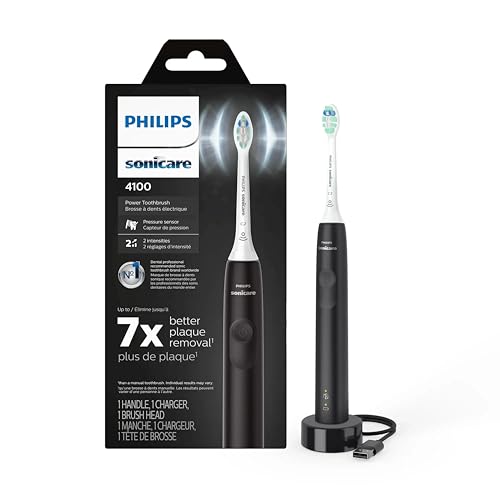
Philips Sonicare ProtectiveClean 4100
Best for: Pressure-sensing brush for receding gums
- Built-in pressure sensor — alerts when you're brushing too hard
- Sonic cleaning designed to be gentle along the gum line
- 2-minute timer with quadrant pacer for thorough coverage
- Compatible with sensitive brush heads for extra comfort
(Affiliate link) · Free shipping on eligible Prime items
(Affiliate link) · Free shipping on eligible Prime items
- Use a toothpaste built for sensitivity and gum health. Pastes whose Drug Facts label lists a sensitivity purpose (printed as “antihypersensitivity” or “antisensitivity”; potassium nitrate, or stannous fluoride in some formulas) target the painful sensitivity to cold, heat, acids, sweets or contact that comes with exposed roots, and the stannous ones also carry a gum-health purpose, more in our best toothpaste for gum recession roundup. A rubber-tip stimulator is another standard piece of the at-home kit, worth a look in our best gum stimulators picks.
- Add a gentle rinse. An alcohol-free or antimicrobial rinse helps control the bacteria behind gum disease without irritating exposed roots, see best mouthwash for receding gums and best mouthwash for gum disease.
- Clean between your teeth daily, gently. Floss, floss picks, or a water flosser all work, the best floss is the one you will use consistently. Where recession has left wider spaces between teeth, an interdental brush earns a place on that list: the European Federation of Periodontology advises interdental brushes for gaps that allow the brush in without trauma (EFP), and a 2019 Cochrane review found interdental brushes may reduce gingivitis more than floss, with the plaque comparison inconsistent (Cochrane, PubMed).
Sizing an Interdental Brush for the Gaps Recession Leaves
Recession rarely opens spaces evenly. The gap beside one molar may take a mid-size brush while your front teeth still only admit floss, so guessing a single size off the shelf usually goes wrong in at least one spot. Dental hygienists handle this with a sizing session: try several color-coded sizes, note which one fits each gap, then commit to only the sizes that fit. A mixed pack replicates that sizing step at home. Follow the same insertion rule the EFP guidance above is built on: the brush should slip in without force, and if a size meets resistance, step down a size or keep floss for that gap.
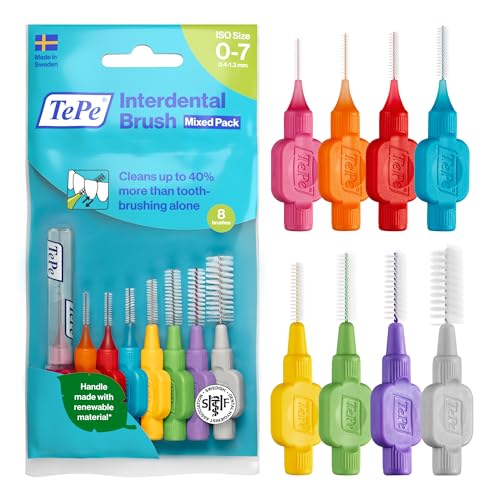
TePe Interdental Brush Original Mixed Pack
Best for: Sizing the gaps recession leaves behind — find your fit, then reorder single sizes.
- Multiple color-coded ISO sizes in one pack
- Plastic-coated wire prevents corrosion and reduces sensitivity
- Slim ergonomic handle
- Used by dental professionals in 60+ countries
(Affiliate link) · Free shipping on eligible Prime items
The mixed pack is $8.99; each color maps to a standardized ISO size, so once you know which colors fit where, you reorder single-size packs of exactly those. Our link goes to the Amazon listing, $8.99 as of this writing, rated 4.3 stars on 13,206 ratings. For how the ISO sizes and colors map, brand by brand, see our interdental brush size chart; for picks, see the full interdental brush guide.
(Affiliate link) · Free shipping on eligible Prime items
- Guard against grinding. If you clench or grind, ask your dentist about a night guard, our best mouth guard for grinding roundup covers the options.
- Quit tobacco, and keep your checkups. Both are among the highest-leverage changes for gum health, and regular visits catch progression early.
If your recession is tied to gum disease specifically, our guides on how to fix gingivitis and how to remove tartar cover the earlier stages worth getting ahead of.
When to See a Dentist or Periodontist
See a dentist promptly once you notice the signs: teeth that look longer, a notch or groove at the gum line, new sensitivity, or visible root. Early intervention improves the outcome.
A recurring frustration is being told the recession is real but that nothing will be done until it is graft-worthy, or getting conflicting recommendations from different dentists. Two things help. First, you can ask directly for a periodontist referral, or find one yourself through the American Academy of Periodontology’s find-a-periodontist tool; periodontists are the specialists who assess and treat recession, and the Cleveland Clinic notes that moderate to severe cases are typically referred to one for a grafting consultation. Second, a second opinion is reasonable when advice conflicts, especially before committing to surgery. Walking in with the severity framework above makes those conversations far more productive.
FAQ
Can receding gums grow back on their own?
No. Gum tissue does not regenerate naturally once it has receded, and the Cleveland Clinic states plainly that receding gums can’t grow back. Non-surgical care can stop further recession, and surgery can cover an exposed root with grafted tissue, but neither is the same as the gum regrowing by itself. Home remedies advertised as regrowing gums are not backed by strong evidence for that claim.
How do I know if I need a gum graft?
It depends mainly on severity and whether you want an exposed root covered. Mild recession is often managed without surgery; moderate to severe recession, or recession that keeps progressing, is where a periodontist may recommend a graft, and the Cleveland Clinic notes those cases are usually referred for a grafting consultation. Whether the tissue between your teeth is intact is a key factor in how completely a root can be covered (PMC). Only a periodontist can make that call for your mouth.
Why do my gums look worse after a deep cleaning?
Because the swelling went down. As the Cleveland Clinic explains, gums that were swollen before a deep cleaning shrink back once the infection clears, so more of the tooth root becomes visible. The cleaning revealed recession that inflammation was masking rather than causing it, and it is a normal part of healing.
How much does a gum graft cost?
There is no single price. Cost varies widely by the type of graft, the number of sites, your location, and your insurance, and we found no dental authority that publishes a fixed figure. Patients frequently report quotes ranging from several hundred to a few thousand dollars per site. Dental insurance may cover part of a medically necessary graft but caps annual payouts, so check your periodontal benefits, and if coverage falls short, a dental discount plan is one way to reduce the out-of-pocket amount.
Did my braces cause my gum recession?
Not by themselves. Moving teeth does not cause recession on its own, but moving them through thin bone can create conditions that predispose the gum to recede (PMC). If you had orthodontic treatment and later noticed recession, the past movement may be one contributing factor among several, alongside brushing force, gum health, and naturally thin tissue, rather than the sole cause.
What toothbrush should I use for receding gums?
A soft-bristled brush used gently. The ADA recommends soft bristles and light pressure, angled around 45 degrees to the gum line, which may help lower the risk of gum injury. If you tend to brush hard, an electric brush with a pressure sensor helps retrain that habit, our best toothbrush for receding gums roundup covers manual and electric options.
This article is for informational purposes only and does not constitute medical or dental advice. Gum recession severity and treatment vary from person to person; always consult a dentist or periodontist about your specific situation. Cost figures reflect generally reported ranges, not quotes, and vary by provider, location, and insurance.