

Keeping your teeth clean with braces is, to put it mildly, a challenge. Brackets, wires, and bands create dozens of tiny crevices where plaque loves to hide, and a standard manual toothbrush often isn’t up to the task. That’s where a good electric toothbrush comes in. According to the American Dental Association (ADA), either manual or powered toothbrushes can be used effectively, and people with dental appliances like braces “may find a powered toothbrush easier to use”. NHS guidance on braces and orthodontics emphasizes the importance of thorough oral hygiene during treatment to prevent complications. To round out your orthodontic care routine, pair this with the best toothpaste for braces and the best mouthwash for braces. For the general question of which electric toothbrush to buy, our electric toothbrush guide covers both brands across every price tier.
Much of the community discussion we researched comes from adults in treatment, and their priorities differ from a parent’s shopping list: a brush that is gentle on adjustment-day soreness, not too loud, and durable enough to outlast a treatment measured in years. We read the clinical sources cited below, the Amazon listings, and braces and aligner community threads to find the best electric toothbrush for braces in 2026, whether you’re an adult with your first set of brackets or a parent shopping for a teenager. If you’re still weighing your orthodontic options, our comparison of Invisalign vs braces and clear braces vs metal braces can help you make an informed decision.
How We Evaluated
Finding the best electric toothbrush for braces isn’t the same as finding the best electric toothbrush in general. Braces introduce unique challenges: you need a brush that won’t damage brackets, can navigate around archwires, and cleans thoroughly despite all the obstacles in its path. Here’s what we prioritized:
- Brush head size and shape: Smaller brush heads can access the tight spaces around individual brackets. Oral-B’s round heads and Sonicare’s compact heads both have advantages here.
- Pressure sensors: Brushing too hard is one of the most common mistakes people with braces make. A good pressure sensor alerts you before you risk popping off a bracket or irritating swollen gums.
- Cleaning modes: A dedicated “sensitive” or “gentle” mode is extremely helpful during the first few days after an adjustment when your teeth and gums are tender.
- ADA acceptance: We gave preference to brushes on the ADA Seal of Acceptance product list, and we checked each claim against that list rather than the box: the Smart 1500 and Pro 1000 are on it by model name, and one listing here claims a Seal we could not find there.
- Price and replacement head availability: Braces are already expensive. We wanted to recommend brushes across a range of budgets, and we made sure replacement heads are easy to find.
- What braces wearers report: We read braces and aligner community threads for how these brushes hold up through treatment, and we say on the card when a brush has no owner record there.
Evidence Receipt
- Either manual or powered toothbrushes can be used effectively, and people with braces “may find a powered toothbrush easier to use”: ADA Oral Health Topics on toothbrushes
- The Oral-B Smart 1500 and Pro 1000 are listed by model name, and the Ortho brush head is named, under the ADA Seal for Oral-B’s oscillating-rotating-pulsating brushes: ADA Seal listing
- The oscillating-vs-sonic comparison comes from a 2021 systematic review in the International Journal of Dental Hygiene; its limits (P&G funding, professional-brushing studies, no fixed-appliance participants) are stated where we cite it in the buyer’s guide
- Brushing at least twice daily with a soft-bristled brush and fluoride toothpaste protects braces and gum health: Cleveland Clinic on teeth braces
- Thorough oral hygiene during orthodontic treatment prevents complications: NHS guidance on braces and orthodontics
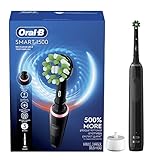
Oral-B Smart 1500 — Best Overall for Braces
Oral-B Smart 1500
Best for: Anyone with braces who wants a reliable, feature-rich brush for far less than the flagship models
- Small round head with 3D cleaning action
- Visible 360-degree gum pressure control that lights up when you brush too hard, per the listing
- Three modes: Daily Clean, Whitening and Sensitive, per Oral-B's product page
- 2-minute timer with 30-second quadrant alerts
(Affiliate link) · Free shipping on eligible Prime items
The Oral-B Smart 1500 is our top overall pick because it pairs the small round head with the most visible pressure warning at this price: a ring the listing says lights up when you brush too hard. The round oscillating-rotating head works around one bracket at a time, and one r/Invisalign owner in our research put it in fewer words: “I prefer the round head from oral b”. Another in the same thread disliked how large Oral-B heads felt, so head shape is a preference, not a verdict. The ADA lists the Smart 1500 by model name under its Seal of Acceptance for Oral-B’s oscillating-rotating-pulsating brushes, and the same entry names the Ortho brush head (ADA Seal listing).
Key features:
- Small round brush head with 3D cleaning action (oscillates, rotates, and pulsates)
- Visible 360-degree gum pressure control that lights up when you brush too hard, per the listing
- Three modes: Daily Clean, Whitening and Sensitive, per Oral-B’s product page (the Amazon listing counts four)
- The pressure sensor also stops the pulsations when you brush too hard, per Oral-B’s product page
- 2-minute timer with 30-second quadrant alerts
Who it’s best for: Anyone with braces who wants a reliable, feature-rich brush for far less than the flagship models cost. It’s especially good for adults and older teens who appreciate the pressure sensor feedback.
Potential downsides: It costs about $23 more than the Pro 1000 below for the same cleaning action, and what that money buys is the visible pressure ring. Oscillating heads are also the louder, rougher-feeling design: one r/Invisalign owner called their Oral-B “so loud compared to the Sonicare”, and another r/Invisalign poster found their spinning Oral-B “way too rough for my teeth right now”.
(Affiliate link) · Free shipping on eligible Prime items
Oral-B Pro 1000 — Best Budget Pick
Oral-B Pro 1000
Best for: Budget-conscious braces wearers and parents buying for a teen
- Listed by model name on the ADA Seal of Acceptance
- Small round brush head ideal for brackets
- Gum pressure control that stops the pulsations when you brush too hard, per the listing
- Three cleaning modes, including a sensitive one, per the listing
- 2-minute timer with quadrant pacing
(Affiliate link) · Free shipping on eligible Prime items
The Oral-B Pro 1000 is the cheapest brush here whose pressure sensor acts for you: its listing describes a gum pressure control that automatically stops the brush pulsations when you brush too hard. The ADA lists it by model name under its Seal of Acceptance for Oral-B’s oscillating-rotating-pulsating brushes, in an entry that also names the Ortho brush head (ADA Seal listing). It carries more than 105,000 ratings at 4.5 stars, the largest review base on this page, and costs about $50.
Key features:
- Listed by model name on the ADA Seal of Acceptance
- Small round brush head ideal for maneuvering around brackets and wires
- Gum pressure control that stops the pulsations when you brush too hard, per the listing
- Three cleaning modes, including a sensitive one, per the listing
- 2-minute timer with quadrant pacing
- Compatible with a wide range of Oral-B replacement heads (including Ortho and Sensitive options)
Who it’s best for: Budget-conscious braces wearers who want proven performance. It’s also an excellent choice for parents buying a first electric toothbrush for a child or teen with braces, since the replacement cost if it’s lost or damaged is low.
Potential downsides: The sensor stops the pulsation rather than lighting up, so it is easy to miss that it fired; the Smart 1500 above shows the same warning as a light. One r/Invisalign owner in our research called their Oral-B “so loud compared to the Sonicare”. The charger is a plug-in stand with no USB option.
(Affiliate link) · Free shipping on eligible Prime items
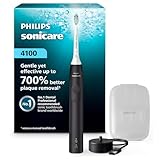
Philips Sonicare 4100 — Best Sonic Option
Philips Sonicare 4100
Best for: People who find oscillating brushes too intense, or anyone who's had a popped bracket
- Pressure sensor that changes the handle's vibration when you press too hard, per the listing
- Two intensity settings, low and high
- 2-minute timer with QuadPacer
- Slim, lightweight handle
(Affiliate link) · Free shipping on eligible Prime items
If you prefer sonic technology over the oscillating-rotating approach, the Philips Sonicare 4100 is our top recommendation for braces. Sonic toothbrushes work differently: the head vibrates side to side at high frequency instead of rotating against one tooth at a time. The systematic review cited in the buyer’s guide below compared the two motions in adults without fixed appliances, so it does not settle which motion handles brackets and wires better. Treat the choice as one of comfort and brushing technique, and ask your orthodontist which they prefer for your hardware. One listing note: as of September 2026 Amazon sells the 4100 as a bundle of the same handle with a brush head case, on a listing carrying about 600 ratings where the one it replaced had gathered about 23,000, so read the star rating as an early one.
Key features:
- Pressure sensor that changes the handle’s vibration when you press too hard, per the listing
- 2-minute timer with QuadPacer
- Slim, lightweight handle that’s easy to hold
- Two intensity settings, low and high
- Takes every Sonicare click-on head
Who it’s best for: People who find oscillating brushes too intense around brackets, or anyone who’s popped a bracket and wants a pressure sensor keeping an eye on how hard they brush. Also great for those who prefer a sleeker, more minimal brush design.
Potential downsides: The brush head is larger than Oral-B’s round heads, which can make it slightly harder to clean around individual brackets. Two intensity settings rather than a named sensitive mode.
(Affiliate link) · Free shipping on eligible Prime items
Philips Sonicare DiamondClean Smart 9500 — Best Premium Choice
Philips Sonicare DiamondClean Smart 9500
Best for: Adults investing in premium orthodontic treatment who want top-tier oral care
- Five brushing modes: Clean, White+, Gum Health, Deep Clean+, Tongue Care
- Three intensity levels per mode
- Pressure-sensor light ring to help avoid bracket pressure
- App-guided brushing with zone tracking, plus USB travel case
(Affiliate link) · Free shipping on eligible Prime items
For those who want every available advantage in keeping their teeth and braces spotless, the Sonicare DiamondClean Smart 9500 is a premium powerhouse. It offers multiple cleaning modes (including a dedicated Gum Health mode) which its listing describes as built for sensitivity and post-dental-procedure care, the setting to reach for when gums are sore after an adjustment.
Key features:
- Five brushing modes: Clean, White+, Gum Health, Deep Clean+, and Tongue Care
- Three intensity levels within each mode
- Pressure-sensor light ring that flags heavy-handed brushing, useful for avoiding pressure on brackets
- A3 Premium All-in-One and C3 Premium Plaque Control heads, a charging glass and a USB travel case in the box, per the listing
- Pairs with the Sonicare app for zone-tracked, personalized brushing guidance
Who it’s best for: Adults who are investing in premium orthodontic treatment (like ceramic or lingual braces) and want a matching level of oral care. Also excellent for anyone dealing with braces-related gum issues who could benefit from the Gum Health mode, which is built for sensitivity and post-procedure care: for more on managing gum inflammation during treatment, see how to fix gingivitis.
Potential downsides: At about $280 at our September read it costs more than five times the Pro 1000, and we found no independent evidence that a premium handle cleans better than its brand’s entry model. That is hard to justify when you are already paying for orthodontic treatment. The larger brush head may require extra patience to navigate around brackets.
(Affiliate link) · Free shipping on eligible Prime items
Bitvae D2 — Best Ultra-Budget Option

Bitvae D2
Best for: Anyone on a tight budget or families with multiple kids in braces
- Sonic vibration technology
- 5 brushing modes including Soft and Gum Care, per the listing
- 60-day battery, per the listing
- 8 brush heads, a travel case and a holder in the box
- No pressure sensor
(Affiliate link) · Free shipping on eligible Prime items
The Bitvae D2 costs under $25 (about $20 for Prime members at our September read), making it the most affordable option on our list by a wide margin, with eight brush heads in the box. Two cautions belong ahead of the praise. Its listing describes no pressure sensor, which is the feature this page ranks first, so it suits someone whose brushing pressure is already under control. And the listing’s title calls it “ADA Accepted”, but a search of the ADA’s Seal of Acceptance product list for the brand returned no results at our September 2026 read, while the same search finds both Oral-B entries above. Treat that claim as the seller’s. If you or your child are new to electric toothbrushes and want to test the waters without a big commitment, it is a reasonable starting point; if an orthodontist has told you to ease off, the Pro 1000 is the cheapest brush here that acts on pressure.
Key features:
- Sonic vibration technology
- 5 brushing modes (White, Clean, Soft, Polish, Gum Care), per the listing
- 60-day battery, per the listing
- No pressure sensor
- Comes with 8 replacement brush heads in the box
Who it’s best for: Anyone on a tight budget, families with multiple kids in braces, or first-time electric toothbrush users who aren’t sure they’ll stick with it.
Potential downsides: Build quality doesn’t match premium brands: the brush may not last as long under daily use. The included brush heads are generic and not specifically designed for orthodontic use, and the listing describes firm bristles at the core of each head with softer ones at the edges, where the ADA’s advice is soft bristles. There is no pressure sensor. We also found no owner reports of this brush in the braces and aligner threads we read, so its case rests on the listing.
(Affiliate link) · Free shipping on eligible Prime items
Philips Sonicare ProtectiveClean 6100 — Best for Sensitive Gums

Philips Sonicare ProtectiveClean 6100
Best for: Anyone with significant gum sensitivity or inflammation from braces
- Three brushing modes: Clean, White, and Gum Care
- Three intensity settings (Low, Medium, High)
- BrushSync technology tracks head wear
- Pressure sensor that warns you and reduces the brush vibrations, per the listing
Not stocked by Amazon (September 2026)
Braces and sore gums go hand in hand, especially in the first few months or after wire adjustments. The Sonicare ProtectiveClean 6100 offers three intensity settings that let you dial back the power on tender days, plus a pressure sensor that, per its listing, warns you and reduces the brush vibrations when you press too hard.
Key features:
- Three brushing modes: Clean, White, and Gum Care
- Three intensity settings (Low, Medium, High) for each mode
- BrushSync technology that tracks brush head wear and reminds you to replace it
- Pressure sensor that warns you and reduces the brush vibrations, per the listing
- Slim, ergonomic handle
Who it’s best for: Anyone experiencing significant gum sensitivity or inflammation from braces. Also a great choice for people who’ve had gum issues (like gingivitis) before getting braces and need an extra-gentle touch.
Potential downsides: At about $130, it costs more than every other pick on this list except the DiamondClean 9500, without matching that model’s five brushing modes. The brush head is still on the larger side for navigating tight bracket spaces. No Bluetooth app connectivity.
Availability, September 2026: Amazon no longer stocks the 6100 itself. At our September 18 read the only offers on the listing were two marketplace resellers at about $209, so the buy button is off this card until it is back at a normal price. For a sonic brush that is gentle on sore gums in the meantime, the Sonicare 4100 above has a pressure sensor and two intensity settings for about $56.
Buyer’s Guide: What to Look For
Choosing the best electric toothbrush for braces comes down to a few key considerations:
Brush Head Size and Type: Smaller brush heads generally work better with braces because they can access the spaces between individual brackets. Oral-B’s round heads have an edge here, but Sonicare’s compact head options work well too. Oral-B sells an Ortho head, which the ADA’s Seal entry for these handles names; Sonicare’s answer is its compact head sizes.
Pressure Sensor: This is arguably the most important feature for braces wearers. Pressing hard is the brushing mistake a toothbrush can actually flag, and the ADA’s advice is soft bristles and gentle pressure. Cleveland Clinic recommends brushing at least twice daily with a soft-bristled brush and fluoride toothpaste to protect braces and keep gums healthy. A brush with a pressure sensor can help you keep that gentle touch consistent, which may save you emergency orthodontist visits. The sensors here do not behave alike: the Pro 1000 stops its pulsations, the Smart 1500 lights up and stops them too, per Oral-B’s product page, the DiamondClean 9500 lights up, the Sonicare 4100 changes its handle’s vibration, and the Bitvae has none. A dental hygienist’s 27-point comment in an r/Invisalign thread we read picked Oral-B’s iO 3 and 4 for exactly this, a light that turns “red if you apply too much (and it stops!)”; our Oral-B model guide covers that tier.
Cleaning Modes: At minimum, look for a Sensitive or Gentle mode. Your mouth will have good days and bad days with braces, and being able to reduce intensity on sore days makes a real difference in brushing consistency.
Timer: The ADA recommends brushing for two minutes, twice a day. A built-in timer with quadrant pacing helps ensure you spend adequate time on every section of your mouth—critical when plaque has so many extra places to hide.
Oscillating-Rotating vs. Sonic: Both technologies are effective. A 2021 systematic review in the International Journal of Dental Hygiene, sponsored by an unrestricted educational grant from Procter & Gamble (the company behind Oral-B), pooled single-brushing studies and found a very small but statistically significant plaque-removal advantage for oscillating-rotating brushes over high-frequency sonic ones. Two limits matter for anyone reading that as buying advice: the advantage came mainly from studies where a professional did the brushing, and in the studies where participants brushed their own teeth the review calls its own data “inconclusive”: the Modified Silness and Löe plaque index found no difference between the brushes (P = .15), while the Rustogi Modified Navy plaque index still favored the oscillating-rotating brush (P = .002). The review also enrolled only adults without fixed orthodontic appliances, so it never tested either motion against brackets and wires. Talk to your orthodontist about which approach they prefer for your specific situation.
Replacement Head Cost and Availability: You’ll likely need to replace brush heads more frequently with braces, since wires can fray bristles faster. In the threads we read, one commenter called replacement heads “a bit pricey” and an aligner wearer went back to a manual brush partly because attachments wore through heads fast. Factor in the ongoing cost and make sure heads are widely available. If you’re not sure which spare heads work with your specific handle, our compatibility guides cover which brush heads fit which Oral-B handles and which heads fit your Sonicare handle.
What Braces Communities Report vs. What the Evidence Supports
The Reddit threads we read for this page include braces and aligner community threads (r/braces, r/Invisalign) alongside the clinical sources above. Three patterns worth knowing before you buy:
| What braces wearers report | What holds up |
|---|---|
| “Every dentist I’ve ever had has told me to use an electric toothbrush” is the strong consensus in aligner and braces threads, and one hygienist notes electric brushes get around brackets and attachments with less effort | Consistent with ADA guidance that people with braces may find a powered brush easier to use, though technique still decides the outcome |
| Bracket pop-offs sometimes get blamed on the electric toothbrush, occasionally by an orthodontist | In those threads, commenters (including one clearly clinically fluent) trace repeated failures to bonding problems, not brushing; a pressure sensor addresses the brushing-force half of the risk |
| A water flosser feels so much easier with braces that some people quietly drop string floss | The communities police this one themselves: one of the most heavily upvoted corrections in the braces threads we researched is that a water flosser does not substitute regular flossing |
FAQ
Can I use an electric toothbrush with braces? Yes. The ADA says either manual or powered toothbrushes can be used effectively, and that people with braces may find a powered toothbrush easier to use. Just be sure to use a soft-bristled brush head and avoid pressing too hard.
Will an electric toothbrush break my brackets? When used correctly, an electric toothbrush should not damage your brackets. The key is to use gentle pressure and let the brush do the work. Models with pressure sensors (like the Oral-B Smart 1500 or the Pro 1000, which stops its pulsations when you press too hard) are especially helpful for preventing bracket damage caused by over-brushing. If your brackets pop off repeatedly and your orthodontist points at the toothbrush, ask about the bond itself: in braces-community threads, commenters (including one clearly clinically fluent) usually trace repeated failures to bonding problems such as moisture contamination during application, and the community consensus in those threads is that a brush used with gentle pressure and a working pressure sensor is not the culprit.
Do adults need a different electric toothbrush for braces than teens? The mechanics are identical, so no. What changes is the weighting. The adults in the threads we read talk about noise, gentleness on adjustment days (a sensitive mode on either Oral-B here, or the Sonicare 4100’s low setting), and a handle that lasts the full multi-year treatment. For a teen, the stronger arguments are a low replacement cost if the brush is lost or damaged (Oral-B Pro 1000, Bitvae D2) and a visible pressure sensor that teaches gentle technique from day one.
How often should I replace the brush head when I have braces? The ADA’s advice is every three to four months, or sooner if the bristles are visibly matted or frayed. With braces, “sooner” is the part that applies: wires and brackets fray bristles faster, and an aligner wearer in our research went back to a manual brush partly because attachments chewed through heads. Check the bristles every few weeks and replace the head when they splay.
Is Oral-B or Sonicare better for braces? Both brands make excellent options. In the threads we read, one owner prefers Oral-B’s small, round head for manoeuvring around brackets, and another calls their Oral-B “so loud compared to the Sonicare”. Sonicare’s heads vibrate instead of rotating, which some wearers find more comfortable on gums left tender by a recent adjustment. The clinical comparison of the two motions in our buyer’s guide was run in adults without fixed appliances, so it comes down to personal preference and your orthodontist’s recommendation.
Should I use a special brush head for braces? It’s a good idea. Oral-B offers an Ortho brush head specifically designed for braces, and Sonicare’s compact brush heads work well around orthodontic hardware. Specialty heads can reach areas that standard heads might miss.
Do I still need to floss if I use an electric toothbrush with braces? Absolutely. No brush head cleans between teeth, and the braces communities police this one themselves: one of the most heavily upvoted corrections in the threads we read is that a water flosser does not substitute regular flossing. With braces, consider using a floss threader, orthodontic flosser, or water flosser to clean between teeth and under wires where your toothbrush can’t reach. A water flosser helps flush debris from around brackets and under the archwire, as an addition to floss rather than a replacement.
Our Methodology
At Dental Roundup, we take a research-first approach to every recommendation. For this roundup of the best electric toothbrush for braces, here’s how we arrived at our picks:
-
Listing reads: Sensor, mode, battery and box-contents claims come from reads of the Amazon listings our links point at, most recently in September 2026, and say “per the listing” where the claim is the seller’s.
-
ADA standards: We checked each brush against the ADA’s own Seal of Acceptance product list rather than the packaging, and we say so where a listing’s ADA claim does not appear there.
-
Clinical evidence: We consulted published dental research comparing oscillating-rotating and sonic brushing technologies, and the buyer’s guide notes where that evidence was gathered in people without fixed appliances rather than in braces wearers.
-
User feedback: We researched discussion threads from braces and aligner communities (r/braces, r/Invisalign), saved with this page’s research notes.
-
Feature analysis: We evaluated each brush on the criteria that matter most for braces wearers: brush head size, pressure sensors, cleaning modes, timer functionality, and replacement head costs.
-
Price-to-value assessment: We ensured our list includes options across every budget, from under $25 to a premium model at about $280, so every braces wearer can find an appropriate fit.
We do not accept payment or free products from manufacturers in exchange for reviews. Our recommendations are based on the research described above. Some links in this article are affiliate links, which means we may earn a small commission if you make a purchase—at no extra cost to you. This helps support our editorial work.