If your periodontist just told you to switch to an electric toothbrush, you’re facing a wall of options that all claim to be “great for gum health.” The reality is more specific: periodontal disease means your gums are already inflamed, possibly receding, and definitely more vulnerable to damage from brushing too hard. The wrong electric toothbrush (or even the right one used incorrectly) can accelerate the problem. An 11-year cohort study in the Journal of Clinical Periodontology followed 2,819 adults and found that electric toothbrush users had less progression in both mean probing depth (0.09 mm less) and attachment loss (0.19 mm less), and retained 19.5% more teeth than manual brushers. But the feature that matters most for periodontal patients isn’t the brushing mode or the app: it’s the pressure sensor. We compared models specifically for how well they protect compromised gum tissue while still removing the plaque and biofilm that drive periodontal disease. For the general question of which electric toothbrush to buy, our electric toothbrush guide covers both brands across every price tier.
How We Evaluated Electric Toothbrushes for Periodontal Disease
We focused on four criteria specific to periodontal patients:
- Pressure sensor quality: This is non-negotiable. Brushing too hard is the failure mode this page is built around, and inflamed tissue can’t tolerate it. We prioritized brushes with real-time pressure feedback, not just a post-brushing notification.
- Gum care mode: A dedicated mode that reduces brushing speed and intensity for inflamed tissue. Not all models have one, and the ones that do vary in how much they actually change.
- Sonic vs. oscillating evidence: A 1997 clinical study comparing Sonicare and Oral-B found Sonicare produced greater probing depth reduction (15.8% vs 7.2%) in periodontitis patients. We weighted this but didn’t exclude oscillating brushes—both types outperform manual brushing.
- Post-SRP compatibility: After scaling and root planing (deep cleaning), gums are especially sensitive. We considered which brushes can be dialed down enough for the recovery period.
In our community research for this page (10 Reddit threads read in full across r/PeriodontalDisease and r/askdentists, August 2026), a self-identified dental hygienist independently lands on our #1 criterion: “The most important feature isn’t always the brand, but whether or not it has a pressure sensor.” The recurring migration story in r/PeriodontalDisease runs Oral-B-to-Sonicare (five separate threads describe Oral-B feeling too harsh on inflamed gums), though one Sonicare switcher reported it “leaves a lot of gunk behind” and considered switching back; and the sharpest technical advice in the pull was about the brush head, not the handle. Our community research analysis covers 1,486 Reddit threads across 209 subreddits, including a dedicated gum-disease section.
Evidence Receipt
- Electric brushing slows periodontal progression over the long term. An 11-year cohort study in the Journal of Clinical Periodontology followed 2,819 adults and found electric toothbrush users had less progression in probing depth (0.09 mm less) and attachment loss (0.19 mm less), and retained 19.5% more teeth than manual brushers.
- Sonic showed the edge on pocket depth in the one periodontitis head-to-head. A 1997 six-month trial in adult periodontitis patients found Sonicare reduced probing depth by 15.8% versus 7.2% for the oscillating Braun Oral-B, with attachment-level improvement the oscillating brush didn’t match.
- Oscillating-rotating has its own review-level evidence. A 2020 JADA systematic review comparing oscillating-rotating brushes with other powered brushes found some evidence they remove more plaque and cut more bleeding sites, sonic models included.
- Both powered types beat manual brushing. The 2014 Cochrane review of powered versus manual toothbrushing pooled 51 trials and found powered brushes reduced both plaque and gingivitis, with brush type not explaining the differences in results.
- Sonic fluid dynamics reach beyond the bristles. In laboratory testing, the fluid flows a sonic brush drives removed biofilm from surfaces the bristles never touched.
- Brush head replacement cadence. The ADA’s toothbrush guidance is to replace brushes or heads every three to four months, sooner if bristles are matted or frayed, and notes both manual and powered toothbrushes are effective at removing plaque.
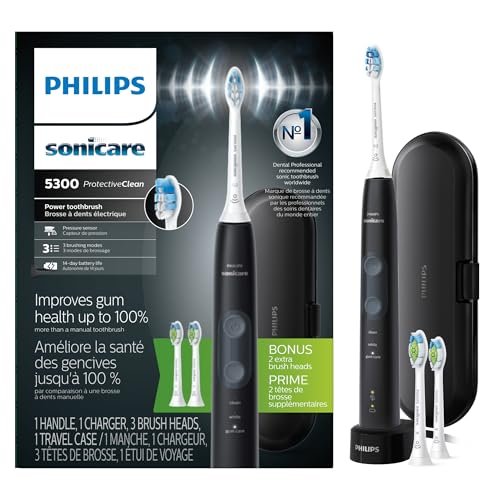
Philips Sonicare 5300: Editor’s Pick
Philips Sonicare 5300
Best for: Most periodontal patients: the best combination of gum care mode, pressure sensor, and sonic technology at a mid-range price
- Dedicated Gum Care mode reduces speed and intensity for inflamed tissue
- Pressure sensor alerts you before you brush too hard
- Sonic action drives cleaning fluid past where the bristles reach
- BrushSync tracks brush head wear for timely replacement
- 14-day battery life for travel and convenience
- +Dedicated Gum Care mode reduces speed and intensity for inflamed tissue
- +Visual pressure sensor alerts you before you brush too hard, per the listing
- +Sonic action drives cleaning fluid past where the bristles reach
- −No app connectivity or brushing tracking
- −Pressure sensor is a binary on/off alert, not the iO's graduated feedback
(Affiliate link) · Free shipping on eligible Prime items
Why We Recommend It
The Sonicare 5300 (sold under the “ProtectiveClean 5300” name on earlier listings) hits the exact sweet spot periodontal patients need: a dedicated Gum Care mode, a pressure sensor, and sonic technology, at about two-thirds the price of the 7300 below. The Gum Care mode isn’t just marketing: Philips describes it as an extra minute of reduced-power brushing to massage the gums.
The pressure sensor matters more here than for typical users. Periodontal patients often compensate for years of plaque buildup by scrubbing harder, which is counterproductive with inflamed or receding gums. The 5300’s listing calls its sensor a visual one: it alerts you when you’re applying too much force. Combined with the fluid flows any powered brush drives, which in laboratory testing removed biofilm from surfaces the bristles never touched, you get effective cleaning without the mechanical trauma. For a deeper comparison of the full Sonicare lineup, see our best Sonicare toothbrush guide.
Key Features
- Three modes: Clean, White, and Gum Care
- Visual pressure sensor, per the listing
- Three intensity settings, per the listing
- BrushSync head replacement reminders
- Compatible with all standard Sonicare click-on heads (use Sensitive or Premium Gum Care heads)
Who It’s Best For
The periodontal patient who wants the clinically-supported benefits of sonic brushing with gum-specific features, without paying about $170 for the 7300’s app coaching they may not use. Also excellent for post-SRP recovery when you switch to the gentler Gum Care mode.
Potential Downsides
No app connectivity or brushing tracking: if you want data on your brushing patterns, you’ll need the Sonicare 7300 or an Oral-B iO model. The pressure sensor is effective but binary (on/off alert) rather than the graduated feedback you get from the iO’s Smart Ring. Some users find that even the Gum Care mode is too intense immediately after deep cleaning; you may need to wait a few days before resuming electric brushing post-SRP. One owner in our forum pull also reported the three modes feel less distinct in the hand than the spec sheet suggests, so buy it for the pressure sensor and Gum Care pattern rather than expecting dramatically different speeds.
(Affiliate link) · Free shipping on eligible Prime items
Oral-B iO Series 7G: Best for Tracking
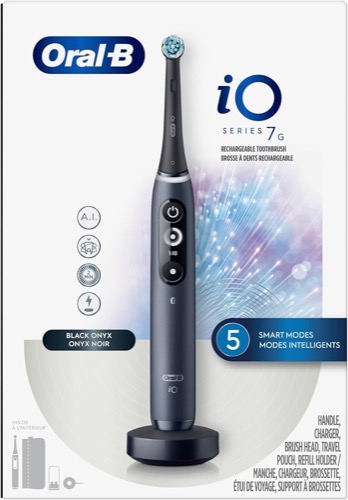
Oral-B iO Series 7G Electric Toothbrush
Best for: Patients who need brushing accountability: the Smart Ring pressure guide and AI-powered app show exactly where you're missing and when you're pressing too hard
- 360° Smart Ring changes color in real-time: green = perfect, red = too hard
- AI-powered app tracks 16 brushing zones and flags missed areas
- 5 cleaning modes including Sensitive and Gum Care
- Linear magnetic drive for smooth, quiet operation
- Interactive display shows mode, timer, and pressure feedback
- +Smart Ring changes color in real time: green for perfect pressure, red for too hard
- +AI-powered app tracks 16 brushing zones and flags missed areas
- +Sensitive and Gum Care modes reduce oscillation intensity for inflamed tissue
- −iO brush heads are proprietary and cost more than standard Oral-B heads
- −Some periodontal patients find the standard iO heads too firm on inflamed gums; budget for the Gentle Care heads
(Affiliate link) · Free shipping on eligible Prime items
Why We Recommend It
The iO Series 7G’s Smart Ring is the most informative pressure sensor system on this page. Instead of a simple alert when you push too hard, the LED ring around the brush handle changes color in real-time: green means ideal pressure, red means too much. If you’ve been told you brush too hard, this graduated feedback trains better habits faster than a binary beep or pulse.
The AI-powered app takes this further by mapping your mouth into 16 zones and tracking whether each one gets adequate coverage. Periodontal disease doesn’t affect all areas equally (you may have deeper pockets in specific quadrants), and the app data can help you and your periodontist see whether your home care is reaching the problem areas. The Sensitive and Gum Care modes reduce the oscillation intensity for use on inflamed tissue. For a detailed comparison of all iO models, see our Oral-B electric toothbrush guide.
Key Features
- Smart Ring with real-time pressure color coding
- AI brushing recognition tracks 16 zones via app
- 5 modes: Daily Clean, Intense Clean, Whiten, Sensitive, Gum Care
- Linear magnetic drive: smoother and quieter than older Oral-B motors
- Interactive OLED display on handle
Who It’s Best For
Periodontal patients who need accountability and data. If your periodontist keeps flagging specific areas that aren’t improving, the zone-by-zone tracking can reveal whether it’s a technique problem. Also ideal for anyone who knows they brush too hard but can’t break the habit without real-time visual feedback.
Potential Downsides
On pocket depth specifically, the head-to-head trial still favors sonic; the evidence section below weighs both sides. In our community research, the recurring r/PeriodontalDisease complaint about the iO family was bristle firmness rather than the motor: posters with inflamed gums reported the standard iO heads felt too rough, with one settling in only after switching to the sensitive heads, so treat that swap as part of the purchase price. The iO brush heads are proprietary and more expensive than standard Oral-B heads. At around $217, it’s a significant investment, though the Series 5 offers the same AI pressure sensing at around $120.
(Affiliate link) · Free shipping on eligible Prime items
Philips Sonicare 7300: Best App-Coached Sonic
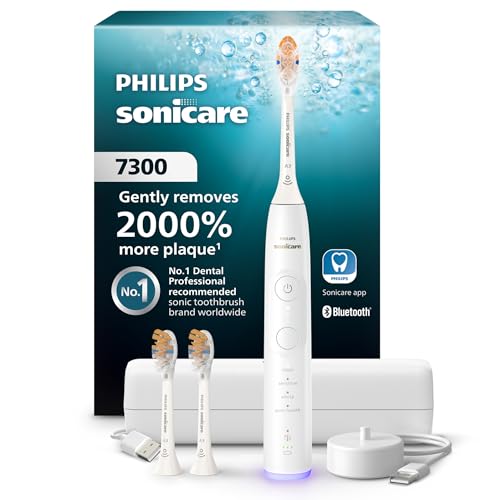
Philips Sonicare 7300
Best for: Periodontal patients who want a Gum Health mode, a gentler Sensitive mode and app coaching to rebuild technique after a diagnosis
- 4 modes: Clean, Sensitive, Gum Health and White, each at 3 intensity levels
- Visual pressure sensor: a light ring at the base warns when you press too hard
- Sonicare app pairing with guided brushing and habit coaching
- Philips-rated 62,000 bristle movements per minute
- BrushSync tracks head wear, pressure and brushing time; up to 21-day battery with a charging travel case
- +Gum Health and Sensitive modes at three intensities give inflamed gums a gentler setting than a single Gum Care mode
- +App coaching adds structure while new brushing habits form after a diagnosis
- +Three A3 heads, a charging travel case and a two-year warranty in the box
- −New for December 2025, so about 910 ratings so far, the third-smallest base on this page
- −About $170 with no wall adapter in the box; a pressure sensor only, no scrubbing or coverage tracking
(Affiliate link) · Free shipping on eligible Prime items
Why We Recommend It
The Sonicare 7300 replaces the ExpertClean 7500 in this slot. Amazon no longer sells the 7500 as a single handle in the US, and Philips’ current lineup, listed since December 2025, takes its place. What the 7300 keeps is the part that matters for periodontal patients: a dedicated Gum Health mode, now joined by a Sensitive mode, with three intensity levels for each, so a flare-up can be brushed on the gentlest setting without dropping the two-minute routine. Combined with Sonicare’s sonic action (which showed the clinical evidence edge in a 1997 trial on reducing probing depth in periodontitis), this is the most full-featured sonic option for serious periodontal management.
The app is the other reason it earns a slot here. Pair the brush and it walks you through guided brushing and coaching, which is most useful in the first months after a diagnosis when a hygienist has asked you to change technique. Be clear about what it does not do: the 7300 has a single visual pressure sensor, a light ring at the base. It does not detect scrubbing or map coverage; on this page, that kind of tracking is the Oral-B iO Series 7G’s job.
Key Features
- Four modes (Clean, Sensitive, Gum Health, White) at three intensity levels
- Visual pressure sensor light ring
- Sonicare app with guided brushing and coaching; BrushSync head-wear tracking
- Up to 21 days per charge, with a charging travel case and charging stand
- Three A3 Premium All-in-One heads in the box; two-year manufacturer warranty
Who It’s Best For
Patients newly diagnosed with periodontitis who want a gentler mode ladder and some coaching while they rebuild habits, and Sonicare loyalists who want the Gum Health mode without stepping up to DiamondClean prices.
Potential Downsides
It is a new listing, first available in December 2025, with around 910 ratings, so its 4.5-star average is an early read rather than a settled one. At about $170 it sits above the 5300 on features and price, and if you will not use the app or the Sensitive mode, the 5300 covers the core gum-care features for about two-thirds of the money. The charging stand and case ship without a wall adapter. And it is not a tracking brush: if you want data to show your periodontist, the iO Series 7G on this page does that.
(Affiliate link) · Free shipping on eligible Prime items
Oral-B iO Series 5: Best Oscillating
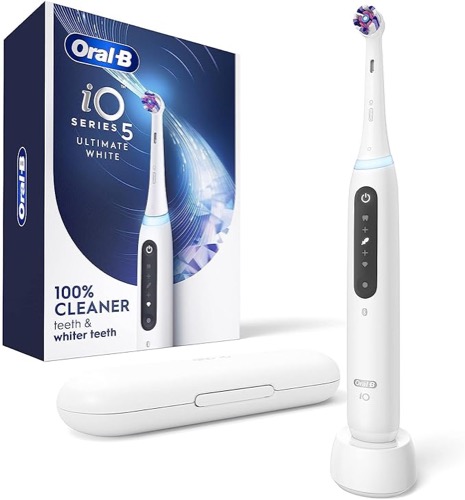
Oral-B iO Series 5
Best for: Patients who prefer the oscillating-rotating feel: 5 cleaning modes including Sensitive and Gum Care with iO's linear magnetic drive for precise pressure control
- 5 cleaning modes: Daily Clean, Intense, Whiten, Sensitive, Gum Care
- AI-powered pressure sensor with visual feedback
- Linear magnetic drive for smooth oscillating action
- Included travel case for protection on the go
- Interactive display shows mode and pressure alerts
- +Sensitive and Gum Care modes meaningfully reduce brushing intensity for inflamed tissue
- +Linear magnetic drive delivers smoother, quieter, more consistent pressure control
- +Brings AI pressure sensing to a more accessible price point than the Series 7G
- −Only 400 reviews, a smaller feedback base than other products on this page
- −Lacks the Smart Ring's graduated color feedback; alert is a simpler notification
(Affiliate link) · Free shipping on eligible Prime items
Why We Recommend It
Not everyone prefers sonic brushing, and the clinical evidence, while slightly favoring sonic for pocket depth, puts oscillating-rotating models squarely inside the class of powered brushes that outperform manual brushing on both plaque and gingivitis. Across the 51 trials that Cochrane review pooled, brush type did not explain the differences in results. The iO Series 5 brings Oral-B’s premium iO platform (linear magnetic drive, AI pressure sensing, five cleaning modes) to a more accessible price point than the 7G.
The Sensitive and Gum Care modes meaningfully reduce the brush’s intensity, making them appropriate for inflamed periodontal tissue. The linear magnetic drive is a significant upgrade from older Oral-B motors: it’s smoother, quieter, and delivers more consistent pressure control. For periodontal patients who’ve used and liked Oral-B in the past, the Series 5 is the entry point into the iO system with all the gum-protective features that matter.
Key Features
- iO linear magnetic drive motor
- AI-powered pressure sensor
- 5 cleaning modes including Sensitive and Gum Care
- Travel case included
- Compatible with iO brush heads (Ultimate Clean, Gentle Care)
Who It’s Best For
Periodontal patients who prefer the feel of oscillating-rotating brushing over sonic vibrations, and want the iO platform’s pressure sensing without the premium price of the Series 7G or 9. Also a good choice for patients who want both a daily and a gentle cleaning mode in one device.
Potential Downsides
With only 400 reviews, the iO Series 5 has a smaller feedback base than the other products on this page. The community caveat for the whole iO family applies here too: the one poster in our pull who stayed happy with an iO brush credited switching to the sensitive heads early. It lacks the Smart Ring color feedback of the 7G: the pressure alert is a simpler notification rather than a graduated visual guide. No app tracking means you won’t get zone-by-zone coverage data.
(Affiliate link) · Free shipping on eligible Prime items
Philips Sonicare 4100: Best Budget
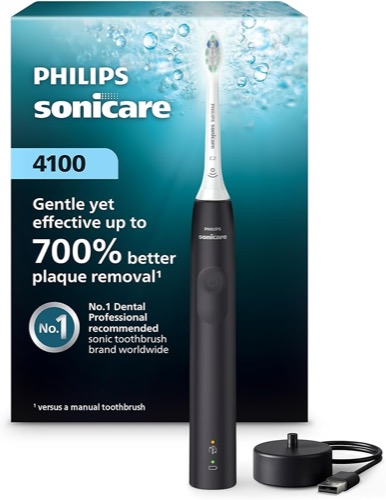
Philips Sonicare 4100 Series
Best for: Periodontal patients on a budget: a pressure sensor at the lowest price point from a major brand, without the gum care mode but with Sonicare's sonic cleaning
- Pressure sensor alerts you when brushing too hard
- Sonic technology with two intensity settings, per the listing
- 2-minute timer with QuadPacer for even coverage
- 14-day battery life
- Compatible with all standard Sonicare brush heads
- +Pressure sensor at the lowest price point on this page, from a major brand
- +Sonic action with two intensity settings, per the listing
- +14-day battery life
- −No dedicated Gum Care mode; only the standard Clean mode is available
- −No app connectivity or brushing tracking
(Affiliate link) · Free shipping on eligible Prime items
Why We Recommend It
The Sonicare 4100 shows you don’t need to spend $150+ to get the feature this page weighs most: a pressure sensor. At the lowest price point on this page, it delivers Sonicare’s sonic action with a sensor that alerts you before you damage inflamed tissue. For periodontal patients who’ve been told to switch from manual but don’t want a premium investment, this is the entry point. One note on its card: as of September 2026 Amazon sells the 4100 as a bundle of the same handle with a brush head case, at about $56, and that listing carries about 600 ratings where the one it replaced had gathered about 23,000.
The 4100 only has one cleaning mode (Clean), which means no dedicated Gum Care mode. But the pressure sensor compensates: the most common brushing mistake periodontal patients make is pressing too hard, and the 4100 catches that. Combined with a soft or extra-soft Sonicare head (sold separately), it covers this page’s core criterion at a fraction of the premium price. For more budget-friendly options across brands, see our budget electric toothbrush guide.
Key Features
- Pressure sensor for over-brushing prevention
- Sonic technology; Electric Teeth puts this handle at 31,000 movements per minute, half the 62,000 of the older ProtectiveClean 4100
- 2-minute smart timer with 30-second QuadPacer
- 14-day battery life
- Compatible with all Sonicare snap-on brush heads
Who It’s Best For
Periodontal patients on a budget who need the pressure-sensing safety net without paying for smart features. Also a good option for patients managing multiple health costs alongside periodontal treatment: effective gum care shouldn’t require a premium price tag.
Potential Downsides
No Gum Care mode: there is one cleaning mode, the standard Clean. Per the listing you do get two intensity settings, so you can drop to the lower one, but you cannot pick a gum-care programme the way the Sonicare 5300’s modes allow. No app connectivity or brushing tracking. The brush head it ships with is the standard C2 Optimal Plaque Control—periodontal patients should consider upgrading to the Premium Gum Care or Sensitive heads (additional cost). Per the listing, a replacement reminder tells you when the head is due, so head wear is the one thing you do not have to judge by eye.
(Affiliate link) · Free shipping on eligible Prime items
Buyer’s Guide: How to Choose an Electric Toothbrush for Periodontal Disease
The Pressure Sensor Is Non-Negotiable
If you take one thing from this page: do not buy an electric toothbrush without a pressure sensor if you have periodontal disease. The most common mistake this page guards against is brushing harder to “clean better,” which damages already-inflamed gum tissue and accelerates recession. A pressure sensor is the single feature that prevents this. Every toothbrush on this page has one.
Sonic vs. Oscillating: What the Evidence Says
The sonic vs. oscillating debate has a specific answer for periodontal patients. A 1997 six-month clinical comparison found that sonic brushes (Sonicare) reduced probing depth by 15.8% in periodontitis patients, compared to 7.2% for oscillating (Oral-B). Sonicare also showed attachment level improvement that the oscillating brush didn’t achieve. Running the other way, a 2020 JADA systematic review comparing oscillating-rotating brushes with other powered brushes found some evidence they remove more plaque and cut more bleeding sites, sonic models included. Our recommendation: if pocket depth is your periodontist’s main concern, lean sonic. If plaque removal is the priority, both work well.
Brush Head Selection Matters as Much as the Brush
The brush head you pair with your electric toothbrush is just as important as the brush itself:
- Sonicare users: Look for the Premium Gum Care (G2/G3) or Sensitive (S/S2) brush heads. The standard heads work, but the Gum Care head has softer, denser bristles designed for inflamed tissue. Watch what ships in the box: whitening-oriented heads like the DiamondClean (W) pack stiff, dense bristles for stain removal, and the most useful technical comment in our community research traced one reader’s bleeding gums to exactly that head gliding over deeper gum pockets. Swap the head before you blame the handle.
- Oral-B iO users: The Gentle Care brush head is designed for sensitive gums. The Ultimate Clean head is the default and works for most periodontal patients, but switch to Gentle Care if your gums bleed during brushing.
- Replace heads every 3 to 4 months: the ADA’s guidance on toothbrushes is to replace them every three to four months, or sooner once bristles look matted or frayed, because a brush cleans less effectively as its bristles wear. One nuance worth knowing before you stock up: Oral-B iO heads fit iO handles only, while Sonicare’s standard click-on system has separate exceptions for Philips One, Sonicare for Kids handles, and old screw-on lines; see which heads fit which Oral-B iO handles and which heads fit your Sonicare handle.
After Deep Cleaning (Scaling and Root Planing)
If you’ve just had SRP, follow your periodontist’s specific instructions. The general guidance:
- Ask how long to wait before resuming electric brushing; many periodontists advise giving the treated tissue at least a day
- Start on the lowest/gentlest mode available (Sensitive or Gum Care)
- Use a soft or extra-soft brush head
- Avoid the treated areas for the first few days if your periodontist advises it
- Sonic brushes may be more comfortable during recovery: the vibrations are gentler than the back-and-forth motion of oscillating brushes
Don’t Forget Interdental Cleaning
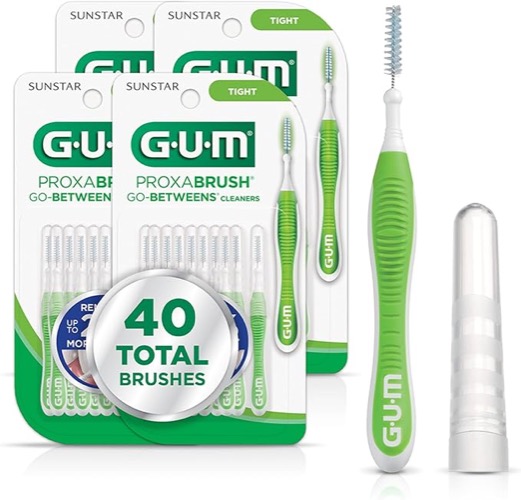
An electric toothbrush is only part of the equation. Periodontal disease occurs between teeth and under the gumline—areas no toothbrush fully reaches. Your periodontist will likely recommend interdental brushes or a water flosser as essential additions to your routine. Interdental cleaning reaches where no toothbrush does; ask your periodontist how they want you to split the effort.
Frequently Asked Questions
Can an electric toothbrush make periodontal disease worse?
Not when used correctly. The risk comes from brushing too hard, which damages inflamed gum tissue and accelerates recession. An electric toothbrush with a pressure sensor actually reduces this risk compared to manual brushing, because the sensor alerts you before you apply too much force. The key is technique: let the brush do the work, hold it at a 45-degree angle to the gumline, and move it slowly from tooth to tooth without scrubbing.
Is Sonicare or Oral-B better for periodontal disease?
Clinical evidence slightly favors Sonicare for reducing periodontal pocket depth. A 1997 head-to-head study found Sonicare produced greater probing depth reduction and attachment level improvement than Oral-B in periodontitis patients. However, both types significantly outperform manual brushing, and the best toothbrush is the one you’ll use correctly and consistently. If you prefer the feel of oscillating brushing, Oral-B iO models with pressure sensors are still excellent choices.
How soon after a deep cleaning can I use my electric toothbrush?
Ask your periodontist how long to wait after scaling and root planing; the common advice is to give the treated tissue at least a day before resuming electric brushing. When you restart, use the gentlest mode available (Sensitive or Gum Care) with a soft brush head. Some practitioners recommend sonic brushes over oscillating during the recovery period because the vibrations are less mechanically aggressive.
Do I need a special brush head for periodontal disease?
You don’t need one, but it helps. Both Sonicare and Oral-B offer brush heads specifically designed for sensitive or inflamed gums: Sonicare’s Premium Gum Care and Oral-B’s Gentle Care heads have softer, denser bristles that clean effectively while being gentler on compromised tissue. Whatever head you use, replace it every 3 to 4 months (sooner if the bristles fray): the ADA notes a brush cleans less effectively as its bristles wear.
Is the brush head or the handle more important for gum disease?
For periodontal patients, the head is closer to half the decision than an accessory. In our community research, the most-upvoted professional advice in bleeding-gums threads was to keep the electric handle and move off medium heads onto the sensitive/gum-care versions: a self-identified hygienist noted most electric toothbrushes ship with medium heads, which they called “a recession causing culprit.” A separate commenter traced one reader’s bleeding gums to the stiff whitening head that shipped in the box. Whichever handle you buy on this page, price in the gum-care or sensitive head as part of the purchase.
Should I use an electric toothbrush or a water flosser for periodontal disease?
Both, ideally. They serve different purposes: the electric toothbrush cleans the surfaces of your teeth, while a water flosser or interdental brushes clean between teeth and below the gumline where periodontal pockets form. Interdental cleaning reaches the pockets and contact points no brush head touches, which is why it carries so much weight in periodontal home care. If budget forces a choice, ask your periodontist which matters more for your specific situation.