
The short answer
Enamel repairs itself with minerals from saliva and fluoride—but only while the damage is still contained in the surface. Once decay breaks through into a cavity, it's permanent and needs a dentist.
NIH National Institute of Dental and Craniofacial Research; American Dental Association; Mayo Clinic
The Short Answer
Teeth lose and regain minerals all day long, and you can tip that balance in your favor. The National Institute of Dental and Craniofacial Research puts it plainly: in its early stages, tooth decay “can be stopped or reversed,” because enamel can repair itself using minerals from saliva and fluoride from toothpaste and other sources. The same page draws the boundary that matters most: once enough mineral is lost that the surface collapses into a cavity, that damage is permanent and a dentist has to repair it with a filling.
So remineralizing teeth is a real thing—but it is a race against a line you can’t cross back over. The good news buried in that sentence: most of what moves the race costs little or nothing. The foundation is the fluoride toothpaste you probably already own; the habits below—when you rinse, when you snack, when you brush after acid—decide how much good it actually does. The products that help are the ones that deliver minerals to the tooth surface and keep them there long enough to work.
Remineralize, Arrest, Heal: Three Words That Get Mixed Up
Most of the confusion around this topic—and most of the arguments in dental forums—comes down to three words being used interchangeably when they mean different things.
Demineralization is enamel losing mineral to acid. Up close it can show as a chalky white spot, and on an X-ray it shows up as mineral loss; dentists call this an incipient (beginning) lesion. The surface is weakened but still intact.
Remineralization is the reverse traffic: calcium and phosphate from saliva, helped by fluoride, redepositing into that weakened surface. This is the stage the NIDCR describes as reversible. The top-voted answer on the remineralization question in the threads we reviewed reaches for a second word here—arrested—for a lesion that has stopped progressing, even if it never visually disappears. Stopping the damage is the win; a spot that stays a spot for decades is a success story, not a failure.
“Healing” a cavity is where the line gets drawn. Once decay has broken through the enamel surface and reached the softer dentin underneath, no toothpaste, rinse, or diet reverses it. That’s not dentist-industry pessimism—it’s the NIDCR’s own line: a cavity is permanent damage that a dentist has to repair. Enamel can re-harden a weakened surface by taking minerals back in; it cannot rebuild structure that has crumbled away. A dentist-authored myth-roundup thread we reviewed included “cavities can heal themselves” on its list precisely because the true version—early, non-cavitated decay can remineralize—gets stretched into a false one.
If a dentist has told you a spot is “one to watch” rather than one to fill, that language usually means you’re still on the reversible side of the line. That watching window is exactly when the rest of this guide applies.
The Free Half: Habits That Do Most of the Work
The highest-value additions cost nothing, and several of them are the kind of thing people say they wish they’d learned decades earlier. One framing note before the list: twice-daily brushing with a fluoride toothpaste is the base the evidence stands on—these habits work by protecting and multiplying that fluoride exposure, not by replacing it.
Spit, don’t rinse. After brushing, spit out the excess toothpaste and stop there. The NHS is explicit: rinsing your mouth immediately after brushing “will wash away the concentrated fluoride in the remaining toothpaste,” diluting exactly the mineral delivery you just paid for. In the community threads we reviewed, this was the most-repeated actionable tip, and several commenters framed it as something they wished they’d learned decades earlier.
If you use a mouthwash, move it away from brushing time. Same logic, same NHS guidance: a rinse straight after brushing—even a fluoride one—washes the concentrated fluoride off your teeth. Use it at a different time of day, and skip eating and drinking for half an hour after a fluoride rinse.
Close the snacking window. Every time you eat or drink something sugary or starchy, mouth bacteria produce acid and your enamel spends the next stretch of time under attack. Mayo Clinic’s cavity guidance lists constant snacking and sipping among its risk factors—sipping acidic or sugary drinks through the day creates what it calls a continual acid bath. Fewer, consolidated eating windows give saliva time to do its repair work between attacks.
After acid, rinse—don’t brush. Enamel is temporarily softened right after acid exposure (citrus, soda, wine, or stomach acid from reflux, morning sickness, or vomiting). The American Dental Association’s erosion guidance recommends rinsing with water rather than brushing immediately after acidic drinks, and after vomiting recommends rinsing with water, a baking-soda rinse, or milk first. Brushing softened enamel scrubs away mineral you’d otherwise get back. If acid wear is your main battle, our enamel erosion toothpaste roundup covers the product side of that specific problem.
Protect your saliva. Saliva is the delivery system for the calcium and phosphate this whole process runs on, and it buffers acid between meals. Dry mouth—from medications, mouth breathing, or dehydration—removes that protection, which is why Mayo Clinic lists it as a cavity risk factor in its own right. If your mouth runs dry, that’s worth addressing directly; our dry mouth toothpaste guide covers the product side.
Get between the teeth. Early lesions love the surfaces a brush can’t reach—between molars is a classic spot for the “watch this one” X-ray finding. Flossing those contacts daily is the baseline; some commenters in the threads we reviewed suggest adding a smear of fluoride toothpaste to the floss to carry fluoride into the exact spot that needs it. It’s a low-risk, low-cost tactic, though not one with formal clinical guidance behind it.
The Watch-Window Protocol: What to Do Until the Recheck
If a dentist just told you a spot is “one to watch” and booked the recheck, here is the whole playbook in one place—in rough order of how much each step matters, starting with the one the evidence actually rests on:
- Brush twice daily with a fluoride toothpaste—for adults, the NHS benchmark is at least 1,350 ppm. This is the foundation; everything below multiplies it.
- Spit, don’t rinse after brushing, so the fluoride stays on your teeth.
- If you use a fluoride rinse, use it at a different time of day—and nothing to eat or drink for 30 minutes after.
- Consolidate eating and drinking into fewer windows; water between them.
- After anything acidic (or any reflux/vomiting), rinse with water and hold off brushing—rinse first, brush later.
- Floss the watched contact every day—optionally with a smear of fluoride toothpaste on the floss (a reader tactic, not formal guidance).
- Fix dry mouth if you have it—saliva is the delivery system.
And two questions worth asking before you leave the office, because the answers calibrate everything above: how deep is the spot (still in the enamel, or approaching the dentin?), and is it active or already arrested? Per the ADA’s nonrestorative-treatment guideline, between-teeth lesions that look limited to the enamel and the outer third of the dentin on an X-ray are most likely not yet cavitated—the ones where clinicians should prioritize non-drilling care. Depth is not a detail; it’s the whole game.
The Ingredient Aisle: What Actually Carries Minerals
Fluoride is the default for a reason. The ADA’s fluoride guidance describes the mechanism: fluoride works into the enamel’s crystal structure to form fluorapatite, a surface more resistant to acid attack, and its remineralizing effect “can both reverse the early decay process as well as create a tooth surface that is more resistant to decay.” For adults, the NHS recommends a toothpaste with at least 1,350 ppm fluoride—UK packs print the ppm directly, while US Drug Facts labels usually list the fluoride compound and its percentage instead. For higher-risk mouths, dentists can prescribe high-fluoride toothpaste well above OTC strength; that’s a conversation, not a shelf purchase. Worth saying honestly: fluoride’s dominance is a professional consensus, not a community-wide one—if you’re weighing the fluoride-free side of that argument, our fluoride vs. hydroxyapatite comparison walks through what the head-to-head evidence actually shows.
Hydroxyapatite toothpaste is the main alternative. It supplies the same mineral enamel is made of, and it has real—but younger and thinner—evidence than fluoride, a distinction we take seriously enough to have written the comparison above. Community enthusiasm runs ahead of the trial base: when a patient asked about hydroxyapatite pastes by name in a thread we reviewed, the professional answer pointed back to fluoride as the better-researched option. If you go this route (by preference or because you’re avoiding fluoride), our hydroxyapatite toothpaste roundup covers the formulas worth considering, and the enamel repair roundup covers both camps side by side. For a child, the kids’ hydroxyapatite roundup covers the versions made for children, where how much gets swallowed is the extra thing to weigh.
A fluoride rinse adds a second daily exposure. An OTC anticavity fluoride rinse is a cheap way to add fluoride contact time—used away from brushing, per the NHS timing rule above. One age gate from Mayo Clinic: mouth rinses generally aren’t recommended for children under 6, who may swallow too much. Our fluoride mouthwash roundup compares the options. The same second-exposure idea exists on the fluoride-free side as hydroxyapatite rinses—same evidence caveat as the pastes above—and our remineralizing mouthwash roundup compares those.
CPP-ACP paste (MI Paste / Tooth Mousse) is a special-purpose tool. It’s a milk-protein-derived paste marketed to deliver calcium and phosphate, often suggested after braces. Three honest caveats. The CPP in CPP-ACP stands for casein phosphopeptide—a milk protein—so it’s off the table for anyone with a milk allergy. The ADA’s nonrestorative-treatment guideline actually suggests clinicians not use 10% CPP-ACP for early lesions when fluoride treatments, sealants, or resin infiltration are accessible. And expectations matter—more on that in the white spot section below. The practical verdict: if your dentist or orthodontist handed you a tube and milk protein isn’t an issue, using it as directed alongside your fluoride routine is reasonable—the guideline’s point is that CPP-ACP shouldn’t displace fluoride, sealants, or infiltration, not that a tube in your bathroom is a problem. Just don’t buy it expecting it to outperform the fluoride options, or to erase a spot. Our MI Paste guide goes through which variant to use, how to apply it, and what the evidence supports.
Small helpers, honestly sized. Sugar-free gum with xylitol promotes saliva flow—the ADA’s erosion page notes chewing gum may help protect teeth by stimulating saliva—and Mayo Clinic lists sugar-free gum among combined-prevention measures, with the caveat that large amounts of xylitol can cause digestive upset. (If there’s a dog in your house, note that the FDA warns xylitol can be deadly to dogs—store it accordingly.) Baking soda’s real role is as a mild acid neutralizer—reasonable as a rinse after reflux or vomiting per the ADA guidance above—not as a replacement for toothpaste. Tooth powder is another format some readers reach for; our tooth powder picks cover the remineralizing options in that category, and our remineralizing gum roundup covers the chewable xylitol options, including hydroxyapatite versions, for readers who want the gum format specifically.
A simple remineralization-support cabinet
One fluoride toothpaste, one rinse for a second daily exposure—and the hydroxyapatite route for readers who've already decided against fluoride. The routes aren't equal-evidence (fluoride is the better-proven default); full comparisons in the linked roundups.
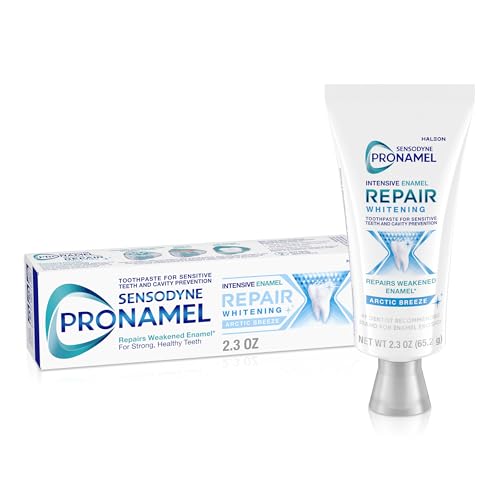
Sensodyne Pronamel Intensive Enamel Repair Toothpaste (2.3 oz)
Weakened or acid-worn enamel with sensitivity
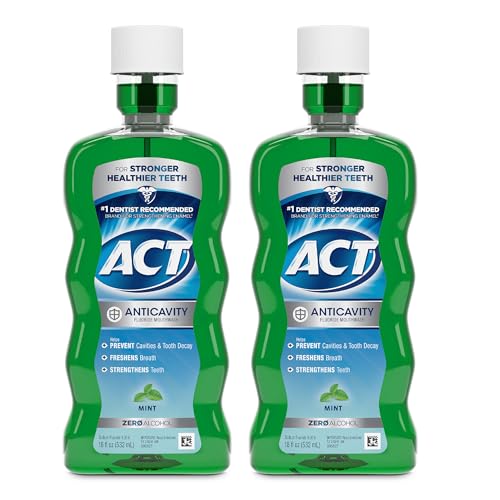
ACT Anticavity Fluoride Mouthwash (18 fl oz, 2-Pack, Mint)
Adding fluoride contact time away from brushing
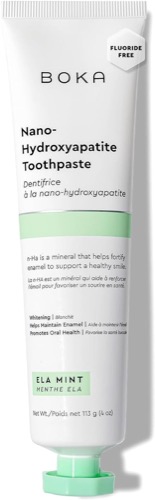
Boka Ela Mint Nano-Hydroxyapatite Toothpaste
The hydroxyapatite approach, if that's your preference
Affiliate links. Dental Roundup may earn a commission at no extra cost to you.
White Spots: The Special Case
White spot lesions—the chalky patches that often show up during or after braces—are where remineralization hopes and reality most often part ways, so this deserves its own straight answer.
Structurally, white spots are the reversible stage. They’re demineralized enamel with the surface still intact, which is exactly the situation the NIDCR describes as stoppable and reversible. Fluoride hygiene, the habits above, and time can arrest them, and arresting them is what protects the tooth.
Cosmetically, expectations need managing. An arrested white spot often stays visible. In the professional discussions we reviewed, experiences with CPP-ACP paste for the appearance of white spots genuinely diverge—one practitioner reported no visible improvement across a large number of post-braces patients, including a family member who used it for about a year; another reported improvements, but only after a professional microabrasion procedure removed the outer mineralized layer first. The published study protocols people cite for these products typically involve twelve weeks or more of daily use. None of this means remineralizing was pointless—it means “the spot is safe” and “the spot is gone” are different outcomes.
If the appearance is the problem, the fixes are procedural. Microabrasion is the cosmetic tool. Resin infiltration (ICON) does double duty: the ADA’s nonrestorative-treatment guideline lists it among the options for arresting early between-teeth lesions, and on white spots, practitioners in the threads we reviewed also use it to improve how the spot looks. Either way, that’s a decision to price with your dentist, not something a toothpaste will deliver.
One more nuance from the community threads worth passing on—raised twice in the braces white-spot discussion we reviewed: not every white mark is demineralization. Fluorosis—enamel formed with too much fluoride in childhood—also shows as white marks, and the distinction changes what, if anything, needs doing. A dentist can tell the difference in an exam; internet photo diagnosis reliably can’t.
What Doesn’t Remineralize Teeth
A parallel internet exists where enamel is rebuilt with oil pulling, eggshell powder, activated charcoal, alkaline diets, or high-dose vitamin protocols. Most people trying these aren’t foolish—they’ve usually absorbed the true premise (early decay can reverse) and been sold the wrong mechanism.
The chemistry is the problem. Remineralization needs mineral—calcium, phosphate, fluoride—delivered to the tooth surface, which is what saliva and the ingredients in the previous section do. Swishing oil delivers none of these; in one community exchange we reviewed, a dental professional answered a full natural-healing protocol (alkaline diet, supplements, twenty-minute coconut-oil sessions) by pointing out that remineralization runs on minerals, not oil, and warned that the real cost of betting on it is time: a lesion that could have been arrested cheaply progresses into one that needs a larger restoration. Charcoal pastes deliver none of these minerals either. Eggshell powder does contain calcium carbonate, but ground shell in a spoon is not a delivery system to a lesion, and no clinical guidance supports it.
Vitamin D deserves one honest sentence: adequate vitamin D matters for the calcium metabolism your whole skeleton runs on, and being deficient is worth fixing for its own sake—but the remineralization the NIDCR describes happens at the tooth surface, delivered by saliva and fluoride, so megadosing supplements is not a route into an enamel lesion.
If a “natural” approach matters to you, the defensible version is unglamorous: the free habits above, plus a hydroxyapatite paste if you’re avoiding fluoride—the honestly-sized evidence for which is exactly what our comparison page covers.
What a Dentist Can Add
Home care is the foundation, but the in-office tier exists, and for a lesion that’s borderline it can be the difference between watching and filling.
Fluoride varnish is the workhorse: a professionally applied, very-high-concentration fluoride coating (sodium fluoride varnish runs 22,600 ppm, per the ADA—roughly fifteen to twenty times the fluoride concentration of an over-the-counter toothpaste) that sets on contact with saliva. It’s quick and routine.
Prescription-strength fluoride toothpaste extends that to daily home use for higher-risk mouths—worth asking about if you’ve had a run of new lesions.
Sealing or infiltrating the lesion is the non-drilling menu most people don’t know to ask about. The ADA’s evidence-based guideline on nonrestorative treatments recommends prioritizing sealants (with or without fluoride varnish) for early lesions on the chewing surfaces of permanent teeth, and suggests fluoride varnish, resin infiltration, or sealants for early lesions between teeth—precisely the “there’s a spot, can we stop it without drilling?” scenario. The same guideline stresses active monitoring during nonrestorative care, which is what your recheck is.
Newer remineralization treatments (peptide- and hydroxyapatite-based products a dentist applies to early lesions, often not covered by insurance—community accounts put them around $100 out of pocket) are generating genuine professional interest: dental professionals discussing them in the threads we reviewed described the early evidence as promising, and one noted they were still tracking results in their own cases. Reasonable to say yes to if the cost is comfortable; equally reasonable, per those same professionals, to lean on diligent home fluoride care and monitoring if it isn’t.
Cosmetic white spot treatments (resin infiltration, microabrasion) round out the menu, as covered above.
The useful reframe for the anxious six-months-until-recheck window: you’re not being sent home to do nothing. You’re being sent home to run the remineralization playbook, and the recheck is how you find out whether it worked.
How Long Does Remineralization Take
Weeks to months, not days—and “done” is the wrong frame. Mineral exchange at the enamel surface is continuous, so what you’re really building is a standing surplus: daily fluoride exposure, contained snacking, protected saliva. The white spot study protocols people cite typically run twelve weeks of daily use before measuring results, which is a fair calibration for expectations generally. A lesion your dentist is watching gets its real scorecard at the next set of X-rays: stable or improved means the playbook is working; progressed means it’s time for the restorative conversation.
When to See a Dentist
Remineralization is a strategy for early, professionally identified damage—it needs a dentist at both ends. Per Mayo Clinic, early decay often has no symptoms at all, which is why regular checkups matter even when nothing hurts; and a toothache or mouth pain means seeing a dentist as soon as possible, not doubling down on home care. The same applies to a visible hole or pit, brown or black staining, sensitivity that’s new or worsening, or a white spot you can’t tell apart from fluorosis. And if reflux, frequent vomiting, or an eating disorder is the acid source, the dental damage is a signal to treat the underlying condition with your doctor—enamel care alone can’t outrun it.
FAQ
Can tooth enamel grow back?
No—and yes, in a narrower sense than the question usually means. Enamel isn’t like skin or bone: structure that has crumbled away doesn’t grow back. But enamel that is demineralized—weakened, not yet broken—can regain mineral and re-harden. The NIDCR describes early decay as reversible for exactly this reason. The moment the surface collapses into an actual cavity, regrowth is off the table and repair means a filling.
Can you remineralize a cavity?
Not a true cavity. Once decay has cavitated—broken through the enamel surface—and especially once it reaches dentin, it doesn’t reverse. What you can sometimes do, under a dentist’s watch, is arrest an early lesion before it gets there. If your dentist is “watching a spot,” that’s the reversible window, and the habits and fluoride exposure in this guide are the play.
Are white spots on my teeth early cavities?
Often, yes—chalky white spots are the classic look of demineralized enamel, the first visible stage of decay, and common around braces where plaque hides. They can be arrested with good fluoride hygiene, though they may stay visible even after they’re stabilized. But white marks can also be fluorosis or other enamel formation quirks, where any treatment is usually a cosmetic choice rather than a health need—a dentist can tell the difference in one look; a photo thread can’t.
Does hydroxyapatite toothpaste remineralize teeth as well as fluoride?
The honest answer is that fluoride has decades of evidence and professional consensus behind it, while hydroxyapatite’s clinical evidence base is real but much smaller and newer. The professional answer to this question in the threads we reviewed pointed back to fluoride; hydroxyapatite is a reasonable choice for people set on avoiding fluoride. We walk through the actual head-to-head trials—including who funded them—in our fluoride vs. hydroxyapatite comparison.
How long does it take to remineralize teeth?
Think in weeks to months. The study protocols people cite for white spot products typically run twelve weeks of daily use; a dentist-monitored early lesion gets its verdict at the next checkup’s X-rays. Anything promising visible enamel repair in days is selling something.
Why shouldn’t I rinse after brushing?
Because the fluoride left on your teeth after spitting is the treatment. The NHS advises spitting out excess toothpaste and skipping the water rinse, which would wash the concentrated fluoride away—and recommends using mouthwash at a different time of day for the same reason. It’s the cheapest upgrade in oral care: same toothpaste, same two minutes, more mineral delivered.