
Enamel repair toothpaste is a useful category, but the name needs a reality check: toothpaste can support remineralization of weakened enamel, reduce sensitivity, and help protect against future acid attack; it cannot regrow enamel that has already worn away. The ADA describes dental erosion as progressive and irreversible loss of mineralized tooth structure, so prevention and early management matter most. We compared six enamel-focused toothpastes on active ingredient, evidence quality, sensitivity support, abrasion risk, and value tier. For a complementary approach, see our best fluoride mouthwash guide.
How We Evaluated Enamel Repair Toothpastes
Active ingredient: fluoride vs. hydroxyapatite. Fluoride has the longer evidence history and ADA acceptance pathway. ADA fluoride guidance notes that fluoride encourages remineralization and makes enamel more acid resistant. Hydroxyapatite has a growing evidence base and appeals to shoppers who want a fluoride-free or combined-mineral approach.
Evidence quality. We gave more weight to ADA acceptance, FDA/DailyMed active-ingredient labels, and peer-reviewed reviews than to package language. That matters in a category where “repair” can easily imply more than toothpaste can deliver.
Sensitivity co-management. Enamel erosion and tooth sensitivity frequently occur together: eroded enamel exposes dentin tubules. We noted which formulas include desensitizing agents (potassium nitrate, stannous fluoride) alongside their remineralization action.
Abrasion and whitening restraint. Toothpastes for enamel-weakened teeth should not rely on harsh scrubbing. The ADA toothpaste overview discusses Relative Dentin Abrasivity and notes that low-abrasion fluoride toothpastes used with a soft brush are generally the safer baseline for erosion-prone users.
Clean ingredient profile. People choosing hydroxyapatite specifically are often doing so because they want to avoid fluoride, SLS (sodium lauryl sulfate), or artificial ingredients. We noted the ingredient profile for each product.
In the r/askdentists and r/DentalHygiene discussions behind our research brief, sensitivity was a recurring trigger for shopping this category: cold-water pain, post-filling sensitivity, and acid wear came up repeatedly, usually alongside the question of whether any toothpaste can rebuild enamel at all.
Evidence Receipt
- Fluoride remains the best-established active for cavity prevention and early enamel remineralization; ADA-accepted anticaries toothpastes must contain fluoride.
- Hydroxyapatite has promising clinical evidence, including systematic reviews indexed on PubMed, but the evidence base is newer and less settled than fluoride’s for routine cavity prevention.
- Enamel erosion management is not just product choice. ADA erosion guidance emphasizes reducing acid exposure, rinsing with water after acidic foods/drinks, avoiding immediate brushing after acidic exposure, and using a soft brush with fluoride toothpaste.
- Sensodyne Pronamel Intensive Enamel Repair uses potassium nitrate and sodium fluoride, according to its DailyMed label. Studies in the Journal of Clinical Dentistry, both by scientists at GlaxoSmithKline (Pronamel’s maker), documented rehardening of acid-softened enamel with the Pronamel sodium fluoride formulation, in both an in vitro rehardening study and an in situ remineralization model.
- Crest Pro-Health Sensitive & Enamel Shield uses stannous fluoride 0.454%, and its DailyMed label lists anticavity, antigingivitis, and antisensitivity uses.
- Made By Dentists Enamel Rebuilding Toothpaste is listed by the ADA Seal program as helping prevent cavities and tooth sensitivity when used as directed.
Sensodyne Pronamel Intensive Enamel Repair Toothpaste — Editor’s Pick
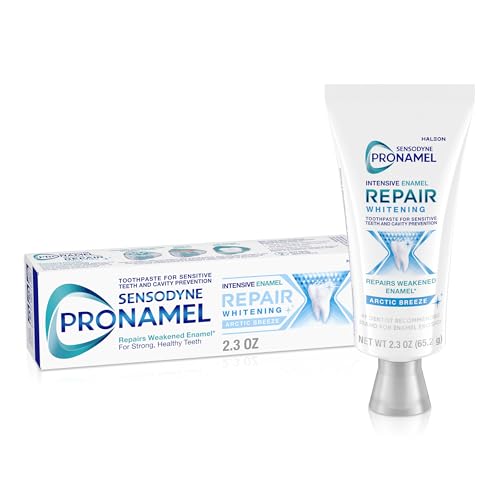
Sensodyne Pronamel Intensive Enamel Repair Toothpaste (2.3 oz)
Best for: Most people with enamel erosion or sensitivity who want a fluoride-based enamel toothpaste with sensitivity support
- Potassium nitrate 5% for sensitivity relief plus sodium fluoride for cavity prevention
- Pronamel positioning is specifically built around acid-weakened enamel care
- Good starting point when sensitivity and erosion concerns overlap
- +Potassium nitrate for sensitivity relief plus sodium fluoride for cavity prevention
- +Specifically formulated for acid-weakened enamel care
- +Journal of Clinical Dentistry studies document rehardening of acid-softened enamel with the Pronamel fluoride formulation
- −Cannot restore enamel that has already been fully lost
- −Smaller 2.3 oz tube runs out faster than mainstream toothpastes
(Affiliate link) · Free shipping on eligible Prime items
Sensodyne Pronamel Intensive Enamel Repair is a strong default for many shoppers because it combines a familiar sensitivity active with fluoride-based enamel support. The DailyMed label lists potassium nitrate 5% for antihypersensitivity and sodium fluoride 0.25% for anticavity protection, which matches the two most common concerns in enamel-erosion threads: cold sensitivity and future protection.
For people whose dentist has mentioned enamel wear, early erosion, or increased sensitivity, this is a straightforward first choice before experimenting with newer ingredient systems. It does not need to be framed as literal enamel regrowth to be useful: fluoride can support remineralization of early weakened enamel, while potassium nitrate can make daily brushing more tolerable if sensitivity is present. At around $5 for 2.3 oz, it is accessible. The main practical downside is tube size; heavy daily users may run through it faster than larger mainstream toothpastes.
If you already know this paste suits you, Sensodyne lists the same Intensive Enamel Repair Whitening toothpaste in bulk: the Pronamel Intensive Enamel Repair 4-pack is four 3.4 oz tubes at around $25, rated 4.8 stars across over 11,000 ratings. (Affiliate link) First-time buyers are better off with the single tube.
Potential downside: Sensodyne Pronamel is effective at hardening existing enamel and slowing future erosion but cannot restore enamel that’s already lost. For significant erosion, a dentist conversation about prescription-strength fluoride or professional treatments is important alongside this product.
Boka Fluoride Free Nano Hydroxyapatite Toothpaste — Best Fluoride-Free
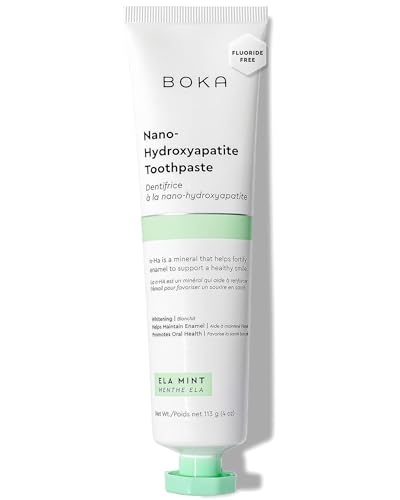
Boka Fluoride Free Nano Hydroxyapatite Toothpaste (4 fl oz)
Best for: People who want a fluoride-free daily toothpaste built around nano hydroxyapatite
- Nano hydroxyapatite formula for a fluoride-free remineralization approach
- SLS-free formula that many sensitivity-prone shoppers find gentler
- Ela Mint flavor with xylitol and a large review base
- +Leading fluoride-free alternative using nano-hydroxyapatite for remineralization
- +SLS-free formula that many sensitivity-prone users find gentler
- +Large review base with broad consumer familiarity
- −Clinical evidence for nHAP is less extensive than fluoride's decades of research
- −More expensive than drugstore fluoride enamel toothpaste options
(Affiliate link) · Free shipping on eligible Prime items
Nano hydroxyapatite (n-HA) is the leading fluoride-free alternative for shoppers who want a mineral-based enamel-care toothpaste. Boka is the most recognizable US consumer brand in that lane, with a cleaner-feeling formula and broad user familiarity. In the threads behind our brief, several users describe Boka as gentler-feeling than conventional toothpastes, which matters for people who dislike strong foaming or stinging.
At around $12 for a 4 oz tube, Boka costs more than drugstore fluoride options, but its strongest role on this page is not beating fluoride head-to-head for every reader; it is giving fluoride-free shoppers a credible, widely used alternative instead of a generic natural paste with no active remineralization story. The single tube above is the simplest way to try it. If you have already settled on Boka as your daily paste, the Ela Mint 3-pack runs about $32, which works out around $11 a tube against around $12 for a single. (Affiliate link) That gap is narrow enough that the reason to buy three is the convenience of not reordering, not the saving.
Potential downside: The clinical evidence for n-HA is growing but less extensive than fluoride’s decades of established research. A 2022 systematic review and meta-analysis found mixed results across study types, while a newer PubMed-indexed review is more favorable. This doesn’t mean n-HA doesn’t work; it means fluoride still has the longer, more settled evidence track record.
Sensodyne Pronamel Gentle Whitening Enamel Toothpaste — Best Enamel + Whitening
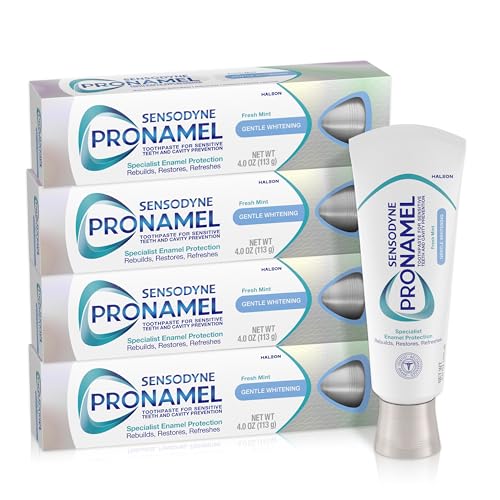
Sensodyne Pronamel Gentle Whitening Enamel Toothpaste (4 oz, Pack of 4)
Best for: People who already like Pronamel and want gradual surface-stain maintenance in a bulk format
- Pronamel fluoride sensitivity formula in a whitening variant
- Best framed as stain maintenance, not dramatic whitening
- 4-pack format for users who already know they tolerate Pronamel well
- +Pronamel fluoride sensitivity formula with gradual whitening benefit
- +Bulk 4-pack format offers value for committed daily users
- +Highest user rating in this roundup at 4.8 stars
- −Whitening effect is gradual and mild compared to dedicated whitening products
- −4-pack format is not ideal for first-time buyers who haven't tried Pronamel
(Affiliate link) · Free shipping on eligible Prime items
Sensodyne Pronamel Gentle Whitening serves readers who already trust Pronamel and want modest surface-stain maintenance without leaving the enamel and sensitivity lane. The ADA whitening overview notes that whitening toothpastes primarily rely on abrasives for removing extrinsic surface stains, so expectations should stay modest.
The 4-pack format at around $25 is not the right first purchase for everyone, but it makes sense for people who already know they tolerate Pronamel and use it daily. If you have not tried Pronamel yet, start with the single 2.3 oz tube of Intensive Enamel Repair above and buy the 4-pack once you know it suits you.
Potential downside: The whitening effect is gradual and mild. If whitening formulas tend to aggravate your sensitivity, choose a non-whitening enamel toothpaste first. For significant discoloration, a dedicated whitening product or dentist-supervised whitening plan is a better fit. See our best teeth whitening guide.
Made by Dentists Enamel Rebuilding Toothpaste — Best Dual-Action
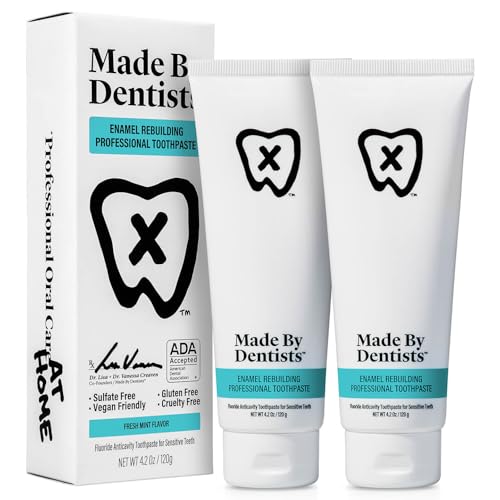
Made by Dentists Enamel Rebuilding Toothpaste (2-Pack, 4.2 oz each)
Best for: People who want fluoride, hydroxyapatite, and sensitivity support in one formula
- Combines hydroxyapatite with fluoride and sensitivity-support ingredients
- ADA Seal listing supports cavity-prevention and sensitivity-relief claims
- 2-pack format works well for buyers ready to commit to the formula
- +Combines hydroxyapatite with fluoride and sensitivity support in one formula
- +ADA Seal listing for cavity prevention and sensitivity relief
- +Dual-action approach for shoppers who want both fluoride and HAP
- −Newer brand with less name recognition than Sensodyne or Boka
- −Thinner forum discussion and community feedback than established brands
(Affiliate link) · Free shipping on eligible Prime items
Most enamel toothpastes are either fluoride-based or hydroxyapatite-based; Made by Dentists Enamel Rebuilding is one of the cleaner combined approaches. It is a good fit for readers who like the hydroxyapatite concept but do not want to give up fluoride, especially if sensitivity is part of the reason they are shopping.
The 2-pack format at around $14 provides reasonable value for 8.4 oz total. What makes this stand out beyond the ingredient combination is the ADA Seal listing. The ADA product page says the Council on Scientific Affairs accepted the product based on safety and efficacy for helping prevent tooth decay and relieving sensitivity in otherwise normal teeth when used as directed. That is narrower than “rebuilds enamel,” but it is still a meaningful trust signal.
Potential downside: This is a newer brand with less name recognition than Sensodyne or Boka, and forum chatter is thinner. The dual-ingredient approach is appealing, but read it as covering both bases rather than as evidence that the combination outperforms either ingredient alone.
Crest Pro-Health Advanced Sensitive & Enamel Shield Toothpaste — Best Budget
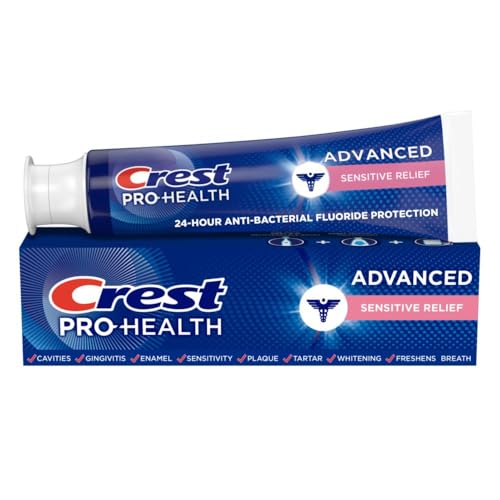
Crest Pro-Health Advanced Sensitive & Enamel Shield Toothpaste (5.1 oz)
Best for: People who want a mainstream stannous fluoride toothpaste for sensitivity and cavity protection
- Stannous fluoride 0.454% active ingredient
- DailyMed lists anticavity, antigingivitis, and antisensitivity uses
- Large mainstream tube and broad retail availability
- +Stannous fluoride 0.454% provides anticavity, antigingivitis, and antisensitivity benefits
- +Budget-friendly pricing with broad retail availability
- +Strong active ingredient profile for a mainstream toothpaste
- −Stannous fluoride can cause surface staining in some users
- −Coffee and tea drinkers should be aware of the staining tradeoff
(Affiliate link) · Free shipping on eligible Prime items
Crest Pro-Health Advanced Sensitive & Enamel Shield uses stannous fluoride rather than potassium nitrate plus sodium fluoride. Its DailyMed label lists stannous fluoride 0.454% for anticavity, antigingivitis, and antisensitivity purposes. For a budget-positioned toothpaste, that is a strong active-ingredient profile.
At around $5 for 5.1 oz, Crest is the best value-per-ounce among all six picks on this list. For people who want meaningful fluoride protection without paying for a specialty enamel brand or hydroxyapatite formula, it is the practical pick. It is especially useful when sensitivity, plaque control, and cavity prevention are all relevant, and it is the easiest of these six to pick up on a normal supermarket run.
Potential downside: Stannous fluoride can cause surface staining in some users. DailyMed notes that these stains are not harmful or permanent and may be removed by a dentist, but coffee and tea drinkers should be aware of the tradeoff.
MasterMedi Nano Hydroxyapatite Toothpaste with Xylitol — Best Value HAP
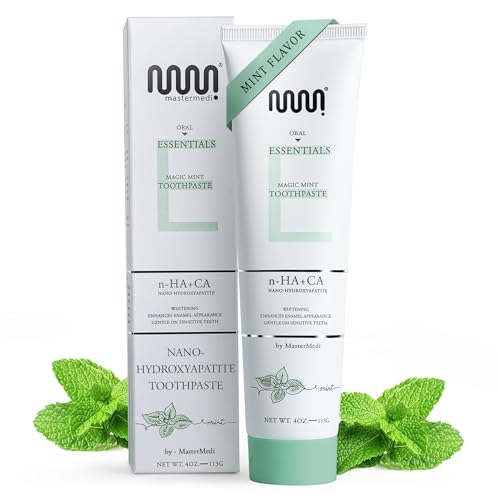
MasterMedi Nano Hydroxyapatite Toothpaste with Xylitol (4 oz)
Best for: Budget-conscious shoppers who want to try nano hydroxyapatite before buying a pricier brand
- Nano hydroxyapatite with xylitol in a fluoride-free formula
- Lower price than many pricier HAP brands
- Good trial option for shoppers comparing HAP against fluoride toothpaste
- +Lower price point makes it an accessible entry to hydroxyapatite toothpaste
- +Fluoride-free formula with nano-hydroxyapatite and xylitol
- +Good trial option before committing to a pricier HAP brand
- −Less brand history and clinical documentation than established competitors
- −Best treated as a trial product rather than a long-term choice
(Affiliate link) · Free shipping on eligible Prime items
If you’re curious about hydroxyapatite toothpaste but not ready to commit to a pricier brand, MasterMedi is the lower-price trial option at around $6 for 4 oz. It keeps the same broad appeal as other fluoride-free HAP formulas: nano hydroxyapatite, xylitol, and no SLS.
This is a solid starting option for people who want to see how their teeth respond to a HAP-based formula before deciding whether to upgrade to Boka or the Made by Dentists dual-action option. The brand has less clinical research and community signal behind it than Boka, so it should be treated as an entry point rather than the evidence leader.
Potential downside: Less brand history and clinical documentation than Boka or the Sensodyne products. Best treated as a trial product rather than a permanent choice, with the understanding that the underlying ingredient (nano-HA) has legitimate science behind it even if this specific brand hasn’t been independently studied.
Buyer’s Guide: Understanding Enamel Erosion and How to Address It
What Causes Enamel Erosion
Enamel erosion is caused by acid: either from external sources such as citrus, carbonated beverages, energy drinks, wine, and other acidic drinks, or internal sources such as acid reflux and frequent vomiting. The ADA’s erosion guidance emphasizes that management starts with reducing acid exposure, rinsing with water after acidic foods or drinks, and avoiding habits that keep acid against the teeth.
Fluoride vs. Hydroxyapatite: The Honest Comparison
Fluoride (sodium or stannous) has decades of clinical evidence, ADA endorsement, and well-understood mechanisms. It helps remineralize early weakened enamel and makes the tooth surface more resistant to acid. The limitation is that fluoride still needs tooth structure to work with; it cannot replace enamel that has already worn away.
Nano hydroxyapatite is a mineral-based alternative that aims to support remineralization with particles similar to tooth mineral. The strongest argument for HAP is not that fluoride is bad; it is that some shoppers want a fluoride-free or combined-mineral option and HAP has more evidence than many natural toothpaste actives. The limitation is less clinical history and no current ADA anticaries acceptance pathway comparable to fluoride toothpaste.
For most people, choosing between them is a values decision: fluoride has the stronger evidence track record; hydroxyapatite has the cleaner ingredient profile and the appeal of building enamel with its own mineral. Both can contribute to enamel protection with consistent use. Our fluoride vs. hydroxyapatite comparison works through the head-to-head studies behind that call if you want to see the evidence rather than the summary. If you go the hydroxyapatite route, our Apagard toothpaste review is a deeper look at the best-known brand in that lane.
What “Enamel Repair” Toothpaste Can’t Do
No toothpaste can regenerate enamel that’s already lost. What these products do is:
- Remineralize partially demineralized enamel (where the crystal structure is weakened but still present)
- Harden enamel to make it more resistant to future acid attack
- Reduce sensitivity from exposed dentin
For significant enamel loss (visible thinning, translucent edges on front teeth, visible yellowing from underlying dentin), a dentist evaluation is important. Treatment options include fluoride varnish applications, dental bonding to protect exposed surfaces, or crowns for severely compromised teeth. No OTC toothpaste addresses structural enamel loss at this level. If you’re weighing formats rather than just brands, our best tooth powder guide covers remineralizing powders and where they fall short of the same claims.
Whitening When Your Enamel Is Weak
The most common worry in this category pairs the two topics on this page: if enamel is already thin, will a whitening toothpaste scrub off more of it? The useful measure is abrasivity, not the word “whitening” on the box. Toothpaste abrasivity is scored on the Relative Dentin Abrasivity (RDA) scale, and the ADA’s toothpaste guidance states that dentifrices at or below RDA 250 are considered safe and effective, with lifelong proper brushing at that level producing limited wear to dentin and virtually no wear to enamel. The enamel loss that brings most readers here is acid-driven erosion, not brushing with a within-limits toothpaste.
That said, sensible picks stack the odds in your favor:
- Stay inside an enamel or sensitivity line for the whitening variant. On this page that pick is Sensodyne Pronamel Gentle Whitening; Sensodyne also sells a Pronamel Clinical Enamel Strength Whitening Action variant built on the same fluoride mechanism, and Crest’s “Enamel Shield” naming on our budget pick reflects its stannous fluoride formula rather than a separate shielding ingredient.
- Don’t stack abrasion sources. A whitening paste plus a firm-bristle brush plus aggressive scrubbing is how sensitivity stories start; pair any whitening formula with a soft brush and light pressure.
- Keep expectations at surface stains. Whitening toothpastes primarily lift extrinsic stains per the ADA whitening overview; deeper discoloration is a job for dedicated products or a dentist-supervised plan.
If whitening is your primary goal and your enamel is healthy, start from our best whitening toothpaste guide instead; if sensitivity is the dominant issue, our whitening toothpaste for sensitive teeth roundup balances those two directly. This page’s lane is the reverse priority: enamel support first, with whitening as a bonus that must not undermine it.
Dietary and Behavioral Changes That Matter
Toothpaste alone can’t outpace continued heavy acid exposure. The most effective approach to enamel protection combines an enamel toothpaste with:
- Rinsing with water after acidic food or drink instead of brushing straight away. ADA consumer guidance suggests waiting an hour before brushing; the wait does no harm, though in situ testing found that the fluoride in the paste, not the delay, is what held enamel loss down.
- Using a straw for acidic drinks to reduce contact with front teeth.
- Addressing acid reflux if present. Dietary acid can often be managed with habits; reflux acid may need medical or dental care.
FAQ
Can enamel really be “repaired” by toothpaste? Partially. Toothpaste can remineralize early-stage enamel damage: where enamel crystals are weakened or partially dissolved but still present. This strengthens enamel and can reverse early lesions. It cannot restore enamel that’s fully lost (the underlying dentin becomes exposed, appearing yellowish). For that, you need dental treatment. Our remineralization guide covers where that line sits and what moves it while you’re still on the reversible side.
How long does it take to see results from enamel repair toothpaste? Give it several weeks of consistent use, especially if sensitivity relief is the goal. If sensitivity persists or worsens after a few weeks, do not keep cycling through toothpastes; the DailyMed labels for sensitivity products advise asking a dentist because sensitive teeth can signal a problem that needs prompt care.
Is Sensodyne Pronamel only for sensitive teeth? No. Sensodyne positions the Pronamel line around acid erosion, with sensitivity relief as an added feature. The “Pronamel” line is specifically enamel-focused, not just sensitive-teeth-focused.
Should I use a fluoride mouthwash alongside enamel toothpaste? Yes, if you’re at elevated enamel erosion risk. A fluoride rinse after brushing adds another topical fluoride exposure to strengthen enamel throughout the day. See our best fluoride mouthwash guide for picks. If you’re on the fluoride-free side of this page, the hydroxyapatite rinses in our remineralizing mouthwash roundup fill the same slot in a routine.
Does whitening damage enamel? Whitening toothpaste is usually about surface-stain removal, not deep bleaching. The risk for enamel-erosion shoppers is overusing abrasive formulas or brushing aggressively while chasing a whiter look. Abrasivity is measurable rather than a guess: the ADA’s toothpaste guidance treats formulas at or below RDA 250 as safe and effective for lifelong use. If your teeth are already sensitive, start with a non-whitening enamel or sensitivity toothpaste and treat whitening as a separate goal.
Which enamel repair toothpaste also whitens? On this page, Sensodyne Pronamel Gentle Whitening is the pick built for that combination: the Pronamel fluoride and sensitivity formula with mild surface-stain polishing. The Amazon listing for our Editor’s Pick, Pronamel Intensive Enamel Repair, is itself titled as a whitening formula, and MasterMedi’s label markets whitening among its nano-hydroxyapatite claims. Expect gradual surface-stain maintenance from any of them, not bleaching-level results.