
Nano-hydroxyapatite (nHAp) is a synthetic form of hydroxyapatite, the calcium-phosphate mineral found in enamel and dentin. Research suggests nHAp toothpastes may help remineralize early enamel lesions and reduce sensitivity, but fluoride still has the stronger US anticaries evidence base and remains the ADA default for most cavity-prevention routines.
That makes nHAP most useful for people who want a fluoride-free daily toothpaste, have sensitivity, dislike harsh whitening formulas, or want to alternate with fluoride after talking with a dentist. If you are cavity-prone or have been prescribed high-fluoride toothpaste, start with our best fluoride toothpaste guide and ask your dentist before replacing fluoride.
The short version: Boka Ela Mint stays the pick for most people: the deepest review base in this lineup, the brand newcomers in the discussions behind this guide most often start with, and a flavor people stick with. It does not state its nHAp percentage, and that is the one thing the community keeps holding against it. Mouthology sits second because it is the pick that answers that criticism: a stated 10% concentration, rod-shaped particles named on the listing, and 4.5 stars across more than 7,000 ratings. Davids is the value pick from an established brand, and Apagard is the one to buy if you want the original Japanese formula. The full reasoning for each, and the trade-offs, follow below.
How We Evaluated
The hydroxyapatite toothpaste market has exploded in recent years, and quality varies significantly. We evaluated each product across five criteria:
- nHAp concentration and particle type: We gave extra credit to brands that disclose their percentage and particle-shape details, while avoiding claims that every undisclosed formula is weaker.
- Supporting ingredients: Xylitol, aloe vera, flavoring agents, and other complementary ingredients affect who will tolerate a formula well. We also checked for common irritants like SLS (sodium lauryl sulfate).
- Sensitivity support: Many people switch to nHAp specifically for sensitivity relief. We noted which formulas draw sensitivity feedback from users and which offer a dedicated sensitive variant.
- Taste and texture: A toothpaste you don’t enjoy using won’t help you. We cross-referenced thousands of user reviews to identify consistency in taste and mouthfeel feedback.
- Value: nHAP toothpastes usually cost more than drugstore fluoride formulas, with prices ranging from around $8 to over $20 per tube as of this writing. We weighed ingredient transparency, tube size, and brand track record against price tier.
We also reviewed clinical literature, ADA guidance, European safety opinions, and community discussions about real-world issues such as low foam, mild mint flavor, grittier textures, and whether to use nHAP with fluoride.
Curious what dental communities actually say? Our community research analysis covers 1,486 Reddit threads across 209 subreddits — including the nano-hydroxyapatite category this page reviews.
Evidence Receipt
- nHAP has promising remineralization evidence, but not unlimited proof. A 2022 scoping review found reported benefits across remineralization, demineralization reduction, sensitivity, and brightness, while noting that evidence in primary teeth remained insufficient.
- Some studies compare HAP favorably with fluoride in narrow settings. A BDJ Open in-situ study found 10% hydroxyapatite comparable to 500 ppm fluoride for remineralizing initial caries lesions in that study design.
- Fluoride is still the US default for anticaries claims. The ADA says fluoride compounds are the anticaries toothpaste ingredients named in the FDA monograph, and the ADA recommends twice-daily brushing with fluoride toothpaste for most people.
- Particle shape matters for safety claims. The European Commission’s SCCS 2023 opinion considered defined rod-shaped hydroxyapatite (nano) safe up to 10% in toothpaste, and its 2025 opinion reached a broader conclusion for specified rod-shaped particles while excluding needle-shaped materials.
Boka Ela Mint Nano-Hydroxyapatite Toothpaste
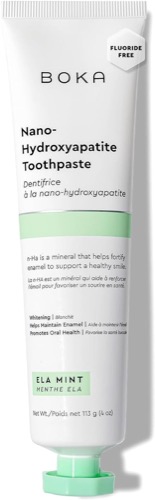
Boka Ela Mint Nano-Hydroxyapatite Toothpaste
Best for: Most people looking for a proven, well-rounded nHAp toothpaste
- Nano-hydroxyapatite formula for enamel remineralization
- SLS-free, fluoride-free, paraben-free
- Eight adult flavors on Boka's site, including Ela Mint, Coco Ginger, and Charcoal
- +Large review base with consistently positive feedback across platforms
- +Clean Ela Mint flavor widely described as the best-tasting nHAP option
- +SLS-free, fluoride-free, paraben-free with a clean ingredient list
- −Does not disclose exact nHAP concentration percentage
- −More expensive than drugstore fluoride toothpaste
(Affiliate link) · Free shipping on eligible Prime items
Why We Recommend It
Boka keeps the top slot on evidence of a particular kind: track record. Its Ela Mint listing carries more than 61,000 Amazon ratings at 4.5 stars, nearly three times the next-largest review base here, and in the 40 Reddit threads pulled for this guide (a narrower set than the sitewide community research above) it is the brand one hygienist reaches for first when a patient wants a hydroxyapatite paste, and the one users most often describe starting with. The Ela Mint flavor is a large part of that: a clean, slightly sweet cardamom-mint that users describe as pleasant without being overpowering, which matters because a paste you stop using does nothing for your enamel.
What Boka does not give you is a number. The formula is built around nano-hydroxyapatite with aloe vera and green tea extract, free from SLS, fluoride, parabens and artificial colors, but Boka calls the formula proprietary and publishes no nHAp percentage. That is the most repeated criticism in the community threads, and one user there who started on Boka because it was the cheapest tube says progress felt slow. We list it as a con rather than a disqualifier: the trials in our Evidence Receipt tested hydroxyapatite formulations in general, not Boka’s tube, and that is true of every brand on this page. The same threads carry a louder warning: a commenter describing herself as a hygienist, who had started on Boka, reported patients developing multiple cavities after dropping fluoride altogether. That is a caution about fluoride-free routines rather than about Boka’s formula, and it is why this page keeps pointing cavity-prone readers back to fluoride.
So the case for Boka is the case for the safest known quantity. If you want the percentage on the tube, the next pick is built for exactly that. If you want the paste with the largest body of buyers vouching for it, this is it.
Key Features
- Nano-hydroxyapatite as the primary active ingredient for enamel support
- SLS-free, which some people with mouth irritation prefer
- Eight adult flavors on Boka’s site, including mint, coco ginger, lavender, and charcoal
- US manufactured with recyclable packaging
- Aloe vera and green tea extract alongside the nHAp
Who It’s Best For
Boka is our top pick for anyone new to hydroxyapatite toothpaste or anyone who wants a reliable daily driver. It’s particularly well-suited if you’ve been frustrated by the taste or texture of other natural toothpastes; Boka’s Ela Mint flavor is one of the best-tasting options in the category. It’s also a strong choice if you’re switching from fluoride and want a product with a large base of positive user feedback. If the price is giving you pause, our full Boka review weighs that question directly.
Potential Downsides
Boka doesn’t disclose its exact nHAP concentration, which makes it harder to compare directly against brands that advertise 10% nHAP. Some users also note that it doesn’t foam as much as conventional toothpaste, a common trait of SLS-free formulas. Note that the linked listing is a three-pack of 4 oz tubes: around $32 at checkout as of this writing, which works out to about $10.66 per tube. That per-tube price sits a little above the sub-$10 single tubes here (Davids, Mouthology, Lumineux), and well above drugstore fluoride toothpaste, especially if you brush with a full pea-sized amount twice daily.
(Affiliate link) · Free shipping on eligible Prime items
Mouthology 10% Nano-Hydroxyapatite Toothpaste
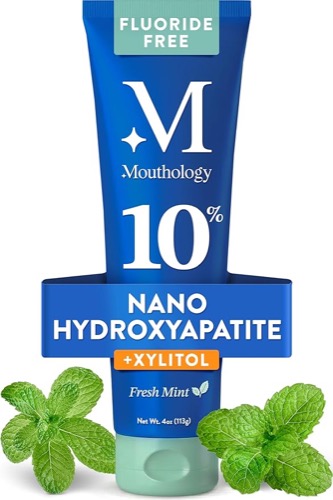
Mouthology 10% Nano-Hydroxyapatite Toothpaste
Best for: Anyone who wants the nHAp percentage stated on the listing, sensitive teeth included
- 10% nano-hydroxyapatite — one of the highest concentrations available
- Rod-shaped nHAp particles, according to the brand
- Contains xylitol as a non-cariogenic sweetener
- SLS-free, fluoride-free, USA made
- +Discloses 10% nano-hydroxyapatite concentration for full ingredient transparency
- +Specifies rod-shaped nHAp particles, relevant to European safety opinions
- +Contains xylitol as a non-cariogenic sweetener
- −Newer brand with less long-term track record than Boka or Davids
- −Mint flavor is milder than some users expect
(Affiliate link) · Free shipping on eligible Prime items
Why We Recommend It
Mouthology stands out in a crowded field by leading with transparency: it states a 10% nano-hydroxyapatite concentration and specifies rod-shaped nHAP particles. That matters because shoppers in this category repeatedly ask what percentage they are actually buying, and because European safety opinions distinguish defined rod-shaped particles from needle-shaped materials.
The formula also includes xylitol, a sugar alcohol often used in oral-care products as a non-cariogenic sweetener. Combined with the high disclosed nHAP concentration, this creates a formula aimed at people dealing with sensitivity, early enamel wear, or frustration with vague ingredient panels. At around $10 for a 4 oz tube as of this writing, it also sits among the least expensive picks here.
Mouthology also has a practical user-feedback pattern behind it: people who like it tend to mention sensitivity relief, smoother-feeling teeth, and the reassurance of a disclosed 10% concentration. That transparency is why it sits second here, ahead of a paste with three times its review base, and why it is the pick for sensitive teeth as well.
Key Features
- 10% nano-hydroxyapatite—clearly disclosed concentration
- Rod-shaped nHAp particles (stated on the listing)
- Xylitol as a non-cariogenic sweetener
- Fresh mint flavor with no artificial sweeteners
- SLS-free and fluoride-free
Who It’s Best For
If you’re specifically dealing with tooth sensitivity and want a concentration you can actually check, Mouthology is the pick of the three 10% pastes here: its review base is larger than Ollie’s and Lumineux’s combined, and at around $10 it costs a little more than half what Ollie does. It’s also the pick for people who value ingredient transparency: the brand is unusually forthcoming about its nHAp percentage and particle type, which is refreshing in a category where many brands are vague about formulation details.
Potential Downsides
Mouthology is a newer brand with less long-term track record than Boka or Davids. Several Mouthology-centric threads in the community research read as marketing-adjacent, with short posts and little engagement, so this is the pick for buyers who value disclosed concentration more than old-brand familiarity. Some reviews mention the mint flavor is milder than expected, which may be a pro or con depending on your preference.
If sensitivity is the whole reason you are shopping, Mouthology also makes an Extra Sensitive version that pairs the same 10% nHAp with potassium nitrate, the desensitizing ingredient our sensitive-teeth toothpaste guide explains, at around $12 a tube as of this writing. (Affiliate link)
(Affiliate link) · Free shipping on eligible Prime items
Davids Hydroxi Nano-Hydroxyapatite Toothpaste
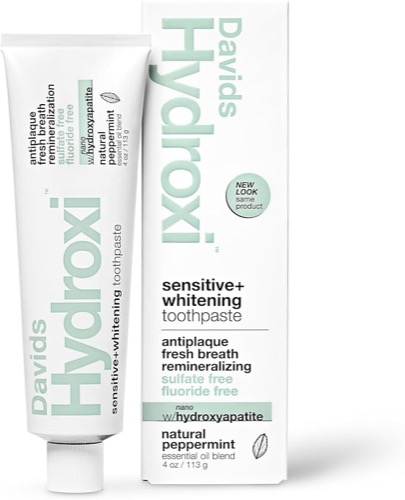
Davids Hydroxi Nano-Hydroxyapatite Toothpaste
Best for: Budget-conscious buyers wanting premium natural ingredients
- Nano-hydroxyapatite for remineralization and sensitivity support
- Antiplaque and whitening formula in a single tube
- SLS-free, sulfate-free, fluoride-free
- Made in the USA in recyclable metal tubes
- +Combines nHAp with antiplaque and whitening support in one tube
- +Recyclable metal tubes and made-in-USA manufacturing
- +Multiple flavor options including a dedicated Sensitive Mint variant
- −Does not state an nHAp percentage; the listing names the supplier grade (Fluidinova NanoXIM) instead
- −Metal tube can be harder to squeeze near the end
(Affiliate link) · Free shipping on eligible Prime items
Why We Recommend It
Davids has built a reputation as a premium natural oral care brand, and its Hydroxi line brings nano-hydroxyapatite into an already strong formula. It is also the value anchor of this roundup. At around $10 for a 4 oz tube as of this writing, it usually carries one of the lowest single-tube prices of any pick here, and it does it without moving into import-product pricing. It also brings a far larger review base than the 10% brands in this lineup, and that depth is why it stays a top-three pick even though it sits below Mouthology on disclosure.
The formula combines nHAp with a whitening and antiplaque blend, plus sensitivity support. It comes in multiple flavor variants including Sensitive Mint, Whitening Peppermint, and Strawberry Watermelon (the one to reach for if mint is what keeps a kid, or you, from brushing happily). (Affiliate link) Davids is particularly notable for its sustainable packaging: recyclable metal tubes and FSC-certified paperboard cartons, with the toothpaste itself made in the USA.
Reviewers frequently mention smoother-feeling teeth, a clean mint profile, and sensitivity improvements. Davids’ listing does not state a percentage, though it does name the material: its Hydroxi blend uses Fluidinova’s NanoXIM nano-hydroxyapatite, which is more than Boka tells you and less than the 10% brands do. It competes here on price, packaging, and a deep review history rather than on a headline concentration number.
Key Features
- Nano-hydroxyapatite combined with whitening and antiplaque ingredients
- Multiple flavor options including a dedicated Sensitive Mint variant
- Recyclable metal tube with sustainability-focused packaging
- Free from SLS, fluoride, parabens, and artificial flavors
- Lower-waste packaging than typical plastic toothpaste tubes
Who It’s Best For
Davids is the value pick if you want a premium-feeling nHAP toothpaste without moving into import pricing. It’s also a great choice if sustainability matters to you: the recyclable metal tubes and made-in-USA manufacturing set it apart from plastic-packaged competitors. If you’ve been using Davids’ fluoride toothpaste and want to try their nHAP line, the transition is straightforward.
Potential Downsides
Davids names its nHAp supplier grade but never a percentage, so you still cannot compare it head-to-head with the 10% brands. Some reviewers note the texture is slightly grittier than expected, particularly in the Whitening Mint variant. The metal tube, while eco-friendly, can be harder to squeeze as you near the end compared to plastic tubes.
(Affiliate link) · Free shipping on eligible Prime items
Ollie 10% Nano-Hydroxyapatite Toothpaste
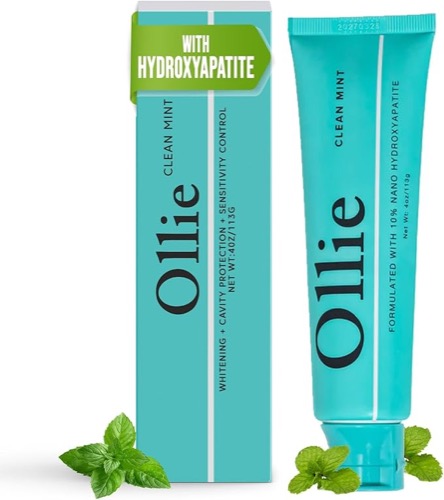
Ollie 10% Nano-Hydroxyapatite Toothpaste
Best for: People who want enamel remineralization and visible whitening
- 10% nano-hydroxyapatite for remineralization
- Whitening formula that targets surface stains
- Enamel and sensitivity support
- Clean Mint flavor, fluoride-free
- +10% nano-hydroxyapatite for combined remineralization and whitening support
- +Gentler whitening approach than peroxide-based products
- +Suitable for sensitive teeth that react to traditional whitening toothpaste
- −One of the more expensive options in the nHAP category
- −Tube size is smaller than product photos suggest
(Affiliate link) · Free shipping on eligible Prime items
Why We Recommend It
Ollie takes a 10% nano-hydroxyapatite formula and leans into the whitening angle. The brand positions it as a three-in-one for enamel support, whitening, and sensitivity relief, which makes it a useful fit for readers who want nHAP but still care about stain removal and brightness. It lists a 10% concentration, unlike some brands that leave the number unstated, though a higher stated percentage is not automatically better (see the buyer’s guide below).
Reviewers frequently describe a gentler whitening experience than peroxide-heavy products. That fits the nHAP whitening theory: rather than bleaching intrinsic tooth color, hydroxyapatite may smooth microscopic surface irregularities so enamel reflects light more evenly.
For people interested in how nHAp compares to other whitening approaches, our best whitening toothpaste guide covers the full range of options.
Key Features
- 10% nano-hydroxyapatite: high concentration for remineralization
- Whitening-focused formula targeting surface stain removal
- Appropriate for sensitive teeth
- Clean Mint flavor
- Available in single, 2-pack, and 3-pack options
Who It’s Best For
Ollie is the choice if whitening is your primary goal but you don’t want a peroxide-first toothpaste. Traditional whitening toothpastes often rely on abrasives or peroxide; nHAP-based whitening is better framed as enamel-surface support and surface-stain management. If you’ve had trouble with sensitivity from whitening products in the past, this approach may be worth trying.
Potential Downsides
At around $17 for a 4 oz tube as of this writing, Ollie is one of the more expensive options in this roundup. The brand is also newer to the market compared with Boka or Davids, with a smaller review base. Some users note the tube is smaller than it looks in product photos, so check pack size before buying.
(Affiliate link) · Free shipping on eligible Prime items
Apagard Premio Nano-Hydroxyapatite Toothpaste
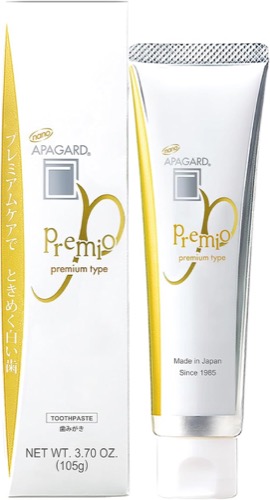
Apagard Premio Nano-Hydroxyapatite Toothpaste
Best for: Enthusiasts who want the original Japanese nHAp toothpaste
- Made by Sangi — the company that invented hydroxyapatite toothpaste in 1980
- Premium Type formula with proprietary Medical Hydroxyapatite (mHAp)
- Japanese import with long Sangi product history
- Double Mint flavor, 3.7oz tube
- +Made by Sangi, the company that pioneered hydroxyapatite toothpaste in 1980
- +Proprietary Medical Hydroxyapatite refined over 40+ years of research
- +Clean Double Mint flavor with long Japanese market history
- −Premium pricing significantly higher than US-made nHAP toothpastes
- −Japanese packaging can be confusing for English-only readers
(Affiliate link) · Free shipping on eligible Prime items
Why We Recommend It
Apagard is the original lineage in this category. Sangi says it launched APADENT hydroxyapatite toothpaste in 1980, followed by APAGARD in 1985, and that Japan’s former Ministry of Health and Welfare approved its proprietary Medical Hydroxyapatite as an anti-caries ingredient in 1993.
The Premio (“premium”) line uses Sangi’s proprietary Medical Hydroxyapatite (mHAp), which the company has refined through extensive research. It commands a higher price tier than US-made alternatives, but the appeal is the research lineage and long Japanese market history. The Double Mint flavor is clean and refreshing without being overpowering.
For those interested in the science behind Sangi’s approach, the Sangi mechanism page provides accessible summaries of the company’s clinical work and technology claims.
Key Features
- Made by the company that invented hydroxyapatite toothpaste (1980)
- Proprietary Medical Hydroxyapatite (mHAp)—refined over 40+ years
- Japanese manufactured import formula
- Available in single, 2-pack, and 3-pack options
Who It’s Best For
Apagard is for the nHAP enthusiast: someone who’s already familiar with hydroxyapatite, wants the longest-running formulation lineage in this roundup, and is willing to pay a premium for it. It’s also a good fit if you specifically want a Japanese import rather than a newer US clean-oral-care brand. Apagard came up more often than any other brand in the community threads behind this page, and the long-term users there tend to favor the Royal variant, which Sangi says carries twice the nHAp of its M-plus type (Sangi FAQ). If you’re weighing Premio against Sangi’s other lines, our Apagard toothpaste review breaks down which variant fits which reader.
Potential Downsides
The biggest barrier is price: at around $22 for a 3.7 oz tube as of this writing, Apagard is the premium pick here and often costs meaningfully more than US-made nHAP toothpastes. It also has fewer US Amazon reviews than competitors, partly because it is an import product. The packaging and branding are in Japanese with English labels, which some users find confusing. Availability can also be inconsistent, with occasional stock issues on Amazon.
(Affiliate link) · Free shipping on eligible Prime items
Lumineux 10% Nano-Hydroxyapatite Toothpaste
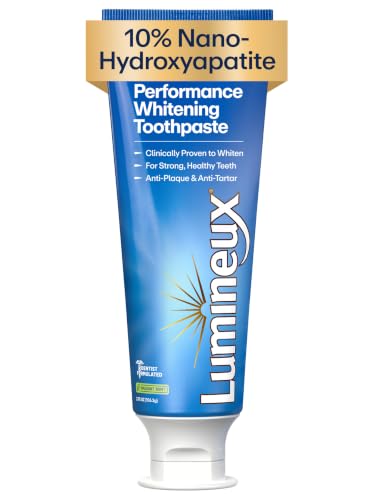
Lumineux 10% Nano-Hydroxyapatite Toothpaste
Best for: Buyers who want a stated 10% nHAp concentration at the lowest tube price here
- 10% nano-hydroxyapatite, stated on the listing
- Fluoride-free, SLS-free, and peroxide-free
- Whitening framed as surface polishing, not bleaching
- Mint flavor in a 3.75 oz tube
- +States a 10% nano-hydroxyapatite concentration, like Mouthology and Ollie
- +Lowest tube price in this lineup at around $8 for 3.75 oz
- +Fluoride-free, SLS-free, and peroxide-free, with whitening framed as surface polishing rather than bleaching
- −Lowest rating in this lineup (4.3 stars across about 1,000 ratings), with a review base only Apagard's is smaller than
- −3.75 oz tube is a little smaller than the 4 oz tubes most US brands here use
(Affiliate link) · Free shipping on eligible Prime items
Why We Recommend It
Lumineux is better known for its whitening strips, and this toothpaste is its entry into the hydroxyapatite category. It earns the budget spot on one plain fact: at around $8 for a 3.75 oz tube as of this writing, it is the cheapest paste here that states a 10% nano-hydroxyapatite concentration. A stated percentage is the ask that comes up most often when these brands are compared in the community threads behind this page, and until now the disclosed-10% options here started at about $10.
The listing positions it as a whitening toothpaste, but the mechanism it describes is the same one the other nHAp pastes here describe: nHAp may smooth microscopic enamel irregularities so surface stains have less to hold onto. There is no peroxide in it, so it is not a bleaching product. Readers who want an actual shade change should look at our whitening toothpaste roundup instead.
Key Features
- 10% nano-hydroxyapatite, stated on the product listing
- Fluoride-free, SLS-free, and peroxide-free
- Whitening framed as surface polishing rather than bleaching
- Mint flavor in a 3.75 oz tube
- Lowest per-tube price in this lineup as of this writing
Who It’s Best For
Lumineux is the pick if the concentration number matters to you but the price of the other disclosed-10% pastes does not sit right. It also suits people who already use Lumineux strips or mouthwash and want to stay with one brand. If you are choosing between this and Mouthology, the difference is about $2 a tube against a much deeper review history for Mouthology.
Potential Downsides
This is the lowest-rated product in the lineup, 4.3 stars across about 1,000 ratings as of this writing, against 4.4 to 4.6 for the rest, and only Apagard has a shorter review history here. That is still a solid record, but it is a shorter one, and we found no substantive discussion of this specific paste in the community threads behind this page. The tube is 3.75 oz, a little smaller than the 4 oz US standard, which narrows the price gap slightly. The Amazon listing also does not state the particle shape it uses, so the European safety opinions discussed in the buyer’s guide cannot be mapped onto it the way they can for brands that specify rod-shaped particles.
(Affiliate link) · Free shipping on eligible Prime items
Buyer’s Guide: How to Choose the Best Hydroxyapatite Toothpaste
What Is Hydroxyapatite and Why Does It Matter?
Hydroxyapatite (HAp) is a calcium phosphate mineral found in enamel and dentin. Nano-hydroxyapatite (nHAP) is a synthetic, smaller-particle version used in some toothpastes to support enamel remineralization. A 2022 scoping review found that nHAP-containing dentifrices have reported benefits across remineralization, demineralization reduction, brightness, and sensitivity, but the evidence is not equally strong for every population or claim.
It’s worth separating Japanese and US claim environments. Sangi’s Medical Hydroxyapatite has Japanese anti-caries history, but in the US the ADA’s toothpaste guidance still centers fluoride for anticaries claims. For this page, we treat nHAP as an enamel-support and sensitivity-support ingredient, not a universal fluoride replacement.
nHAp Concentration: Does the Percentage Matter?
Concentration matters because it tells you whether a brand is making a specific formulation claim or simply using nHAP as a label ingredient. Here is what each brand on this page actually states, read from its own listing or website in September 2026:
| Brand | Stated nHAp concentration | Particle shape stated | Where it says so |
|---|---|---|---|
| Mouthology | 10% | Rod-shaped | Listing title |
| Ollie | 10% | Rod-shaped | Listing title and bullets |
| Lumineux | 10% | Not stated | Listing title |
| Davids | Not stated; names the material (Fluidinova NanoXIM) | Rod-shaped | Listing bullets and ingredient panel |
| Boka | Not stated; formula described as proprietary | Not stated | Boka’s own guide |
| Apagard (Sangi) | Not disclosed by policy; Premio holds 1.4 times the nHAp of Sangi’s standard types | Not stated | Sangi FAQ |
Three of the six state 10%, and three name a rod-shaped particle. Sangi says outright that it does not disclose the figure, and Boka and Davids simply do not publish one.
Particle shape matters for a different reason: safety opinions and brand claims are not automatically interchangeable across all forms of nano-hydroxyapatite. The European Commission’s SCCS opinions apply to specified rod-shaped particles and exclude needle-shaped materials. A brand that doesn’t disclose concentration or particle shape isn’t automatically ineffective, but it gives shoppers less to evaluate.
Hydroxyapatite vs. Fluoride: Which Should You Choose?
This is the most common question in the category, and the answer is: it depends on your risk profile. Fluoride has decades of clinical use and remains the ADA-recommended active ingredient for most cavity-prevention routines. Hydroxyapatite research is promising, and some controlled studies show comparable remineralization results in specific settings, but the evidence base is younger and more product/formulation-specific.
That said, many people choose nHAP because they prefer to avoid fluoride for personal reasons, want a sensitivity-focused formula, or want to alternate with fluoride. If you have frequent cavities, dry mouth, recession, orthodontic white spots, or prescription fluoride in your routine, ask your dentist before switching fully away from fluoride. Our fluoride vs. hydroxyapatite comparison takes the head-to-head evidence apart in full if you want the longer version of this answer.
What Else Should You Look For?
Beyond the nHAp itself, consider:
- SLS-free formulas if you’re prone to canker sores or mouth irritation. The ADA notes sodium lauryl sulfate among ingredients reported as contact irritants in some people.
- Xylitol as a supporting ingredient. Treat it as a useful non-cariogenic sweetener in toothpaste, not as a replacement for fluoride.
- Flavor variety: you’re more likely to stick with a toothpaste you enjoy using
- Third-party certifications: vegan, cruelty-free, and organic certifications can matter if they align with your values
- Complementary tools: toothpaste is only part of the picture. A tongue scraper clears the bacterial film a brush leaves behind (Affiliate link), and daily interdental cleaning is widely recommended — see our best water flosser picks
If a paste texture isn’t your thing, our best tooth powder roundup covers remineralizing powder formulas, a different delivery format worth considering.
How Long Before You Notice Results?
Community feedback most often describes sensitivity and smoothness changes first, usually after a few weeks of consistent brushing. Whitening effects, where applicable, are more subtle because nHAP is not a peroxide bleach. Remineralization of early enamel damage is a longer process that may not produce visible results but can be tracked by your dentist over time. Be patient and consistent; switching toothpaste formulas too frequently doesn’t give any single product enough time to work.
Frequently Asked Questions
Is hydroxyapatite toothpaste actually effective?
Research suggests it may be, especially for remineralization and sensitivity support. A clinical meta-analysis found nHAP-containing treatments performed well for dentin hypersensitivity relief, while caries and remineralization evidence is still more formulation-specific than fluoride evidence. Calling nHAP a proven one-for-one fluoride replacement would overstate the current evidence.
Can I use hydroxyapatite toothpaste with braces?
Yes, nHAP toothpaste can be used with braces, retainers, and other dental appliances. The key issue with braces is demineralization around brackets, so ask your orthodontist whether nHAP, fluoride, or a combination routine makes the most sense for your cavity risk. For more orthodontic-specific recommendations, see our guides on best toothpaste for braces and best mouthwash for braces.
Is hydroxyapatite toothpaste safe for kids?
Generally, nHAP is used in some children’s toothpastes, but age-specific brushing advice should still come from a dentist or pediatric dentist. The ADA recommends supervised fluoride toothpaste use in rice-grain or pea-sized amounts depending on age; if you prefer nHAP for a child who swallows toothpaste, ask your dentist how that fits with cavity risk. For the nHAP formulas made specifically for children, see our kids’ hydroxyapatite toothpaste roundup; for age-specific recommendations more broadly, check our best toothpaste for kids and best toothpaste for toddlers guides.
How does nano-hydroxyapatite whiten teeth?
Unlike peroxide-based whitening that bleaches stains, nHAP may make teeth look brighter by filling or smoothing microscopic surface irregularities. That can improve how enamel reflects light, but it will not change intrinsic tooth color the way peroxide can. For a broader look at whitening options, see our best whitening toothpaste roundup.
Should I stop using fluoride if I switch to hydroxyapatite?
That’s a decision to make with your dentist. Some people use nHAp toothpaste as a complete fluoride replacement, while others alternate between the two (for example, using nHAp in the morning and fluoride at night). If you’re at high risk for cavities, your dentist may recommend keeping fluoride in your routine. There’s no evidence that using both nHAp and fluoride together is harmful, though they target enamel remineralization through different mechanisms.
Why do some brands specify “10% nHAp” while others don’t list a percentage?
Formulation transparency varies across the industry. Brands like Mouthology, Ollie, and Lumineux prominently advertise their 10% nHAp concentration, while others like Boka consider their exact formulation proprietary. A higher stated percentage isn’t automatically better; particle size, shape, and supporting ingredients also affect performance. That said, if concentration transparency is important to you, brands that disclose their percentage make it easier to compare.
Is nano-hydroxyapatite toothpaste safe?
For the particle types the EU’s consumer-safety committee has assessed, the answer so far is yes, at up to 10% in toothpaste. The European Commission’s Scientific Committee on Consumer Safety concluded in 2023 that a defined rod-shaped nano-hydroxyapatite is safe in toothpaste at up to 10%, and its 2025 opinion reached a broader conclusion for specified rod-shaped particles while continuing to exclude needle-shaped materials. Those opinions cover the specific materials submitted to the committee, not every product on the shelf, which is why particle shape and concentration disclosure matter when you compare brands. As with any toothpaste, spit rather than swallow, and supervise children’s brushing.