
Nano-hydroxyapatite (nHAP) mouthwash is a newer category of rinse that uses synthetic hydroxyapatite—the same calcium-phosphate mineral found in tooth enamel—to support remineralization after brushing. While nHAP toothpaste has a growing evidence base, the mouthwash format is earlier in its research arc and carries different delivery characteristics. If your primary goal is cavity prevention, start with our best fluoride mouthwash picks, which remain the ADA-recommended default.
How We Evaluated
Remineralizing mouthwash is still an emerging product class, and quality varies. We evaluated each option across five criteria:
- nHAP formulation and transparency: We gave credit to brands that disclose their nHAP concentration and particle type. Undisclosed formulations are not automatically weaker, but they give buyers less to evaluate.
- Supporting ingredients: Rinses in this category lean on additions like xylitol, essential oils, and colloidal silver. We noted which additions have supporting evidence and which rest primarily on tradition.
- Sensitivity and enamel support claims: Many buyers come to this category seeking sensitivity relief. We assessed whether each product’s claims are grounded in formulation logic or rely on nHAP’s general reputation.
- Format and usability: This lineup spans liquid concentrates, ready-to-use rinses, oil-pulling formulas, and chewable tablets. Each format has usability tradeoffs that affect daily compliance.
- Value: Prices range from around $14 to $30, and the formats do not compare cleanly. Ready-to-use bottles run from 8 oz to 20 fl oz, Davids ships a concentrate you dilute yourself, and Boka comes as a 90-count tablet container. We weighed cost per use against formulation quality and brand track record.
We also reviewed the available clinical literature on nHAP in rinse format, ADA fluoride guidance, European safety opinions on nHAP particle shape, and community discussions about real-world experience with these products.
Davids Hydroxi Mouthwash Refill
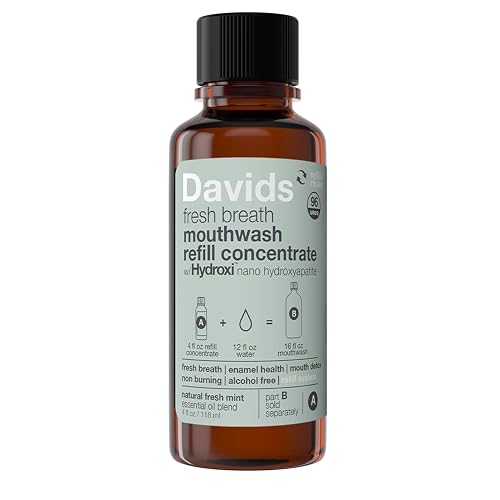
Davids Hydroxi Mouthwash Refill
Best for: People who want a concentrated nHAP rinse from a brand with a strong oral care lineup
- Concentrate formula — mix with water before use
- Nano-hydroxyapatite for enamel support
- Herbal Citrus Mint flavor
- Fluoride-free, alcohol-free
- Refill-friendly packaging for reduced waste
- +Concentrate format keeps the per-rinse cost low and reduces packaging waste
- +Backed by Davids' established nHAP oral care line, including a well-reviewed toothpaste
- +Herbal Citrus Mint flavor for a non-standard taste profile
- −Requires mixing before each use: less convenient than ready-to-use rinses
- −Very new product with a small review base
(Affiliate link) · Free shipping on eligible Prime items
Why We Recommend It
Davids built its reputation on nHAP toothpaste—the Hydroxi toothpaste line is one of the most-reviewed nHAP toothpastes on Amazon—and this mouthwash brings the same formulation philosophy into a rinse format. What makes this pick interesting is the concentrate approach: rather than shipping a pre-mixed bottle, Davids sells a refill that you dilute with water. That keeps the per-use cost low (around $14 for the refill) and reduces the packaging overhead, which aligns with the brand’s sustainability focus.
The Herbal Citrus Mint flavor is a departure from the straight-mint profiles that dominate the category. If you already use Davids toothpaste and want to build a matched nHAP routine, this is the natural pairing. For a broader look at remineralization strategies beyond mouthwash, our how to remineralize teeth guide covers the full picture.
Potential Downsides
The concentrate format adds a step: you need to mix before each use, which makes it less grab-and-rinse than a pre-mixed bottle. The review base is also thin at 226 reviews—strong at 4.8 stars, but a small sample compared to Boka’s nearly 2,000. Davids does not disclose an exact nHAP concentration for this product.
(Affiliate link) · Free shipping on eligible Prime items
Happy Tooth nHAP Mouthwash
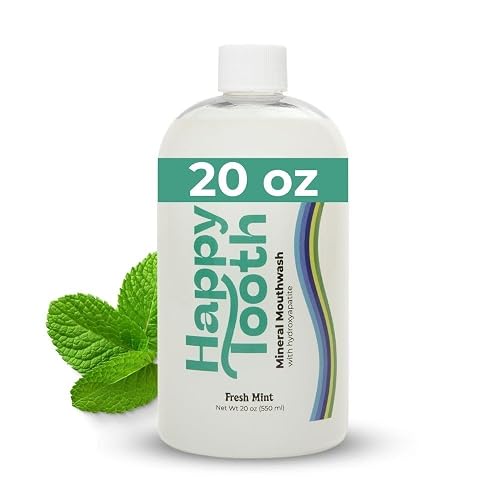
Happy Tooth nHAP Mouthwash (Mint, 20 fl oz)
Best for: Anyone who wants a large, ready-to-use nHAP rinse from a dedicated hydroxyapatite brand
- Nano-hydroxyapatite for enamel remineralization support
- 20 fl oz bottle — largest in this lineup
- Mint flavor, ready to use
- Fluoride-free formula
- From a dedicated nHAP oral care brand with a matching toothpaste line
- +Largest bottle in the lineup at 20 fl oz, offering strong value per ounce
- +Dedicated nHAP oral care brand with a matching toothpaste line
- −Does not disclose exact nHAP concentration
- −Newer brand with limited long-term track record
(Affiliate link) · Free shipping on eligible Prime items
Why We Recommend It
Happy Tooth is one of the few brands built entirely around nano-hydroxyapatite oral care. The company offers nHAP toothpaste, mouthwash, and related products—so the mouthwash is not a line extension from a brand that happens to include nHAP, but a core product from a company whose identity is tied to the ingredient.
The 20 fl oz bottle is the largest in this lineup, which matters for per-ounce value. At around $19, it undercuts some of the smaller-bottle options on a cost-per-use basis. The mint flavor is straightforward and the formula is fluoride-free, making it a simple addition to an existing brushing routine—whether you pair it with nHAP toothpaste or with a fluoride toothpaste and use the rinse as a complementary nHAP step.
Potential Downsides
Happy Tooth does not publish an exact nHAP percentage, so comparing its formulation strength against products that do is difficult. The brand is newer and has a limited track record compared to established oral care companies. There is no independent community feedback on the mouthwash product specifically, though the toothpaste has appeared in user routines discussed online.
(Affiliate link) · Free shipping on eligible Prime items
Simply Silver nHAP Mouthwash
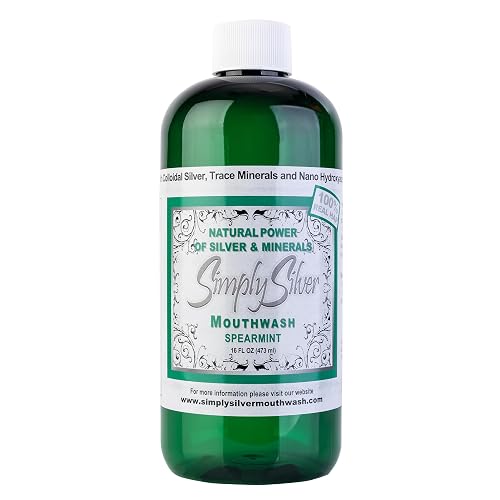
Simply Silver nHAP Mouthwash (Spearmint, 16 oz)
Best for: People who want nHAP paired with colloidal silver for an added antibacterial angle
- Nano-hydroxyapatite combined with colloidal silver
- Spearmint flavor, alcohol-free
- Fluoride-free formula
- 16 oz bottle
- Antibacterial angle from the silver component
- +Combines nHAP with colloidal silver for a dual enamel-support and antibacterial approach
- +Alcohol-free, fluoride-free spearmint formula suited for daily use
- +Strong 4.6-star rating across 900+ reviews: the best combination of high rating and large review base in this lineup
- −No colloidal silver product carries the ADA Seal of Acceptance, and clinical evidence for oral use is limited
- −Higher price per ounce than the larger-bottle options
(Affiliate link) · Free shipping on eligible Prime items
Why We Recommend It
Simply Silver pairs nano-hydroxyapatite with colloidal silver, which gives it an antibacterial angle most nHAP rinses skip. Colloidal silver has some in-vitro antibacterial evidence, though no colloidal silver product holds the ADA Seal of Acceptance and clinical data for oral use specifically remains limited. What you get is a two-ingredient formula—nHAP for enamel support, silver aimed at bacteria—in an alcohol-free spearmint base that avoids the drying or burning sensation some mouthwashes produce.
At 4.6 stars across 909 reviews, Simply Silver has the strongest rating-to-volume ratio in this lineup. The 16 oz spearmint bottle is a mid-range size at around $25. The dual-ingredient approach is the reason to pick it—though the evidence supporting colloidal silver in oral care is not as developed as what exists for ingredients like cetylpyridinium chloride or chlorhexidine, and nothing in the formula targets sensitivity specifically. If you are exploring enamel-support toothpastes alongside this rinse, see our best enamel repair toothpaste picks.
Potential Downsides
The colloidal silver ingredient is polarizing. Some buyers seek it out; others will be put off by its lack of mainstream dental endorsement. The FDA has stated that colloidal silver is not generally recognized as safe or effective for treating any condition, and no colloidal silver oral care product appears on the ADA Seal of Acceptance roster. At around $25 for 16 oz, the per-ounce cost is higher than Happy Tooth’s larger bottle.
(Affiliate link) · Free shipping on eligible Prime items
Boka Hydroxyapatite Mouthwash Tablets
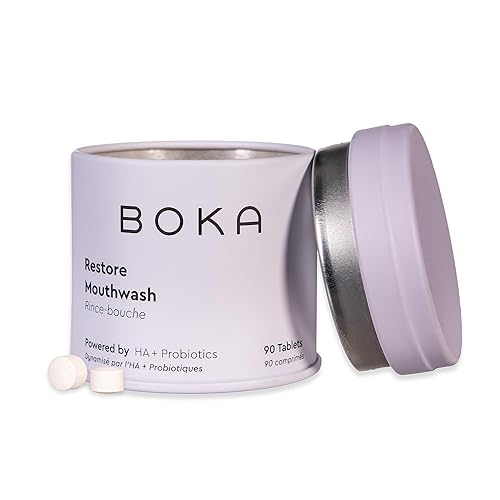
Boka Hydroxyapatite Mouthwash Tablets (90 ct)
Best for: Travelers and commuters who want nHAP rinse without carrying a liquid bottle
- Chewable mouthwash tablets — no liquid to carry or spill
- Nano-hydroxyapatite for enamel support
- 90-count container
- TSA-friendly and travel-ready
- From Boka, an established nHAP toothpaste brand
- +Tablet format eliminates spill risk and meets carry-on liquid restrictions
- +Largest review base in this lineup at nearly 2,000 reviews
- +Boka is an established nHAP brand with a well-reviewed toothpaste line
- −Tablet-to-rinse experience feels unfamiliar compared to traditional mouthwash
- −Lower star rating (4.3) than the liquid options in this lineup
(Affiliate link) · Free shipping on eligible Prime items
Why We Recommend It
Boka’s mouthwash tablets solve a practical problem: liquid mouthwash is heavy, spillable, and subject to carry-on liquid restrictions. The tablet format eliminates all three issues. You chew a tablet, add water, swish, and spit. Community discussions support the format’s appeal—in a thread about nHAP routines for people with enamel damage, one user specifically recommended nHAP mouthwash tablets: “Chewing it into your problem teeth feels satisfying,” with another responding, “I like the chewing tablet idea! I should get some for the really achy days when I’ve eaten too much crunchy stuff.”
Boka also brings brand credibility. The company’s Ela Mint toothpaste is one of the most-reviewed nHAP toothpastes on Amazon (see our nHAP toothpaste roundup), so the mouthwash tablets are a format extension from an established player rather than a one-product startup. At around $20 for 90 tablets, the per-use cost is competitive with liquid options.
Potential Downsides
The 4.3-star rating is the lowest in this lineup. Some reviewers find the tablet experience awkward—chewing a tablet, adding water, and swishing is a different routine than pouring from a bottle, and it takes a few uses before it stops feeling odd. If you prefer a traditional mouthwash experience, the liquid picks in this lineup will feel more familiar.
(Affiliate link) · Free shipping on eligible Prime items
SELFWISE nHAP Oil Pulling Mouthwash
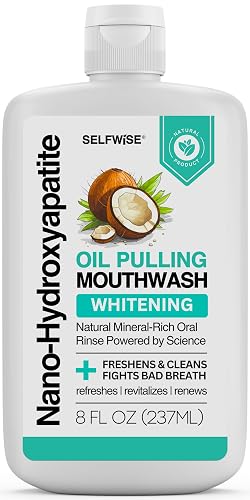
SELFWISE nHAP Oil Pulling Mouthwash (8 oz)
Best for: People who already oil pull and want to add nHAP into that routine
- MCT coconut oil base with nano-hydroxyapatite
- Dual-purpose: oil pulling and nHAP enamel support
- Fluoride-free, alcohol-free
- 8 oz bottle
- Combines traditional oil pulling with modern nHAP formulation
- +Dual-purpose formula combines oil pulling with nHAP enamel support in one step
- +MCT coconut oil base for users who prefer oil-based oral care
- −The ADA does not recommend oil pulling as a dental hygiene practice; the evidence is limited and mostly traditional
- −Small 8 oz bottle at around $20 means a higher per-ounce cost than the larger-bottle options
(Affiliate link) · Free shipping on eligible Prime items
Why We Recommend It
SELFWISE takes a different approach by embedding nano-hydroxyapatite into an MCT coconut oil base designed for oil pulling. Oil pulling—swishing oil in the mouth for several minutes—is a traditional practice with some preliminary evidence for reducing oral bacteria, though the ADA does not recommend it as a dental hygiene practice and the research base is smaller and less standardized than what supports conventional mouthwash ingredients.
What makes this pick worth including is the crossover appeal. If you already oil pull, SELFWISE lets you add nHAP to that routine without adding a separate product. The community signal is thin and second-hand. Two Reddit comments turned up only as search-result snippets: one in a periodontal health thread describing less sensitivity and calmer gums after a few weeks, and one citing the brand’s ingredient transparency as the reason for switching. We could not open either comment in full, so treat both as unconfirmed rather than as evidence. At around $20, the price point is moderate—but the 8 oz bottle is the smallest in the lineup.
Potential Downsides
The 8 oz bottle carries a higher per-ounce cost than the larger-bottle options. Oil pulling also asks for a much longer swish than a conventional rinse, which is the part most people give up on. The oil-based texture is unfamiliar to most mouthwash users, and some people find it unpleasant. If you do not already practice oil pulling, the liquid nHAP rinses in this lineup are a simpler entry point.
(Affiliate link) · Free shipping on eligible Prime items
Dr. Michelle Remineralizing Mouthwash
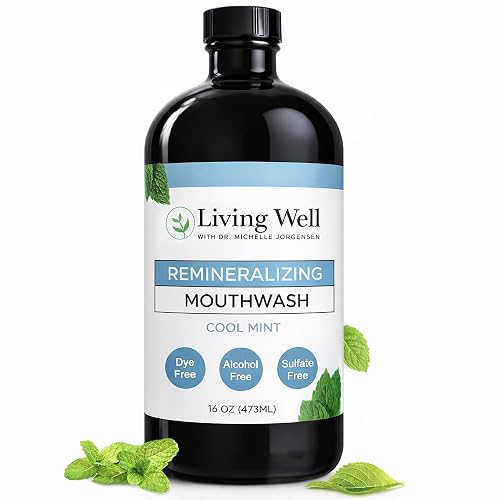
Dr. Michelle Remineralizing Mouthwash (Cool Mint)
Best for: Buyers who want a premium, holistic nHAP formula and are willing to pay more for it
- Nano-hydroxyapatite in a premium holistic formula
- Cool Mint flavor
- Practitioner-founded brand
- Fluoride-free, curated ingredient list
- Positioned as a holistic oral care product
- +Practitioner-founded brand with a holistic oral care philosophy
- +Cool Mint flavor with a clean, curated ingredient list
- −Most expensive option in this lineup at around $30
- −Smaller brand with fewer reviews than more established competitors
(Affiliate link) · Free shipping on eligible Prime items
Why We Recommend It
Dr. Michelle is a practitioner-founded brand with a holistic oral care philosophy, and this mouthwash reflects that positioning. The Cool Mint formula uses nano-hydroxyapatite alongside a curated ingredient list that avoids many of the additives found in mass-market rinses. The brand has appeared in community discussions—one user with an enamel-damage condition mentioned the Dr. Michelle product line favorably.
At around $30, this is the most expensive pick in the lineup. The premium is partly a brand story: a practitioner-founded company with a holistic positioning that resonates with buyers who treat oral care as part of a broader wellness routine. Whether the formulation justifies the price over a product like Happy Tooth at around $19 is difficult to assess without comparative clinical data, which does not exist for these specific products.
Potential Downsides
The price is the primary barrier. At the top of this lineup’s price range, it asks for a real outlay before you know whether the formula suits you. The review base (528 reviews, 4.5 stars) is solid but smaller than Simply Silver or Boka, making the feedback pattern narrower. If your budget matters more than brand philosophy, the other picks in this lineup offer comparable nHAP delivery for less.
(Affiliate link) · Free shipping on eligible Prime items
Wondering what dental communities say about nHAP products? Our community research analysis covers 1,486 Reddit threads across 209 subreddits — including the remineralization and sensitivity discussions that shaped this page.
Buyer’s Guide: How to Choose a Remineralizing Mouthwash
Does nHAP Work in a Mouthwash?
The short answer: it may, but the evidence is earlier-stage than what exists for nHAP toothpaste. A 2023 in-vitro study compared nHAP toothpaste against nHAP mouthwash for dentin tubular occlusion (blocking the tiny channels in dentin that cause sensitivity). The toothpaste showed higher occlusion rates than the mouthwash. This does not mean mouthwash is ineffective, but it suggests the delivery format matters—toothpaste has longer contact time and mechanical action from brushing, while a rinse relies on shorter passive exposure.
Separately, a 2025 in-vitro study tested a single commercial nHAP mouthwash in the laboratory and reported antibacterial, antifungal, and antioxidant activity. Read that one carefully: the formulation tested also contains cetylpyridinium chloride, a well-established antimicrobial in its own right, so the antibacterial results cannot be credited to nano-hydroxyapatite. One laboratory test of one product is a starting point, not a body of evidence, and no dental authority has issued a formal endorsement for nHAP mouthwash.
The practical takeaway: nHAP mouthwash is a reasonable complement to brushing, not a replacement for it. If you are already using an nHAP or enamel-repair toothpaste, a rinse may add incremental contact time with the mineral. If you are relying on mouthwash alone for remineralization, the evidence does not support that approach.
Can You Use nHAP Mouthwash with Fluoride Toothpaste?
This is the most common question in the category. A user on r/askdentists framed it directly: “I want to get the benefits of both minerals so I thought I should brush with a fluoride toothpaste and rinse with a hydroxyapatite mouthwash. Is there a benefit to this or will one mineral cancel out the other?” No dentist answered them on the thread.
There is no published evidence that fluoride and nHAP cancel each other out when used sequentially. They target enamel remineralization through different mechanisms—fluoride promotes the formation of fluorapatite, while nHAP deposits a calcium-phosphate layer. If the question still nags at you, separating them by time of day—fluoride toothpaste in the morning, nHAP rinse at night—costs nothing and removes any theoretical interaction at the enamel surface. That is a scheduling preference on our part, not a precaution anyone has shown to be necessary.
The ADA’s position remains that fluoride is the recommended anticaries agent. Using an nHAP mouthwash alongside fluoride toothpaste is a reasonable approach if you want exposure to both minerals, but it should not replace fluoride for someone at higher cavity risk. For a deeper comparison, see our fluoride vs. hydroxyapatite breakdown.
Liquid vs. Tablets: Which Format?
This lineup includes both liquid rinses and Boka’s chewable tablets, and the format you choose depends on how and where you plan to use it.
Liquid rinses (Davids, Happy Tooth, Simply Silver, SELFWISE, Dr. Michelle) work like conventional mouthwash: pour, swish, spit. There is nothing to prepare and the routine feels familiar. The tradeoff is bulk—bottles are heavier, leak-prone in luggage, and subject to TSA liquid limits.
Tablets (Boka) are chewed with water to create a rinse. The appeal is portability: they are lightweight, spill-proof, and easy to keep in a desk drawer, gym bag, or carry-on. Community feedback supports the format—users with enamel damage have described the chewing action as satisfying for targeting problem areas. The tradeoff is the extra chew-and-dissolve step and a routine that takes a few goes to feel normal.
Neither format has been shown to be clinically superior to the other for nHAP delivery. Choose based on your practical needs: liquid for a familiar home routine, tablets for travel and portability. If neither format fits your routine, our remineralizing gum roundup covers the chewable option as a third nHAP delivery format.
What to Look For
When evaluating a remineralizing mouthwash, consider:
- nHAP concentration and particle type. Brands that disclose their percentage and specify rod-shaped particles (the form the European Commission’s SCCS assessed as safe in its June 2025 opinion) make comparison easier. In practice, none of the products in this lineup publish an exact nHAP percentage, so comparison on formulation strength alone is not currently possible. Higher concentration would not automatically mean better performance in any case: one commenter in an r/Dentistry thread argued that high concentrations make the particles clump until they are too large to settle onto tooth structure or fill pores and tubules. That is a single voice whose credentials we could not confirm, not a research finding—but it is a fair caution against reading a bigger percentage as a better product. Undisclosed concentrations are not automatically a red flag, but they leave you evaluating the brand on reputation rather than formulation data.
- Supporting ingredients. Colloidal silver is the addition documented in this lineup, and it carries Simply Silver’s whole pitch. Elsewhere in the category you will see xylitol (a non-cariogenic sweetener with some evidence for reducing bacterial acid production) and essential oils. Weight each by its evidence base, not by how prominently the label features it.
- Alcohol-free formulas. Alcohol-based rinses can dry the mouth, which may undermine the remineralization environment you are trying to create. Davids, Simply Silver, and SELFWISE state alcohol-free formulas; for the other three, check the label before you buy.
- Bottle size and per-use cost. A lower sticker price on a smaller bottle can be more expensive per use. Happy Tooth’s 20 fl oz at around $19 and Davids’ concentrate at around $14 offer the strongest per-rinse value; Dr. Michelle at around $30 is the steepest.
- Brand track record. In an emerging category with limited regulatory oversight—the FDA does not evaluate nHAP oral care claims the way it does fluoride—a brand’s broader product history and transparency matter more than usual.
Frequently Asked Questions
Is remineralizing mouthwash a replacement for toothpaste?
No. Mouthwash is a complement to brushing, not a substitute. Toothpaste delivers active ingredients with mechanical action over a longer contact period. Even the toothpaste evidence has limits: a 2022 scoping review of nHAP dentifrices concluded there is insufficient evidence to support their efficacy in primary teeth. The rinse research is thinner still—we found no equivalent review covering nHAP mouthwash at all. If you use nHAP mouthwash, pair it with a toothpaste—either nHAP or fluoride—rather than treating the rinse as your sole remineralization step.
Is nano-hydroxyapatite safe in mouthwash?
The mouthwash question has a direct answer. In its June 2025 opinion, the European Commission’s Scientific Committee on Consumer Safety (SCCS) considered nano-hydroxyapatite safe at concentrations up to 10% in mouthwash and up to 29.5% in toothpaste, and reported no mutagenic hazard. That raised the earlier 2023 ceilings and settled the genotoxicity question in favor of safety.
Two caveats worth understanding. The opinion covers rod-shaped particles only—needle-shaped nHAP sits outside its scope, so the SCCS makes no finding about that form either way, and the exclusion is a boundary on what was assessed rather than a verdict against needles. And none of the products in this lineup publish an nHAP percentage, so you cannot check any of them against the 10% rinse ceiling yourself. Safety is the part of this category that has been examined properly; efficacy in rinse format is where the research base is still thin.
How often should I use nHAP mouthwash?
Most products in this lineup are designed for once- or twice-daily use, following brushing. There is no established clinical protocol for nHAP mouthwash frequency. A reasonable approach is to follow the product’s label directions and use the rinse consistently rather than sporadically—remineralization support depends on regular contact over time, not occasional use.
Does nHAP mouthwash help with tooth sensitivity?
It may. Nano-hydroxyapatite may help occlude (block) exposed dentin tubules, which are a common cause of sensitivity to hot, cold, and sweet stimuli. However, a 2023 study found that nHAP toothpaste produced greater tubular occlusion than nHAP mouthwash in a laboratory setting. Community experience is mixed: some users report sensitivity improvements with nHAP products, while one user who tried four different nHAP toothpastes over nine months reported no decrease in sensitivity. Set realistic expectations—nHAP mouthwash may provide incremental support but is unlikely to resolve severe or long-standing sensitivity on its own.
Why doesn’t the ADA endorse nHAP products?
The ADA Seal of Acceptance program evaluates products that submit evidence meeting its standards for safety and efficacy. As of this writing, no nHAP toothpaste or mouthwash has received the ADA Seal. This does not mean nHAP is unsafe—it means the evidence submitted (or the act of submission itself) has not met the ADA’s specific criteria. The ADA’s fluoride guidance remains centered on fluoride as the recommended anticaries agent, reflecting decades of clinical data that nHAP has not yet matched in breadth.
When should I see a dentist instead of buying a remineralizing mouthwash?
If you have persistent tooth sensitivity that does not improve after several weeks, visible enamel damage such as chips or translucent edges, cavity symptoms like sharp pain when biting or dark spots on teeth, or gum recession exposing root surfaces, see a dentist before relying on any over-the-counter product. Remineralizing mouthwash supports enamel in its early stages of weakening, but it cannot reverse a cavity that has broken through enamel or address underlying conditions like bruxism or acid reflux that accelerate enamel loss. A dentist can assess whether your situation calls for professional treatment, prescription-strength products, or whether an OTC remineralizing rinse is a reasonable part of your home care routine.
Can I use nHAP mouthwash with braces or retainers?
Generally, yes. nHAP mouthwash can be swished around brackets, wires, and retainers without interference. The concern with braces is demineralization around brackets—white spots that form where enamel weakens under plaque buildup. Whether nHAP rinse, fluoride rinse, or both is the right approach depends on your cavity risk, which your orthodontist can assess. For orthodontic-specific product recommendations, see our guide to the best mouthwash for braces.