Best Mouthwash for Receding Gums in 2026: Dentist-Informed Picks
Receding gums are more common than most people realize. According to MouthHealthy, gum disease is linked to risk factors including poor oral hygiene, genetics, and hormonal factors like pregnancy. Gum disease is also one of the conditions that can contribute to recession, and once gum tissue pulls back, it doesn’t grow back on its own. That makes prevention and daily maintenance critical.
One practical, low-effort tool in that maintenance routine? The right mouthwash. Mayo Clinic notes that while no rinse can reverse recession that’s already occurred, the right formula may help with reducing harmful bacteria, calming gum inflammation, and creating an environment where your gums have a better chance of staying healthy. For a complete overview of causes and treatment options, see our guide on gum recession treatment guide.
We’ve dug into the research, reviewed expert guidance, and evaluated what’s actually on shelves to bring you this guide. Here’s what we found.
How We Evaluated
Before we get into the picks, here’s what we actually looked at when building this list:
- Active ingredients: We prioritized rinses with evidence-backed ingredients like cetylpyridinium chloride (CPC), chlorhexidine alternatives, fluoride, and essential oils with antimicrobial properties.
- Alcohol content: Alcohol-based mouthwashes can dry out oral tissues, which is particularly problematic when gum tissue is already compromised. We noted alcohol content for each pick.
- Gentleness: Receding gums often mean exposed root surfaces and heightened sensitivity. Harsh formulas can cause more harm than good.
- ADA Seal of Acceptance: Where available, we noted ADA-accepted products, which have been evaluated for safety and efficacy.
- Real-world usability: A great mouthwash has to be one people will actually use twice a day. Flavor, burn level, and availability all factor in.
The most instructive thread in the r/DentalHygiene research behind this update came from a user convinced Listerine had caused a new mark at their gumline. A commenter on r/DentalHygiene reframed it: 'Listerine cannot to my knowledge cause gum recession. However, you might have had gum inflammation reduction... We have a term called pseudo pocketing.' Inflamed gums sit puffy and high on the tooth; a routine that calms them down can reveal a gumline that was always slightly further back.
Evidence Receipt
- The ADA’s mouthrinse overview attributes therapeutic effects to active ingredients such as cetylpyridinium chloride and essential oils that can help reduce plaque and gingivitis, and notes an alcohol-free rinse may be the prudent choice for people prone to dry mouth.
- ADA fluoride guidance supports fluoride’s role in strengthening tooth surfaces and promoting remineralization, which is the basis for the exposed-root fluoride picks on this list.
- Cleaning between teeth is mechanical work no rinse replaces: European Federation of Periodontology guidance recommends interdental brushes wherever the space allows one to be inserted without trauma, and a 2019 Cochrane review found interdental brushes may reduce gingivitis more than floss, with the plaque comparison inconsistent.
- No mouthwash reverses existing recession: Mayo Clinic’s receding-gums overview frames rinses as supportive care, and significant recession needs a dentist or periodontist.
Sensodyne Pronamel Intensive Enamel Repair Mouthwash — Best Overall
Sensodyne Pronamel Intensive Enamel Repair Mouthwash
Best for: Protecting exposed root surfaces against acid and sensitivity
- Alcohol-free enamel-repair fluoride rinse
- Built on Sensodyne's sensitivity / enamel-repair system
- Sized as a 3-pack for multi-month daily use
- 3,925 Amazon ratings at 4.8 stars
- +Alcohol-free fluoride rinse that Sensodyne says helps actively repair weakened enamel
- +The only pick formulated around enamel repair (Sensodyne's wording) rather than pain relief or general gum health
- +No alcohol: the ADA's mouthrinse guidance says an alcohol-free rinse may be the prudent choice for anyone prone to dry mouth
- −Priced higher per ounce than general-purpose rinses as a specialist formula
- −Not intended for active periodontal infection, it protects exposed surfaces, not the underlying disease
(Affiliate link) · Free shipping on eligible Prime items
Why We Recommend It
When gums recede, what was once protected enamel becomes exposed root dentin—softer, more porous, and far more vulnerable to acid and sensitivity than any other surface in the mouth. Sensodyne Pronamel Intensive Enamel Repair is a fluoride rinse that Sensodyne says helps actively repair weakened enamel, and it is alcohol-free, which matters because the ADA notes alcohol can be drying. It’s the only mouthwash on this list formulated around enamel repair (Sensodyne’s wording) rather than pain relief or general gum health. One transparency note: our Reddit research pass found constant discussion of Pronamel toothpaste but no organic community testimony on this mouthwash SKU specifically, so this pick rests on formula and label rather than user threads.
Key Features
- Alcohol-free fluoride rinse in an enamel-repair chemistry
- Extra Fresh flavor designed for daily twice-a-day use
- One of the most recognized sensitivity brands in oral care
- 3-pack presentation built for 2–3 months of consistent use
Who It’s Best For
Anyone whose dentist has flagged root exposure, clinical recession, or persistent dentinal sensitivity. Particularly strong for people who already use Sensodyne Pronamel toothpaste: the rinse and paste share a chemistry that reinforces each other twice a day.
Potential Downsides
At around $18.50 for the 3-pack as of this writing, it’s priced higher per ounce than general-purpose rinses because it’s a specialist formula. Not intended for active periodontal infection: the role here is protecting the exposed surfaces left behind after recession, not treating the underlying disease.
(Affiliate link) · Free shipping on eligible Prime items
Listerine Clinical Solutions Sensitive Teeth Mouthwash — Best for Root Sensitivity
Listerine Clinical Solutions Sensitive Teeth Mouthwash
Best for: Root sensitivity pain at the recession line
- Alcohol-free sensitivity-targeted rinse
- From the clinical Listerine line, distinct from antiseptic Listerine
- Daily fresh mint profile gentler on exposed tissue
- 1,440 Amazon ratings at 4.6 stars
- +Alcohol-free rinse built specifically around root-sensitivity pain at the recession line
- +Fresh mint tuned much lower than classic Listerine so it's tolerable on exposed dentin
- +One of the more affordable picks on the list
- −Not a cavity-strengthening fluoride rinse, needs pairing for the enamel-rebuilding angle
- −Sensitivity relief is gradual, not immediate
(Affiliate link) · Free shipping on eligible Prime items
Why We Recommend It
This is the sibling of our gum-disease pick from Listerine’s Clinical Solutions sub-line—but built specifically around the sensitivity pain that hits when gums have receded far enough to expose the dentin. It’s alcohol-free (which is effectively mandatory when inflamed root surfaces are already hurting), and the fresh mint is tuned much lower than classic Listerine so it actually gets used daily. It also shows up in the wild: one r/DentalHygiene user in the threads we read uses this exact rinse daily and chose it for its dye-free formula, and no one in that thread had a complaint about the product itself. At around $9 as of this writing, it’s also one of the more affordable picks on this list.
Key Features
- Alcohol-free sensitivity-focused clinical rinse
- Daily fresh mint: designed to be tolerable on exposed dentin
- Positioned around sensitivity pain relief and protection, not just breath
- 500 mL clinical bottle
Who It’s Best For
People whose recession shows up primarily as sensitivity to cold, air, or brushing, not as bleeding or active infection. A good complement to Pronamel if you want a dedicated pain-focused rinse in rotation.
Potential Downsides
Not a cavity-strengthening fluoride rinse: pair with ACT or Pronamel for the enamel-rebuilding angle. Sensitivity relief is gradual, not immediate.
(Affiliate link) · Free shipping on eligible Prime items
ACT Anticavity Fluoride Mouthwash — Best Fluoride for Exposed Roots
ACT Anticavity Fluoride Mouthwash (Cinnamon, 18 fl oz)
Best for: Daily fluoride strengthening of exposed root dentin
- 0.05% sodium fluoride anticavity rinse
- Alcohol-free
- Strongest anticavity fluoride concentration sold without a prescription
- Multiple flavors available
- +Sodium fluoride that strengthens exposed root dentin against decay
- +Alcohol-free; the ADA notes alcohol can be drying and that an alcohol-free rinse may be the prudent choice for dry mouth
- +The least expensive pick on the list
- −Lacks the antimicrobial action of other picks, works best combined with a fuller routine
- −Fluoride rinse shouldn't be swallowed, so not ideal for very young children
(Affiliate link) · Free shipping on eligible Prime items
Why We Recommend It
When gums recede, they expose cementum: the softer root surface that sits below the gum line. This surface is significantly more vulnerable to decay than enamel and often triggers significant sensitivity. According to ADA fluoride guidance, fluoride strengthens tooth surfaces and may help with reducing the risk of root caries, which is a real concern for people with recession. If sensitivity is a significant issue for you, a mouthwash for sensitive teeth used alongside your gum-focused rinse may help. ACT Anticavity delivers 0.05% sodium fluoride, the strongest anticavity concentration sold without a prescription, in an alcohol-free, rinse-once-daily format that’s easy to work into any routine. When Reddit users ask why dentists and hygienists keep recommending ACT, the answers that come back in our research are its fluoride content, the absence of alcohol, and the fact that any drugstore carries it. At around $4 as of this writing, it’s also the least expensive pick on this list.
Key Features
- 0.05% sodium fluoride anticavity rinse
- Alcohol-free
- Strongest anticavity fluoride concentration sold without a prescription
- Multiple flavors available
- Very affordable
Who It’s Best For
Anyone whose dentist has flagged exposed root surfaces or root sensitivity as a concern. Also a good supplemental rinse to rotate with a more antimicrobial formula.
Potential Downsides
Fluoride rinse shouldn’t be swallowed: not ideal for very young children. It also doesn’t directly address bacteria or inflammation the way antimicrobial rinses do, so it works best in combination with a complete oral care routine. One commenter on r/DentalHygiene in our research recalled a professor comparing ACT to flavored water for gum-disease efficacy specifically. That’s one professional’s anecdote rather than consensus, but it frames the right expectation: ACT’s job here is fluoride protection for exposed roots, not antimicrobial gum treatment.
(Affiliate link) · Free shipping on eligible Prime items
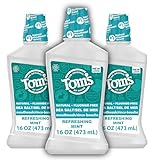
Tom’s of Maine Sea Salt Alcohol-Free Mouthwash — Best Natural Alcohol-Free
Tom's of Maine Sea Salt Alcohol-Free Mouthwash
Best for: Natural-ingredient rinse without SLS, alcohol, or artificial sweeteners
- Sea salt and zinc-forward natural formula
- Alcohol-free, no artificial sweeteners, colors, or flavors
- 3-pack 16 fl oz presentation built for continued use
- 501 Amazon ratings at 4.5 stars
- +Alcohol-free with no SLS or artificial sweeteners for a cleaner ingredient list
- +Sea salt gives gentle astringent action while zinc supports plaque management
- +One of the most widely available natural options that doesn't compromise on feel
- −Contains no fluoride, so shouldn't be the only rinse for roots at cavity risk
- −Mild mint flavor that some users find too soft
(Affiliate link) · Free shipping on eligible Prime items
Why We Recommend It
When recession patients specifically ask for a cleaner ingredient list (no alcohol, no SLS, no artificial sweeteners), Tom’s of Maine Sea Salt is one of the most widely available options that actually matches the request without compromising on feel. Sea salt gives it a gentle astringent action for the gum line, the zinc supports plaque management, and the alcohol-free chemistry avoids the burn that recession patients tolerate the least. A transparency note: this pick drew no Reddit discussion in our research pass; its gentle, non-irritating reputation comes from retail reviews, and we weight it accordingly. The 3-pack runs $22.44 as of this writing: about $7.50 per bottle.
Key Features
- Natural sea salt and zinc profile
- Free of alcohol, artificial sweeteners, colors, and flavors
- Refreshing mint flavor without chemical aftertaste
- Pack-of-3 sizing for sustained daily use
Who It’s Best For
Patients who prefer natural-ingredient oral care products and don’t want to trade down on feel. Also a good rotation partner with fluoride rinses like ACT for people who want to alternate a re-mineralizing rinse with a gentler natural option.
Potential Downsides
Doesn’t contain fluoride, so shouldn’t be the only rinse for patients with exposed root surfaces at cavity risk. Mint flavor is softer than conventional rinses; some users find it too mild.
(Affiliate link) · Free shipping on eligible Prime items
Listerine Gum Therapy Antiplaque & Anti-Gingivitis Mouthwash — Best for Gum Treatment

Listerine Gum Therapy Antiplaque & Anti-Gingivitis Mouthwash
Best for: Gumline plaque and gingivitis control rather than breath freshening
- Essential-oil antiseptic actives, the same class as classic Listerine
- Antiplaque and anti-gingivitis gum-health formula
- ADA Seal of Acceptance
- 9,061 Amazon ratings at 4.7 stars
- +Holds the ADA Seal of Acceptance
- +Essential-oil formula aimed at gumline plaque and gingivitis rather than breath
- +The Listerine pick US Reddit users actually name when the concern is gum health
- −Built for plaque and gingivitis control, not root sensitivity, so exposed-root pain still needs a sensitivity rinse
- −Contains 21.6% alcohol by volume, which can sting exposed root surfaces
(Affiliate link) · Free shipping on eligible Prime items
Why We Recommend It
This is the slot our Reddit research effectively picked. In the threads behind this update, “Gum Therapy” is the Listerine name US users actually reach for when the concern is gum health rather than breath: one r/Dentistry poster listed it in their daily routine, and a head-to-head thread comparing it with ACT described it as the option targeted at at-risk and periodontal patients. It holds the ADA Seal of Acceptance for helping prevent and reduce plaque and gingivitis, and it is the essential-oil formula Listerine positions around gumline gum health rather than breath. One thing to know before you buy: the base is 21.6% alcohol by volume, the same as classic Listerine antiseptic, so it can sting where recession has left root surfaces exposed.
Key Features
- Essential-oil antiseptic formula targeting plaque and gingivitis at the gumline
- ADA Seal of Acceptance
- Designed for twice-daily use alongside brushing and interdental cleaning
- Same antiseptic base as classic Listerine, at 21.6% alcohol by volume
Who It’s Best For
People whose recession comes with bleeding, puffiness, or a gum-disease warning from their dentist, and Listerine users who want the brand’s dedicated gum-health formula. At around $8.50 as of this writing, it sits between ACT and the specialist sensitivity rinses on price.
Potential Downsides
It’s a plaque-and-gingivitis rinse, not a sensitivity or fluoride product: if exposed-root pain or root-decay risk is your main issue, pair it with Listerine Clinical Solutions or ACT from this list. And because the base carries the same 21.6% alcohol as classic Listerine, exposed roots can sting on contact, which is the trade-off for the essential-oil actives doing the gum work.
(Affiliate link) · Free shipping on eligible Prime items
Crest Pro-Health Complete Clean Mouthwash — Best Everyday Maintenance

Crest Pro-Health Complete Clean Mouthwash
Best for: Everyday dual-action gum and breath maintenance
- Alcohol-free
- Targets gum-line bacteria
- Freshens breath for up to 12 hours
- CPC-based formula
- +Alcohol-free CPC formula that targets gum-line bacteria
- +Dual-action gum health and breath freshness for up to 12 hours
- +Widely available in drugstores and budget-friendly
- −Some users notice a slightly medicinal aftertaste
- −May not be strong enough for more advanced gum concerns
(Affiliate link) · Free shipping on eligible Prime items
Why We Recommend It
Crest Pro-Health Complete Clean is one of the few over-the-counter options specifically formulated with gum health in mind. According to the periodontal health experts at Periodontal Health Center, it earns a spot among the best periodontal mouthwashes thanks to its cetylpyridinium chloride (CPC) antibacterial approach and its clean, alcohol-free formula. Oral-B’s own consumer guidance (a manufacturer’s recommendation rather than clinical literature) also points people experiencing gum issues toward alcohol-free rinses, noting they leave the mouth feeling fresh without the burning sensation that can exacerbate sensitivity. Like Tom’s, this pick drew no organic Reddit discussion in our research pull, so our assessment rests on its label claims and verified-review patterns.
Key Features
- Alcohol-free
- Targets gum-line bacteria
- Freshens breath for up to 12 hours
- CPC-based formula
- Available widely in drugstores
Who It’s Best For
Everyday users who want a dual-action rinse that addresses both gum health and breath freshness without any fuss. At around $5 as of this writing, it’s a solid pick for the whole family.
Potential Downsides
Some users notice a slightly medicinal aftertaste. It may not be strong enough for those with more advanced gum concerns, who should speak with a periodontist about prescription-strength options.
(Affiliate link) · Free shipping on eligible Prime items
Buyer’s Guide: What to Look For
Alcohol-Free Is Usually the Right Call
Alcohol is a drying agent—the ADA notes it may be prudent to recommend alcohol-free rinses for people prone to dry mouth. For healthy gum tissue, a little dryness might be tolerable, but for tissue that’s already receding or inflamed, that same drying effect can worsen sensitivity and irritation.
Look for Evidence-Backed Active Ingredients
The most evidence-supported active ingredients in OTC gum-health mouthwashes include:
- Cetylpyridinium chloride (CPC): The ADA lists CPC among the therapeutic actives in mouthrinses that can help reduce plaque and gingivitis
- Essential oils (eucalyptol, thymol, menthol, methyl salicylate): The ADA’s mouthrinse overview also lists essential oils among the actives shown to reduce plaque and gingivitis when used as directed
- Sodium fluoride: Helps protect exposed root surfaces from decay, as noted in ADA guidance on fluoride
- Hydrogen peroxide (low concentration): May help with soothing minor soft tissue irritation
Avoid Harsh Additives If You’re Sensitive
Sodium lauryl sulfate (SLS), artificial dyes, and high alcohol content are all worth avoiding if your gums are already compromised. These ingredients may disrupt the oral microbiome or cause additional tissue irritation.
The ADA Seal Matters
The ADA Seal of Acceptance means a product has been independently evaluated for safety and effectiveness for its stated purpose. It’s one of the easiest ways to filter out products making unsupported claims.
Clean Between Your Teeth Before You Rinse
A rinse is the last step in the chain, not the first. Swishing over an undisturbed film of plaque does little for the surfaces underneath; the actives can only reach what brushing and interdental cleaning have already physically disrupted. That between-teeth step matters most exactly where recession has opened up wider interdental spaces. European Federation of Periodontology guidance recommends interdental brushes wherever the space allows one to be inserted without trauma, and a 2019 Cochrane review found interdental brushes may reduce gingivitis more than floss, with the plaque comparison inconsistent.
Two practical rules from commenters on r/DentalHygiene in our research: pick the largest brush that fits a given gap without forcing, and never force one; if no size fits, that surface is for floss. Expect some bleeding in long-neglected gaps for the first few days: it comes from the existing inflammation being cleaned up, not from brush damage, and should settle quickly. One safety note from the same threads: replace brushes before the wire looks worn or bent, because a tip that snaps off between teeth (or in a periodontal pocket) is a rare but real scenario. For sizing help, see our interdental brush size chart; for our picks, see the full interdental brush guide.
Mouthwash Is a Supplement, Not a Solution
It’s worth saying clearly: no mouthwash reverses gum recession. If you’re seeing significant recession, exposed roots, or bleeding gums, please see a dentist or periodontist. Mouthwash is a supportive tool: best used alongside proper brushing (with a soft-bristled brush), flossing, and regular professional cleanings. For toothbrush guidance tailored to receding gums, see our picks for the best toothbrush for receding gums, or the best electric toothbrush for receding gums if you prefer powered brushing.
FAQ
Q: Can mouthwash actually help with receding gums?
A: Mouthwash can’t reverse recession that has already occurred: that requires professional treatment. However, the right mouthwash may help reduce the plaque and gingivitis the ADA’s mouthrinse overview describes: the same inflammation that can drive further recession. Think of it as damage control and prevention, not repair.
Q: Can mouthwash cause gum recession?
A: No ingredient in the rinses on this list is known to cause recession. What trips people up is timing: in our research threads, a user noticed a new gumline mark right after starting Listerine, and a commenter on r/DentalHygiene explained it as inflammation reduction, sometimes called pseudo-pocketing. Inflamed gums are puffy and sit higher on the tooth; when a better routine calms them down, the gumline that was always underneath becomes visible. If a gap keeps widening or pain escalates, that’s a reason to see a dentist, not to switch products.
Q: Does dabbing mouthwash directly on a receding spot help gums grow back?
A: No. This myth came up verbatim in our research threads, and the professional answer steered the poster to a dentist, noting rinses are only called for under specific conditions. No topical application regrows gum tissue; receded areas that hurt or keep progressing need a dentist or periodontist, where options like grafting are assessed.
Q: Should I use an alcohol-free mouthwash for receding gums?
A: In most cases, yes. Alcohol-free formulas are less likely to irritate already-sensitive gum tissue or exposed root surfaces. Oral-B’s consumer guidance (manufacturer advice, not clinical literature) specifically notes that alcohol-free rinses help avoid the burning sensation that can be uncomfortable for those with gum problems.
Q: How often should I use mouthwash if I have receding gums?
A: The common recommendation is twice daily: after brushing in the morning and before bed. Follow the specific product’s instructions, and check with your dentist or periodontist if you’re unsure what’s right for your situation.
Q: Is chlorhexidine mouthwash good for receding gums?
A: Chlorhexidine is the benchmark antiseptic rinse that researchers test other anti-plaque rinses against, per a 1997 review in Periodontology 2000 that calls it the gold standard for that reason, and a 2017 Cochrane review found high-quality evidence that it cuts plaque substantially when used alongside brushing, with tooth staining a common side effect after a few weeks of use. In the US it is prescription-only, per the ADA, so it is a rinse to use on your dentist’s instructions rather than an everyday default. Some dental professionals, including Dr. Kami Hoss, advocate for gentler, prebiotic-friendly formulas for everyday use. Talk to your dentist before starting a chlorhexidine regimen.
Q: What ingredients should I avoid in mouthwash if my gums are receding?
A: It’s generally worth avoiding high concentrations of alcohol, sodium lauryl sulfate (SLS), and artificial dyes, as these may irritate already-sensitive gum tissue. Always read the label and don’t hesitate to ask your dentist for a recommendation tailored to your needs.
Q: Should I also use a specialty toothpaste for receding gums?
A: Yes, a mouthwash and toothpaste that both target gum health work synergistically. See our roundup of the best toothpaste for gum recession for picks weighed on abrasivity (where the maker publishes a figure) and on gum-protective ingredients.
Q: Can I use multiple mouthwashes at the same time?
A: Rotating between a fluoride rinse and an antimicrobial rinse (rather than using both at once) is an approach some dentists suggest for people with multiple concerns, for example, gum disease risk plus exposed root cavities. That said, more products don’t always mean better outcomes. A simple, consistent routine is usually more effective than a complicated one.
Our Methodology
We research each category thoroughly before publishing recommendations. For this article, we:
- Reviewed guidance from the American Dental Association (ADA) on gum disease, recession, and the role of mouth rinses in oral hygiene
- Consulted published roundups and clinical commentary from periodontists and general dentists across multiple sources, including Periodontal Health Center and Dr. Kami Hoss’s dental practice blog
- Ran a dedicated Reddit research pass for this update (r/DentalHygiene, r/askdentists, r/PeriodontalDisease, r/dentistry), saved in our research notes; where a pick drew no community discussion, its section says so
- Evaluated each product’s ingredient list against evidence-based criteria for gum health
- Cross-checked picks against editorial coverage: NBC Select’s 2026 mouthwash roundup independently features Listerine Clinical Solutions Sensitive Teeth, one of our picks
- Applied our standard editorial criteria: alcohol content, active ingredients, sensitivity profile, ADA Seal status, and accessibility
We earn a small commission if you purchase through our Amazon links, at no extra cost to you. This never influences which products we recommend; our picks are always editorially independent. For more on how we work, see our affiliate disclosure.
Note: This article is for informational purposes only and does not constitute dental or medical advice. If you are experiencing significant gum recession, bleeding, or pain, please consult a licensed dentist or periodontist.