
The Short Answer
You cannot remove tartar at home. Once plaque hardens into tartar (dental calculus), only a dentist or dental hygienist can safely remove it using professional scaling instruments. However, you can prevent tartar from forming in the first place, and that’s where the right daily routine makes a real difference.
What Is Tartar?
Tartar (also called dental calculus) is mineralized plaque. When the soft bacterial film on your teeth (plaque) isn’t removed promptly, it absorbs minerals from your saliva and hardens into a rough, yellowish or brownish deposit; dental professionals describe the earliest hardening beginning within roughly a day or two. According to the Cleveland Clinic, tartar bonds firmly to tooth enamel and can only be removed with professional dental instruments.
Unlike plaque, which you can brush and floss away, tartar is too hard and firmly attached for any toothbrush to dislodge. It tends to build up in specific spots: the backs of your lower front teeth (near the salivary glands), along the gumline, and between teeth that are hard to reach with a brush.
If you’re dealing with the soft, fuzzy buildup you can feel with your tongue, that’s likely still plaque; our guide on how to remove plaque covers the most effective removal methods.
Why Tartar Matters
Tartar isn’t just a cosmetic issue. Its rough surface creates an ideal environment for bacteria to colonize, which can lead to:
- Cavities: bacteria trapped against enamel produce acids that erode tooth structure
- Gingivitis: tartar at or below the gumline irritates gum tissue, causing inflammation, redness, and bleeding (how to fix gingivitis)
- Periodontitis: untreated gingivitis can progress to serious gum disease with bone loss and eventual tooth loosening (how to fix receding gums)
- Bad breath: bacterial colonies in tartar produce volatile sulfur compounds
Can You Remove Tartar at Home?
No. This is worth stating clearly because many websites suggest baking soda pastes, vinegar rinses, or DIY dental scalers can remove tartar at home. These approaches either don’t work or carry real risks:
Baking soda may help remove plaque before it hardens, but it cannot break the mineral bond of established tartar. It’s a mild abrasive (a 2017 review in the Journal of the American Dental Association by Hara and Turssi describes baking soda as low-abrasive because it is softer than enamel and dentin) and fine for occasional use in your brushing routine, but it won’t replace a professional cleaning.
Vinegar or acidic rinses can theoretically soften mineral deposits, but they also erode healthy enamel. The damage to your teeth outweighs any marginal tartar reduction.
At-home dental scalers are sharp instruments that require training to use safely. Without proper technique, you risk scratching enamel, cutting gum tissue, or pushing bacteria beneath the gumline, potentially worsening the problem. According to Colgate’s dental resource, attempting to scrape tartar yourself can lead to infection and gum damage.
The consistent advice from dental professionals: if you can see or feel tartar buildup, schedule a professional cleaning.
How Professional Tartar Removal Works
During a routine dental cleaning, your hygienist uses two main approaches:
Scaling: a handheld or ultrasonic instrument that physically removes tartar from above and below the gumline. Ultrasonic scalers use vibration and water to break apart deposits, while hand scalers (curettes) allow precise removal in tight areas.
Root planing: if tartar has extended below the gumline, the hygienist smooths the root surfaces to prevent bacteria from reattaching. This is typically part of a “deep cleaning” recommended for patients showing signs of gum disease.
A standard cleaning takes 30 to 60 minutes and is generally painless, though sensitive areas may cause brief discomfort. The American Dental Association is clear that there is no one-size-fits-all schedule: some people need a dental visit once or twice a year, while others need more. If you have gum disease, the American Academy of Periodontology notes that maintenance visits may run every six months for mild disease and every few months for more advanced stages, so if you build tartar quickly, let your dentist set the interval.
How to Prevent Tartar Buildup
Since you can’t remove tartar at home, prevention is everything. The goal is to remove plaque before it has a chance to mineralize, and that window is surprisingly short (as little as 24 hours in some cases).
1. Brush Effectively Twice Daily
Technique matters more than toothbrush brand. Angle your bristles 45 degrees toward the gumline and use short, gentle strokes. Pay extra attention to the backs of your lower front teeth and the outer surfaces of your upper molars: these are the most common tartar buildup zones.
A 2014 Cochrane review of 56 trials found moderate-quality evidence that powered toothbrushes remove more plaque than manual brushing: about 11% less plaque after one to three months and 21% less beyond three months. If you’re prone to tartar, an electric brush is a change the evidence supports, though the review’s authors note the clinical importance of the difference remains unclear.
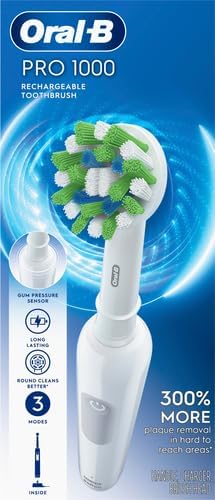
Oral-B Pro 1000
Best for: Preventing tartar buildup: oscillating-rotating cleaning Oral-B says beats a manual brush along the gumline, plus a pressure sensor and two-minute timer
- 3D oscillating-rotating-pulsating action breaks up plaque
- Built-in pressure sensor prevents overbrushing
- 2-minute professional timer with quadrant pacing
- Compatible with Oral-B brush heads except the iO range
- +3D oscillating-rotating-pulsating action breaks up plaque effectively
- +Built-in pressure sensor helps prevent overbrushing
- +2-minute timer with quadrant pacing encourages thorough brushing coverage
- −Won't remove tartar once it has already hardened, only helps prevent new buildup
(Affiliate link) · Free shipping on eligible Prime items
(Affiliate link) · Free shipping on eligible Prime items
For a deeper comparison of electric toothbrush options, see our best Sonicare toothbrush and best Oral-B electric toothbrush guides.
2. Clean Between Teeth Daily
Plaque that sits between teeth is plaque your brush can’t reach, and it hardens just as quickly. Floss, interdental brushes, or a water flosser can all handle this, but consistency matters more than which tool you choose.
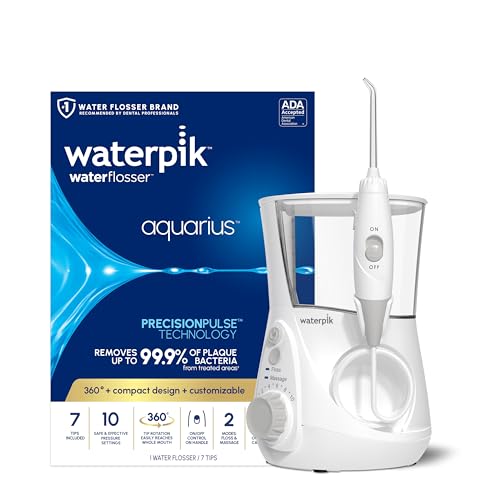
Waterpik Aquarius WP-660
Best for: Flushing bacteria from the gumline where tartar forms first
- Removes up to 99.9% of plaque from treated areas
- 10 pressure settings for customized cleaning
- ADA-accepted for safety and effectiveness
- Particularly effective along the gumline and around dental work
- +Removes up to 99.9% of plaque from treated areas
- +10 pressure settings for customized cleaning
- +ADA-accepted for safety and effectiveness
- −Won't dissolve tartar that has already hardened, only helps prevent new buildup
(Affiliate link) · Free shipping on eligible Prime items
(Affiliate link) · Free shipping on eligible Prime items
If you have wider gaps between teeth, bridgework, or implants, interdental brushes (Affiliate link) can be more effective than floss in those areas. Our guide on water flosser vs. traditional floss helps you decide which approach fits your situation.
3. Use a Tartar Control Toothpaste
Tartar control toothpastes contain active ingredients (typically pyrophosphates or zinc citrate) that interfere with the mineralization process that turns plaque into tartar. They can’t dissolve existing tartar, but research suggests they meaningfully slow new buildup.
Look for a fluoride toothpaste with tartar control properties. The combination of fluoride (for cavity protection) and pyrophosphates (for tartar prevention) covers two priorities at once.
4. Add an Antibacterial Mouthwash
An antibacterial mouthwash reduces the bacterial load in your mouth, which means less plaque production overall. Mouthwashes containing cetylpyridinium chloride (CPC) or essential oils (like Listerine’s formula) have clinical evidence supporting their ability to reduce plaque and gingivitis. See our best mouthwash for gum disease roundup for specific recommendations.
5. Stay Hydrated and Watch Your Diet
Saliva is your mouth’s natural defense against plaque; it washes away food particles and neutralizes bacterial acids. Staying hydrated keeps saliva production steady. Sugary and starchy foods feed plaque-forming bacteria, so limiting snacking between meals reduces the amount of plaque that forms throughout the day.
Signs You Have Tartar Buildup
You may have tartar if you notice:
- A rough, hard deposit you can feel with your tongue, especially behind your lower front teeth
- Yellow or brownish discoloration along the gumline that doesn’t brush away
- Gums that bleed when you brush or floss
- Persistent bad breath despite good oral hygiene
- Gum tissue that looks red or swollen near the base of certain teeth
If you’re experiencing any of these, schedule a dental cleaning. Catching tartar early prevents it from progressing to gum disease.
When to See a Dentist
- Once or twice a year for routine cleanings for many adults, with your dentist setting the interval based on your risk
- More often than that if your dentist or periodontist has identified rapid tartar buildup or gum disease: the interval tightens as the disease advances
- As soon as possible if you see visible tartar deposits, have bleeding gums, or notice loose teeth
If cost is a concern, our guide on emergency dental care without insurance covers options for affordable dental treatment.
FAQ
Q: How fast does plaque turn into tartar? A: Plaque can begin mineralizing into tartar within 24 to 72 hours if not removed. This is why brushing twice daily and cleaning between teeth once daily is so important—you’re working against a short clock.
Q: Does tartar control toothpaste actually remove tartar? A: No. Tartar control toothpaste prevents new tartar from forming by inhibiting the mineralization of plaque, but it cannot dissolve or remove tartar that has already hardened. You still need professional cleaning for existing deposits.
Q: Can an electric toothbrush remove tartar? A: An electric toothbrush cannot remove established tartar, but the Cochrane review cited above found powered brushes remove more plaque than manual brushing, and removing plaque before it hardens is how tartar is prevented in the first place.
Q: Is tartar the same as plaque? A: No. Plaque is a soft, sticky bacterial film that forms daily and can be removed with brushing and flossing. Tartar is what plaque becomes when it hardens through mineral absorption; at that point, only professional dental instruments can remove it. Learn more in our plaque removal guide.
Q: Why does tartar keep coming back after a cleaning? A: Tartar buildup is a natural ongoing process. As long as plaque forms (which it does every day), some of it will eventually harden if not fully removed. People who produce more saliva, have rough tooth surfaces, or have certain dietary habits may see faster recurrence. Consistent home care between cleanings is the best way to slow the cycle.
Q: Are dental scalers from Amazon safe to use at home? A: Dental professionals consistently advise against using scalers at home. Without proper training, you risk scratching enamel, cutting gum tissue, and introducing bacteria below the gumline. The potential for harm outweighs any benefit—professional cleanings are the safe approach.