
If your gums bleed when you brush, look a little puffy, or feel tender to the touch, you may be dealing with gingivitis: the earliest and most reversible stage of gum disease. According to Mayo Clinic, this early inflammation is triggered by bacterial plaque accumulation and is still fully reversible with proper care. The good news: with the right daily routine, including a targeted mouthwash, you can get things back on track. According to MouthHealthy, gingivitis is caused by plaque buildup along the gumline, and a complete oral hygiene routine (brushing, flossing, and where recommended an antimicrobial rinse) is the standard approach for managing it.
We dug into the research, reviewed dentist recommendations, and evaluated dozens of formulas to bring you this roundup of the best mouthwashes for gingivitis available right now. For a broader overview of how to tackle early gum disease from every angle, see our guide on how to fix gingivitis.
How We Evaluated
We don’t recommend products we wouldn’t feel comfortable suggesting to a family member. Here’s what guided our selections:
- Active ingredients: We prioritized rinses with clinically studied antimicrobial or antibacterial agents recognized by the American Dental Association such as cetylpyridinium chloride (CPC), essential oils, and fluoride.
- ADA Seal of Acceptance: Where applicable, we noted whether a product has earned the ADA Seal, which indicates a product has been evaluated for safety and efficacy.
- Alcohol content: Alcohol-free options are important for users with dry mouth, those in recovery, or anyone with sensitive gum tissue.
- Customer feedback: We reviewed thousands of verified user reviews to flag recurring complaints or standout benefits.
- Dentist endorsements: We cross-referenced recommendations from dental professionals cited in reputable publications.
Crest Gum Care Alcohol-Free Mouthwash (2-Pack)
Crest Gum Care Alcohol-Free Mouthwash (2-Pack)
Best for: Bleeding gums and early-stage gingivitis, rinsed twice a day for the long haul
- Cetylpyridinium chloride (CPC) 0.07% antigingivitis active, the same as Parodontax
- Alcohol-free cool wintergreen formula
- Two 33.8 fl oz bottles, about 100 label doses
- 4.8★ rating across 3,307 Amazon ratings
(Affiliate link) · Free shipping on eligible Prime items
Why We Recommend It
This is the same active ingredient as the Parodontax rinse, at the same strength, for less per ounce. Crest’s DailyMed drug label lists cetylpyridinium chloride (CPC) 0.07% as the active, for antigingivitis and antiplaque, and Parodontax’s label lists the same active at the same 0.07% strength, with the same 20 mL twice-a-day dose. CPC is one of the ingredients the ADA credits with helping reduce plaque and gingivitis, and both rinses are alcohol-free.
On cost per ounce and rating, Crest comes out ahead. The two-pack runs around $15 and works out to just over half the Parodontax bottle’s cost per ounce, and it holds 4.8 stars across 3,307 ratings against Parodontax’s 4.6 across 2,343. Two 33.8 fl oz bottles hold about 100 of the label’s 20 mL doses, enough for around seven weeks of twice-daily rinsing, so the price you see covers a routine you can keep up.
Key Features
- CPC 0.07% antigingivitis/antiplaque oral rinse
- Alcohol-free cool wintergreen
- 33.8 fl oz × 2: built for sustained daily use
- Same active, strength and 20 mL twice-daily dose as the Parodontax rinse, at a lower cost per ounce
Who It’s Best For
Users who’ve been told their bleeding gums are mild gingivitis and want a CPC rinse labeled for plaque and gingivitis that they can sustain. Also a strong fit for anyone switching away from alcohol-based Listerine because of burn or dry mouth.
Potential Downsides
CPC can cause brown staining of teeth, tongue and restorations, according to the ADA’s mouthrinse guidance. The flavor is cool wintergreen; if you want mint, the Parodontax rinse below is the mint option.
(Affiliate link) · Free shipping on eligible Prime items
Listerine Clinical Solutions Gum Health Mouthwash
Listerine Clinical Solutions Gum Health Mouthwash
Best for: Stubborn early gingivitis that has not responded to gentler rinses
- Four essential oil antiseptic (thymol, eucalyptol, menthol, methyl salicylate)
- ADA Seal of Acceptance for plaque and gingivitis reduction
- Essential oil rinses reduce plaque and gingivitis alongside daily brushing and flossing, per the ADA's mouthrinse review
- 4.7★ rating across 3,000+ Amazon ratings
(Affiliate link) · Free shipping on eligible Prime items
Why We Recommend It
If your gingivitis is more than just a little pink on the floss (persistent bleeding, visibly swollen gums, or redness that hasn’t responded to gentler rinses), Listerine Clinical Solutions is the step up: an alcohol-based essential oil antiseptic with the ADA Seal for reducing plaque and gingivitis. Its four essential oil formula (thymol, eucalyptol, menthol, methyl salicylate) is the same active blend the ADA’s mouthrinse review says has been shown to reduce plaque and gingivitis alongside daily brushing and flossing, and this formulation carries the ADA Seal of Acceptance specifically for reducing plaque and gingivitis.
Where the CPC rinses in this guide (Crest, Parodontax, TheraBreath and SmartMouth) rely on CPC as their antigingivitis active, Clinical Solutions uses a blend of four essential oils. For early gingivitis that’s being stubborn (the kind where your dentist mentions it at two cleanings in a row), this is an over-the-counter step up to try before asking your dentist what comes next, and at around $10 it’s a modest step up in price from the basics.
Key Features
- Four essential oil antiseptic blend, named in the ADA’s mouthrinse review for reducing plaque and gingivitis
- ADA Seal of Acceptance for plaque and gingivitis control
- Works through a different mechanism than CPC rinses (essential oils vs cetylpyridinium chloride)
- Strong verified-review track record (4.7★, 3,000+ Amazon ratings)
Who It’s Best For
People whose early gingivitis hasn’t fully responded to CPC-based or fluoride rinses, or anyone who prefers an alcohol-based essential oil rinse over the gentler alcohol-free CPC options. Also a solid fit if your dentist has specifically recommended an antiseptic mouthwash for gingivitis.
Potential Downsides
Contains alcohol—the essential oils are delivered in an alcohol base, which means a stronger burn than CPC rinses. Not recommended for people with dry mouth, those in recovery from alcohol use disorder, or children under 12. If alcohol is a concern, the CPC-based options in this guide are a better fit.
(Affiliate link) · Free shipping on eligible Prime items
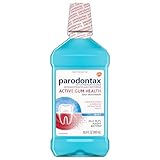
Parodontax Active Gum Health Mouthwash
Parodontax Active Gum Health Mouthwash
Best for: Parodontax toothpaste users who want the matching rinse, or a single smaller bottle
- CPC 0.07% antiplaque/antigingivitis active, the same as the Crest rinse
- Alcohol-free mint formula designed for daily use
- Pairs with the Parodontax toothpaste line
- 4.6★ rating across 2,343 Amazon ratings
(Affiliate link) · Free shipping on eligible Prime items
Why We Recommend It
Parodontax’s rinse earns its place on two counts: it matches the Parodontax toothpaste line, and it costs less upfront, at around $7 for a single 16.9 fl oz bottle. Its DailyMed drug label lists cetylpyridinium chloride (CPC) 0.07% as the active, for antigingivitis and antiplaque, in an alcohol-free mint base, with the same 20 mL twice-a-day dose.
Its active and strength match the Crest rinse above, so the choice between them comes down to price, flavor and brand. Crest costs less per ounce; Parodontax costs less at checkout and keeps your rinse in the same line as your toothpaste.
Key Features
- CPC 0.07% antiplaque/antigingivitis formula, the same active and strength as Crest Gum Care
- Alcohol-free for daily twice-a-day use
- Matches the Parodontax toothpaste line for a one-brand gum routine
- 4.6★ across 2,343 Amazon ratings
Who It’s Best For
People already using Parodontax toothpaste who want the matching rinse, or anyone who would rather buy one smaller bottle than a two-pack. The medicine inside is the same CPC, at the same strength, as our top pick.
Potential Downsides
Its label says it may cause staining, and the ADA lists brown staining of teeth, tongue and restorations as a possible side effect of CPC. Not a replacement for brushing and flossing. It also costs more per ounce than the Crest two-pack.
(Affiliate link) · Free shipping on eligible Prime items
SmartMouth Clinical Zinc Activated Mouthwash
SmartMouth Clinical Zinc Activated Mouthwash
Best for: Plaque-driven gingivitis with bad breath
- Zinc-activated antiplaque system plus CPC
- Alcohol-free, sugar-free, gluten-free
- Marketed for healthy gum support
- 4.6 stars on 3,800+ Amazon ratings
(Affiliate link) · Free shipping on eligible Prime items
Why We Recommend It
SmartMouth Clinical uses a zinc-activated two-bottle system with CPC as the antiplaque/antigingivitis active. Zinc ions disrupt the volatile sulfur compounds that drive halitosis while CPC attacks the bacterial plaque that drives gingivitis: useful if bleeding gums and persistent bad breath show up together, as they often do.
Key Features
- Zinc + CPC combination active system
- Alcohol-free, sugar-free, gluten-free
- Clean mint flavor with lower burn than antiseptic rinses
- High-volume verified reviews consistently above 4.5 stars
Who It’s Best For
People whose gingivitis shows up alongside chronic bad breath. The zinc chemistry is specifically helpful for the sulfur-compound side of the problem that CPC alone doesn’t fully address.
Potential Downsides
The two-bottle activation system takes a day to get used to. Price-per-ounce is higher than drugstore house brands: expect around $23.
(Affiliate link) · Free shipping on eligible Prime items
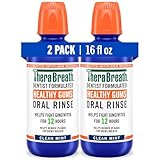
TheraBreath Healthy Gums Oral Rinse
TheraBreath Healthy Gums Oral Rinse
Best for: Sensitive mouths and those avoiding alcohol
- Cetylpyridinium chloride (CPC) as active ingredient
- 100% alcohol-free formula
- Mild, non-burning flavor for twice-daily use
- Free of artificial colors and SLS
(Affiliate link) · Free shipping on eligible Prime items
Why We Recommend It
TheraBreath Healthy Gums Oral Rinse earns consistently high praise from buyers: it holds 4.7 out of 5 stars across more than 33,000 Amazon ratings. It’s formulated with CPC (cetylpyridinium chloride), an antimicrobial agent that may help with reducing gum-irritating bacteria, and it’s entirely alcohol-free. It typically runs around $17. It’s also the only formula in TheraBreath’s six-mouthwash lineup built on a labeled antigingivitis active, which is exactly why it’s the right TheraBreath for this page’s readers.
Key Features
- Cetylpyridinium chloride (CPC) as its primary active ingredient
- 100% alcohol-free formula
- Mild, non-burning flavor: suitable for everyday twice-daily use
- Free of artificial colors and sodium lauryl sulfate (SLS)
Who It’s Best For
People with sensitive gums, dry mouth, or those who find traditional antiseptic rinses too harsh. It’s also a solid choice for anyone who simply wants a gentler but still effective daily rinse.
Potential Downsides
The ADA lists brown staining of teeth, tongue and restorations as a possible side effect of CPC. While effective for mild gingivitis, those with more advanced gum concerns may need a stronger formula.
(Affiliate link) · Free shipping on eligible Prime items
Listerine Cool Mint Antiseptic Mouthwash

Listerine Cool Mint Antiseptic Mouthwash
Best for: Budget-conscious shoppers wanting ADA-accepted antibacterial power
- Four essential oil formula with ADA Seal
- Kills 99.9% of bad breath germs, per Listerine
- Decades of clinical research backing
- Widely available and very affordable
(Affiliate link) · Free shipping on eligible Prime items
Why We Recommend It
Listerine Cool Mint Antiseptic is the classic, time-tested workhorse of gingivitis rinses. According to Dumas Family Dental, it’s designed to reduce gingivitis while also lessening bad breath, thanks to its essential oil formula. It holds the ADA Seal, listed on the ADA’s roster under the name “Listerine Antiseptic,” for reducing plaque and gingivitis, and a 2015 JADA meta-analysis pooled 29 essential-oil rinse trials run from 1980 to 2012. At around $7, it earns its budget-pick badge.
Key Features
- Four essential oil formula (same active blend as Listerine Clinical Solutions)
- ADA Seal of Acceptance
- Kills 99.9% of bad breath germs, per Listerine, which says its essential oils kill germs that cause plaque and gingivitis
- Widely available and very affordable
Who It’s Best For
Budget-conscious shoppers who want a powerful, ADA-accepted formula. It’s also great for those who prefer the familiar, intense mint sensation that signals a deep clean.
Potential Downsides
Contains alcohol: not recommended for children under 12, those in recovery from alcohol use disorder, or anyone with ulcers or very sensitive gum tissue. The strong flavor can be polarizing.
(Affiliate link) · Free shipping on eligible Prime items
Listerine Gum Therapy Mouthwash

Listerine Gum Therapy Mouthwash
Best for: Listerine users who want the gingivitis-specific formula and already tolerate an alcohol rinse
- Essential-oil formula targeting gingivitis, in a 21.6% alcohol base
- Antibacterial action against plaque at the gumline
- Designed for twice-daily use
- Gentler flavor than original Listerine
(Affiliate link) · Free shipping on eligible Prime items
Why We Recommend It
Listerine Gum Therapy is the brand’s dedicated entry into the gingivitis-specific category. Its Drug Facts label lists four essential oils (eucalyptol, menthol, methyl salicylate and thymol) as antiplaque and antigingivitis actives, carried in a base of 21.6% alcohol by volume, per the DailyMed label. That makes it the Listerine formula aimed squarely at gums, not the gentle one in this lineup. Lima Dental Group includes it among their recommended options for patients with early-stage gum concerns.
Key Features
- Essential-oil formula specifically targeting gingivitis (contains 21.6% alcohol)
- Antibacterial action against plaque at the gumline
- Designed for twice-daily use as part of a brushing and flossing routine
- Gentler flavor profile compared to original Listerine
Who It’s Best For
Listerine loyalists who want the brand’s essential-oil approach aimed at their gums and already get on with an alcohol rinse. If the burn or dry mouth is the problem, the CPC picks above are the switch, not this one.
Potential Downsides
Slightly pricier than standard Listerine antiseptic, at around $8. It is still an alcohol-based rinse, so it is not for dry mouth, children under 12, or anyone avoiding alcohol.
(Affiliate link) · Free shipping on eligible Prime items
ACT Restoring Zero Alcohol Fluoride Mouthwash

ACT Restoring Zero Alcohol Fluoride Mouthwash
Best for: Dry mouth alongside gingivitis concerns
- Fluoride-forward formula for enamel restoration
- Completely alcohol-free, gentle on sensitive tissues
- May help with dry mouth symptoms
- Pleasant, mild flavor
(Affiliate link) · Free shipping on eligible Prime items
Why We Recommend It
ACT is best known for fluoride rinses, but their Zero Alcohol formula quietly does double duty: it supports enamel health while its antibacterial components may help with keeping plaque-related gum irritation in check. Lima Dental Group highlights it as a top pick specifically for patients dealing with gingivitis alongside dry mouth or sensitivity concerns. At about $6.50, it’s also the least expensive rinse in this guide.
Key Features
- Fluoride-forward formula for enamel restoration
- Completely alcohol-free and gentle on sensitive tissues
- May help with dry mouth symptoms while supporting gum health
- Pleasant, mild flavor
Who It’s Best For
People who experience dry mouth alongside gum issues: a common combination since reduced saliva flow can accelerate plaque buildup and gum irritation, according to the ADA. Also suitable for older adults and those with medication-induced dry mouth.
Potential Downsides
Not primarily an antimicrobial rinse, so its direct effect on bacterial gingivitis is more modest than CPC- or essential oil-based options. Works best as part of a comprehensive oral hygiene routine rather than as a standalone treatment.
(Affiliate link) · Free shipping on eligible Prime items
Buyer’s Guide: What to Look For
Active Ingredients Matter Most
When shopping for a gingivitis mouthwash, the active ingredient list is the most important thing to examine. Here’s a quick breakdown:
- Essential oils (thymol, eucalyptol, menthol, methyl salicylate): Used in Listerine products, these are one of the ingredient classes named in the ADA’s mouthrinse review, and a 2015 JADA meta-analysis pooled 29 industry-sponsored trials of essential-oil rinses run between 1980 and 2012, each lasting six months or longer, and found about 16% less gingivitis and 28% less plaque at six months when the rinse was added to brushing and interdental cleaning. According to the ADA, essential oil rinses may help with reducing plaque and gingivitis when used as directed.
- Cetylpyridinium chloride (CPC): A common antibacterial agent in alcohol-free rinses. Cleveland Clinic notes that antimicrobial mouthwash can help destroy the disease-causing bacteria associated with gingivitis. CPC rinses are generally well-tolerated by most users.
- Chlorhexidine gluconate: The benchmark rinse researchers test other anti-plaque rinses against; a 1997 review in Periodontology 2000 calls it the gold standard for that reason, and a 2017 Cochrane review found high-quality evidence that it cuts plaque substantially when used alongside brushing. The same review judged its gingivitis benefit in mild gum inflammation too small to matter clinically, found too little data to judge moderate or severe cases, and reported tooth staining after a few weeks of use. The ADA’s mouthrinse review notes it is prescription-only in the US. If your gingivitis is more advanced, ask your dentist about this option.
- Fluoride: While not directly antimicrobial, fluoride strengthens enamel and is worth including if you’re also dealing with sensitivity or early decay.
Alcohol vs. Alcohol-Free
Alcohol-based rinses (like original Listerine) tend to deliver a more intense antimicrobial effect but can cause burning, dryness, and irritation, especially if your gums are already inflamed. Alcohol-free options have come a long way and are now considered just as effective for most users, according to multiple dental experts we surveyed in our research. If you have dry mouth, sensitive gums, or any reason to avoid alcohol, go alcohol-free without hesitation.
Look for the ADA Seal
The ADA Seal of Acceptance is awarded to products that meet the ADA’s criteria for safety and effectiveness. According to the ADA, this seal is a reliable indicator that a product does what it claims. Not every good product has it, but it’s a helpful shortcut when you’re comparing options.
Mouthwash Is a Supplement, Not a Solution
This is worth repeating: no mouthwash, however effective, replaces brushing twice daily with a fluoride toothpaste and flossing once a day. According to the ADA, proper mechanical plaque removal through brushing and flossing is the foundation of gingivitis prevention. Mouthwash is a valuable addition to that routine—not a substitute for it. If gum disease has progressed beyond early gingivitis, you may also want to explore the best mouthwash for gum disease for stronger therapeutic options. If you’re looking for a gentler daily adjunct instead, our oil pulling mouthwash picks cover the coconut-oil-based rinses some readers ask about.
FAQ
Q: Can mouthwash alone cure gingivitis? No, and we’d be skeptical of any product that claims otherwise. Mouthwash may help with reducing the bacteria and plaque that contribute to gingivitis, but according to the ADA, effective treatment requires consistent brushing, flossing, and regular professional cleanings. Mouthwash is a powerful supporting player, not the whole team.
Q: How often should I use mouthwash for gingivitis? Most dentist-recommended rinses are designed for twice-daily use: once in the morning and once before bed, after brushing and flossing. Always follow the specific directions on the label, as some rinses have different usage instructions.
Q: Is alcohol-free mouthwash as effective as alcohol-based for gingivitis? For most people dealing with mild to moderate gingivitis, yes. Modern alcohol-free formulas using CPC or essential oils have demonstrated meaningful antibacterial activity in clinical studies. Alcohol-based rinses may have a slight edge in intensity, but the difference is often negligible for everyday gingivitis prevention, and alcohol-free options are better tolerated by most users. A systematic review of seven head-to-head studies found alcohol-free essential-oil rinses gave somewhat less plaque control, with no clear difference in gum bleeding or gingivitis scores (van Swaaij et al., 2024).
Q: My gums bleed when I brush—is that gingivitis? Bleeding gums are one of the classic signs of gingivitis, but you should see your dentist to confirm. The ADA advises seeing your dentist if you suspect gum disease, because the sooner it is treated the better, and bleeding gums can also signal more advanced gum disease. Gum-care rinse labels draw a clear line too: Parodontax’s Drug Facts say to stop use and ask a dentist if gingivitis, bleeding, or redness persists for more than 2 weeks.
Q: What’s the difference between gingivitis and periodontitis? Gingivitis is the early, reversible stage of gum disease involving inflammation of the gum tissue. If left untreated, it can progress to periodontitis, a more serious condition that may involve bone loss and is not fully reversible. The mouthwashes in this guide are most appropriate for gingivitis; periodontitis typically requires professional treatment and possibly prescription rinses. See our guide to the best mouthwash for periodontal disease if you need options for more advanced cases.
Q: Should children use mouthwash for gingivitis? Most antiseptic rinses are not recommended for children under 6 (and alcohol-based rinses not until age 12 or as directed by a dentist). If your child is showing signs of gum inflammation, we strongly recommend consulting a pediatric dentist rather than introducing an adult antiseptic rinse.
Q: What toothpaste pairs best with a gingivitis mouthwash? Pairing your mouthwash with the right toothpaste amplifies results. See our roundup of the best toothpaste for gingivitis for formulas that work well alongside the rinses above.
Our Methodology
We compiled this guide by reviewing and synthesizing recommendations from dental professionals, published clinical research, and data from reputable consumer publications including NBC Select, Health.com, and The Healthy. We evaluated each product based on its active ingredient profile, ADA recognition status, alcohol content, user review data, and overall value.
We do not accept payment for editorial placement. Some links in this article are affiliate links, meaning we may earn a small commission if you purchase through them; this never influences which products we recommend or how we rank them. Our affiliate disclosure is always visible on every roundup we publish.
We revisit and update our roundups regularly to reflect new product launches, formula changes, and emerging clinical evidence. This article was last reviewed in September 2026.