
Bottom line: Nano-hydroxyapatite (nHAp) is the only fluoride-free ingredient with head-to-head clinical trials against fluoride, so Boka Ela Mint (nHAp, about $32 for a 3-pack) is our top pick. On a tighter budget, Davids Hydroxi (about $10) takes the same nHAp approach, while Spry (about $9) prevents cavities through xylitol instead. Need one from a drugstore today? Tom’s of Maine (about $10 for a 2-pack). Prefer a traditional herbal formula? M3 Naturals neem (about $20 for a 3-pack). Plastic-free for travel? Bite tablets (about $25). One caveat: dental professionals broadly advise against dropping fluoride entirely, especially if you’re cavity-prone — a popular pragmatic compromise is a hybrid routine (nHAp in the morning, fluoride at night), though that specific split is community practical wisdom, not a formally validated protocol.
At a glance:
| Pick | Best for | Key active | Price | Rating |
|---|---|---|---|---|
| Boka Ela Mint · Editor’s Pick | Closest scientific fluoride replacement | Nano-hydroxyapatite | ~$32 (3-pack) | 4.5 (61,279) |
| Davids Hydroxi · Best Value | Premium nHAp at a lower price | Nano-hydroxyapatite | ~$10 | 4.4 (22,152) |
| Spry · Best Xylitol-Based | Cavity prevention via xylitol | Xylitol | ~$9 | 4.7 (1,419) |
| Tom’s of Maine · Best Widely Available | Buying in a store today | Zinc citrate | ~$10 (2-pack) | 4.6 (45,915) |
| M3 Naturals Neem · Best Herbal | Traditional herbal formula | Neem | ~$20 (3-pack) | 4.5 (144) |
| Bite Tablets · Best Eco-Friendly | Zero-waste & travel | nHAp + xylitol | ~$25 (2-mo) | 4.3 (794) |
Whether you’re concerned about fluoride sensitivity, prefer minimal ingredients, or simply want to explore alternatives backed by emerging research, fluoride-free toothpaste has come a long way. Today’s best options don’t just skip fluoride: they replace it with active ingredients that have real science behind them. We checked the ADA’s toothpaste guidance and fluoride topic review before separating credible alternatives from natural-marketing claims.
The challenge? Not all fluoride-free toothpastes are created equal. Some use nano-hydroxyapatite (the same mineral your teeth are made of), others rely on xylitol’s bacteria-fighting properties, and some build on herbal ingredients like neem. We compared the leading options in each approach to find the six that actually deliver.
How we researched this page: We reviewed the ADA’s position statements on fluoride and toothpaste ingredients, cross-referenced Reddit discussions across r/dentistry, r/askdentists, and r/DentalHygiene (where verified dental professionals weigh in), and analyzed community consensus data from our 1,400+ thread dental research corpus. We did not test these products hands-on. Our recommendations are based on ingredient evidence, professional commentary, and real user experience patterns, not personal use.
If you’re looking for natural toothpaste brands more broadly (regardless of fluoride status), check our best natural toothpaste guide. For hydroxyapatite-specific options, see our best hydroxyapatite toothpaste roundup.
Evidence Receipt
- Hydroxyapatite matched fluoride in two head-to-head cavity trials. Manufacturer-funded randomized trials in adults, 2023 and children, 2021 found hydroxyapatite toothpaste non-inferior to fluoride at preventing new cavities; neither reports testing the nano form most US brands sell.
- No fluoride-free option matches fluoride’s population-level record. The ADA’s toothpaste guidance and fluoride review frame our caution throughout this page.
- Neem toothpaste reduced plaque and gingivitis in a small trial. A randomized double-blind trial of 30 participants found significant reductions in plaque and gingival index scores (Abhishek et al., 2015).
- A neem-containing combination dentifrice beat a standard toothpaste at one month. The randomized trial tested a papain, bromelain, miswak, and neem formula in orthodontic patients and found significantly lower plaque and gingivitis scores (Tadikonda et al., 2017).
- Kids are the exception case. The American Academy of Pediatric Dentistry recommends fluoride toothpaste from the first tooth, which is the basis for our kids-section caution.
Boka Ela Mint Nano Hydroxyapatite Toothpaste
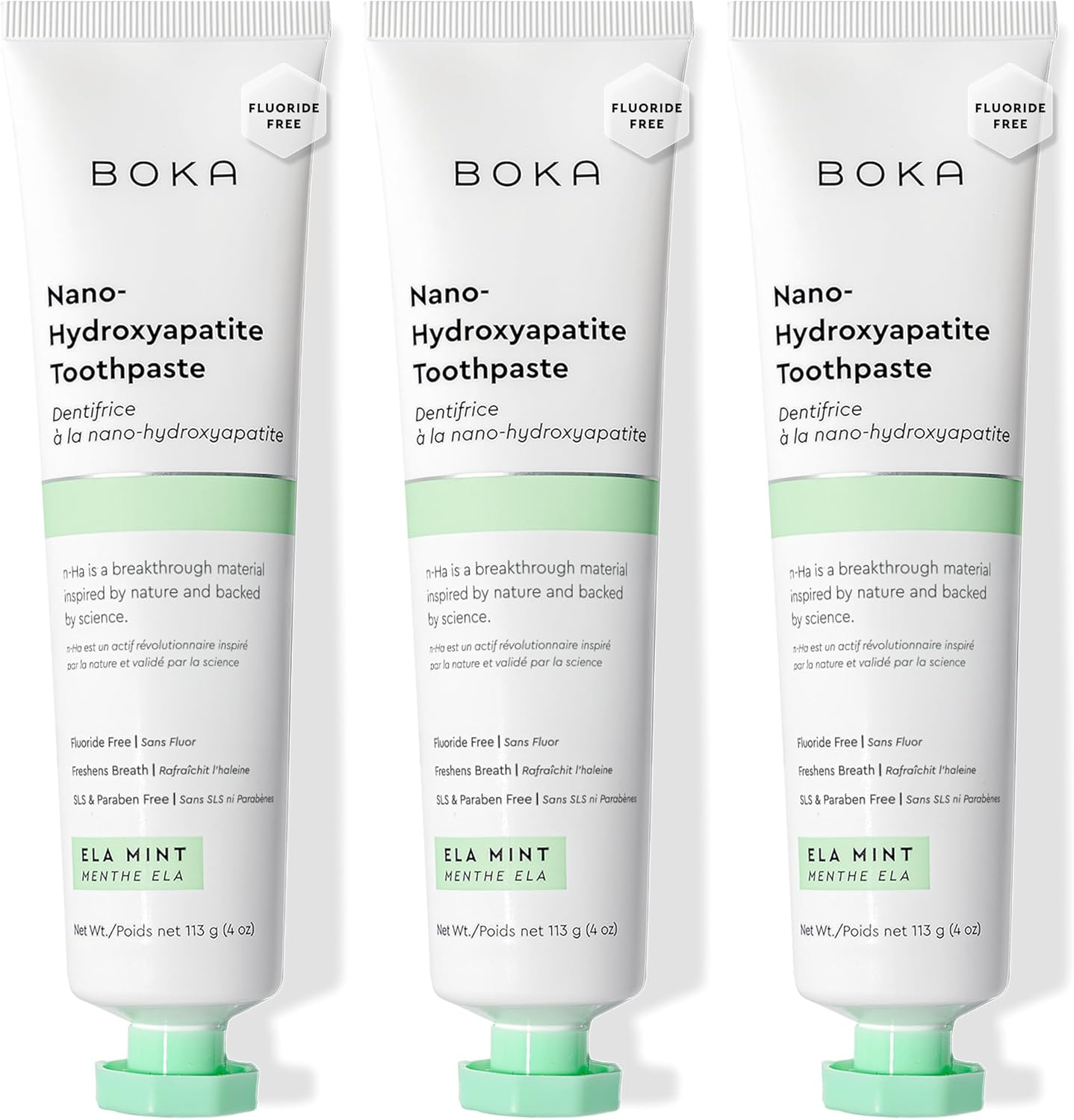
Boka Ela Mint Nano Hydroxyapatite Toothpaste
Best for: Anyone who wants the closest scientific replacement for fluoride
- Nano-hydroxyapatite (nHAp) — the fluoride alternative with the strongest research
- Green tea extract and xylitol for additional antibacterial support
- SLS-free, paraben-free, sulfate-free formula
- 61,000+ reviews, the most-reviewed nHAp toothpaste in our lineup
(Affiliate link) · Free shipping on eligible Prime items
Why We Recommend It
Boka built their entire brand around nano-hydroxyapatite, the fluoride alternative with the strongest scientific backing. nHAp is a synthetic form of the mineral that makes up 97% of your tooth enamel, and it has been sold in Japan since the 1980s and approved there as an anti-cavity agent since 1993. Two double-blind randomized trials — one in adults over 18 months (Frontiers in Public Health, 2023) and one in children over roughly a year (Scientific Reports, 2021) — found 10% hydroxyapatite toothpaste non-inferior to fluoride at preventing new cavities: the strongest head-to-head evidence any fluoride-free ingredient has. Three honest caveats: both trials were funded by Dr. Kurt Wolff GmbH (a hydroxyapatite toothpaste maker), neither reports testing the nano form (nHAp) most US products use — the children’s paste is specified as 10% microcrystalline hydroxyapatite, while the adult trial lists its paste only as “hydroxyapatite (10%)” with no particle size, and the adult trial enrolled healthy, low-risk mouths (the children’s trial, to its credit, enrolled cavity-prone kids). Promising, not the final word.
The Ela Mint formula combines nHAp with green tea extract and xylitol for a multi-pronged approach. With more than 61,000 reviews and a 4.5-star rating, it is the most-reviewed nHAp toothpaste in our lineup. The mint flavor is clean without being overpowering.
Key Features
- Nano-hydroxyapatite remineralizes by depositing the same mineral your teeth are made of
- Green tea extract (EGCG) provides antioxidant and antibacterial benefits
- Xylitol helps reduce S. mutans bacteria populations
- Free from fluoride, SLS, parabens, and artificial colors
- Clean mint flavor that both adults and kids enjoy
Who It’s Best For
Boka is our top pick for anyone serious about maintaining strong enamel without fluoride. It’s particularly compelling for people who’ve researched the science and want the most evidence-backed alternative available. If you’re switching from fluoride and worried about cavity protection, nHAp is the closest thing to a like-for-like replacement. Our full Boka review goes deeper on the different variants and whether the price holds up.
Potential Downsides
Boka costs more than conventional toothpaste, though it’s competitively priced within the nHAp category. Some users find the mint flavor too subtle compared to traditional toothpaste. And while the nHAp research is promising, it doesn’t yet match fluoride’s 70+ years of population-level data. One professional concern worth noting: Boka does not disclose what percentage of nHAp is in their formula. Dental professionals on r/DentalHygiene and r/dentalmaterials flag this (the European SCCS assessed up to 10% nHAp as safe in toothpaste in its 2023 opinion for rod-shaped particles, and most clinical studies showing efficacy use concentrations at or near that level) without disclosure, informed buyers can’t verify they’re getting an effective concentration.
(Affiliate link) · Free shipping on eligible Prime items
Buying for the household or settling in for the long haul? The card above is the Ela Mint 3-pack, so the roughly $32 you see covers three 4 oz tubes: about $10.66 each, and fewer reorders than buying singles.
Davids Hydroxi Nano Hydroxyapatite Toothpaste
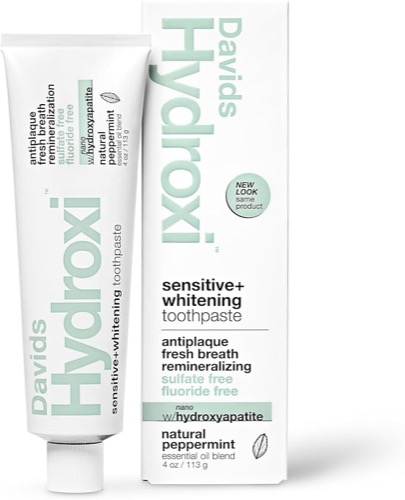
Davids Hydroxi Nano Hydroxyapatite Toothpaste
Best for: People who want premium nHAp toothpaste without the premium price
- Nano-hydroxyapatite with birch xylitol for dual-action protection
- EWG-verified ingredients — every component independently reviewed
- Recyclable aluminum tube — no plastic waste
- Made in California, 4 oz aluminum tube
(Affiliate link) · Free shipping on eligible Prime items
Why We Recommend It
Davids is a premium oral care brand that’s earned a loyal following for their commitment to transparency: every ingredient is EWG-verified, and the toothpaste comes in a recyclable aluminum tube. Their Hydroxi formula uses the same nano-hydroxyapatite technology as Boka at a comparable price per tube, but Davids gets you into nHAp for about $10 without committing to a three-pack.
Made in California, Davids pairs nHAp with birch xylitol and baking soda for gentle whitening. The formula is free of SLS, sulfates, and artificial flavors.
Key Features
- Nano-hydroxyapatite for enamel remineralization without fluoride
- Birch-derived xylitol for antibacterial action
- Baking soda for gentle whitening
- 4 oz aluminum tube (a 5.25 oz size exists as a separate listing)
- Recyclable metal tube, with a reusable tube-rolling key sold separately by Davids
Who It’s Best For
Davids is the best choice if you want nHAp technology but care about sustainability and value. It’s the lowest-commitment nHAp buy on this list, and the aluminum packaging eliminates plastic waste. It’s also great for people who prefer a brand with full ingredient transparency: EWG verification means every component has been independently reviewed for safety.
Potential Downsides
With roughly 22,000 ratings against Boka’s 61,000, Davids has a smaller user base, so there’s less real-world feedback to draw from. Some users report the baking soda gives a slightly salty aftertaste. The metal tube is stiffer to work than a plastic one, and the tube-rolling key that gets the last of the paste out is sold separately by Davids rather than packed in the box.
(Affiliate link) · Free shipping on eligible Prime items
Spry Natural Xylitol Toothpaste
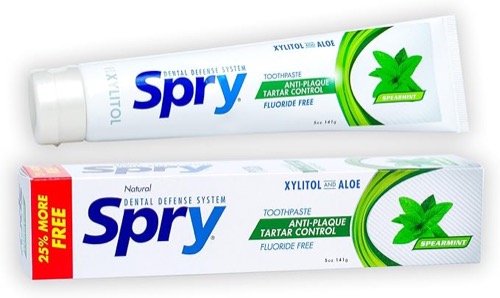
Spry Natural Xylitol Toothpaste
Best for: People who want cavity prevention through xylitol rather than remineralization
- Xylitol as the primary active ingredient
- Disrupts S. mutans bacteria — the main cause of cavities
- Calcium and aloe vera for gentle, non-abrasive cleaning
- 5 oz tube — one of the best values on this list
(Affiliate link) · Free shipping on eligible Prime items
Why We Recommend It
While most fluoride-free toothpastes focus on remineralization, Spry takes a different approach: starving the bacteria that cause cavities in the first place. Xylitol is a sugar alcohol that cavity-causing bacteria (Streptococcus mutans) consume but can’t metabolize, effectively disrupting their ability to produce the acid that erodes enamel.
Spry uses xylitol as its primary active ingredient, which is key. The xylitol evidence favors repeated daily exposure (see our xylitol gum guide), and Spry also makes xylitol mints, gum, and rinse for a full system. At around $9 for a 5 oz tube, it’s one of the most affordable options on this list.
Key Features
- Xylitol as the lead active: not just a supporting ingredient
- Calcium derived from natural sources for mineral support
- Aloe vera for gum soothing and moisture
- SLS-free, fluoride-free formula
- Mild spearmint flavor suitable for sensitive palates
Who It’s Best For
Spry is the best choice for people who want to prevent cavities through a different mechanism than remineralization. It’s especially popular with dry-mouth sufferers, whose cavity risk climbs as saliva drops. It’s also great for people who want to build an entire xylitol-based oral care routine: Spry offers gum, mints, and rinse that work together.
Potential Downsides
Xylitol’s cavity-prevention evidence, while solid, isn’t as strong as nHAp’s head-to-head data against fluoride. The spearmint flavor is milder than most people expect—some reviewers describe it as “barely there.” And remember: xylitol is extremely toxic to dogs, so keep this toothpaste stored securely if you have pets.
(Affiliate link) · Free shipping on eligible Prime items
Tom’s of Maine Antiplaque & Whitening Toothpaste
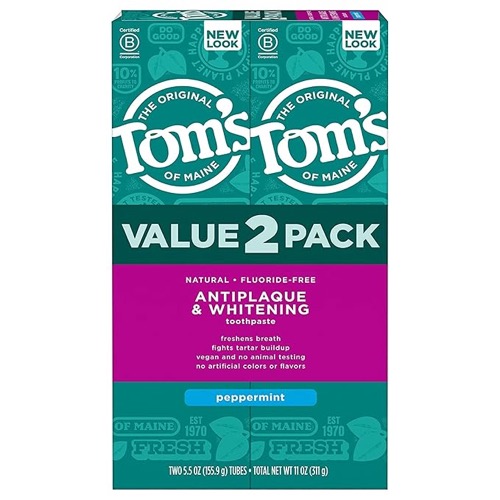
Tom's of Maine Antiplaque & Whitening Toothpaste
Best for: People who want an easy-to-find fluoride-free option at any drugstore
- Zinc citrate for antiplaque and tartar control
- Natural whitening from hydrated silica
- Available at Target, Walmart, CVS, and most grocery stores
- 45,000+ reviews, second only to Boka on this page
(Affiliate link) · Free shipping on eligible Prime items
Why We Recommend It
Sometimes you just need a fluoride-free toothpaste you can grab at Target, CVS, or Walmart without ordering online. Tom’s of Maine has been the default answer to that question for over 50 years, and their Antiplaque & Whitening formula remains one of the most dependable options in the category.
With more than 45,000 Amazon reviews and a 4.6-star rating, Tom’s carries the second-deepest track record on this page, behind only Boka, and it is the easiest of the six to buy without ordering anything. The formula uses zinc citrate for tartar control and hydrated silica for gentle whitening. It’s a long-running formula from a B Corp certified company with transparent ingredient sourcing.
Key Features
- Zinc citrate for plaque and tartar control
- Hydrated silica for gentle, enamel-safe whitening
- Fluoride-free, with no artificial flavors or colors. Tom’s markets the current formula as SLS-free, but the Amazon ingredient panel still lists sodium lauryl sulfate, so read the box if you’re avoiding SLS.
- B Corp certified with transparent supply chain
- Available at virtually every major retailer in the US
Who It’s Best For
Tom’s is the best choice for anyone who wants a reliable, easy-to-find fluoride-free option without the hassle of online ordering. It’s particularly good for families transitioning to fluoride-free oral care: the familiar packaging, pleasant peppermint flavor, and wide availability make it an easy switch.
Potential Downsides
As a fluoride-free toothpaste without hydroxyapatite, Tom’s relies on plaque prevention rather than active remineralization. Dental professionals in online forums frequently note that without fluoride or nHAp, you’re missing enamel-strengthening benefits. If cavity prevention is your priority, consider pairing Tom’s with an nHAp or fluoride rinse. The flavor is milder than conventional toothpaste, which some interpret as “not working” even though effectiveness isn’t tied to intensity.
(Affiliate link) · Free shipping on eligible Prime items
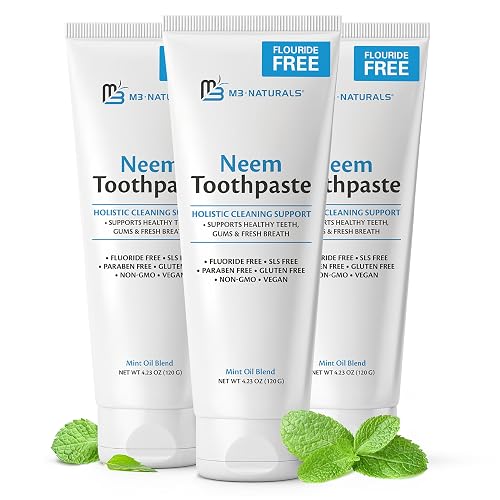
M3 Naturals Neem Toothpaste
M3 Naturals Neem Toothpaste
Best for: People who want a traditional herbal formula built around neem
- Neem-based herbal formula — used in traditional oral care for centuries
- Flavored with real spearmint and peppermint oil, no artificial flavors
- SLS-free, vegan, and gluten-free
- Three-tube pack at about $6.70 per tube
(Affiliate link) · Free shipping on eligible Prime items
Why We Recommend It
Neem is one of the few herbal toothpaste ingredients with randomized-trial data behind it. A small double-blind trial of 30 participants found that a neem-containing toothpaste significantly reduced both plaque and gingival index scores versus control (Abhishek et al., 2015), and a second randomized trial found a neem-containing combination dentifrice (with papain, bromelain, and miswak) produced significantly lower plaque and gingivitis scores than a standard toothpaste after one month in patients wearing fixed braces (Tadikonda et al., 2017). These are small adjunct-level studies, not cavity-prevention trials, but that’s more clinical support than most herbal formulas can point to.
M3 Naturals keeps the formula simple and palatable: neem as the active herbal ingredient, flavored with real spearmint and peppermint oil rather than artificial flavoring, with no SLS. Unlike some traditional herbal pastes, it tastes and feels like a normal mint toothpaste.
One honest caveat: this is the newest addition to our lineup, with 144 reviews behind its 4.5-star average, well below the review bases of the other picks here, which range from several hundred to tens of thousands. We’ve included it because the ingredient evidence justifies the slot, but the real-world feedback pool is still small.
Key Features
- Neem, backed by small randomized trials showing plaque and gingivitis reduction
- Real spearmint and peppermint essential oils for flavor
- Free of SLS, fluoride, gluten, and artificial flavors
- Pack of three 4.23 oz tubes, working out to about $6.70 per tube
Who It’s Best For
The person who wants their fluoride-free toothpaste rooted in herbal tradition rather than lab-derived minerals. If ayurvedic or plant-based formulas appeal to you but you’ve been burned by herbal pastes with no evidence behind them, neem is an herbal ingredient where small clinical trials actually exist. It’s also a natural fit if you already like the rest of M3’s line.
Potential Downsides
There’s no remineralizing agent here (no nHAp, no fluoride), so this cleans, freshens, and supports gum health rather than rebuilding enamel. If cavity prevention is your priority, pick an nHAp option or pair this with one. The review base is the smallest on this list (144 ratings), so the long-term real-world picture is thinner than for the established picks. And the neem trials, while real, are small and measured plaque and gum inflammation, not cavity outcomes.
(Affiliate link) · Free shipping on eligible Prime items
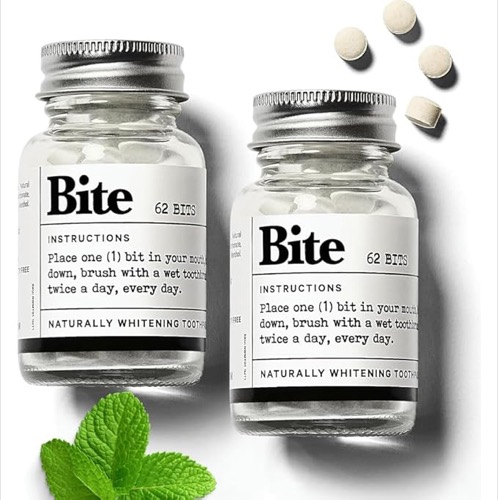
Bite Whitening Toothpaste Tablets
Bite Whitening Toothpaste Tablets
Best for: Zero-waste advocates and travelers who want to ditch the tube
- Nano-hydroxyapatite + xylitol — two proven fluoride alternatives in one
- Plastic-free refillable glass jar with a metal lid
- Vegan, cruelty-free, made in the USA
- TSA-friendly solid format — perfect for travel
(Affiliate link) · Free shipping on eligible Prime items
Why We Recommend It
Bite rethinks fluoride-free oral care from the ground up: literally replacing the tube with a refillable glass jar of chewable tablets. Each tablet combines nano-hydroxyapatite with xylitol, giving you two proven fluoride alternatives in a completely plastic-free format. Just bite a tablet, add water, and brush as normal.
The tablets are vegan, cruelty-free, and made in the USA. The 2-bottle pack provides about 2 months of supply (124 tablets) at around $25, which works out to about 20 cents a brushing, more than a tube typically costs per use. You’re paying for both the active ingredients and the sustainable packaging.
Key Features
- Dual active ingredients: nano-hydroxyapatite for remineralization + xylitol for antibacterial action
- Glass jar with a metal lid: Bite calls it a plastic-free container and sells refills for it, so the jar is the part you keep
- Solid tablet format is TSA-friendly (no liquids) and leak-proof for travel
- 124 tablets per 2-bottle pack (roughly 2 months)
- Also available in Mint Charcoal variant
Who It’s Best For
Bite is the best choice for people who care as much about packaging as ingredients. If you’re already using shampoo bars, safety razors, and reusable bags, Bite’s toothpaste tablets fit naturally into a zero-waste routine. They’re also ideal for frequent travelers: no liquids, no leaking, no TSA worries. The nHAp + xylitol combination means you’re not sacrificing efficacy for sustainability.
Potential Downsides
At about 20 cents a brushing, Bite costs more per use than tube toothpaste typically does. The 4.3-star rating is the lowest on our list, with the most common complaint being the adjustment to tablet format: some people never get comfortable with the chew-then-brush routine. A few reviewers also wish the mint flavor were stronger. One thing to weigh alongside that score: it rests on 794 ratings, under a thousand, so we read it as a thinner signal than the tens of thousands standing behind Boka or Tom’s.
(Affiliate link) · Free shipping on eligible Prime items
The Science of Going Fluoride-Free
Why People Skip Fluoride
The reasons for choosing fluoride-free toothpaste range from medical necessity to personal preference. Some people experience fluoride sensitivity or live in areas with heavily fluoridated water and want to reduce their total exposure. Others prefer to avoid it based on the precautionary principle. And some simply want more control over what goes in their body.
Whatever your reason, the important question isn’t whether to skip fluoride—it’s what you’re replacing it with.
The Four Main Approaches
Nano-hydroxyapatite (nHAp) is the strongest fluoride alternative in terms of clinical evidence. It works by depositing a biocompatible form of calcium phosphate directly onto your enamel, filling in microscopic damage. Japan approved it as an anti-cavity agent in 1993, and two manufacturer-funded European trials (Paszynska et al., in adults and in children) found hydroxyapatite toothpaste non-inferior to fluoride at preventing new cavities. Our top picks Boka, Davids, and Bite all use this approach.
Xylitol works differently: rather than rebuilding enamel, it disrupts the bacteria that damage it. S. mutans bacteria consume xylitol but can’t process it, which eventually reduces their population in your mouth. The xylitol evidence favors repeated daily exposure (see our xylitol gum guide). Spry is our dedicated xylitol pick.
Clay and mineral formulas rely on bentonite clay’s ability to adsorb (bind to) bacteria and toxins through an ion-exchange process. The approach has historical use and a devoted following, but the clinical evidence is the thinnest of the four, which is why our current lineup no longer carries a dedicated clay pick.
Herbal and plant-based formulas use ingredients like neem, tea tree oil, zinc citrate, and aloe vera with general antimicrobial and soothing properties. Tom’s of Maine falls in this category, combining zinc citrate with plant-derived ingredients for plaque control. Neem carries some of the better evidence in this group: small randomized trials found neem-containing toothpastes reduced plaque and gingivitis scores (Abhishek et al., 2015; Tadikonda et al., 2017), which is why our herbal pick, M3 Naturals, is built around it.
A Note on Cavity Prevention
No fluoride-free toothpaste can match fluoride’s 70+ years of population-level cavity-prevention data. If you’re cavity-prone, discuss going fluoride-free with your dentist first. The strongest evidence for fluoride-free cavity prevention belongs to hydroxyapatite: it’s the only alternative tested head-to-head against fluoride in randomized trials, which found it non-inferior at preventing new cavities. Those two trials (Paszynska et al., 2021 and 2023) were funded by a hydroxyapatite-toothpaste manufacturer and neither reports testing the nano form most US brands sell: the 2021 children’s paste is specified as microcrystalline hydroxyapatite, and the 2023 adult paper lists its paste only as “hydroxyapatite (10%)”. Treat the result as promising rather than settled.
That said, toothpaste is just one part of oral health. Proper brushing technique, flossing, diet (limiting sugar and acid), and regular dental visits matter far more than which specific toothpaste you use.
Community vs. Evidence: The Fluoride-Free Debate
This is one of the most polarized topics in dental care. Here’s where community sentiment and professional evidence actually stand:
| Community sentiment | Professional/clinical evidence | |
|---|---|---|
| nHAp as fluoride replacement | High enthusiasm — Boka is the most-discussed fluoride-free toothpaste on Reddit dental subs | Supportive but cautious — two manufacturer-funded trials found hydroxyapatite non-inferior to fluoride at cavity prevention, neither of them reporting the nano form US brands sell, but the evidence base is decades younger than fluoride’s |
| Going fully fluoride-free | Many users do it confidently, especially in natural-health communities | The ADA, the AAPD, and dentists answering on r/askdentists consistently advise keeping fluoride in the routine |
| Xylitol for cavity prevention | Moderate awareness — more often mentioned as a supplement than a toothpaste ingredient | Evidence supports bacterial disruption, but requires consistent multi-daily exposure for meaningful effect |
| Herbal formulas like neem | Almost no discussion in the dental subreddits we searched, even across a five-year window | Two small randomized trials found neem-containing toothpastes lowered plaque and gingivitis scores; neither measured cavities |
A popular pragmatic compromise we saw across dental subreddits — including from hygienists on r/DentalHygiene — is to use nHAp in the morning and fluoride at night, so you get both mechanisms without choosing sides. It’s community-generated practical wisdom rather than a formally validated protocol, but for people who want to keep some fluoride it’s a reasonable middle path. Whether it’s right for you comes down to your cavity-risk profile — ask your dentist.
When Fluoride-Free Doesn’t Work
Switching to fluoride-free toothpaste and still getting cavities? The issue often isn’t the toothpaste, it’s one of these underlying patterns that dental communities flag repeatedly:
- Dry mouth is the hidden driver. Medications (antidepressants, antihistamines, blood pressure meds), Sjögren’s syndrome, and mouth breathing all reduce saliva flow. Without saliva’s natural remineralization, even good toothpaste can’t keep up. If you’re cavity-prone despite good hygiene, ask your dentist about saliva flow before blaming the toothpaste. See our best toothpaste for dry mouth guide.
- Diet undoes what toothpaste does. Frequent snacking, sipping acidic drinks throughout the day, or high sugar intake creates an acid environment faster than any toothpaste can neutralize. Reddit’s dental communities consistently emphasize that brushing technique + diet matter more than which toothpaste you use.
- The nHAp percentage might be too low. Most clinical studies showing nHAp efficacy use concentrations around 10% — the level the EU’s SCCS assessed as safe in toothpaste in its 2023 opinion (a safety finding, not a legal cap). If your fluoride-free toothpaste doesn’t disclose its nHAp concentration, you can’t verify you’re getting enough for meaningful remineralization.
- Some conditions raise cavity risk enough to need more than an OTC toothpaste. People with conditions that raise cavity risk (EDS, CF-related enamel damage, active gum disease, radiation-related dry mouth) are often told by their dentist to use prescription-strength fluoride; fluoride-free OTC options aren’t designed for those situations.
How to Choose the Right Fluoride-Free Toothpaste
If cavity prevention is your top priority: Choose an nHAp-based option (Boka, Davids, or Bite). Nano-hydroxyapatite has the strongest clinical evidence for remineralization without fluoride. Read the label before you commit, though: the trials behind it used concentrations around 10%, and of these three only Bite states a figure on its Amazon listing, at 5%. Boka publishes no percentage at all, which is the gap its own section here flags. Consider the hybrid routine: nHAp in the morning, fluoride at night.
If you’re focused on preventing bacterial buildup: Spry’s xylitol-led formula actively disrupts cavity-causing bacteria rather than trying to rebuild enamel after the damage is done.
If you want a traditional herbal formula: M3 Naturals builds its paste around neem, an herbal ingredient with randomized-trial support for plaque and gum-health benefits. It cleans and freshens rather than remineralizes, so pair it with an nHAp or fluoride product if cavity protection matters to you.
If you need it from a store today: Tom’s of Maine is available at virtually every drugstore, grocery store, and big-box retailer in the US. No waiting for shipping.
If sustainability matters as much as ingredients: Bite’s tablet format eliminates plastic tubes entirely. The pack is two refillable glass jars holding 124 tablets between them, about two months of brushing.
If you have dry mouth: Pair any fluoride-free toothpaste with xylitol gum or mints, which Spry also makes: the chewing and sucking are what raise saliva flow, and the xylitol keeps working on cavity-causing bacteria between brushings.
Frequently Asked Questions
Is fluoride-free toothpaste safe?
Yes, fluoride-free toothpaste is safe to use. The question isn’t safety: it’s effectiveness at preventing cavities. Fluoride remains the most extensively studied cavity-prevention ingredient, but alternatives like nano-hydroxyapatite have strong and growing evidence supporting their efficacy.
Can fluoride-free toothpaste prevent cavities?
Some can. Hydroxyapatite has been tested head-to-head against fluoride in two randomized trials (adults, 2023 and children, 2021) that found it non-inferior at preventing new cavities — though both were funded by a hydroxyapatite-toothpaste manufacturer and run in populations from healthy adults to cavity-prone kids. Xylitol reduces cavity-causing bacteria when used consistently. However, fluoride-free toothpastes that rely solely on mechanical cleaning (abrasives) without active remineralizing agents offer less cavity protection. If you’re cavity-prone, the safest approach is the hybrid routine (nHAp morning, fluoride night) rather than going fully fluoride-free.
Is hydroxyapatite better than fluoride, or should I use both?
This is the most common question across dental communities, and the honest answer is that it depends on your risk profile. nHAp and fluoride work through different mechanisms: nHAp deposits mineral directly onto enamel, while fluoride converts enamel into a more acid-resistant form. A popular pragmatic approach is to use nHAp toothpaste in the morning and fluoride at night — you’ll see hygienists on r/DentalHygiene suggest it — though that’s user-generated practical wisdom rather than a formally validated protocol. If you have frequent cavities, dry mouth, or prescription fluoride in your routine, keeping fluoride is the safer bet; if you’re set on going fully fluoride-free, nHAp is the closest substitute, but you’re giving up fluoride’s additional acid-resistance benefit. Ask your dentist what fits your situation.
What is nano-hydroxyapatite and why is it in so many fluoride-free toothpastes?
Nano-hydroxyapatite (nHAp) is a synthetic form of the calcium phosphate mineral that makes up 97% of tooth enamel. When applied to teeth, the nano-sized particles fill in microscopic enamel defects and form a protective layer. It’s been approved as an anti-cavity ingredient in Japan since 1993 and is increasingly popular in the US and Europe. A candid note on the “nano” part: nano-sized particles are marketed as integrating with enamel better than larger particles, but neither of the two big caries trials reports testing the nano form: the children’s trial specifies microcrystalline hydroxyapatite, and the adult trial lists its paste only as “hydroxyapatite (10%)”. Head-to-head evidence that nano beats micro doesn’t exist yet. Either way, prefer products that disclose which form and what concentration they use over ones that just say “hydroxyapatite.” Sangi’s Apagard is the long-running Japanese nHAp brand, and our Apagard toothpaste review covers it in more depth.
Should I use fluoride-free toothpaste for my kids?
Many parents choose fluoride-free toothpaste for young children because it’s safe if swallowed, an important consideration for kids who haven’t mastered spitting yet. nHAp-based options are popular choices. However, the American Academy of Pediatric Dentistry recommends fluoride toothpaste from the first tooth in a rice-grain-sized amount, so discuss this with your child’s dentist. One important caution from dental communities: a parent reported their child developed cavities after switching exclusively to Boka. Dental professionals consistently advise that if you go fluoride-free for a child, monitor cavity development closely with your dentist. For a kids-specific comparison (including xylitol-free and safe-to-swallow options) see our best fluoride-free toothpaste for kids guide.
Can I use fluoride-free toothpaste with an electric toothbrush?
Yes. All of the paste-format products on this list (Boka, Davids, Spry, Tom’s, M3 Naturals) work with electric toothbrushes. For Bite’s tablets, just chew the tablet first to create a paste, then brush normally.
How long does it take to see results after switching to fluoride-free?
There’s no clinical timeline for this. A reasonable trial is a few months of consistent use, and your dentist can look for changes at your next checkup. For the most comprehensive protection, pair your toothpaste with regular flossing and a remineralizing mouthwash.