
Apagard is the restorative-whitening line of Sangi, the company that started the hydroxyapatite toothpaste category in 1980 and moved it to the nano form in 2003. Sangi Co. launched the first hydroxyapatite toothpaste (APADENT) in 1980, followed by APAGARD in 1985, and in 1993, Japan’s Ministry of Health and Welfare approved Sangi’s proprietary Medical Hydroxyapatite as an anti-caries ingredient. That lineage makes Apagard the “OG” among nHAP toothpastes, with a track record no competitor can match. But the brand’s lineup (Premio, M-Plus, Royal, Smokin’) confuses people, and the pricing, import logistics, and Japanese packaging create friction that US-market alternatives like Boka don’t have. We compared the full Apagard range to sort out which product fits which person and whether the Japanese pioneer earns its premium. If you’re still deciding whether nHAP is right for you at all (the “does this ingredient work?” question), start with our best hydroxyapatite toothpaste roundup, which compares Apagard head-to-head against Boka, Davids, and others.
The short verdict
- Is Apagard good? Yes, as a nano-hydroxyapatite toothpaste it is the category’s original, built on an ingredient that has carried a Japanese anti-caries approval since 1993. What it is not is cheap, and Sangi will not tell you the exact concentration.
- Which Apagard is best? Premio for most people (1.4x the nano-mHAP of M-Plus, around $22 a tube, or about $15 a tube in the 2-pack). Royal if you want the maximum concentration (2x M-Plus) and will pay around $39 for a Japan-direct import. M-Plus (around $14.50 a tube in the official two-pack) if you want the cheapest way to try the brand and can live with a thin review history.
- Apagard vs Apadent? Same maker, same nano-mHAP. Sangi positions Apagard as its restorative-whitening line and Apadent as its gum-care and sensitivity line. Details below.
- Who should skip it: anyone cavity-prone who would be giving up fluoride to use it, and anyone who needs a printed percentage on the tube.
How We Evaluated Apagard’s Products
Concentration transparency. Sangi does not publish absolute nano-mHAP percentages, a fact the company confirms in its FAQ. What they do disclose is relative amounts: Premio contains 1.4x the nano-mHAP of M-Plus, and Royal contains 2x. We use these verified ratios throughout this review, not the unverified “7%/10%” figures that circulate in online discussions.
Research lineage. No other nHAP brand has Sangi’s depth of published research. A comprehensive review in The Saudi Dental Journal lists, in its table of nano-hydroxyapatite studies, a trial that used Apagard M-Plus as the toothpaste in both arms while testing an added Apagard nHAP lotion. We weighted that track record, while noting what it does and doesn’t prove.
Import reality. Apagard is a Japanese product now available through official Sangi Amazon listings alongside older third-party import listings. We evaluated each variant’s actual US availability, stock reliability, and per-tube value, not just its formulation.
Community experience. We researched dental communities, r/AsianBeauty, r/Biohackers, and oral health forums to surface the real praise, complaints, and confusion around Apagard, and built them into each product’s downsides. Our dental community consensus research, drawn from more than 1,400 forum threads, found Apagard Premio among the most-discussed nHAP pastes, with a divided sentiment profile: 85 mentions across those threads; of the 72 that carried a clear sentiment label, 15 were positive, 11 negative, 22 mixed and 24 neutral. Strong enamel-repair and dentist-noticed-improvement testimonials sit on one side, price complaints and counterfeit worries on the other.
Does nano-hydroxyapatite actually work?
Briefly, because it’s the question behind every “is Apagard worth it” search: nano-hydroxyapatite is a synthetic version of the mineral your teeth are made of, and the evidence for it is promising. An 18-month double-blind randomized controlled trial in Frontiers in Public Health found a fluoride-free 10% hydroxyapatite toothpaste non-inferior to 1,450 ppm sodium fluoride toothpaste at preventing new cavities in adults: 89.3% of the hydroxyapatite group finished with no increase in decayed, missing, or filled surfaces, against 87.4% on fluoride. Two caveats travel with that trial and both matter on this page. Its test paste is listed as “hydroxyapatite (10%)” and the paper never reports it as the nano form Apagard is built on, so the head-to-head cavity result is evidence for hydroxyapatite as an ingredient rather than for nHAP specifically. The second: its endpoint was cavity increment, not remineralization — the authors write only that a remineralizing effect “was not excluded,” attributing the remineralization findings themselves to separate studies. It was also co-funded by hydroxyapatite-toothpaste maker Dr. Kurt Wolff GmbH & Co. KG and run in healthy, low-caries-risk adults. Japan approved Sangi’s Medical Hydroxyapatite in 1993 for three functions that Sangi describes as: adsorbing and removing plaque, filling microscopic surface defects, and remineralizing subsurface areas of mineral loss. That said, fluoride has decades more population-level data, and the ADA still treats it as the standard for cavity prevention. We cover the full debate (safety, concentration, and the fluoride-vs-nHAP question) in our hydroxyapatite toothpaste guide. The rest of this page assumes you’ve decided nHAP is for you and want to know whether Apagard is the brand to buy.
Evidence Receipt
- Sangi’s own FAQ states that Premio contains 1.4 times as much nano-mHAP as M-Plus and Smokin’, that Royal contains 2 times as much as M-Plus, and that the absolute percentage “is not disclosed.” Every concentration comparison on this page uses those ratios and nothing else.
- Sangi’s corporate history dates the first hydroxyapatite toothpaste (Apadent) to 1980, the Apagard brand to 1985, and the 1993 approval of Medical Hydroxyapatite as an anti-caries ingredient in Japan, citing three acknowledged effects: plaque adsorption, filling of microscopic surface defects, and remineralization of sub-surface mineral loss.
- The cavity-prevention evidence for hydroxyapatite is an 18-month double-blind randomized trial in adults (Frontiers in Public Health, 2023): 89.3% of the hydroxyapatite group versus 87.4% of the fluoride group showed no increase in decayed, missing, or filled surfaces, meeting the trial’s non-inferiority threshold. The trial was co-funded by toothpaste maker Dr. Kurt Wolff GmbH (three authors are Wolff employees) and the two participating Polish universities, and it did not test an Apagard product.
- A 2023 comprehensive review of nano-hydroxyapatite in dentistry (The Saudi Dental Journal) lists, in its table of nano-hydroxyapatite studies, a randomized trial that paired Apagard M-Plus toothpaste with Apagard Deep Care lotion; those are the only Apagard products named anywhere in that review.
- The American Dental Association continues to recommend fluoride toothpaste as the primary tool for preventing cavities, the trade-off every fluoride-free Apagard product carries.
- Sangi’s FAQ states its toothpastes are safe during pregnancy and for children, and that Royal is sold only through Sangi’s own online shop and marketplaces such as Amazon and eBay, not in general retail.
Apagard Premio Nano-Hydroxyapatite Toothpaste — Editor’s Pick
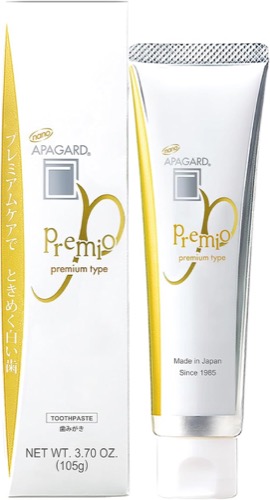
Apagard Premio Nano-Hydroxyapatite Toothpaste
Best for: Most people who want the original Japanese nHAP toothpaste with a premium concentration
- Sangi's premium formula — 1.4x the nano-mHAP of the standard M-Plus line
- Made by the company that invented hydroxyapatite toothpaste in 1980
- Clean Double Mint flavor in a 3.7 oz (105g) tube
- Fluoride-free — approved as a medicinal ingredient in Japan since 1993
- +Made by Sangi, the company that invented hydroxyapatite toothpaste in 1980 — the longest track record in the category
- +1.4x the nano-mHAP concentration of the standard M-Plus formula (Sangi FAQ confirmed)
- +Clean Double Mint flavor and smooth texture that users describe as leaving teeth feeling 'like glass'
- −Premium pricing at around $22 per tube — roughly double most US-made nHAP toothpastes
- −Sangi does not publish the exact nano-mHAP percentage, only relative amounts between variants
(Affiliate link) · Free shipping on eligible Prime items
Why We Recommend It
Premio is the product most people should start with. It’s Sangi’s premium tier (the name is Italian for “prize”), and it contains 1.4x the nano-mHAP of the standard M-Plus formula, which Sangi positions as delivering “greater whitening and anti-caries protection.” The Double Mint flavor is clean and understated: milder than most US toothpastes, which is a feature or a bug depending on your preference. In community discussions, users consistently describe the post-brushing feel as exceptionally smooth: one r/AsianBeauty commenter said Apagard “always makes my teeth feel super smooth, almost like glass afterwards.”
At around $22 for a single 3.7 oz tube, Premio is unambiguously premium-priced: roughly double what you’d pay for Boka or Davids. The case for that premium rests on two things: Sangi’s 40+ year research lineage and a higher nano-mHAP concentration than the budget M-Plus line. If the heritage and formulation depth matter to you more than price, this is where to start. If they don’t, a US-made alternative may serve you just as well.
Key Features
- Sangi’s proprietary Medical Hydroxyapatite (nano-mHAP), refined since 1980
- 1.4x nano-mHAP concentration vs M-Plus (Sangi FAQ confirmed)
- Double Mint flavor, fluoride-free
- 3.7 oz (105g) per tube
Who It’s Best For
Premio is the right Apagard for first-time buyers who want the flagship formula without paying for the Japan-import-only Royal. It’s also the natural pick if you already know you want Apagard specifically (not just any nHAP toothpaste) and want the premium tier rather than the basic M-Plus.
Potential Downsides
The biggest barrier is price: at around $22 per tube, it’s significantly more expensive than US-made nHAP alternatives. Sangi does not publish an absolute nano-mHAP percentage (only that Premio has 1.4x the base formula), so you can’t confirm exactly how it compares to brands that disclose a 10% concentration. The review base on this specific listing (a little over 400 ratings) is smaller than competitors with tens of thousands of reviews, partly because Sangi’s official US Amazon presence is newer. Some users in dental communities report a transition period with increased sensitivity when switching to Apagard, though most long-term users report improvement: set expectations for weeks, not days.
(Affiliate link) · Free shipping on eligible Prime items
Apagard Premio Nano-Hydroxyapatite Toothpaste (2-Pack) — Best Value
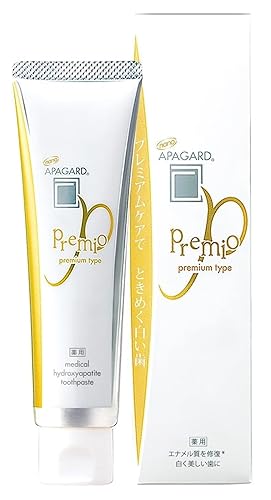
Apagard Premio Nano-Hydroxyapatite Toothpaste (2-Pack)
Best for: People who've decided on Premio and want the lowest per-tube price
- Identical flagship Premio formula in a two-tube pack
- Deepest review base of any Apagard US listing (nearly 1,500 ratings)
- Lower per-tube cost than buying singles
- Two 3.7 oz tubes — roughly a 3-4 month supply for one person
- +Same flagship Premio formula at a meaningfully lower per-tube price than buying singles
- +Deepest review base of any Apagard listing on Amazon US (nearly 1,500 ratings at 4.5 stars)
- +Two 3.7 oz tubes is roughly a 3-4 month supply for one person
- −A commitment purchase — try a single tube first to confirm you like the flavor and feel
- −Same undisclosed absolute nano-mHAP percentage as the single
(Affiliate link) · Free shipping on eligible Prime items
Why We Recommend It
The 2-pack is the same Premio formula, sold two tubes at a time for around $30, which works out to about $15 per tube instead of $22 for a single. That’s a meaningful savings that brings Apagard closer to the price range of US-made nHAP toothpastes. It also happens to be the Apagard listing with the deepest review pool on Amazon US (nearly 1,500 ratings at 4.5 stars), which gives you more feedback to evaluate than any other Apagard product page.
The sequencing advice is the same as with any premium toothpaste: buy a single first, confirm you like the flavor and feel, then switch to the 2-pack for resupply. Apagard’s mild Double Mint is a deliberate choice, not a flaw, but it’s different enough from conventional toothpaste that some people don’t like it. Find out with one tube, not two.
Key Features
- Same flagship Premio nano-mHAP formula as the single
- Two 3.7 oz (105g) tubes per pack
- Lowest per-tube price in the Premio range
- Nearly 1,500 ratings, the most-reviewed Apagard listing on Amazon US
Who It’s Best For
The 2-pack is for people who’ve already tried Premio and know it’s their toothpaste. It’s also sensible for a household where two people use it, or anyone who wants to lock in the better per-tube price without dealing with a subscription.
Potential Downsides
If you haven’t tried Premio before, this is a commitment purchase; you’re buying two tubes of a $15-per-tube toothpaste you might not like. The same core limitations apply: undisclosed absolute nano-mHAP percentage, mild flavor that may feel underwhelming, and the Japanese-heritage branding that some US buyers find unfamiliar. It carries the same formulation as the single: cheaper Apagard, not different Apagard.
(Affiliate link) · Free shipping on eligible Prime items
Apagard Royal Nano-Hydroxyapatite Toothpaste — Highest Concentration
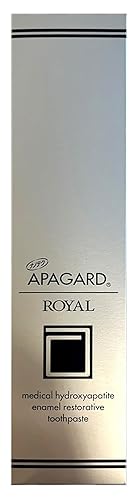
Apagard Royal Nano-Hydroxyapatite Toothpaste
Best for: Enthusiasts who want the maximum nano-mHAP dose in any Apagard product
- Highest nano-mHAP concentration in the Apagard lineup — 2x the M-Plus baseline
- Strongest long-term endorsements in dental and biohacker communities
- Larger 4.8 oz (135g) tube than Premio
- Japan-direct import — limited US availability
- +Highest nano-mHAP concentration in the Apagard range — 2x the M-Plus baseline (Sangi FAQ confirmed)
- +Strongest long-term user testimonials in dental communities, including multi-year endorsements
- +Larger 4.8 oz (135g) tube than Premio's 3.7 oz
- −Japan-direct import with limited and inconsistent US stock — often shows 'Only X left'
- −Most expensive Apagard variant at around $39 per tube
(Affiliate link) · Free shipping on eligible Prime items
Why We Recommend It
Royal is Apagard for the committed nHAP enthusiast. It contains the highest nano-mHAP concentration in Sangi’s lineup: 2x the M-Plus baseline, which works out to about 43% more nano-mHAP than Premio. Sangi’s FAQ confirms this and notes that Royal is only available through their Japanese online shop, Amazon, or eBay, not in general retail, even in Japan.
The community signal for Royal is the most positive of any nano-hydroxyapatite toothpaste in our community research, though it rests on only 15 mentions. Long-term users in r/Biohackers and r/AsianBeauty report years of use with genuine dental improvement: one commenter reported using Apagard Royal “for like 10+ years” and credited it with avoiding dental visits. Another noted their “dentist noticed a huge improvement” after upgrading from Premio to Royal. These aren’t scientific evidence, but a decade of consistent personal endorsement from engaged users is a meaningful signal.
At around $39 for a 4.8 oz tube, Royal is the most expensive Apagard variant and the priciest nHAP toothpaste in our coverage. The case for it is concentration: if you’ve already committed to nHAP and want the highest available dose from the brand with the longest research history, this is it. If you’re still testing whether nHAP works for you, start with Premio—upgrading later is easier than starting at the top.
Key Features
- Highest nano-mHAP concentration in the Apagard series (2x M-Plus)
- 4.8 oz (135g) tube, larger than Premio’s 3.7 oz
- 830+ ratings at 4.7 stars
- Japan-direct import
Who It’s Best For
Royal is for people who’ve already used a lower-tier Apagard (or another nHAP toothpaste), seen results they want to amplify, and are willing to pay the import premium for the maximum concentration. It’s the product that the informed nHAP enthusiast community gravitates toward.
Potential Downsides
The Japan-import logistics are the main practical issue: stock is inconsistent on Amazon (often showing “Only X left”), pricing varies between sellers, and shipping can take longer. Some buyers express authenticity concerns about third-party import listings: look for the nano-mHAP Inside Mark on the packaging, which Sangi prints on all genuine products. At ~$39 per tube, even committed Apagard users need to weigh whether 2x concentration versus Premio’s 1.4x justifies the price difference. And like all Apagard products, the absolute nano-mHAP percentage is undisclosed.
(Affiliate link) · Free shipping on eligible Prime items
Apagard M-Plus Nano-Hydroxyapatite Toothpaste (2-Pack) — Cheapest Entry
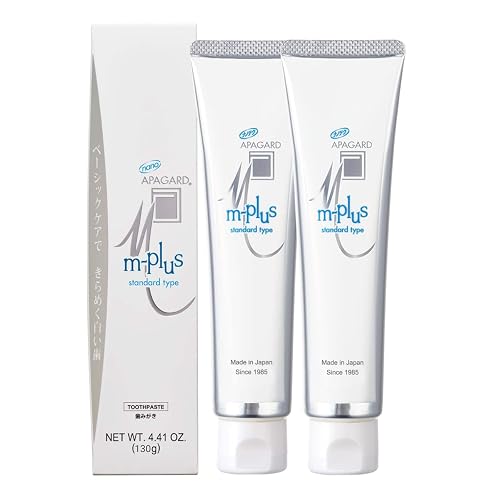
Apagard M-Plus Nano-Hydroxyapatite Toothpaste (2-Pack)
Best for: Trying Apagard for the least money, or households that go through toothpaste fast
- Sangi's standard, longest-selling Apagard formula — the baseline for the Premio and Royal concentrations
- Two 125g / 4.4 oz tubes, larger than Premio's 105g
- Official Sangi US listing, Mild Mint flavor
- Around $14.50 per tube
- +Lowest per-tube price in the Apagard range: around $14.50 per 4.4 oz tube in Sangi's official two-pack
- +Larger tube than Premio (125g vs Premio's 105g), sold by Sangi's official US listing
- +Same nano-mHAP ingredient with the same 1993 Japanese anti-caries approval, at the baseline concentration
- −Thin US review history (116 ratings when we checked), far below the other listings on this page
- −Baseline nano-mHAP concentration: Premio carries 1.4x and Royal 2x as much
(Affiliate link) · Free shipping on eligible Prime items
Why We Recommend It
M-Plus is the Apagard that Sangi itself describes as the standard, classic, longest-selling product in the range, and it is the formula every other variant is measured against: Premio has 1.4x its nano-mHAP, Royal 2x. What you give up in concentration you get back in price and volume. Sangi’s official two-pack works out to around $14.50 per 125g tube, a larger tube than Premio’s 105g, which puts a genuine Sangi product at roughly the price of Boka or Davids for the first time. If the question is “what is the cheapest way to find out whether I like Apagard,” this is the answer.
Read this before you buy it on our word alone. This listing had 116 ratings when we checked, against nearly 1,500 on the Premio two-pack. We normally hold a featured product to a far deeper review history than that, and we have made an exception here because it is Sangi’s own official listing for a formula that has been on sale in Japan for decades, not a new or third-party product. The 4.7-star average is real but rests on a small base, so treat it as a good early signal rather than a settled verdict.
Key Features
- Sangi’s baseline nano-mHAP formula (Premio = 1.4x, Royal = 2x this level)
- Two 125g (4.4 oz) tubes per pack, around $29
- Mild Mint flavor, fluoride-free
- Official Sangi US listing
Who It’s Best For
First-time Apagard buyers who want the lowest-cost trial, families who burn through toothpaste and want the bigger tube, and anyone who has decided concentration differences matter less to them than price.
Potential Downsides
The review base is the honest weak point, and the baseline concentration means that if you are buying Apagard specifically for the higher nano-mHAP dose, this is the wrong tier. The community has almost nothing to say about M-Plus specifically: in the 30 Apagard threads we read for this update, not one discussed it by name, so the feel-and-results testimonials on this page come from Premio and Royal users. Flavor is a mild mint, in the same understated register as Premio.
(Affiliate link) · Free shipping on eligible Prime items
The rest of the Apagard lineup
A brand review should account for what we didn’t feature, so here’s where the remaining variants stand.
Serena is the newest variant on Amazon US, which Sangi describes as a formula for extra protection against coffee, tea, and wine stains (the Amazon listing bills it as a gentle-whitening type in floral mint), at around $23 a tube. Its review base is tiny (under 25 ratings when we checked), so we can describe it but not recommend it yet.
Smokin’ is the smoker’s stain-care variant: same nano-mHAP level as M-Plus but with added ingredients Sangi says target nicotine and tobacco stains. It’s available mainly through Japanese import channels and has minimal US Amazon presence.
Renamel is Sangi’s professional-grade formula, sold through dental offices in some markets. It’s sometimes confused with Royal in online discussions. US availability is extremely limited (single-digit stock on Amazon), and we don’t recommend it as a consumer purchase.
Buyer’s Guide: Is Apagard Worth It, and Which One Should You Buy?
The short answer on value
Apagard is worth it if the research heritage matters to you and you want the formulation lineage that started the nHAP category. Sangi has been refining Medical Hydroxyapatite since 1980, Japan’s government approved it as an anti-caries ingredient in 1993, and a peer-reviewed review in The Saudi Dental Journal lists an Apagard trial in its table of nano-hydroxyapatite studies. No other brand in this space can point to that depth of institutional history.
It is not the right pick if your priority is disclosed concentration at the lowest price. Apagard’s undisclosed absolute percentages mean you’re trusting Sangi’s relative claims (1.4x, 2x) and heritage rather than a number on the tube. US-made brands like Mouthology print “10%” on their label, and cost less. If a verified percentage is what you need to feel confident, those brands serve that specific need better.
And there’s a more important reason some people shouldn’t buy any Apagard toothpaste at all. If you’re cavity-prone or have a history of decay, dropping fluoride is the documented risk—the loudest caution from dental professionals in online discussions is aimed at exactly this scenario, where people switch to a fluoride-free toothpaste and start getting cavities they weren’t getting before. At Apagard’s price point ($23–39 per tube), that’s a costly mistake. If you’re not sure about your cavity risk, talk to your dentist before switching. If you want to hedge, many community members use an nHAP toothpaste at night and a fluoride toothpaste in the morning: a split routine that lets you keep fluoride’s cavity-prevention track record while getting the nHAP experience. Sangi confirms that Apagard is also safe for children and during pregnancy, but for children specifically, whether to use a fluoride-free toothpaste is worth raising with a pediatric dentist.
Which Apagard should you buy?
- New to Apagard / want the flagship → Premio single tube (Editor’s Pick)
- Already a fan, want the best per-tube price → Premio 2-Pack
- Want the highest nHAP concentration available → Royal (for committed users)
- Just want to try Apagard cheaply → M-Plus 2-Pack (Cheapest Entry; thinnest review base, see the caveat on its card)
- Shopping for gum sensitivity rather than whitening → Apadent, Sangi’s gum-care line (see below)
Apagard vs Apadent: same company, different job
“Apadent vs Apagard” is a question readers bring to this page constantly, and the answer comes straight from the maker. Both are Sangi products built on the same nano-mHAP. Sangi’s FAQ describes Apagard as its “restorative whitening” toothpaste and Apadent as the line with added ingredients for gum care and protection against sensitivity and periodontal disease. Apadent was also the original: Sangi’s first hydroxyapatite toothpaste in 1980 carried the Apadent name, five years before Apagard launched. In practice, Apadent is the line Sangi leans on overseas (several Apadent products are marked overseas-only on Sangi’s site, and Apadent Kids is the European children’s version), while Apagard is the consumer-facing line with the Premio / M-Plus / Royal tiers. If your priority is whitening and enamel feel, Apagard is the one with the concentration tiers; if gum sensitivity is the reason you’re shopping, Apadent is the one designed for it, and our toothpaste for gum recession guide covers the wider field.
Apagard versus Boka, Davids, and other nHAP brands
This is the comparison the community keeps coming back to, and the trade-offs are consistent:
Apagard vs Boka. Apagard wins on heritage, disclosed relative concentration, and the “teeth feel like glass” experience users describe. Boka wins on flavor (Ela Mint is consistently called the most pleasant-tasting nHAP toothpaste), US availability, price (~$12 vs ~$23), and sheer review volume (60,000+ vs under 1,500 on Apagard’s most-reviewed listing). If you’re choosing between them: Boka is the easier on-ramp; Apagard is the deeper commitment. We compare both in our Boka toothpaste review and hydroxyapatite roundup.
Apagard vs disclosed-10% brands. Mouthology and a few newer US brands print “10% nano-hydroxyapatite” on the tube. Apagard provides only relative amounts. If a printed number is your decision criterion, those brands answer that question directly. Apagard’s case rests on its research pedigree and over 40 years of refining Medical Hydroxyapatite particle technology.
A note on concentration numbers you’ll see online
You’ll find claims that “Premio is 7% and Royal is 10% nano-hydroxyapatite” in Reddit discussions and product reviews. We could not verify these numbers from any Sangi source. Sangi’s FAQ explicitly states: “The percentage of nano-mHAP in Sangi’s toothpastes is not disclosed.” What Sangi does confirm is the relative hierarchy: Premio = 1.4x M-Plus, Royal = 2x M-Plus. We use these verified ratios throughout this review. If absolute percentages matter to you, choose a brand that publishes them.
Buying Apagard in the US: what to know
Sangi now sells directly on Amazon US through official listings; you can identify these by the “APAGARD” brand name with the registered trademark symbol and the Sangi product descriptions. These are newer listings with thinner review histories than the older third-party import listings that have been on Amazon for years. Both are legitimate sources, but if authenticity concerns you, look for the nano-mHAP Inside Mark on the packaging: a logo Sangi prints on all genuine products containing their proprietary Medical Hydroxyapatite.
Royal is the exception to easy US purchasing. It’s a Japan-direct import with limited stock that fluctuates. If stock matters, check availability before committing to it as your daily toothpaste, or keep a tube of Premio as your backup.
Counterfeit worry comes up in more of the Apagard purchase threads we read than any other buying question, and the community’s answer is consistent: buyers who don’t trust a marketplace listing name dedicated Japanese-import retailers (Japanese Taste, YesStyle, Stylevana), eBay (one long-time buyer reports never having received a fake), and the toothpaste aisle of Japanese and pan-Asian supermarkets such as Mitsuwa and Tokyo Central. One r/AsianBeauty commenter shopping for Royal was told that “dedicated retailers like japanese taste, yesstyle, or stylevana are great options if you’re looking for guaranteed authenticity.” The Sangi-branded Amazon listings we link to carry the marks of the official seller (the ® in the title, Sangi’s own product copy, consistent packaging photos), but if a listing’s title, price, or packaging looks off, those alternatives exist and cost about the same.
Set realistic expectations
Nano-hydroxyapatite supports enamel and may reduce sensitivity over time, but it is not a way to reverse cavities, fix translucent teeth overnight, or replace dental visits. The strongest community endorsements for Apagard come from users who’ve been at it for months or years, not days. Some users report a transition period with increased sensitivity when first switching: if that happens, it’s a reason to check with your dentist, not to assume the product is failing. The reports run in both directions. One r/AsianBeauty user on a third tube of Premio wrote “My teeth feel stronger, no sensitivity and no cavities,” while another in the same thread “noticed a big decline in the health of my teeth (more sensitivity, more cavities)” and switched brands after a cleaning. A self-identified registered dental hygienist in the “is it worth it” thread gave the professional hedge in one line: hydroxyapatite “is promising though but we can’t fully recommend it quite yet.” That is the honest state of the evidence, and it’s why the fluoride question above matters more than the variant question. And if you’re specifically concerned about tooth translucency, which surfaces frequently in Apagard discussions: some users report improvement with consistent long-term use, others see no change. Uncertainty is the fair framing.
Frequently Asked Questions
Is Apagard toothpaste worth the price?
It depends on what you’re paying for. If the research heritage (Sangi invented the nHAP category, Japan approved it as a medicinal ingredient, and a peer-reviewed review lists an Apagard trial in its table of nano-hydroxyapatite studies) matters to you, it’s a defensible premium. At around $15 per tube in the 2-pack, it’s not dramatically more than Boka. If you just want “some nHAP toothpaste” and don’t care about the formulation lineage, US-made alternatives do the job for less.
What’s the difference between Apagard Premio, M-Plus, and Royal?
All three contain Sangi’s proprietary nano-mHAP but at different concentrations. M-Plus is the baseline (basic care, a larger tube than Premio, cheapest). Premio has 1.4x the nano-mHAP of M-Plus and is positioned as the premium daily-use formula. Royal has 2x the nano-mHAP of M-Plus (the highest in the lineup) and is available mainly through Japan-direct import channels. Smokin’ is a stain-care variant with the same nano-mHAP as M-Plus plus added stain-removal ingredients.
Which Apagard toothpaste is best?
For most people, Premio: it carries 1.4x the nano-mHAP of the basic M-Plus formula at a price that drops to about $15 a tube in the 2-pack, and it is the variant with the deepest US review history. Royal is the best if maximum concentration is the goal (2x M-Plus) and the import price and patchy stock don’t bother you. M-Plus is the best way to try the brand cheaply, with the caveat that even Sangi’s official US listing still has a thin review history.
Is Apagard better than Apadent?
Neither is “better”; they are aimed at different problems. Both are Sangi products using the same nano-mHAP. Apagard is Sangi’s restorative-whitening line and comes in concentration tiers (M-Plus, Premio, Royal). Apadent adds ingredients for gum care and sensitivity and is the line Sangi pushes hardest outside Japan, including Europe. Pick Apagard for whitening and enamel feel, Apadent for gum sensitivity.
Does Apagard have 10% nano-hydroxyapatite?
We cannot verify this. Sangi’s FAQ explicitly states that the percentage is “not disclosed.” Claims of “7% Premio / 10% Royal” circulate in online discussions but have no traceable source in Sangi’s published materials. What Sangi does confirm is relative concentrations: Premio = 1.4x M-Plus, Royal = 2x M-Plus. If a verified absolute percentage matters to you, choose a brand that publishes one.
Can I use Apagard with a fluoride toothpaste?
Yes. Many people who don’t want to fully drop fluoride use a fluoride toothpaste in the morning and Apagard at night (or vice versa) rather than replacing fluoride entirely. This split routine is the most common approach in dental communities, and it lets you keep fluoride’s cavity-prevention track record while getting the nHAP experience. There’s no harm in alternating. We discuss the combine-or-replace question further in our fluoride-free toothpaste guide.
Is Apagard safe without fluoride?
Apagard is fluoride-free by design—Sangi’s approach uses nano-hydroxyapatite instead. Japan’s Ministry of Health approved this ingredient as an anti-caries agent in 1993, and the head-to-head cavity evidence is real: an 18-month double-blind trial found a fluoride-free 10% hydroxyapatite toothpaste non-inferior to 1,450 ppm fluoride at preventing new cavities in adults, though the paper never reports its test paste as the nano form Apagard uses, and the trial enrolled healthy, low-caries-risk mouths. However, the ADA still considers fluoride the standard for cavity prevention, and dental professionals generally recommend nHAP for patients who specifically want to avoid fluoride, not as a universal replacement. If you’re cavity-prone, discuss the switch with your dentist first.
How long does Apagard take to work?
Community reports vary widely. Some users notice smoother-feeling teeth within days, while measurable improvements in sensitivity or enamel appearance typically take weeks to months of consistent use. The strongest endorsements in dental communities come from long-term users: months to years, not days. Set expectations for gradual improvement, not overnight results, and see your dentist if you notice new sensitivity or white spots rather than pushing through.
Is my Apagard toothpaste authentic?
If you’re buying from Amazon, check for the official Sangi seller (newer listings with the registered trademark in the title) or established third-party import sellers with strong review histories. Look for the nano-mHAP Inside Mark on the packaging: a logo Sangi places on all genuine products. The fact that Apagard has both official US listings and older import listings can create confusion, but both channels sell genuine Sangi products.