


If you’ve ever skipped your morning coffee or winced biting into ice cream, you already know how much tooth sensitivity can affect daily life. The good news? You don’t have to choose between a brighter smile and comfortable teeth. The best whitening toothpastes for sensitive teeth are specifically formulated to tackle surface stains while soothing those sharp, shooting sensations: no trade-offs required.
Everything here is chosen for stain lift first, with sensitivity protection as the constraint each pick has to clear. If your sensitivity is severe enough that whitening isn’t the priority yet, our best toothpaste for sensitive teeth roundup covers the pure relief formulas. This page is only for teeth that already react. If your teeth are comfortable and you just want the brightest formula, our best toothpaste for whitening roundup covers the stronger peroxide options instead.
This roundup covers daily paste only, the kind you brush with twice a day to lift surface stains over weeks. If your discoloration is deeper and you want a timed two to three week peroxide course instead, start with our best whitening strips for sensitive teeth guide, which covers the peroxide-free and low-peroxide strips built for sensitive mouths. If you want to go beyond toothpaste with a full whitening treatment, our guide to the best teeth whitening products highlights strip and kit options that also include sensitive-friendly picks.
We spent time researching dentist recommendations, clinical ingredients, and real-world reviews to bring you this carefully curated roundup. Whether your sensitivity is mild or significant, there’s a solid option here for you.
How We Evaluated
Before diving into individual picks, here’s exactly how we narrowed the field:
- Active desensitizing ingredients: We prioritized products containing potassium nitrate, one of the potassium salts that have drawn particular research attention for sensitivity (a Cochrane review found the trial evidence mixed—stronger for objective sensitivity testing than for patient-reported relief), or stannous fluoride, whose safety and efficacy data have been reviewed by the ADA in ADA Seal of Acceptance-accepted formulas.
- Whitening mechanism: We looked at how each product whitens (whether through polishing abrasives, hydrogen peroxide, or enzymatic action) and how that approach holds up for sensitive enamel.
- ADA Seal of Acceptance: Where applicable, we noted ADA-accepted products, as this seal requires demonstrated safety and efficacy.
- Dentist recommendations: We cross-referenced picks against recommendations from cosmetic and general dentists cited across multiple editorial sources.
- Real-world usability: Flavor, texture, ease of use, and value all factored in.
Sensodyne Pronamel Gentle Whitening Toothpaste
Sensodyne Pronamel Gentle Whitening Toothpaste
Best for: Anyone with sensitivity from acidic foods, cold drinks, or whitening treatments who wants gradual whitening without drama
- Contains potassium nitrate to calm nerve sensitivity
- Polishes away surface stains in a Pronamel formula Haleon calls low-abrasion
- Strengthens acid-weakened enamel (Pronamel technology)
- Fluoride: 1,150 ppm, per Haleon (sodium fluoride 0.25% on the US label)
- +Potassium nitrate calms nerve sensitivity while polishing lifts surface stains, in a line Haleon calls low-abrasion
- +Pronamel technology strengthens acid-weakened enamel
- +Consistently tops dentist recommendation lists for sensitive teeth
- −Whitening is gentle and cumulative, no dramatic overnight results
(Affiliate link) · Free shipping on eligible Prime items
Why We Recommend It
Sensodyne Pronamel Gentle Whitening consistently tops dentist recommendation lists, and for good reason. It’s one of the few toothpastes that meaningfully addresses both sensitivity and enamel erosion simultaneously. Multiple dental publications, including Byrdie’s dentist-reviewed roundup, cite it as a top performer for sensitive teeth. According to the ADA, fluoride strengthens teeth to help prevent decay and remineralizes tooth enamel—one reason fluoride toothpastes like this one are recommended for enamel-conscious routines.
Key Features
- Contains potassium nitrate to calm nerve sensitivity
- Polishes away surface stains in a Pronamel formula Haleon calls low-abrasion
- Strengthens acid-weakened enamel (Pronamel technology)
- Available in mint and clean mint flavors
- Fluoride: 1,150 ppm, per Haleon (sodium fluoride 0.25% on the US label)
Who It’s Best For
Anyone who experiences sensitivity from acidic foods, cold drinks, or whitening treatments will find this toothpaste especially well-suited. It’s also a great daily driver for those who want gradual whitening without the drama of strips or trays. If you’re ready to step up to a kit, our roundup of the best at-home teeth whitening kits includes peroxide-free options designed with sensitive teeth in mind.
Potential Downsides
Whitening results are gentle and cumulative—don’t expect dramatic changes overnight. If you’re looking for fast, noticeable brightening, you may find the pace frustrating.
(Affiliate link) · Free shipping on eligible Prime items
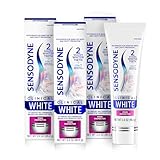
Sensodyne Clinical White
Sensodyne Clinical White
Best for: People with moderate to significant sensitivity who want meaningful whitening results, including post-professional-whitening maintenance
- 5% potassium nitrate for sensitivity relief
- Stain-lifting whitening Haleon calls clinically proven, citing an 8-week study
- Haleon calls it enamel safe and less abrasive on enamel than other whitening toothpastes
- Fluoride-based protection against cavities
- +5% potassium nitrate, an active the ADA's toothpaste guidance lists for sensitivity pain
- +Brand claims up to two shades whiter with 24/7 sensitivity protection
- +Haleon calls it enamel safe and less abrasive on enamel than other whitening toothpastes; fluoride for cavities
- −Slightly higher price than standard Sensodyne variants
- −Mint flavor is stronger than some users expect
(Affiliate link) · Free shipping on eligible Prime items
Why We Recommend It
Sensodyne Clinical White is the brand’s most potent whitening offering, combining 5% potassium nitrate with a stain-lifting whitening formula. Potassium toothpastes have drawn particular research attention for sensitivity, a Cochrane review notes, though it found the trial evidence mixed—stronger for objective sensitivity testing than for patient-reported relief. Sensodyne claims it delivers up to two shades whiter teeth while providing 24/7 sensitivity protection, making it one of the most well-rounded options in this space.
Key Features
- 5% potassium nitrate for sensitivity relief
- Stain-lifting whitening Haleon calls clinically proven, citing an 8-week study
- Haleon says it is enamel safe and less abrasive on enamel than other whitening toothpastes
- Fluoride-based protection against cavities
- Recommended by dentists in multiple editorial reviews
Who It’s Best For
This is our top pick for people with moderate to significant sensitivity who still want meaningful whitening results. It’s also a strong choice if you’ve had professional whitening treatments and want to maintain results without aggravating post-treatment sensitivity. Pairing it with a sensitivity-focused mouthwash can also help: see our picks for the best mouthwash for sensitive teeth for compatible options.
Potential Downsides
It sits at a slightly higher price point than standard Sensodyne variants. Some users also report the mint flavor is stronger than expected, which may not suit everyone.
(Affiliate link) · Free shipping on eligible Prime items
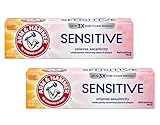
Arm & Hammer Sensitive Teeth & Gums Toothpaste
Arm & Hammer Sensitive Teeth & Gums Toothpaste
Best for: Budget-conscious shoppers wanting a reliable daily whitening toothpaste, or as a secondary toothpaste alongside a specialized sensitivity product
- Baking soda as the primary cleaning agent, which Arm & Hammer calls one of the least abrasive tooth cleaners, in what the listing calls a low-abrasion formula
- Contains sensitivity-relief ingredients
- Fights cavities with fluoride
- About $8 for a 2-pack, roughly $4 a tube
- +Baking soda lifts surface stains, and Arm & Hammer says its toothpastes are less abrasive than other toothpastes, though we found no abrasivity number for this tube
- +About $8 for a 2-pack, roughly $4 a tube
- +Fluoride protection against cavities
- −Texture is slightly grittier than some users prefer
- −Sensitivity relief may be less pronounced than clinical-strength options
(Affiliate link) · Free shipping on eligible Prime items
Why We Recommend It
If you’re watching your budget without wanting to sacrifice quality, Arm & Hammer Sensitive Teeth & Gums punches well above its price tag: it’s sold as a 2-pack for about $8, working out to roughly $4 a tube. It uses baking soda along with sensitivity-targeting ingredients to lift surface stains. Arm & Hammer calls baking soda one of the least abrasive materials you can clean your teeth with, though it gives no abrasivity figure for this particular tube on its product page or in that article, and the ADA says abrasivity scores under 250 shouldn’t be used to rank one toothpaste as safer than another.
Key Features
- Baking soda as the primary cleaning agent, which Arm & Hammer calls one of the least abrasive tooth cleaners, in what the listing calls a low-abrasion formula
- Contains sensitivity-relief ingredients
- Fights cavities with fluoride
- About $8 for a 2-pack, roughly $4 a tube
- Fresh mint flavor
Who It’s Best For
Budget-conscious shoppers who want a reliable daily whitening toothpaste without spending a lot. Also a good secondary toothpaste to use alongside a more specialized sensitivity product.
Potential Downsides
The texture is slightly grittier than some users prefer, which is characteristic of baking soda formulas. Sensitivity relief may be less pronounced compared to clinical-strength options like Sensodyne Clinical White.
(Affiliate link) · Free shipping on eligible Prime items
Boka Toothpaste for Sensitive Teeth (Fluoride-Free)
Boka Toothpaste for Sensitive Teeth (Fluoride-Free)
Best for: People seeking a fluoride-free option with mild to moderate sensitivity, or those following a more natural wellness philosophy
- Nano-hydroxyapatite (n-Ha) as the active remineralizing agent
- Free from fluoride, SLS, and artificial flavors
- Whitens by polishing; Boka puts its whole toothpaste line at 50 to 90 on the abrasivity scale, which it calls low to medium
- Available in several flavors including Ela Mint and Coco Ginger
- +Research (manufacturer-funded) suggests nano-hydroxyapatite may remineralize enamel comparably to fluoride
- +Free from fluoride, SLS, and artificial flavors
- +Several flavor options including Ela Mint and Coco Ginger
- −Not ADA-accepted, the seal requires fluoride for cavity-protection claims
- −Those with high cavity risk should consult a dentist before going fluoride-free
(Affiliate link) · Free shipping on eligible Prime items
Why We Recommend It
Boka takes a different approach to oral care, using nano-hydroxyapatite (n-Ha) instead of fluoride as its primary remineralizing agent. An 18-month double-blind randomized trial in Frontiers in Public Health—funded by hydroxyapatite-toothpaste maker Dr. Kurt Wolff GmbH & Co. KG—found hydroxyapatite toothpaste non-inferior to fluoride for cavity prevention in adults, though that trial’s paste is listed only as “hydroxyapatite (10%)” and is never reported as the nano form Boka uses, and a separate randomized trial in BDJ Open (manufacturer-funded) found nano-hydroxyapatite as effective as a leading desensitizing toothpaste at relieving tooth sensitivity. For those who prefer to avoid fluoride (whether for personal, health, or lifestyle reasons), Boka offers a thoughtful alternative that doesn’t abandon enamel care altogether.
Key Features
- Nano-hydroxyapatite (n-Ha) as the active remineralizing agent
- Free from fluoride, SLS, and artificial flavors
- Whitens by polishing; Boka puts its whole toothpaste line at 50 to 90 on the abrasivity scale, which it calls low to medium
- Clean-label formula with minimal additives
- Available in several flavors including Ela Mint and Coco Ginger
Who It’s Best For
People seeking a fluoride-free option who have mild to moderate sensitivity. Also well-suited to those interested in a cleaner ingredient list or who follow a more natural wellness philosophy.
Potential Downsides
Because it’s fluoride-free, it is not ADA-accepted—the ADA Seal of Acceptance requires fluoride for cavity-protection claims. Anyone with a history of cavities or high cavity risk should consult their dentist before switching to a fluoride-free option.
(Affiliate link) · Free shipping on eligible Prime items
Sensodyne Extra Whitening Toothpaste

Sensodyne Extra Whitening Toothpaste
Best for: People with mild-to-moderate sensitivity who feel Pronamel Gentle Whitening isn't delivering visible brightness fast enough
- Potassium nitrate for sensitivity management
- More active whitening than standard Sensodyne variants
- Fluoride for cavity protection
- Builds sensitivity protection over time with consistent use
- +More active whitening than standard Sensodyne variants
- +Called out by cosmetic dentists as a go-to for sensitive teeth
- +Potassium nitrate builds sensitivity protection with consistent use
- −Takes weeks of twice-daily use before sensitivity relief is fully established
(Affiliate link) · Free shipping on eligible Prime items
Why We Recommend It
Sensodyne Extra Whitening is specifically called out by cosmetic dentists (including those at NH Dentistry Beverly Hills) as a go-to recommendation for patients with sensitive teeth who want a more assertive whitening action. It still contains potassium nitrate for sensitivity, but its whitening system is slightly more intensive than the Pronamel line, making it a middle-ground option for those who want visible results without going full clinical-strength.
Key Features
- Potassium nitrate for sensitivity management
- More active whitening than standard Sensodyne variants
- Fluoride for cavity protection
- Builds sensitivity protection over time with consistent use
- Fresh mint flavor, widely available
Who It’s Best For
This is an excellent choice for people with mild-to-moderate sensitivity who feel Pronamel Gentle Whitening isn’t quite delivering visible brightness fast enough. Think of it as the step between everyday Sensodyne and the clinical-strength version. If you’re still weighing Sensodyne against Sensodyne, our Sensodyne toothpaste guide compares the full lineup side by side.
Potential Downsides
Like all Sensodyne products, it takes consistent twice-daily use over several weeks before sensitivity relief becomes fully established. The listing says it “gently polishes away surface stains”, but we found no abrasivity figure for it on Sensodyne’s US product page or the listing, so there is no number to compare it against.
(Affiliate link) · Free shipping on eligible Prime items
Twice Anti-Cavity Fluoride Toothpaste (Wintergreen Peppermint, 3-Pack)
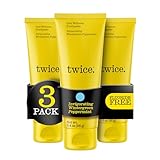
Twice Anti-Cavity Fluoride Toothpaste (Wintergreen Peppermint, 3-Pack)
Best for: People who want a premium formula with cleaner, plant-based ingredients
- Fluoride plus potassium nitrate for cavity protection and sensitivity relief, per the listing
- Hydrated silica and pentasodium triphosphate for surface-stain polishing, per the listing
- Coconut-derived foaming agents with aloe vera and vitamins A and E, per the listing
- Free from SLS, artificial dyes, parabens, BPA, and gluten, per the listing
- +Pairs fluoride with potassium nitrate for sensitivity, and adds aloe vera and vitamins A and E, per the listing
- +Free from SLS, artificial dyes, parabens, BPA, and gluten, per the listing
- +Recommended by dentists in Health.com's 2026 whitening toothpaste roundup
- −Sold as a three-pack of 3.4 oz tubes at about $15, so the upfront outlay is higher than a single tube
- −Whitening results are gradual and subtle rather than dramatic
(Affiliate link) · Free shipping on eligible Prime items
Why We Recommend It
Twice Oral Wellness has quietly built a strong reputation in the wellness-forward dental space. Recommended by dentists in Health.com’s 2026 whitening toothpaste roundup, this fluoride formula adds potassium nitrate for sensitivity and plant-derived ingredients such as aloe vera, per the listing, for a more holistic approach. It’s one of the few products in this space that manages to feel premium without compromising on sensitivity care.
Key Features
- Fluoride plus potassium nitrate for cavity protection and sensitivity relief, per the listing
- Hydrated silica and pentasodium triphosphate for surface-stain polishing, per the listing
- Coconut-derived foaming agents with aloe vera and vitamins A and E, per the listing
- Free from SLS, artificial dyes, parabens, BPA, and gluten, per the listing
- Sold as a three-pack of 3.4 oz tubes
Who It’s Best For
People who want a step up in experience (better flavor, cleaner ingredients, more pleasant texture). Also a strong pick for anyone already using a wellness-focused lifestyle routine who wants their oral care to match.
Potential Downsides
At about $15 for three 3.4 oz tubes, the per-tube price is low for this roundup, but the pack is the only way the wintergreen peppermint version is sold right now. The whitening results are gradual and subtle rather than dramatic, which suits some users and frustrates others.
(Affiliate link) · Free shipping on eligible Prime items
Buyer’s Guide: What to Look For
Desensitizing Ingredients
Two desensitizing agents you will meet in over-the-counter toothpaste are potassium nitrate and stannous fluoride. The ADA’s toothpaste guidance cites a review that recommends twice-daily self-applied stannous or potassium formulas for reducing sensitivity pain. Desensitizing toothpastes with these active ingredients typically require several weeks of consistent use before sensitivity improves noticeably. Potassium nitrate works by calming the nerve inside the tooth; stannous fluoride works by occluding (blocking) the tiny tubules in dentin that transmit pain signals.
Abrasivity (RDA Score)
RDA (Relative Dentin Abrasivity) is a lab score for how abrasive a toothpaste is, though the only figure we found for the pastes on this page is Boka’s, and that is a single range for its whole line. The ADA treats any toothpaste at or below RDA 250 as safe and effective, requires that of every paste carrying its Seal of Acceptance, and says scores under 250 should not be used to rank one toothpaste as safer than another, because those differences don’t translate into measurable wear on enamel. Where a maker describes its paste’s abrasivity in words, as Haleon does for Pronamel, we quote it on the card. If charcoal toothpaste appeals to you, our best charcoal toothpaste picks cover that category on its own.
Whitening Mechanism
Most whitening toothpastes work through one of three mechanisms:
- Abrasive polishing: physically buffs away surface stains
- Chemical bleaching: uses hydrogen peroxide (less common in sensitivity formulas)
- Enzymatic or optical agents: break down stain compounds or improve light reflection
For sensitive teeth, polishing-based whitening avoids peroxide, and the ADA links temporary tooth sensitivity to all forms of bleaching; pairing it with enamel-strengthening ingredients helps too. If you’d rather skip peroxide altogether, our best purple toothpaste picks cover the color-correcting route to a brighter smile without any bleaching agent.
Fluoride vs. Fluoride-Free
Unless you have a specific reason to avoid fluoride, stick with it: the ADA calls fluoride safe and effective for preventing tooth decay in children and adults, and recommends brushing with a fluoride toothpaste. Fluoride-free options using nano-hydroxyapatite are an emerging alternative with promising early research, but they don’t yet carry ADA Acceptance. Always discuss changes with your dentist, particularly if you have a history of cavities.
ADA Seal of Acceptance
The ADA Seal is a helpful shortcut: it means the product has been independently evaluated and found to be safe and effective for its stated claims. Not all good products carry the seal (it requires manufacturer submission and fees), but it’s a reliable trust signal when present.
FAQ
Q: Can whitening toothpaste make sensitivity worse?
A: It can. The ADA links temporary sensitivity to all forms of bleaching, and a 2020 review it cites found limited evidence that whitening toothpastes carry side effects such as sensitivity comparable to paint-on whitening gels. That’s why choosing a toothpaste specifically formulated for sensitive teeth matters. The ADA’s toothpaste guidance also cites a review recommending twice-daily potassium or stannous formulas for reducing sensitivity pain.
Q: How long does it take to see whitening results from toothpaste?
A: Most whitening toothpastes (especially sensitivity-focused formulas) take 2 to 6 weeks of consistent twice-daily use before visible brightening becomes apparent. Results are typically one to two shades lighter rather than the dramatic changes you’d see with professional treatments.
Q: Is it safe to use whitening toothpaste every day if I have sensitive teeth?
A: Generally yes, provided the toothpaste is specifically formulated for sensitive teeth. The ADA considers any toothpaste at or below RDA 250 safe and effective, and every paste carrying its Seal meets that limit. It’s always worth checking with your dentist, particularly if your sensitivity is linked to gum recession, cracked teeth, or exposed dentin.
Q: What’s the difference between whitening toothpaste and whitening strips for sensitive teeth?
A: Whitening toothpaste works primarily on surface (extrinsic) stains through abrasives or chemical agents. Whitening strips use a higher concentration of hydrogen peroxide to penetrate enamel and address deeper (intrinsic) discoloration. Strips tend to produce faster and more noticeable results, but they can also cause more sensitivity. For deep stains, a strip formulated for sensitive teeth is the better tool, and the strip guide linked at the top of this page covers the peroxide-free and low-peroxide options that pair safely with a daily desensitizing paste.
Q: Should I use a separate sensitivity toothpaste and whitening toothpaste?
A: Some people do rotate between the two, but the products in this roundup are designed to do both jobs simultaneously. If your sensitivity is severe, you might prioritize a dedicated sensitivity toothpaste (like standard Sensodyne) for a few weeks before transitioning to a combination formula. The sensitivity-first roundup linked at the top of this page is a good starting point if you need a non-whitening option first.
Q: How is this different from your sensitive-teeth toothpaste roundup?
A: Same shortlist criteria, opposite priority order. This page starts with how well a paste lifts surface stains and then checks that the formula is safe for reactive teeth. The sensitivity-first roundup starts with desensitizing power (active ingredient, concentration, time to relief) and treats whitening as a bonus. Pick this page if you want a brighter smile and sensitivity is the thing standing in the way.
Q: How is this different from your general whitening toothpaste guide?
A: Scope. This page only lists formulas built around a desensitizing active (potassium nitrate, stannous fluoride, or nano-hydroxyapatite), and it leaves out the higher-peroxide pastes that whiten faster but sting. The general whitening-paste guide linked at the top covers the full field, including 2% and 4% hydrogen peroxide formulas, and ranks on brightening power first. Start there if your teeth do not react to cold; start here if they do.
Q: Do natural or fluoride-free whitening toothpastes work as well?
A: Some fluoride-free formulas using nano-hydroxyapatite show real promise for sensitivity relief and enamel remineralization, according to emerging research. However, the ADA calls fluoride safe and effective for preventing tooth decay and recommends a fluoride toothpaste, so fluoride-free options are best suited to those with low cavity risk. Talk to your dentist before making the switch.
Our Methodology
We built this guide through a multi-step research process. We started by surveying recent (2025–2026) dentist-sourced roundups from outlets including Health.com, Byrdie, Forbes Vetted, and The Independent, as well as guidance directly from practicing cosmetic and general dentists. We cross-referenced these sources against ADA guidelines on sensitivity, abrasivity, and whitening safety.
We then evaluated each product against a consistent set of criteria: active ingredients and their clinical evidence base, published abrasivity information, ADA Seal status where applicable, price-to-value ratio, and real-world feedback from verified consumer reviews. We prioritized products with demonstrated desensitizing ingredients, and we were careful to distinguish between marketing claims and clinically supported benefits.
We don’t accept payment for product placements, and our affiliate relationships (clearly disclosed above) do not influence which products are included or ranked. Our goal is simple: give you the most useful guidance possible so you can make a confident choice for your smile.