
The Short Answer
Plaque is removed through consistent brushing (twice daily, 2 minutes, light pressure), cleaning between your teeth once daily, and professional cleanings on a schedule your dentist sets. Technique matters more than force or fancy equipment. No home remedy removes tartar (hardened plaque); only a dentist or hygienist can do that safely, and home scaling tools can cause real damage.
What Is Plaque?
Plaque is a sticky film of bacteria that forms on teeth after eating. According to the American Dental Association, the bacteria in plaque release acids after you eat or drink something sugary; the plaque itself is the film, and it’s the bacteria in it, feeding on carbohydrates, that produce the acid. Repeated acid attacks break down enamel and eventually cause cavities. Plaque that isn’t removed with thorough daily brushing and cleaning between teeth can eventually harden into tartar (calculus).
Plaque vs. Tartar: Why Timing Matters
The distinction decides what you can fix at home. Plaque is soft: a toothbrush, floss, or an interdental brush removes it mechanically. But per the Cleveland Clinic, plaque that sits undisturbed absorbs minerals from your saliva and hardens into tartar, which bonds to enamel so firmly that only professional instruments can remove it. The hardening starts fast: dental professionals on Reddit put the window at roughly 24 to 48 hours for the earliest deposits.
That clock is why a once-a-day-ish routine leaks buildup over time. It also explains the classic trouble spot: the backs of the lower front teeth sit next to salivary gland openings, so plaque there mineralizes fastest. Dental professionals on Reddit point at the same anatomy when people ask why that one spot always builds up first.
If what you’re seeing is already hard, yellowish, and won’t brush off, you’re past the plaque stage; our guide on how to remove tartar covers what happens next (short version: a professional cleaning).
How to Remove Plaque at Home
- Brush for 2 minutes, twice daily, with light pressure. The ADA’s home-care guidance is built on twice-daily brushing with a fluoride toothpaste for two minutes; our toothpaste-for-cavities picks cover the fluoride side. Technique carries more weight than effort: angle the bristles toward the gumline and move tooth by tooth rather than scrubbing hard. Pressing harder does not remove more plaque, but it does wear gums down. Dental professionals in the Reddit threads we reviewed repeatedly told hard brushers the same thing: soft bristles, light grip, slow pace.
- Clean between your teeth once a day. A brush can’t reach the contact points between teeth, where cavities like to start. The ADA’s review of interdental cleaning lands somewhere refreshingly practical: floss, interdental brushes, and water flossers all have evidence behind them, and the best device is the one you’ll actually use daily. String floss works best wrapped in a C-shape against each tooth, sliding up and down the tooth surface, with a fresh segment for each gap. Don’t be discouraged if nothing visible comes out; plaque at this stage is a thin film, not chunks, and invisible removal is still removal. Our dental floss guide covers which type fits which mouth; if standard floss is difficult, a water flosser can help you actually stick with the habit.
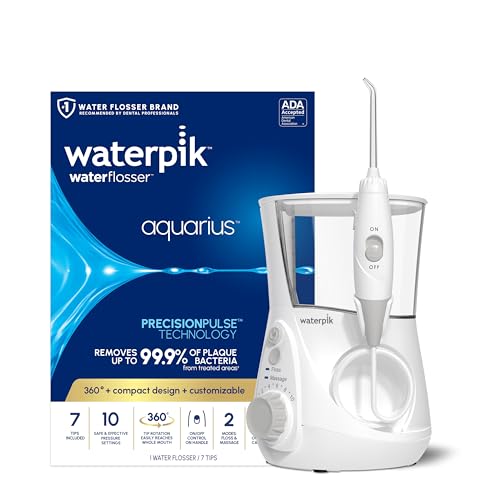
Waterpik Aquarius WP-660
Best for: Cleaning around bridges, implants, braces, and deep gum pockets
- ADA Accepted under the countertop water flosser category
- Pressurized water stream flushes soft plaque and debris from between teeth
- 10 pressure settings for customised cleaning
- 7 tips included for the whole family
(Affiliate link) · Free shipping on eligible Prime items
(Affiliate link) · Free shipping on eligible Prime items
One honest caveat from the professional side: a water flosser removes soft, fresh deposits, and dental professionals who debate the topic on Reddit keep landing on the same framing: a water jet flushes debris out, while floss physically wipes the tooth surface. One hygienist describes patients with braces, bridges, implants, or deep gum pockets improving dramatically with one, and those are the same best-fit cases professionals list, while still treating it as a companion to string floss rather than a full replacement. Use it daily; the hardening clock doesn’t pause between sessions.
- Use an antiseptic mouthwash if it fits your situation. An antibacterial mouthwash can reduce the bacteria that form plaque. It’s an adjunct, not a substitute: rinsing doesn’t mechanically remove the film, and a 14-year hygienist on Reddit tells diligent brushers that mouthwash is optional when brushing and interdental cleaning are already solid.
- Consider an electric toothbrush. The 2014 Cochrane review of powered versus manual toothbrushing found powered brushes removed more plaque and reduced gingivitis more than manual brushing, in both the short and long term, with oscillating-rotating designs the most studied (Cochrane, 2014). You don’t need a premium model: the community consensus among dental folk on Reddit is that a basic rechargeable from a major brand plus good technique beats an expensive handle used badly. Let the brush do the work; glide it slowly along the gumline instead of scrubbing with it like a manual brush.
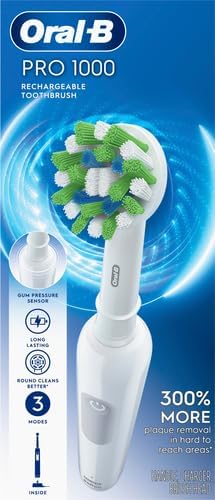
Oral-B Pro 1000
Best for: Budget rechargeable with a round head that cleans one tooth at a time
- 3D oscillating-rotating-pulsating action breaks up plaque
- Built-in pressure sensor protects gums from overbrushing
- 2-minute professional timer
- Compatible with full range of Oral-B brush heads
(Affiliate link) · Free shipping on eligible Prime items
(Affiliate link) · Free shipping on eligible Prime items
A useful fit note from those same threads: the small round Oral-B head suits crowded teeth because it can adapt to one tooth at a time, while switchers coming straight from a manual brush are cautioned in the same discussion not to use a round head like a manual one; gliding it tooth by tooth is what makes it work. Either style cleans well when used correctly; the pressure sensor on the Pro 1000 is the feature that matters most if you tend to brush hard.
Wondering whether to use a water flosser or traditional floss for plaque removal? Our water flosser vs. floss comparison breaks down which works best for different situations.
Two often-overlooked tools can further reduce plaque levels:
- Scrape your tongue daily: the tongue harbors a large share of the mouth’s bacteria, and tongue scraping showed up in most of the routines we reviewed without a single professional disputing it. A stainless steel tongue scraper (Affiliate link) takes seconds.
- Use interdental brushes for wider gaps; standard floss works best for tight contacts, but interdental brushes (Affiliate link) are more effective for cleaning around bridgework, implants, or anywhere you can fit the brush without forcing it.
Why You Might Still Get Buildup with a Good Routine
The most common frustration in the community threads we reviewed isn’t laziness, it’s the opposite: people who brush twice a day, floss, water-floss, and scrape their tongue, and still watch buildup return. If that’s you, the routine may not be the problem. Factors dental professionals raise in those discussions:
- Saliva chemistry. A hygienist on Reddit notes that some people simply carry more calcium and phosphorus in their saliva, which mineralizes plaque faster, while others have more natural pyrophosphates, which slow it down. You didn’t choose your saliva. This is also why “tartar-control” toothpastes exist: pyrophosphate and zinc-citrate formulas are designed to interfere with that mineralization, and stannous fluoride formulas have published evidence on plaque and calculus control as well (Heliyon, 2019).
- Mouth breathing. A dry mouth overnight concentrates minerals and lets plaque sit undisturbed; one recurring professional explanation in those threads connects night-time mouth breathing with faster tartar formation.
- Dry mouth from medication. Reduced saliva flow means less natural rinsing. If a medication changed your mouth, our dry mouth product guide covers products that help.
- Diet. Plaque bacteria feed on simple carbohydrates, so frequent bread, crackers, and sugar give the film more to work with between brushings.
- Missed spots, not missed sessions. Brushing twice a day doesn’t help the surface you never quite reach. That’s a technique and coverage problem, which brings us to disclosing tablets.
Check Your Work with Disclosing Tablets
Disclosing tablets are the “purple stuff” some hygienists use in the chair: a food-grade dye you chew after brushing that stains any remaining plaque a vivid color, showing exactly which spots your brush keeps missing. They’re inexpensive, available over the counter, and dental professionals on Reddit regularly suggest them to people trying to diagnose their own technique.
Two tips for reading the results accurately. First, the dye clings to more than plaque: chipped enamel edges and exposed root surfaces from gum recession can hold color even when perfectly clean, so a stained line at the gumline isn’t automatically a hygiene failure. Second, use what you see to adjust where you brush, not how hard.
What Not to Do: Skip the Plaque Scrapers
Amazon sells metal dental scalers that look exactly like the hooked instruments a hygienist uses. The dental professionals in every thread we reviewed were unanimous, and unusually emphatic, about leaving them alone:
- Scaling is a trained, licensed procedure. Hygienists describe it as difficult to do properly even on their own teeth, with years of training behind the angle and pressure decisions involved.
- The damage is gradual and invisible. A slip cuts your gum, but the quieter risk is repeatedly scraping away small amounts of enamel and the softer dentin underneath, and pressing bacteria below the gumline.
- You can’t reach the part that matters. Home scraping removes at most the visible buildup above the gumline. The deposits below the gumline are the ones tied to gum disease and bone loss, and clearing only the visible portion leaves a mouth that looks clean while the real problem continues underneath.
- Sterility. Professional instruments are sterilized between every patient. A scraper in your bathroom drawer is not.
The same warning applies in softer form to improvised tools: toothpicks and fingernails can chip away a visible fleck of tartar, but they irritate gum tissue and leave the rest behind. If buildup has hardened, the fix is a professional cleaning, not a sharper object.
The gentler mistake worth naming: brushing harder and longer. Multiple threads feature people brushing 5 to 10 minutes at full pressure out of plaque anxiety, and the outcomes reported there include receding gums and expensive repair work. Plaque removal takes time and coverage, not force.
When to See a Dentist
Professional cleanings do the part no home tool can: a hygienist removes hardened tartar above and below the gumline, typically with an ultrasonic scaler that patients often find far gentler than they feared. If it has been years, that’s normal and dentists see it constantly; the appointment is shorter and less dramatic than most people expect.
How often should you go? The honest answer, straight from the ADA’s own review of the evidence, is that there’s no single magic interval: research hasn’t crowned “every 6 months” as optimal for everyone, and the ADA’s position is that your recall schedule should be tailored to your individual risk. People who build tartar quickly or have gum disease history are often put on shorter recall schedules; low-risk patients may comfortably go longer. Your dentist sets the number, and it’s worth asking them to explain why yours is what it is.
Book sooner if you notice bleeding gums that persist beyond a week of good hygiene, buildup you can see or feel that won’t brush off, persistent bad breath, or gum tenderness. Untreated plaque buildup is a leading cause of gingivitis: learning how to fix gingivitis early can prevent it from progressing to more serious gum disease. And if you’re stuck on a long waiting list, ask the office to call you about cancellations; hygienists themselves suggest it.
Evidence Receipt
- Plaque’s acid mechanism and hardening into tartar are described by the American Dental Association’s MouthHealthy plaque page: plaque bacteria release acids after sugary meals, and plaque that isn’t removed by daily brushing and interdental cleaning can harden into calculus (tartar).
- Plaque mineralizes into tartar that only professional instruments can remove, per the Cleveland Clinic’s tartar overview; the roughly 24-to-48-hour early-hardening window quoted on this page is community-sourced from dental professionals in this guide’s research file, not from the Cleveland Clinic.
- Twice-daily 2-minute brushing with fluoride toothpaste, daily interdental cleaning, and individually tailored recall intervals are the core of the ADA’s home-care evidence review, which also notes there is no consensus that one fixed cleaning interval fits everyone.
- Powered brushes outperform manual on plaque and gingivitis: the 2014 Cochrane review found an 11% plaque reduction at 1 to 3 months (21% beyond 3 months) versus manual brushing, with oscillating-rotating designs the most studied.
- Interdental cleaning helps beyond brushing: a 2019 Cochrane review of home-use interdental devices found low-certainty evidence that flossing and interdental brushes reduce gingivitis compared with toothbrushing alone, that interdental brushes may outperform floss, and that oral irrigators showed only a short-term gingivitis signal; evidence certainty was low across all devices.
- Stannous fluoride’s effect on plaque and calculus is documented in a 2019 Heliyon review of stabilized stannous fluoride dentifrices.
- The Waterpik Aquarius WP-660’s ADA Seal status comes from a category listing, not a model-level one: the Aquarius WP-660 is a countertop unit covered by the ADA’s acceptance of the Waterpik Countertop Family Water Flosser, which the ADA Council on Scientific Affairs accepted as safe and effective for removing plaque along the gumline and between the teeth. The roster carries no separate WP-660 entry.
FAQ
Q: Can I remove tartar at home? A: No. Once plaque hardens into tartar, only a professional dental cleaning (scaling) can remove it safely. Home scaling tools can damage enamel and gums, and they can’t reach the deposits below the gumline that actually drive gum disease. Everything a home routine can do, it does before plaque hardens: the daily brushing and interdental cleaning described above are tartar prevention, not tartar removal.
Q: Can existing plaque be removed by brushing alone, or do I need a professional cleaning? A: Fresh plaque, yes: it’s soft, and a well-used toothbrush plus daily cleaning between teeth removes it. What brushing can’t remove is plaque that has already mineralized into tartar, and most mouths accumulate at least some over months even with a solid routine. That’s the division of labor: your routine handles the daily film, the hygienist periodically clears whatever hardened in the spots you missed.
Q: How do you remove plaque permanently? A: You don’t, and nothing sold online changes that. Plaque begins re-forming soon after brushing because the bacteria live in your mouth permanently; that’s normal biology, not failure. What you control is whether the film gets removed before it hardens and before its acids do damage. A repeatable daily routine beats any intensive one-off deep clean.
Q: Why do I still get plaque when I brush and floss every day? A: Possibly technique and coverage (disclosing tablets will show you), but not necessarily. Saliva chemistry varies from person to person, and dental professionals also point to mouth breathing, medication-related dry mouth, and frequent simple carbohydrates as accelerants. If your hygienist confirms your technique is good and buildup still outpaces the routine, more frequent professional cleanings and a tartar-control toothpaste are the levers to discuss.
Q: Is a water flosser enough on its own, without string floss? A: For most people it works best as a complement rather than a replacement: the jet flushes soft debris well but doesn’t wipe the tooth surface the way floss does. It earns a bigger role if you have braces, bridges, implants, or deep gum pockets, where floss physically can’t reach, or if the honest alternative is not flossing at all. A daily water-flossing habit beats an abandoned floss habit.
Q: How often should I get a professional cleaning? A: There’s no universal interval. The ADA’s review of the evidence found no proven one-size-fits-all schedule and recommends tailoring the interval to your individual risk. Heavy tartar formers and people with gum disease history are typically put on shorter recall schedules than low-risk patients. Ask your dentist what your risk level is and let that set the calendar.