


Dealing with a gum infection, a healing extraction site, or persistent bacterial buildup is stressful enough before you hit the mouthwash aisle. Big-brand bottles promise to kill 99% or 99.9% of germs, forum threads argue about whether alcohol-free versions work, and one r/Dentistry poster described researching for hours and coming away more confused than they started. This guide cuts through that by reading the drug-facts panel for each rinse that has one (on DailyMed or, for Crest, on the listing we link), checking which products the ADA Seal roster lists and for what claim, and noting what dental professionals in the threads we read recommend each rinse for. As always, if you suspect a serious oral infection, please see your dentist: no mouthwash replaces professional care. The American Dental Association treats mouthrinse as one part of a complete oral care routine, and Mayo Clinic’s periodontitis overview traces how untreated bacterial plaque progresses to gum disease, which is why acting early matters. If gum inflammation is the underlying concern, the best mouthwash for gingivitis covers rinses specifically optimized for that condition.
How We Evaluated
Before diving into our picks, here’s how we approached this roundup:
- Drug labels over marketing: Where DailyMed (the National Library of Medicine’s label database) carries a rinse’s FDA over-the-counter drug label, we read the label itself and report the listed active ingredient and its stated purpose, not the front-of-bottle claims; for the Crest rinse we read the active-ingredient panel on the listing.
- Active ingredients: The lineup spans four chemistries: cetylpyridinium chloride (CPC, the labeled antigingivitis/antiplaque active in the Crest rinse), hydrogen peroxide (the labeled wound-cleansing active in Peroxyl), stabilized chlorine dioxide and sodium chlorite (the odor-fighting ingredients in CloSYS and TheraBreath), and fluoride rinses that carry the four Listerine essential oils as inactive ingredients. The ADA’s mouthrinse guidance names CPC, chlorhexidine, and essential oils among the antimicrobial ingredients shown to help reduce plaque and gingivitis alongside brushing and flossing.
- ADA Seal claims, verified live: Every Seal claim on this page was checked against the ADA’s live accepted-products roster in August 2026, and each roster entry we cite was re-read in September 2026. Where a product isn’t on the roster, we say so.
- User experience: Taste, burn level, and ease of use matter for long-term adherence, so we ground those sections in real user and professional reports from dental communities.
- Price and availability: All picks are widely available, with prices re-read from the live listings at each update.
Evidence Receipt
- Listerine Total Care’s FDA drug label lists one active ingredient: sodium fluoride 0.02%, purpose “anticavity”; the four essential oils and 21.6% alcohol appear among the inactive ingredients.
- The ADA Seal held by Listerine Total Care Anticavity Mouthwash is scoped to “helping to prevent tooth decay,” not to germ-kill or gum disease.
- The roster’s alcohol-free Total Care entry is Listerine Total Care Mild Alcohol Free Anticavity Fluoride Mouthwash, also scoped to cavity prevention; it is the bottle we link, and its FDA label lists the same sodium fluoride 0.02% active with no alcohol in the ingredient list.
- TheraBreath Fresh Breath Oral Rinse holds the ADA Seal for “helping to reduce bad breath,” and CloSYS’s alcohol-free rinse, whose roster ingredient list matches the unflavored Ultra Sensitive bottle we link, holds its own Seal for the same claim; neither covers gum disease or infection.
- The ADA’s mouthrinse overview states that antimicrobial ingredients like cetylpyridinium chloride, chlorhexidine, and essential oils have been shown to help reduce plaque and gingivitis when combined with daily brushing and flossing, and that children under 6 should not use mouthrinse unless directed by a dentist.
- Our August 2026 read of the ADA’s accepted-products roster returned no entry for the Crest Pro-Health Complete Clean rinse we link, and its listing makes no Seal claim.
- A six-month randomized trial of a 0.07% CPC rinse, the concentration listed for the Crest rinse we link, found lower plaque scores than a placebo rinse, no significant difference in gum bleeding at six months, and slightly more staining (Van Leeuwen et al. 2015, PMID 25040299). The trial was funded by Dentaid, a Spanish oral-care company that also supplied the study rinses, according to the lead author’s thesis.
- Colgate Peroxyl’s FDA label lists hydrogen peroxide 1.5% as an oral debriding agent and wound cleanser, directs up to four uses daily, and caps use at 7 days unless a dentist or physician directs otherwise.
- A randomized crossover trial in treated hypertensive adults found that three days of antibacterial mouthwash use reduced oral nitrate-to-nitrite conversion and was paralleled by a small (2.3 mmHg) rise in systolic blood pressure (Bondonno et al. 2015, PMID 25359409). The rinse tested was a chlorhexidine gluconate mouthwash, per the paper’s methods, so the result speaks to chlorhexidine rather than to the rinses on this page.
- A systematic review of seven head-to-head studies found alcohol-free essential-oil mouthwashes gave somewhat less plaque control than alcohol-containing ones, with no clear difference in gum bleeding or gingivitis scores; two of its authors disclose past fees or grants from manufacturers, Listerine among them (van Swaaij et al. 2024, PMID 39133629).
Crest Pro-Health Complete Clean Mouthwash: Editor’s Pick
Crest Pro-Health Complete Clean Mouthwash
Best for: anyone who wants a daily rinse whose label names an antibacterial active for plaque and gingivitis, without the burn of alcohol
- CPC 0.07%, labeled antigingivitis/antiplaque
- Alcohol-free
- Six-month CPC trial: less plaque than placebo, bleeding not different
- Around $5 per liter
- +Its listed active, CPC 0.07%, is labeled antigingivitis/antiplaque
- +Alcohol-free with no burn
- +Around $5 for a full liter, the lowest price per ounce here
- −In a six-month trial, a 0.07% CPC rinse caused slightly more tooth staining than a placebo rinse
- −Some forum users report food tasting wrong for days after using it
(Affiliate link) · Free shipping on eligible Prime items
Why We Recommend It
Of the six rinses here, this is the one whose active ingredient is labeled for gum health: the active-ingredient panel on the listing we link gives cetylpyridinium chloride (CPC) 0.07%, with the purpose antigingivitis/antiplaque. The two Listerine Total Care bottles list fluoride for cavities, Peroxyl lists hydrogen peroxide as a wound cleanser, and CloSYS and TheraBreath are breath rinses whose ADA Seals cover bad breath. CPC at this strength has its own trial record: over six months, a 0.07% CPC rinse lowered plaque scores against a placebo rinse, though gum bleeding was not significantly different by the end and staining rose slightly (Van Leeuwen et al., 2015), and the ADA’s mouthrinse guidance names CPC among the ingredients shown to help reduce plaque and gingivitis alongside brushing and flossing. It is alcohol-free, so there is no alcohol burn on tissue that is already sore, and at around $5 a liter it is also the lowest-cost bottle here per ounce. What it does not have is an ADA Seal: the Complete Clean rinse we link was not on the roster at our August 2026 read, and its listing makes no Seal claim.
Key Features
- Cetylpyridinium chloride (CPC) antibacterial agent
- Alcohol-free
- Antigingivitis/antiplaque designation on the listing
- Fights bad breath, plaque, and gingivitis
- Clean Mint flavor in the 1-liter bottle we link
Who It’s Best For
Anyone whose worry is plaque or gum inflammation and who wants a daily rinse with a labeled antibacterial active, especially if alcohol stings. It is a daily rinse, not a treatment: gums that keep bleeding or swelling are a reason to book a dentist.
Potential Downsides
CPC has two side effects worth knowing about. The familiar one is staining: in the six-month Van Leeuwen trial above, the 0.07% CPC group showed a small but significant difference in staining against the placebo group (8.6% at three months, 10.4% at six). The less-advertised one is taste alteration: users in an r/Dentistry thread describe food tasting wrong or a numb-tongue feeling for days to a week after use (a second thread is titled “Crest Pro-Health: No Taste”), tracing it to the CPC, and that thread’s original poster quoted a Crest FAQ saying CPC may cause a temporary change in the taste of food in a small percentage of people. One user put both sides in a sentence: it ruined their sense of taste for several days after one use, and it also works really well. If you notice taste changes, stopping resolves it within about a week by these accounts.
(Affiliate link) · Free shipping on eligible Prime items
Listerine Total Care Anticavity Fluoride Mouthwash: Best for Cavity Protection
Listerine Total Care Anticavity Fluoride Mouthwash
Best for: anyone who wants one daily rinse covering fluoride protection plus the classic Listerine essential-oil formula, and doesn't mind alcohol
- Sodium fluoride 0.02% anticavity active
- Four Listerine essential oils in the formula
- ADA Seal of Acceptance for cavity prevention
- Six-benefit daily rinse
- +Sodium fluoride active ingredient with an ADA Seal for cavity prevention
- +Carries the four Listerine essential oils (eucalyptol, menthol, thymol, methyl salicylate)
- +Six-benefit daily formula at a drugstore price
- −Contains 21.6% alcohol; in the threads we read, the burn is what pushed two users off classic Listerine
- −Label directions are for ages 12 and up; the germ-kill line is front-of-bottle marketing, not a Drug Facts purpose
(Affiliate link) · Free shipping on eligible Prime items
Why We Recommend It
Total Care is Listerine’s everything-at-once formula, and the first thing to know is that it is not the classic teal “Listerine Antiseptic,” even though the two share a shelf and a brand. Its FDA drug label lists a single active ingredient, sodium fluoride 0.02%, with the purpose “anticavity”; the four famous essential oils (eucalyptol, menthol, thymol, methyl salicylate) are listed among the inactive ingredients rather than as labeled actives. Kenvue markets Total Care’s germ-kill line (“Kills 99.9% of germs that cause bad breath”), and the essential-oil family it belongs to is one the ADA names among ingredients shown to help reduce plaque and gingivitis, but the regulated claim on this specific bottle is cavity prevention. That is also exactly what its ADA Seal covers: “safe and has shown efficacy in helping to prevent tooth decay, when used as directed.” We link the Intense Mint 1-liter listing, which runs around $9.
Key Features
- Sodium fluoride 0.02% anticavity active (per the FDA label)
- Four-essential-oil Listerine formula
- ADA Seal of Acceptance, scoped to cavity prevention
- Intense Mint flavor in the 1-liter bottle we link
Who It’s Best For
Anyone who wants one daily rinse that combines fluoride protection with the classic Listerine formula and doesn’t have sensitivity to alcohol. If the germ-kill mission is your whole reason for rinsing, the product built for that is the teal Listerine Antiseptic, whose essential oils are the labeled actives and whose ADA Seal covers preventing and reducing gingivitis and plaque; Total Care trades some of that focus for fluoride. If that is the bottle you want, we link Listerine Cool Mint Antiseptic on our gingivitis roundup. (Affiliate link) For a broader look at gum disease management, the best mouthwash for gum disease covers rinses used in more advanced cases.
Potential Downsides
Contains 21.6% alcohol per the label’s inactive-ingredients list. In the threads we read, two users describe switching away from classic Listerine because of the burn; one of them, posting in a thread about a CPC rinse changing the taste of food, went back to Listerine and “made myself get used to it.” Label directions are for adults and children 12 and up, with younger children directed to a dentist or doctor. If you have dry mouth or have been told to avoid alcohol, the alcohol-free version below is the gentler bottle. After oral surgery, follow your surgeon’s aftercare sheet first; if they clear a rinse and alcohol stings, the alcohol-free bottle is the one to use.
(Affiliate link) · Free shipping on eligible Prime items
CloSYS Ultra Sensitive Mouthwash: Pick for Sensitive Mouths
CloSYS Ultra Sensitive Mouthwash
Best for: people with sensitive mouths, or anyone whose mouth reacts to the alcohol or strong mint of a typical antiseptic rinse
- Stabilized chlorine dioxide technology
- Alcohol-free and sulfate-free
- pH-balanced formula
- Unflavored, with an optional peppermint flavor dropper
- +Stabilized chlorine dioxide targets bacteria without alcohol or harsh detergents
- +Gentle enough for sensitive mouths and daily use
- +Alcohol-free and sulfate-free; its rinse formula holds the ADA Seal for helping reduce bad breath
- −Highest sticker price here, around $26 for two 32-ounce bottles, though not the highest per ounce
- −Contains no fluoride, so it needs pairing with a fluoride toothpaste
(Affiliate link) · Free shipping on eligible Prime items
Why We Recommend It
CloSYS takes a different chemical route: stabilized chlorine dioxide, which the listing says eliminates odor-causing bacteria at the source, in an unflavored, pH-balanced formula the listing calls “as gentle as water.” Its reputation in the threads we read is specific rather than universal. A 2026 patient-recommendation list posted by a hygienist on r/DentalHygiene slots CloSYS as the gentle, alcohol-free, pH-balanced option for sensitive and dry-mouth patients, and a commenter answering a burn-averse buyer called it a go-to precisely because it has zero burn. Others are cooler on it: a veteran hygienist replying to that same list says she recommends everything on it except CocoFloss and CloSYS, a 2016 r/Dentistry commenter says they “typically only recommend Closys/Therabreath if people can’t seem to get their breath under control,” and another r/Dentistry commenter dismissed it as overrated and overpriced. The pattern across those threads: its gentleness is the product. It also holds an ADA Seal for helping reduce bad breath, the only claim that Seal covers.
Key Features
- Stabilized chlorine dioxide technology
- Alcohol-free and sulfate-free
- pH-balanced formula
- Unflavored, with an optional peppermint flavor dropper
- Gentle enough for daily use
Who It’s Best For
People with sensitive mouths, or anyone whose mouth reacts to the alcohol or strong mint of a typical antiseptic rinse (the bottle we link is unflavored, with an optional peppermint dropper). If gentleness is the difference between rinsing daily and skipping it, this is the rinse that gets used.
Potential Downsides
It has the highest sticker price here, around $26 for the two-bottle 32-ounce pack we link, though per ounce it comes in under TheraBreath and Peroxyl. Users in one multi-year thread report a bitter aftertaste (one says it faded with time) and a dry-mouth feeling, and two report new tooth sensitivity, though both were layering it with other rinses at the same time, which makes the culprit hard to pin. It carries no fluoride, so pair it with a fluoride toothpaste.
(Affiliate link) · Free shipping on eligible Prime items
TheraBreath Fresh Breath Oral Rinse — Best for Bad Breath
TheraBreath Fresh Breath Oral Rinse
Best for: those dealing with chronic bad breath linked to bacterial activity, or people who want an everyday antibacterial rinse that's gentle and easy to tolerate
- OXYD-8, TheraBreath's sodium-chlorite-based oxygenating formula
- Alcohol-free and dye-free
- No SLS/sulfates or parabens, per the listing
- Maker's claim: fights bad breath for 12 hours
- +Holds the ADA Seal of Acceptance for helping reduce bad breath
- +Alcohol-free, with no dyes, colors, SLS or parabens per the listing
- +Professionals in the threads we read reach for it for bad breath and tonsil-stone pockets
- −Standard formula contains no fluoride
- −Pricier per ounce than drugstore rinses, about $15 for two 16-ounce bottles
(Affiliate link) · Free shipping on eligible Prime items
Why We Recommend It
TheraBreath’s listing includes sodium chlorite among its ingredients, which the brand markets as OXYD-8, a formula derived from sodium chlorite, and it is one of the rinses on this page with an ADA Seal for helping reduce bad breath. Its professional lane is specific: in the threads we read, every professional source that mentions it does so for breath or tonsil stones. The 2026 r/DentalHygiene patient-recommendation list files it under halitosis for reducing odor-causing bacteria and volatile sulfur compounds, the 2016 r/Dentistry commenter quoted above recommends it, alongside CloSYS, only when people can’t get their breath under control, and a self-identified hygienist in an r/tonsilstones thread dips microbrushes in it to clean the tonsil pockets. For a focused roundup on halitosis, see our guide to the best mouthwash for bad breath. It also lists no dyes, colors, sulfates or parabens, which appeals to users looking for a shorter ingredient list.
Key Features
- OXYD-8, TheraBreath’s sodium-chlorite-based oxygenating formula
- Alcohol-free and dye-free
- No SLS/sulfates or parabens, per the listing
- Maker’s claim: fights bad breath for 12 hours
- Other TheraBreath formulas target different jobs (Healthy Gums uses CPC)
Who It’s Best For
Those dealing with chronic bad breath linked to bacterial activity, or people who want an everyday antibacterial rinse that’s gentle and easy to tolerate. If gum health rather than breath is the goal, TheraBreath’s Healthy Gums rinse uses CPC instead; our TheraBreath comparison covers which of the brand’s rinses fits which problem.
Potential Downsides
Doesn’t contain fluoride in the standard formula, and the rare peppermint-sensitive user reacts even to the Mild Mint version: one poster describes burning and jaw pain from its peppermint oil. We link the two-bottle 16-ounce pack, around $15, which is pricier per ounce than drugstore staples.
(Affiliate link) · Free shipping on eligible Prime items
Colgate Peroxyl Mouth Sore Rinse — Best for Mouth Sores
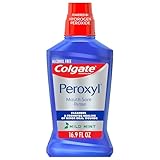
Colgate Peroxyl Mouth Sore Rinse
Best for: anyone dealing with canker sores, minor gum wounds, or irritation from dental work, dentures, or braces
- 1.5% hydrogen peroxide oral debriding agent
- Alcohol-free
- Designed for mouth sores and minor wound care
- Mild mint flavor
- +1.5% hydrogen peroxide cleanses canker sores, minor mouth wounds, and irritated gum tissue
- +Gentle effervescent action debrides tissue without harsh scrubbing
- +Alcohol-free, with label directions down to age 2 under supervision
- −The label caps use at 7 days unless a dentist or physician directs otherwise
- −Not a daily-maintenance rinse; it's a short-term wound cleanser
(Affiliate link) · Free shipping on eligible Prime items
Why We Recommend It
This one stands apart from the rest of the list because it’s a wound cleanser, not a daily rinse. Peroxyl’s FDA label lists hydrogen peroxide 1.5% as an “oral debriding agent/oral wound cleanser” for temporarily cleansing canker sores, minor mouth wounds, and minor gum inflammation from minor dental procedures, dentures, orthodontic appliances, or accidental injury. The gentle effervescent action debrides (cleans) irritated tissue without scrubbing, and the label’s directions run up to four times daily after meals, for adults and children as young as 2 with supervision. At around $12 a bottle, it’s an easy addition to a recovery kit. If you’re dealing with an active canker sore specifically, our guide on how to get rid of a canker sore fast covers additional steps beyond this rinse.
Key Features
- 1.5% hydrogen peroxide active ingredient (oral debriding agent per the label)
- Alcohol-free
- Designed for mouth sores and minor wound care
- Mild mint flavor
- Up to 4 uses daily, maximum 7 days unless directed
Who It’s Best For
Anyone managing canker sores, a minor gum wound, or irritation from dental work in the acute phase, before transitioning back to a standard rinse for maintenance. After an extraction or oral surgery, use it only on your own dentist’s or surgeon’s instruction. One patient in an r/wisdomteeth thread reports being told by their dentist to use it gently, tilting the head instead of swishing; a self-described healthcare worker in the same thread warns against peroxide on healing wounds unless specifically ordered. Your surgeon’s post-op sheet outranks any roundup, ours included.
Potential Downsides
The label caps use at 7 days unless a dentist or physician directs otherwise, and says to stop if symptoms persist or worsen; that limit is the product working as designed, not a defect. In the r/askdentists and r/DentalHygiene threads we read, people rinsing a mouth sore with Peroxyl, some at their dentist’s suggestion, report both outcomes: some describe the swelling going down or the pain stopping after a week of rinsing, others describe a sore still there after four or five days. The label also says to stop and ask a doctor if irritation, pain or redness persists or worsens, or if swelling, rash or fever develops. Treat it like the short-term tool it is.
(Affiliate link) · Free shipping on eligible Prime items
Listerine Total Care Alcohol-Free Mouthwash (Mild Mint) — Alcohol-Free Pick
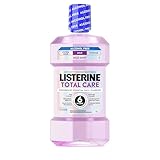
Listerine Total Care Alcohol-Free Mouthwash (Mild Mint)
Best for: adults and teens 12+ who find alcohol-based rinses too harsh, or anyone advised by their dentist to avoid alcohol-containing products
- Alcohol-free fluoride formula
- Same essential-oil blend as the classic
- Sodium fluoride 0.02% anticavity active
- On the ADA Seal roster for cavity prevention
- +Same fluoride active and essential-oil blend as the classic, with zero alcohol
- +On the ADA Seal roster by name, for helping prevent tooth decay
- +Alcohol-free, which the ADA says may be the prudent choice for dry mouth
- −The Seal covers cavity prevention only, not germ-kill or gum disease
- −Label directions start at 12, the same as the classic; younger kids need a different bottle
(Affiliate link) · Free shipping on eligible Prime items
Why We Recommend It
This is the Total Care formula with the alcohol removed entirely. Its FDA label lists the same sodium fluoride 0.02% anticavity active and the same four essential oils in the inactive list, with no alcohol anywhere in the ingredient list. Two practical differences follow from the label. First, comfort: no burn, which is what keeps burn-averse people rinsing at all. Second, a Seal of its own: this Mild bottle is the alcohol-free Total Care the ADA roster names for cavity prevention, so the Seal claim on the card traces to this exact product rather than to its alcohol-based sibling. The listing we link is the Mild Mint flavor in the 1-liter bottle, around $9, shipped and sold by Amazon.
Key Features
- Alcohol-free, with the same fluoride active as the classic
- Same four-essential-oil blend
- On the ADA Seal roster by name, for cavity prevention
- Label directions from age 12, the same as the classic
Who It’s Best For
Adults and teens who find alcohol-based rinses too harsh, those with mild dry mouth, and anyone advised by their dentist to avoid alcohol-containing products. After oral surgery, follow your surgeon’s aftercare sheet first; if they clear a rinse and alcohol stings, this is the gentler bottle.
Potential Downsides
For cavity protection the fluoride active is identical to the classic’s; for plaque control, a systematic review found alcohol-free essential-oil rinses somewhat less effective than alcohol versions (see the alcohol question below). The Seal covers cavity prevention only, so it says nothing about germ-kill or gum disease. The label directions start at 12, so this is not the bottle for a household with younger children; the label’s inactive ingredients also include sodium lauryl sulfate and two added colors (Red 33, Blue 1), which some people avoid.
(Affiliate link) · Free shipping on eligible Prime items
What Dental Professionals on Reddit Say About Antibacterial Mouthwash
Before the buyer’s guide, here is where professionals in the threads we read land, because it frames every choice below.
In the r/Dentistry and r/DentalHygiene threads we read for this guide, the recurring professional position is that no over-the-counter rinse treats an established infection: plaque and tartar are removed mechanically, by brushing, interdental cleaning, and professional scaling. In a 2025 r/Dentistry thread, the top-voted comment calls alcohol-based antiseptic mouthwash 'useless' ('bacteria levels are back to normal in an hour anyways') while praising daily fluoride rinse, and other commenters in the thread describe over-the-counter mouthwash as an add-on or 'lifestyle product' rather than treatment. Professionals across these threads still recommend specific rinses for specific jobs: fluoride rinses for cavity risk, an essential-oil antiseptic such as teal Listerine as a plaque/gingivitis assist, TheraBreath or CloSYS for odor, and short-term prescription chlorhexidine after surgery or for severe gum disease.
The takeaway isn’t that rinsing is pointless; it’s that a rinse is the third tool in the kit, after the brush and whatever you clean between teeth with. Pick the rinse whose specific job matches your specific problem, and let your dentist handle anything that looks like a true infection.
Buyer’s Guide: What to Look For
Active Antibacterial Ingredients
The ingredient label tells you everything. Look for one of these recognized agents:
- Essential oils (eucalyptol, thymol, menthol, methyl salicylate): The Listerine family of ingredients. The ADA names essential oils among the antimicrobial ingredients shown to help reduce plaque and gingivitis alongside brushing and flossing. Check whether they’re the labeled active (as in classic Listerine Antiseptic) or listed as inactive ingredients of a fluoride rinse (as in Total Care).
- Cetylpyridinium chloride (CPC): Found in alcohol-free formulas like Crest Pro-Health. Named by the ADA among ingredients shown to help reduce plaque and gingivitis; watch for staining and for taste changes some users report.
- Chlorine dioxide: Used in CloSYS, whose listing says it eliminates odor-causing bacteria at the source; its calling card in the threads we read is gentleness.
- Hydrogen peroxide: A short-term wound cleanser and debriding agent, not a daily antibacterial rinse.
- Chlorhexidine gluconate: The prescription-strength option (Peridex and generics). Your dentist may prescribe it for post-surgical care or serious gum infection. The ADA notes that some studies found it controls plaque better than essential oils, with no difference for gingivitis, and that it can stain teeth and alter taste; dentists prescribe it for short courses.
If you’d rather avoid chlorhexidine or CPC altogether, oil pulling is the natural-side alternative some readers consider, whether with plain oil or a ready-to-use oil pulling mouthwash.
The ADA Seal of Acceptance
The Seal belongs to a specific product for a specific claim, not to a brand. Four of the rinses on this page have their own roster entries, and the claims differ: Listerine Total Care Anticavity and its Mild alcohol-free version are accepted for helping prevent tooth decay, while TheraBreath Fresh Breath and CloSYS’s alcohol-free rinse are accepted for helping reduce bad breath. None of the six is accepted for gum disease or infection; the classic teal Listerine Antiseptic holds its Seal for preventing and reducing gingivitis and plaque. Every Seal claim here traces to a roster entry on the ADA’s accepted-products roster, re-read in September 2026. A rinse without a Seal can still work; a page claiming a Seal should be able to point at the roster entry.
Alcohol vs. Alcohol-Free
It depends on the active. For fluoride rinses like both Total Care bottles here, the anticavity active is identical with or without alcohol. For essential-oil antiseptics the trade is real but modest: a systematic review of seven head-to-head studies found alcohol-free essential-oil rinses controlled plaque somewhat less well than the alcohol versions, found no clear difference in gum bleeding or gingivitis scores, and found people preferred the alcohol-free taste (van Swaaij et al., 2024). The CPC rinse here, the Crest pick, is alcohol-free to begin with. The ADA adds that because alcohol can be drying, an alcohol-free rinse may be the prudent choice for dry mouth. Consider going alcohol-free if you:
- Experience dry mouth (xerostomia)
- Have been cleared by your surgeon to rinse after oral surgery and find that alcohol stings
- Have children using the rinse (and note the label age floors: 12+ for both Total Care bottles here, down to 2 under supervision for Peroxyl)
- Find the burning sensation intolerable enough to skip rinsing
That last one matters more than any formula difference: the rinse you actually use daily beats the stronger one sitting in the cabinet.
Prescription Mouthwash: When You Need More
If you have a confirmed oral infection (an abscess, post-surgical infection, or advanced periodontitis), your dentist may prescribe chlorhexidine gluconate rinse (brand name Peridex). The ADA’s mouthrinse guidance groups chlorhexidine with the antimicrobial ingredients shown effective against plaque and gingivitis, and in practice it’s the rinse dentists reach for around surgery and severe gum disease. OTC antibacterial rinses may help with mild bacterial concerns, but they are not substitutes for prescription treatment or professional care when a true infection is present. For advanced gum disease situations, the best mouthwash for periodontal disease covers the rinses most often recommended alongside professional treatment.
FAQ
Q: Can mouthwash actually treat an oral infection? A: The ADA says a rinse may add benefit in reducing the risk of bad breath, cavities or gum disease, but no mouthwash treats a true oral infection on its own. If you have symptoms of an abscess (swelling, severe pain, fever, or pus), you need professional dental care promptly: left untreated, a tooth abscess can spread to the jawbone and to other parts of the body, according to MedlinePlus. If cost or access is what’s keeping you from a dentist, our guide to emergency dental care without insurance covers where to go.
Q: My gums keep swelling even though I brush, floss and rinse. Is the mouthwash failing? A: Sometimes the cause is not something a rinse can reach. Gum overgrowth is a recognized reaction to specific medicines, namely phenytoin, ciclosporin and calcium channel blockers, and it is turning up more often in dental practice because calcium channel blockers are so widely used (Zoheir & Hughes, 2020). In one r/askdentists thread, a poster who was brushing, flossing and rinsing with Listerine Total Care still had gums that kept growing; the top reply asked about amlodipine, and the next reply named it as one of the medicines known to cause this kind of overgrowth. Management involves your dentist and the doctor who prescribed the medicine, and any change to a prescription is that doctor’s call, so don’t stop a medicine on your own.
Q: If I already brush and floss, does mouthwash add anything? A: A little, for a specific job. The ADA says a rinse does not take the place of brushing and flossing but may add benefit in reducing the risk of bad breath, cavities or gum disease. For CPC rinses like the Crest pick, a systematic review of eight studies found a small but significant extra reduction in plaque and gum inflammation when the rinse was used on top of brushing (Haps et al., 2008). Match the rinse to the job its label names; the professionals quoted above make the same point.
Q: What’s the strongest option for an infected mouth? A: Over the counter, the ceiling is mechanical cleaning plus a rinse whose label names an antibacterial active: CPC (the Crest pick here) or the essential oils in classic Listerine Antiseptic, which also holds the ADA Seal for gingivitis and plaque. Beyond that ceiling sits prescription chlorhexidine gluconate, which your dentist can prescribe alongside actual treatment of the infection source. If you find yourself shopping for the “strongest” rinse, that’s usually the signal to book the appointment instead.
Q: How long should I use antibacterial mouthwash? A: For general preventive use, daily-use rinses like the Listerine, Crest, CloSYS, and TheraBreath picks are designed for long-term use. Colgate Peroxyl is the exception: its label caps use at 7 days unless a dentist or physician directs otherwise. Prescription chlorhexidine rinses are prescribed for specific durations.
Q: Why does Peroxyl’s label say not to use it more than 7 days? A: Because it’s classified as an oral debriding agent (a wound cleanser), not a maintenance rinse. Its label directs you to stop and ask a doctor if sore-mouth symptoms haven’t improved within 7 days, since a wound that isn’t healing needs diagnosis, not more rinsing. The same label says to stop if irritation, pain or redness persists or worsens. If your dentist tells you to use it longer, that instruction outranks the label’s default.
Q: I’ve used Peroxyl for four or five days and the sore is still there. Should I keep going? A: People in the threads we read report both outcomes by that point: some sores settled with rinsing, others were still there after four or five days. The label sets the limit: stop and ask a doctor if sore mouth symptoms have not improved within 7 days, or if irritation, pain or redness persists or worsens, or if swelling, rash or fever develops (Drug Facts). If a dentist suggested Peroxyl, see the dentist who told you to use it.
Q: Can I use Peroxyl or antiseptic mouthwash after a tooth extraction? A: Only on your surgeon’s or dentist’s instruction. Post-extraction patients in dental communities get conflicting advice: one r/wisdomteeth patient’s dentist told them to use Peroxyl gently (tilting the head instead of swishing), while a self-described healthcare worker in the same thread warns against alcohol or peroxide on healing wounds unless specifically ordered. Your surgeon’s aftercare sheet sets the default, and our tooth-extraction recovery guide lays out what Mayo Clinic, the NHS, MedlinePlus and an oral surgeons’ association say about rinsing, day by day. The same healthcare worker put early bad breath down to trapped food debris rather than a need for a stronger rinse.
Q: How long after an extraction before I can go back to Peroxyl or my usual mouthwash? A: The people asking get different answers. In one r/wisdomteeth thread, a poster three weeks out from a lower wisdom tooth removal asked about going back to Peroxyl, and the top reply, from another commenter rather than a professional, was “Leave it alone. Let it heal.” In an older thread, a patient said their own dentist had told them to use Peroxyl, gently, tilting the head instead of swishing. Even the published start days for gentle salt-water rinsing differ by source, as the recovery guide above shows. The person to ask is the surgeon who did the extraction, and their aftercare sheet outranks any thread.
Q: Does antibacterial mouthwash raise blood pressure or kill good bacteria? A: There’s a real mechanism behind this worry: some oral bacteria convert dietary nitrate into nitrite, a step in the body’s nitric-oxide pathway that supports blood-vessel function. A small randomized crossover trial in adults on blood-pressure medication found that three days of antibacterial mouthwash use reduced that conversion and was paralleled by a small (about 2 mmHg) rise in systolic blood pressure (Bondonno et al. 2015). The rinse in that trial was chlorhexidine gluconate, per the paper’s methods, and dental professionals discussing this research on Reddit point out that the evidence is strong for chlorhexidine but questionable for essential-oil rinses, and that no dentist prescribes chlorhexidine long-term anyway. If you’re managing hypertension and rinse twice daily, it’s a reasonable thing to mention to your physician; it is not a reason to panic about occasional use.
Q: Is alcohol-free mouthwash as effective as alcohol-containing formulas? A: It depends on the active ingredient. For a fluoride rinse, the anticavity active is the same with or without alcohol. For essential-oil rinses, a systematic review of seven head-to-head studies found the alcohol-free versions gave somewhat less plaque control, with no clear difference in gum bleeding or gingivitis scores (van Swaaij et al., 2024). CPC, which the ADA names alongside essential oils among ingredients shown to help reduce plaque and gingivitis, comes in alcohol-free rinses like the Crest pick. If the burn stops you rinsing at all, the alcohol-free bottle you use beats the stronger one you skip.
Q: Can children use antibacterial mouthwash? A: The ADA advises that children under 6 should not use mouthrinse unless directed by a dentist, because they may inadvertently swallow large amounts. The labels here that admit children under 12 direct supervision. Check each label’s own age floor too: both Total Care bottles we link, the classic and the Mild alcohol-free, are directed 12 and up.
Q: What’s the difference between antiseptic and antibacterial mouthwash? A: The terms overlap heavily in practice. Antiseptic refers to inhibiting or killing microorganisms broadly (bacteria, fungi, some viruses); antibacterial specifically targets bacteria. On a store shelf the label difference is mostly positioning. The distinction the ADA draws is more useful: cosmetic rinses only freshen breath for a while, while therapeutic rinses carry an active ingredient meant to control a condition such as plaque, gingivitis, bad breath or tooth decay. So judge a bottle by its named active ingredient and what the label says that active is for.
Q: Should I use mouthwash before or after brushing? A: The ADA’s mouthrinse guidance says the order may come down to personal preference, and that manufacturers may recommend a specific sequence depending on the ingredients, so your bottle’s directions are worth reading: both Listerine Total Care labels here direct use twice a day after brushing, then no eating or drinking for 30 minutes (Drug Facts). There is a counterweight for acidic rinses like Total Care: our guide to rinse timing explains the case for rinsing first and brushing after when a rinse is acidic, so if your dentist has flagged erosion, ask which order they want for you.
Q: Is mouthwash acidic enough to damage my enamel? A: Some rinses are quite acidic. A 2018 laboratory study measured six commercially available rinses and found a Crest Pro-Health rinse at pH 7.05 and the three Listerine rinses tested between 3.43 and 3.98, with Listerine Total Care the most acidic. Over two weeks of soaking human enamel and dentin samples, enamel loss did not differ significantly between the rinses, while dentin loss did (Delgado et al., 2018). Those are bench numbers from a dish, not a mouth. If your dentist has mentioned erosion, our rinse-timing guide explains why the order matters with an acidic rinse.
Q: How long should I wait after rinsing before putting my retainer back in? A: None of the labels we read for this page give a retainer wait. The nearest label instruction is on both Listerine Total Care bottles: no eating or drinking for 30 minutes after rinsing. Some rinses also measure acidic in lab tests (see the acidity question above). Ask your orthodontist for their rule; the rinse-timing guide linked above has a section for aligner and brace wearers.
Our Methodology
At Dental Roundup, we approach every product roundup the same way: by prioritizing evidence over marketing claims.
For the September 2026 update of this guide, we read each product’s FDA drug label on DailyMed where one exists and report the labeled actives and directions rather than front-of-bottle claims; re-read the ADA Seal roster entries this page cites; re-read every linked Amazon listing from a US location for current ratings, review counts, pack sizes, and prices; and grounded the user-experience and professional-opinion sections in about 30 Reddit threads, mostly from r/Dentistry, r/askdentists, r/DentalHygiene and r/wisdomteeth, read as archive copies. Short phrases in quotation marks are verbatim; everything else is paraphrased and weighted toward patterns that repeat across users. Professional status on Reddit is self-described unless a subreddit verifies flair.
We did not accept payment or free product samples from any brand in exchange for inclusion or favorable coverage. Products are evaluated on ingredient efficacy, safety profile, user accessibility, and price point. All Amazon links use our affiliate tag, which supports the site at no cost to you.
We update this guide as new research emerges and products are reformulated. If you have a specific oral health condition, we always recommend consulting a licensed dental professional for personalized advice.