
The short answer
Prices are per arch, without insurance. A full set (both arches) is roughly double. Dental plans usually cover dentures at their lowest coverage percentage, such as 50%, capped by the annual maximum.
Prices: Delta Dental (2024 data). Coverage: National Association of Dental Plans. Lifespan: Cleveland Clinic.
The Short Answer
A full (complete) denture typically costs $1,115 to $2,540 per arch in the United States—Delta Dental’s cost data puts a full lower at $1,115–$2,425 and a full upper at $1,220–$2,540. Partial dentures run $1,425–$2,785 per arch on the same data. Budget denture chains advertise economy tiers from a few hundred dollars per arch ($499 at Aspen Dental with its $49/year savings plan), and premium private-practice packages run higher.
Before any other number makes sense, one piece of quote literacy: denture prices are per arch—upper or lower, not both. A “full set” means two arches, so double the per-arch figure. And the denture price is almost never the whole bill: extractions, an immediate (temporary) denture, relines, and any bone grafting are commonly separate charges, which is how patients in denture communities end up comparing a $2,300 quote against an $8,400 quote for what sounds like the same treatment. This guide breaks down each piece, what insurance and Medicaid actually do, and the levers that reliably lower the total.
Tooth loss is not a niche problem—CDC survey data from 2015–2018 found 12.9% of adults 65 and older had lost all their natural teeth, rising to 17.8% among those 75 and older. If you’re weighing dentures, you’re in large company, whatever the getting-here story was.
Denture Types and What Each Costs
The American Dental Association describes dentures as removable appliances that replace missing teeth, in several distinct forms—and the form is the first thing your quote prices.
What dentures cost by type
Source: Full and partial: Delta Dental (2024 data). Immediate: Gentle Dental (unit not stated). Snap-in/implant-supported excluded (a different price class).
Gentle Dental’s immediate band also covers traditional complete dentures and gives no per-arch unit, so treat it as rough, not a comparable. The Cleveland Clinic covers the same type taxonomy—complete, partial, immediate, and implant-supported.
The budget-chain tier is priced as advertised—but comes with reading requirements. Large national denture chains publish per-arch price sheets: Affordable Dentures lists single-arch economy dentures from $400 and economy packages at about $800–$1,200 (arches per package not stated), and Aspen Dental runs from $499 per arch to premium tiers averaging $1,841, both at its $49/year savings-plan member price. Patients in denture communities report happy outcomes at exactly these chains at exactly these prices; the same threads carry the recurring caution that extractions, relines, and upgrades are where the advertised number grows. Neither reaction is wrong—the price sheet is the starting line, not the bill.
The overdenture middle path. If you still have a few salvageable teeth, a commenter identifying as a dentist in a personal-finance community describes an option worth asking about: root canal treatment on two or more remaining teeth, then a denture that fits over them—an overdenture, which the ADA describes as fitting over a small number of prepared natural teeth. It trades root-canal costs for a denture that fits over your own prepared teeth rather than bare gums, without implant pricing; whether your remaining teeth qualify is a per-mouth call.
The Real Bill: What Gets Added to the Denture Price
Denture communities are consistent on one structural point: the denture line item is often the smaller half of the treatment plan. What stacks on top:
-
Extractions. Teeth still in the arch have to come out first, priced per tooth—commonly $70–$310 simple (Cigna, Delta Dental, Gentle Dental) and $150–$650 surgical (Gentle Dental), as our tooth extraction cost guide breaks down. Multiply by a full arch of remaining teeth and patients report extraction packages that rival or exceed the denture itself.
-
The immediate + permanent two-step. An immediate denture is placed the day of your extractions—the ADA notes it “may need to have the denture relined or remade after your jaw has healed.” That reline-or-remake is the quiet second purchase: patients describe paying for the immediate denture at surgery and then a second charge—sometimes a full second denture—months later. Some offices include the follow-up reline or a replacement denture in the package; many don’t. Ask, in writing: what happens after healing, and is it included?
Ask at your appointment“What happens after healing — is the reline or replacement denture included in this price, or is it a separate charge?”
Immediate dentures often need a second charge after the gums heal.
-
Relines and adjustments over time. Fit is not a one-time event. The Cleveland Clinic notes it usually takes several visits to achieve the desired fit, recommends a reline every one to two years, and puts the average denture lifespan at seven to 10 years—so the lifetime cost includes periodic professional relines and, eventually, replacement. Ask your office what a reline costs before you need one: Delta Dental’s cost page prices only the dentures themselves (full and partial, upper and lower) and gives no reline figure, and the only reline pricing Aspen Dental publishes (on its denture repair and reline page) is a $49-per-procedure-code promotion on full-arch dentures at select offices.
“What does a reline cost at this office, and how often will I need one?”
Delta Dental's cost page gives no reline figure, and Aspen Dental's $49 is a select-office promotion.
-
Bone grafting. The largest ambush in the patient record: one widely-read community thread describes a $24,000 estimate in which the dentures were $3,000—and bone grafts were $21,000. Grafting has legitimate uses, especially where implants are planned, but it turns a denture quote into a surgical quote. The same decision framework from our extraction guide applies: ask what the graft is for, get it itemized, and get a second opinion at that price altitude.
-
Add-on line items. Patients dissecting itemized quotes report charges like a $2,500 “denture design fee” alongside standard codes. The move is the same as everywhere in this cost family: itemized quote, procedure codes, and a direct question about any line you can’t map to a procedure.
Dentures Cost With Insurance
Dental plans slot dentures into their cost-shared restorative tiers—Cigna’s coverage guidance groups them with crowns and bridges (its generic coinsurance example: an 80/20 split after the deductible; the share for denture-class work varies by plan). The dental-plan trade body, the National Association of Dental Plans, says dentures usually get a plan’s lowest percentage, such as 50% (or a higher flat copay on HMO-style plans). Delta Dental’s denture page is candid that most plans “help cover” dentures but coverage varies—neither insurer’s public guidance commits to a universal denture percentage, so the predetermination of benefits is the only number that’s actually yours.
What the patient record says matters more than the coverage percentage:
- The annual maximum is the binding constraint. One patient thread pegs $1,500 as a normal PPO cap; most in-network maximums sit at $1,000–$2,500 (NADP data via ADA News), against extraction-plus-denture plans patients report routinely running $3,000–$8,000+. Expect insurance to take a meaningful bite, not carry the bill.
- Network write-downs can outweigh coverage. One insured patient describes a $24,000 billed treatment plan becoming $6,900 patient-owed—mostly negotiated network rates, not just the coverage percentage. In-network shopping is a lever even after benefits max out.
- Waiting periods apply. Major work is often behind a waiting period on new plans—buying a plan the week you need dentures usually doesn’t work.
Medicaid is its own map. Adult dental benefits vary by state, per the National Institute of Dental and Craniofacial Research, and the community experience is consistent: some state programs cover dentures (sometimes extractions but not the denture, or the denture but not extractions), and covered dentures are typically the basic tier—free-but-ill-fitting is the recurring complaint in patient reports. Check your state’s actual benefit before pricing anything else—coverage you already have beats every discount below.
Dentures Cost Without Insurance
Without coverage, the published ranges above are your starting benchmark: $1,115–$2,540 per full arch, $1,425–$2,785 per partial arch—figures Delta Dental frames as average out-of-network costs, which means a negotiated cash rate can come in below them—with budget chains advertising economy arches for less and premium private packages running more. Asking is normal: the ADA’s practice guidance notes many dentists discount for up-front cash or check payment (no standard amount). The complete picture—extractions included—is where patient-reported totals live: community threads document full extraction-and-denture journeys from around $1,200–$3,700 at budget chains and dental schools up to $8,000+ at private practices.
The single most useful fact in the whole patient record: quotes for the same scope differ by multiples, not percentages. One patient reports a family dentist quoting $8,400 for extractions plus immediate and permanent top dentures—and a denture chain quoting $2,300 for what they describe as the same treatment. Some of any spread that size is tier and inclusion differences hiding under identical-sounding scope—which is exactly why the itemized quote comes first. Another patient’s $67,000 quote became $21,000 after negotiating—and dropping the implants from the plan. A second opinion on a denture treatment plan is not paranoia; it may be the highest-yield hour you spend on the whole process.
Ways to Pay Less for Dentures
The seven steps at a glance
Step 1: Get the Full Treatment Plan Itemized, Per Arch
Extractions (per tooth), immediate denture, permanent denture or reline, any grafting, sedation—each with its procedure code. Ask explicitly: “Is the post-healing reline or replacement included?” and “Which arch does each number cover?”
Step 2: Benchmark and Second-Opinion the Quote
The FAIR Health Consumer estimator shows typical fees for your ZIP code. Then get a second quote—given documented multi-thousand-dollar spreads for identical denture scopes, this step pays better here than almost anywhere in dental care.
Step 3: Price a Denture Chain AND an Independent Office—and Ask Who Makes the Denture
Behind every quote is a provider class, and it moves the number: a general dentist (who, per a denturist writing in a denture community, often sends prosthetic work out to a lab), a prosthodontist (the specialty with additional prosthetics training—the referral denture wearers recommend for hard cases), a licensed denturist in the states that license them, or a chain clinic. Ask who designs and fits the denture you’re quoted for—it’s the context that makes two very different quotes comparable.
“Who designs and fits the denture I'm being quoted for — a general dentist, a prosthodontist, or a licensed denturist?”
It's the context that makes two very different quotes comparable.
The community record cuts both ways: budget chains deliver real $1,200–$2,000 completed journeys with satisfied patients—with quotes as low as $2,300 for full extraction-plus-denture scopes—and other patients report add-on pressure there. Independent offices quote higher list prices and negotiate. Getting one of each turns the spread into your leverage.
Step 4: Check Medicaid, Then Dental Schools, Then Community Clinics
State Medicaid first (NIDCR guidance)—denture coverage exists in many states. Dental schools (CODA finder) run complete denture cases at teaching-clinic rates (the University of Colorado’s dental school says typically 30–50% below area private practices; one denture-thread commenter says “easily half the price of private practice”), with a denture-specific trade-off: the treatment timeline can stretch to a year or more across many appointments. Community health centers (HRSA lookup) offer sliding-scale fees by income.
Step 5: Read Financing Terms Before Signing at the Desk
Financing offers saturate the denture patient record: third-party healthcare cards, in-house weekly plans, and newer point-of-sale lenders all appear constantly in patient threads. The recurring warnings: approval isn’t guaranteed when you need it most, one patient pegs the interest rate at 32% once promotional terms lapse, and deferred-interest promotions charge retroactive interest if the balance isn’t cleared in time. A saved-for procedure or a discount-plan cash rate often beats card financing—and if a 401(k) loan is on your list, weigh its real costs (lost growth, job-change repayment rules) with a financial adviser first. Whatever the route, run the total-repayment number, not the monthly payment.
Step 6: Pay With Pre-Tax Dollars
Artificial teeth are listed as a qualified medical expense in IRS Publication 502—FSA/HSA funds typically apply. Confirm with your plan administrator.
Step 7: Use a Discount Plan for the Whole Journey, Not Just the Denture
Dentures are a multi-year relationship: extractions now, the denture, a reline after healing, relines every year or two, and replacement in seven to 10 years. That recurring structure is what makes a membership-style discount plan, such as 1Dental (Affiliate link) from $175/year with no annual maximum and no waiting period, pencil better here than for one-off procedures—provided a participating dentist near you actually does denture work. Discount depth is each plan’s own claim: 1Dental headlines a reported average saving of 50%, and Aetna Vital Savings says members pay 15% to 50% less in most cases, listing a complete upper denture at $904 against a $1,674 average. Check the fee schedule for the denture and reline codes on your quote first—and if you’re going the budget-chain route, run the comparison: chain cash prices can already undercut a discount plan’s negotiated rates at independent offices.
Snap-In and Implant-Supported Dentures: A Different Price Class
If your research keeps surfacing five-figure numbers, you’ve crossed into implant-supported territory—and it’s worth being precise, because patients in denture communities regularly receive quotes for one product class while researching another. A snap-in (implant-retained) overdenture is still removable; it clips onto a small number of implants. Fixed full-arch systems (All-on-4 and similar) are non-removable and cost substantially more again. ClearChoice (a provider’s own price list, not a neutral survey) puts custom-made implant dentures at $8,000–$13,500 per arch and fixed full-arch implants at $14,000–$36,000 per arch; Aspen Dental’s implant-denture average is $8,289 per arch. Our full-mouth dental implants cost guide covers All-on-4, All-on-6, and implant-overdenture pricing in detail.
The clinical logic for implant retention is bone: the jawbone that held your teeth loses volume after they’re gone—the American Association of Oral and Maxillofacial Surgeons notes implants are recommended for replacing extracted teeth partly “to prevent bone loss”—and that same slow change is why conventional dentures need periodic relines. Two notes from the patient record before you upgrade classes: satisfaction runs in both directions—there are patients who call implant-supported dentures life-changing and patients who spent five figures and say plainly they wouldn’t do it again, including maintenance costs they didn’t anticipate. And conventional dentures without implants remain a livable, widely-chosen option: threads full of long-term wearers report exactly that. If you’re weighing a single-tooth-scale version of this decision instead, start with our single-tooth implant guide.
Living With Dentures: The Ongoing Costs
- Adjustment period. Expect several fitting visits (Cleveland Clinic) and a rough first stretch—denture wearers describe months of adaptation, adhesives, and soft foods before eating normalizes, often followed by relief that they did it.
- Daily care is cheap; skipping it isn’t. The ADA’s care guidance—brush with a soft brush and non-abrasive cleanser, soak in water when not worn—protects a four-figure appliance with drugstore supplies. Our denture cleaner and denture adhesive roundups cover the consumables. The one optional upgrade: for buildup that soaking alone doesn’t clear, our best ultrasonic cleaner roundup compares six machines and suggests denture wearers start with the iSonic, whose maker’s manual calls it good for a small pair of dentures; if a full set is tight, clean the upper and lower plates one at a time. And if a crack or a loose fit shows up between visits, our denture repair kit roundup covers the at-home fixes that can bridge the gap until you can get to your dentist.
- Relines every one to two years, replacement in seven to 10 (Cleveland Clinic, above). Budget for dentures the way you’d budget for eyeglasses: an appliance with a service life, not a permanent fixture.
When to See a Dentist
If you’re reading this while putting off care—loose teeth, recurring abscesses, pain that’s reshaping how you eat or work—the recurring pattern across the patient record is that waiting only moved the price up and the options down. Start with an exam and an itemized, per-arch quote; bring the questions from this guide. One exception outranks everything above: fever, spreading facial or neck swelling, or trouble swallowing or breathing alongside a dental infection is an emergency-room situation, not a quote-shopping one. Short of those signs, if you’re in active pain without coverage, our emergency dental guide covers the urgent routes, and the Medicaid/dental-school/clinic paths above are how uninsured patients in the record actually got their dentures done.
Protect a $1,000+ Investment for Under $20
The denture care consumables that keep a four-figure appliance functioning between professional relines.
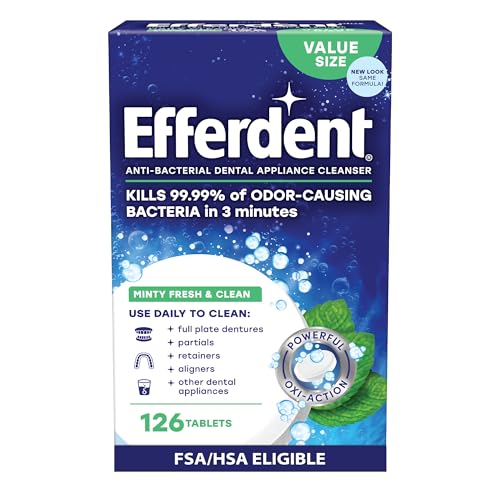
Efferdent Denture Cleaner Tablets (Minty Fresh, 126 ct)
A daily soak tablet; the maker says it kills 99.99% of odor-causing bacteria in 3 minutes
Poligrip Power Max Power Hold + Seal (2.2 oz)
A zinc-free adhesive cream for the adaptation period and beyond: Poligrip says its seal helps keep food particles from getting stuck under your denture while you learn to eat with it
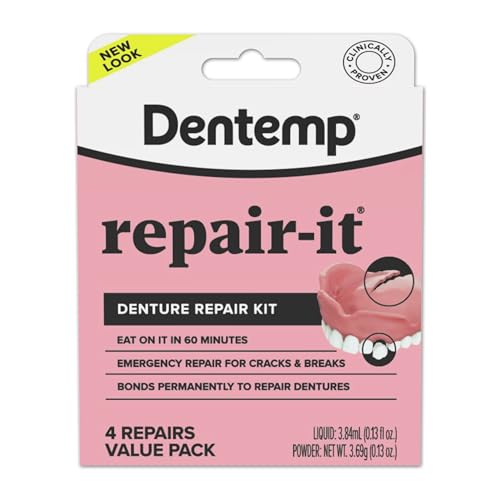
Dentemp Repair-It Advanced Formula Denture Repair Kit (4 repairs)
A $2-per-repair emergency fix that buys time before a professional repair -- worth keeping in the drawer from day one
Affiliate links. Dental Roundup may earn a commission at no extra cost to you.
FAQ
How much are dentures for a full set?
A full set means both arches. At Delta Dental’s published ranges—$1,115–$2,425 for a full lower and $1,220–$2,540 for a full upper—a complete set runs roughly $2,335–$4,965 (our sum of the two), before extractions, which are billed per tooth on top. Budget chains advertise single-arch economy dentures from $400 (Affordable Dentures) and $499 (Aspen Dental, membership pricing); premium private packages run past these ranges.
How much do dentures cost without insurance?
The per-arch benchmarks are Delta Dental’s average out-of-network costs: about $1,115–$2,540 per full arch and $1,425–$2,785 per partial arch, plus extractions—and negotiated cash rates can land below those averages. Patient-reported complete journeys span roughly $1,200–$3,700 at budget chains and dental schools to $8,000+ at private practices—a spread wide enough that a second quote pays better here than almost anywhere in dental care.
Does insurance or Medicaid cover dentures?
Most dental plans help, as major restorative care: usually at the plan’s lowest coverage percentage, such as 50% (National Association of Dental Plans), cost-shared after the deductible, capped by the annual maximum ($1,000–$2,500 on most plans, per NADP data in ADA News), and often behind a waiting period on new plans. Insurers don’t commit to a universal denture percentage in their public guidance, so request a predetermination of benefits. Medicaid denture coverage is state-by-state per NIDCR guidance—some states cover dentures (typically the basic tier), and checking your state’s benefit should be step one.
How much is a partial denture?
$1,425–$2,785 per arch at Delta Dental’s published ranges—overlapping full-denture pricing, since a partial’s framework and anchoring add complexity even though it replaces fewer teeth. Gentle Dental quotes partials from around $500–$1,500 without specifying per-arch, so match units before comparing quotes. Construction matters too: partials come as cast-metal framework, flexible resin, or acrylic, and quotes differ by class—Aspen Dental’s flexible partial line averages $1,319 per arch. Ask which construction your quote covers.
Do I have to buy two dentures—an immediate and a permanent one?
Often—and it surprises many patients. An immediate denture goes in the day of your extractions; the ADA notes it may need relining or remaking after your jaw heals, because healed gums change shape. Some offices include the post-healing reline or replacement in the quoted package, others bill it as a second purchase. Ask before surgery—in writing—what the after-healing plan and price are. And know the opt-out: a conventional denture is made after your tissues heal—a process the ADA notes may take several months—so skipping the immediate denture avoids its cost entirely, at the price of going without teeth while you heal. For some budgets that trade is worth discussing.
How long do dentures last?
Seven to 10 years on average, per the Cleveland Clinic, with a professional reline recommended every one to two years as your jaw and gums change. Well-kept dentures reach the far end of that range—daily non-abrasive cleaning and overnight soaking are the cheap habits that protect the investment.
This article is for informational purposes only and does not constitute medical or dental advice. Prices cited are estimates based on publicly available provider and insurer data and patient-reported costs; they vary by location, provider, and case complexity. Always consult your dentist or prosthodontist for advice regarding your specific treatment options and costs.