
A well-fitting denture should need minimal adhesive, but most denture wearers know that reality is more complicated. Bone resorption gradually changes the fit, food finds its way underneath, and lower dentures in particular can feel insecure during meals and conversations. The right adhesive bridges that gap between professional relines, keeping dentures stable and comfortable throughout the day. The challenge is choosing between creams, powders, strips, and thermoplastics: each type trades hold strength against mess and convenience differently. We compared seven options across creams, powder, strips and a thermoplastic to find the best fit for every priority. For denture cleaning products, see our best denture cleaner roundup.
How We Evaluated Denture Adhesives
We compared denture adhesives across five criteria:
- Hold strength: How securely does it keep dentures in place during eating, talking, and daily activity? We prioritized products with consistently strong hold for both upper and lower dentures.
- Zinc-free formulation: The FDA has urged caution around zinc-containing adhesives after case reports linking chronic overuse to nerve damage. Zinc-free options received preference.
- Ease of application and cleanup: How messy is application? How difficult is residue removal at the end of the day?
- Duration: How long does a single application last before reapplication is needed?
- Value: Cost per day of use, accounting for tube/pack size and reapplication frequency.
We cross-referenced Amazon reviews, dental professional recommendations, and denture wearer forums to identify products that consistently perform well across these criteria.
Evidence Receipt
- The FDA’s denture adhesive guidance documents the zinc-overuse concern behind our zinc-free preference: it cites case reports linking chronic overuse of zinc-containing adhesives to nerve damage, numbness and tingling, and says a 2.4-ounce tube used for upper and lower dentures should last seven to eight weeks.
- The named case evidence is a 2008 Neurology case series (Nations et al.) that identified four heavy denture-cream users with copper deficiency and neurologic disease, and measured the zinc content of the denture creams they used.
- The American Dental Association’s denture guidance relays the American College of Prosthodontists’ recommendation to avoid zinc-containing adhesives “as a precautionary measure”, and states that adhesives “are not a remedy for ill-fitting dentures”.
- Zinc status of each pick is taken from manufacturer ingredient records: Fixodent Extra Hold Powder lists Calcium/Zinc PVM/MA on its manufacturer product page, which is why our powder pick carries the same zinc caveat as the Fixodent creams.
Poligrip Power Max Power Hold + Seal (2.2 oz): Editor’s Pick
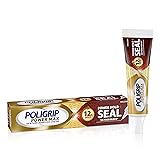
Poligrip Power Max Power Hold + Seal (2.2 oz)
Best for: Most denture wearers who want a reliable zinc-free cream with strong hold and a food seal
- Zinc-free: the ingredient list is calcium/sodium PVM/MA copolymer, petrolatum, cellulose gum and mineral oil
- Precision nozzle for an all-around seal that Poligrip says helps keep out food particles
- Flavor-free formula, per the listing
- +Zinc-free by its ingredient list, and Haleon marks its Super Poligrip creams, powder and Comfort Seal Strips on its professional site as not containing zinc
- +Hold-and-seal cream that Poligrip says helps keep out food particles
- +Flavor-free, so it won't alter the taste of food
- −Some forum wearers find Poligrip holds less well than Fixodent, one saying carbonation dissolved it, though others prefer it
- −Like all creams, it can ooze if over-applied and residue removal takes effort
(Affiliate link) · Free shipping on eligible Prime items
Why We Recommend It
Poligrip Power Max pairs a strong all-day hold with a zinc-free formula: a combination that makes it our top pick for most denture wearers. The “hold plus seal” formula does double duty: Poligrip says it gives the strongest hold within the Poligrip range and forms a seal against 5x more food particles than no adhesive, and keeping food out from under the denture is a job the ADA’s denture page also credits adhesives with. Power Max’s ingredient list (calcium/sodium PVM/MA copolymer, petrolatum, cellulose gum, mineral oil) names no zinc, and Haleon, which makes Poligrip, marks its Super Poligrip creams, powder and Comfort Seal Strips on its professional site “Does not contain zinc”. Read the current ingredient list rather than the brand name, though: the 2008 case series behind the zinc warnings found zinc in the Poli-Grip cream of that era as well as in Fixodent.
The flavor-free formulation is worth noting: it won’t interfere with the taste of food, which cream adhesives with mint or menthol flavoring can sometimes do. At around $6 for a 2.2 oz tube, it’s also an inexpensive way to find out whether a zinc-free cream holds well enough for you. In the denture forums we read, Power Max came up by name once, from a wearer who said it “doesn’t dissolve as much as fixodent” and liked that it is zinc-free.
Key Features
- Zinc-free formula by its ingredient list (Haleon marks its Super Poligrip creams, powder and Comfort Seal Strips on its professional site “Does not contain zinc”)
- Hold-and-seal formula that Poligrip says helps keep out food particles
- Flavor-free, per the listing
- Works for full and partial dentures
- Available in single tubes and multi-packs
Who It’s Best For
Most denture wearers, especially those who want a strong daily cream without zinc exposure concerns. Particularly good for people whose main frustration is food getting trapped under dentures.
Potential Downsides
Some forum wearers find Poligrip holds less well than Fixodent: one wrote that “the carbonation would dissolve the polygrip”, though another who moved from Fixodent to Poligrip said they prefer it “much more”. Like all cream adhesives, it can ooze over the edges if over-applied, and residue removal requires some effort at the end of the day.
(Affiliate link) · Free shipping on eligible Prime items
Fixodent Ultra Max Hold (2.2 oz, Pack of 2): Fixodent’s Strongest Hold
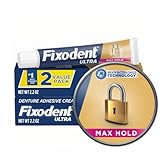
Fixodent Ultra Max Hold (2.2 oz, Pack of 2)
Best for: People with loose-fitting dentures who want Fixodent's strongest hold and don't mind zinc-containing formulas
- Fixodent's strongest hold, per P&G, for all-day grip on full or partial dentures
- Precision tip nozzle for controlled application without excess mess
- Two-pack format for better long-term value
- +P&G's own answer to which Fixodent is strongest: "Our strongest product is Fixodent Ultra Max Hold"
- +Precision tip nozzle gives controlled application and reduces waste
- +Two-pack format lowers the per-tube cost
- −Contains zinc (Calcium/Zinc PVM/MA), and the FDA links chronic overuse of zinc adhesives to nerve damage
- −Residue cleanup can be stubborn
(Affiliate link) · Free shipping on eligible Prime items
Why We Recommend It
Fixodent Ultra Max Hold is the product P&G names when asked which Fixodent is strongest (“Our strongest product is Fixodent Ultra Max Hold”), and for people who need maximum grip above all else, that is the reason it is here. That ranking is within Fixodent’s own line, not a test against other brands’ creams. In the denture forums we read it came up by name once, from a wearer who pairs it with powder: “Fixodent ultra max hold plus powder works AMAZING for me. Holds all day and doesn’t affect taste at all.”
The two-pack format brings the per-tube cost down (around $11.50 for the pack, which works out to under $6 per tube) and ensures you won’t run out mid-week. With 19,000+ reviews and a 4.6-star rating, it has one of the deepest review pools in this roundup.
Key Features
- Fixodent’s strongest hold formula
- Precision tip nozzle for controlled application
- Two-pack for better value
- All-day hold from one application, per the listing
Who It’s Best For
People with loose-fitting dentures (particularly lower dentures) who prioritize grip strength above everything else and want the strongest hold Fixodent makes.
Potential Downsides
This product contains zinc. The FDA says zinc-containing adhesives are “safe to use in moderation as directed” and that a 2.4-ounce tube used for upper and lower dentures should last seven to eight weeks; the case reports it describes, of nerve damage, numbness and tingling, involved people using at least two tubes a week. If a tube runs out well before that, your dentures may need professional relining rather than more adhesive. Residue cleanup can also be stubborn.
(Affiliate link) · Free shipping on eligible Prime items
Cushion Grip Thermoplastic Denture Adhesive (1 oz): Best Long-Lasting
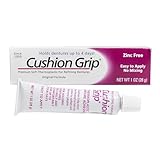
Cushion Grip Thermoplastic Denture Adhesive (1 oz)
Best for: Denture wearers tired of daily reapplication who want a cushioning adhesive that lasts up to 4 days
- Thermoplastic formula the listing says lasts up to 4 days per application, with no daily cream routine
- Acts like a soft reliner, per the listing, cushioning sore gums and pressure points
- Zinc-free and waterproof; the listing says it stays in place through eating, drinking and cleaning
- +A single application lasts up to 4 days, eliminating the daily cream routine
- +Acts as both adhesive and soft reliner, cushioning sore gums and pressure points
- +Zinc-free and waterproof
- −Steep learning curve, since application is more involved and over-application is common
- −The 4-day claim is optimistic, with 2-3 days more realistic for lower dentures
(Affiliate link) · Free shipping on eligible Prime items
Why We Recommend It
Cushion Grip is fundamentally different from every other product in this roundup. It’s a thermoplastic adhesive that softens in warm water, molds directly to the contours of your dentures, and hardens into a semi-permanent cushioning layer—effectively acting as both an adhesive and a soft reliner. A single application can last up to four days, which means no daily cream routine, no morning oozing, and no nightly residue scraping. That proposition has earned Cushion Grip a passionate following among long-term denture wearers, reflected in its 46,000+ review count, the largest in this roundup. A 1 oz tube runs around $14.
The cushioning effect is the other key differentiator. For denture wearers with sore spots or gum irritation from ill-fitting dentures, Cushion Grip absorbs some of the pressure rather than just holding dentures in place.
Key Features
- Thermoplastic formula: lasts up to 4 days per application
- Acts as both adhesive and soft reliner
- Cushions gums and reduces pressure-related sore spots
- Zinc-free and waterproof
- Safe for plastic, porcelain and acrylic dentures, per the listing
Who It’s Best For
Denture wearers who want to eliminate the daily adhesive routine entirely, and anyone dealing with gum soreness from dentures that don’t fit perfectly. Particularly popular with people waiting for a reline appointment.
Potential Downsides
There is a real learning curve. The application process involves warming the tube in hot water, applying a thin strip to dry dentures, and letting it set: significantly more involved than squeezing a cream. Over-application is common on the first try, and excess material can spill over the denture edges and harden on your gums uncomfortably. Forum wearers put one application at two to four days, so treat four days as the upper end. At 3.9 stars, it has the lowest rating in this roundup, and in the forums we read, reapplying it is a chore: one wearer wrote that they “dread” it.
(Affiliate link) · Free shipping on eligible Prime items
Sea-Bond Secure Denture Adhesive Seals, Fresh Mint Uppers (30 ct): Best Mess-Free
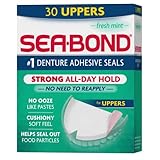
Sea-Bond Secure Denture Adhesive Seals, Fresh Mint Uppers (30 ct)
Best for: People who hate the oozing and residue of cream adhesives and want a clean, no-mess alternative
- Pre-cut adhesive seals with no cream, powder or paste; the listing calls them zinc and ooze free
- Zinc-free, in a fresh mint flavor
- 30 seals per box provides a full month of daily use for upper dentures
- +Pre-cut seals apply with no cream, powder, or residue to clean up
- +Zinc-free, in a fresh mint flavor
- +30 seals provide a full month of daily use for upper dentures
- −Hold is noticeably weaker than cream adhesives and struggles with lower dentures
- −Higher per-day cost than creams, and uppers and lowers are sold separately
(Affiliate link) · Free shipping on eligible Prime items
Why We Recommend It
Sea-Bond takes a completely different approach: pre-cut adhesive seals that you press onto wet dentures and snap into place. There’s no cream, no powder, no paste, and critically, no mess. No oozing during application and no gummy residue to scrape off at night: one forum wearer said it “doesn’t leave any of that gook on the top of your mouth”. For people whose primary frustration with denture adhesive is the cleanup routine, Sea-Bond eliminates it entirely.
The seals are zinc-free and come in a 30-count pack (one month’s supply), making daily cost predictable: at around $7 a box, that works out to about 22 cents per seal. The Fresh Mint variant adds a mint flavor; if you want no taste at all, the flavor-free Poligrip and Fixodent Ultra Max Hold creams above are the closer fit.
Key Features
- Pre-cut adhesive seals: no cream, powder, or paste
- Zinc and ooze free, per the listing
- Zinc-free
- Fresh mint flavor
- 30 seals per box (one month supply for upper dentures)
Who It’s Best For
Anyone who prioritizes cleanliness and convenience over maximum hold strength. Ideal for people with well-fitting dentures who need just a bit of extra security, and for denture wearers who have given up on cream adhesives because of the mess.
Potential Downsides
Hold strength is noticeably weaker than cream adhesives: Sea-Bond seals are best suited for well-fitting dentures that mostly just need a seal, not for poorly fitting dentures that need serious gripping power. They struggle with lower dentures in particular, where the smaller surface area limits adhesion. The per-day cost is also higher than creams. Upper and lower seals are sold separately. This listing’s title and selected style say Uppers, though its first bullet describes “denture adhesive seal lowers”, so check the style shown on the product page before you buy.
(Affiliate link) · Free shipping on eligible Prime items
Fixodent Complete Original (2.4 oz, Pack of 2): Best Value
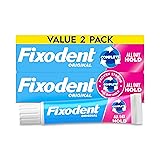
Fixodent Complete Original (2.4 oz, Pack of 2)
Best for: Regular denture wearers who want a trusted, affordable adhesive for daily use
- Classic Fixodent cream with the "strong, all-day hold" and food seal its listing describes
- Two-pack (2 × 2.4 oz), the lowest per-ounce cost in this roundup
- From the brand P&G calls the #1 dentist-recommended denture adhesive brand, among dentists who recommend one
- +Lowest per-ounce cost in this roundup, thanks to the two-pack format
- +All-day hold and a food seal, per the listing
- +Highest rating in the roundup, at 4.7 stars
- −Contains zinc, with the same overuse caveat as other Fixodent products
- −Not Fixodent's strongest hold (P&G gives that title to Ultra Max Hold), so it may not suit poorly fitting or lower dentures
(Affiliate link) · Free shipping on eligible Prime items
Why We Recommend It
Fixodent Complete Original is the adhesive equivalent of a reliable workhorse. It has a 4.7-star rating (the highest in this roundup) and costs less per ounce than any other product here thanks to the two-pack format, around $8 for two 2.4 oz tubes. The listing promises a “strong, all-day hold” and a seal that helps keep food out, and Fixodent says its adhesives are “formulated to last all day”, which suits denture wearers who have reasonably well-fitting dentures and just want something dependable for daily use.
The “Complete” formula combines hold, comfort, and food seal in one product: it’s not the strongest hold available, but it covers all the bases adequately for everyday use.
Key Features
- Fixodent’s classic all-purpose formula
- Two-pack (2 × 2.4 oz) for the lowest per-ounce cost
- All-day hold with food seal, per the listing
- From the brand P&G calls the #1 dentist-recommended denture adhesive brand
Who It’s Best For
Budget-conscious daily users who want a reliable, trusted adhesive without paying a premium. Ideal for people with reasonably well-fitting dentures who need consistent hold rather than maximum grip.
Potential Downsides
This product contains zinc: the same caveat applies as with Fixodent Ultra Max Hold. Fixodent says a 2.4 oz tube should last at least 7 to 8 weeks; if yours runs out much sooner, you may be overusing it. It is not Fixodent’s strongest hold (P&G gives that title to Ultra Max Hold), so it may not be sufficient for poorly fitting or lower dentures. Residue cleanup follows the standard cream adhesive routine (warm water, soft cloth).
(Affiliate link) · Free shipping on eligible Prime items
Fixodent Extra Hold Powder (1.6 oz): Best Powder
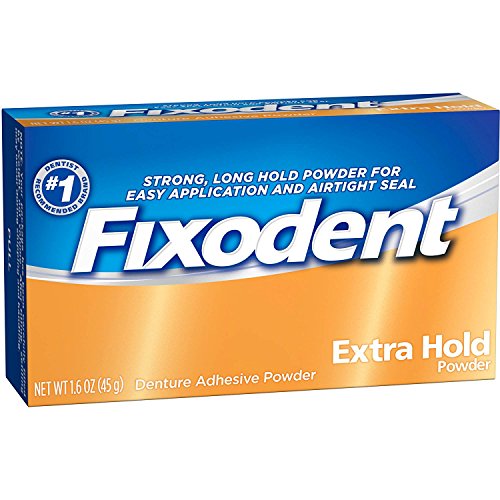
Fixodent Extra Hold Denture Adhesive Powder (1.6 oz)
Best for: People who want cream-level daily hold without the ooze during application or the scraping at night
- Dusts onto a wet denture and forms a thin, airtight seal, per P&G, with no nozzle, no bead placement and no oozing
- Forum wearers describe it as easier to remove at night than cream
- The forums' favorite second product: powder dusted over a cream base is the closest thing to a consensus technique in the threads we read
- +Dusts onto a wet denture in seconds and forms a thin, even layer with no oozing
- +Far easier end-of-day cleanup than cream, with much less residue left on gums
- +The denture forums' go-to second product: powder dusted over a cream base is the closest thing to a consensus technique in the threads we read
- −Contains zinc (Calcium/Zinc PVM/MA), so the same FDA overuse caveat as Fixodent creams applies
- −Dosing takes practice: too much makes the denture hard to remove at night, too little loosens by afternoon
(Affiliate link) · Free shipping on eligible Prime items
Why We Recommend It
Powder is the format the denture forums we read praise most for easy application and removal. Application is the opposite of a cream routine: you wet the denture, dust the powder across the fitting surface, shake off the excess, and seat it. The water activates the powder into a thin, even adhesive film with no beads to place, no nozzle to control, and no ooze over the edges when you bite down.
The bigger win comes at night. The single most common adhesive complaint in the denture forums we researched is the end-of-day residue ordeal: users describe 10 to 30 minutes of scraping cream off their gums. Powder leaves far less behind, and what remains rinses off rather than peeling off. In the r/dentures threads we read, wearers who switched from cream to powder reported bigger improvements than those who only switched brands. At around $9 for a 1.6 oz bottle, it is also a cheap experiment, and its 4.5-star average across 1,400+ ratings sits behind only the two Fixodent creams in this roundup.
Key Features
- Powder format: dust onto a wet denture, shake off excess, seat
- Forms a thin, airtight seal without bead placement or oozing
- Noticeably easier residue cleanup than cream adhesives
- Works for full and partial dentures
- Pairs with a cream base for the community’s strongest-hold combination
Who It’s Best For
Anyone whose main frustration with cream is the mess at both ends of the day. Also the natural first try for new denture wearers who gag on cream texture, and the standard second purchase for people building the cream-plus-powder combination for a difficult lower denture.
Potential Downsides
This powder contains zinc (its adhesive is a Calcium/Zinc PVM/MA copolymer, per the manufacturer’s ingredient listing), so the same FDA overuse caveat applies as with the Fixodent creams: used as directed it should not be a concern, but going through bottles unusually fast is a reline signal, not a buy-more signal. If avoiding zinc entirely is your priority, Super Poligrip’s Extra Strength powder is the zinc-free powder alternative; Amazon lists it both as a single 1.6 oz bottle and in six-bottle packs. Dosing also takes a few days to calibrate: heavy application bonds so firmly the denture can be hard to remove at night, while a light dusting may loosen by late afternoon.
(Affiliate link) · Free shipping on eligible Prime items
What the community says vs. what the evidence says
| Common community belief (paraphrased) | What the evidence supports |
|---|---|
| Cream plus a dusting of powder is the “pro move” for stubborn lower dentures | This is the closest thing to a consensus technique in the denture forums we researched, described repeatedly by multi-year wearers as the difference between constant reapplication and a full day’s hold. It stacks two zinc-containing products if both are Fixodent, so the FDA’s use-as-directed amounts still apply to the combined total. |
| Zinc in adhesive is dangerous | The documented harm is real but specific to chronic heavy overuse. A 2008 Neurology case series tied copper deficiency and neurologic disease to users going through far more denture cream than directed, and the FDA’s guidance followed. Normal directed use is not the documented risk scenario; needing more and more adhesive is the signal that matters, and it points to a reline. |
| No adhesive really holds a lower denture | Lowers are the harder case: less ridge surface, more tongue interference. But the evidence-backed answer is fit, not format. The community’s workarounds (strong creams, the cream-plus-powder combo, Cushion Grip as a temporary liner) buy time, and the reline-not-adhesive message is the recurring answer in these threads, with implant-retained options raised as the longer-term fix. |
| Carbonated and hot drinks dissolve the hold | Widely reported across brands in the threads we researched, most often about creams. Manufacturers’ own directions to wait after application before eating or drinking point the same way, and no adhesive in this roundup is marketed as immune to it. |
Buyer’s Guide: How to Choose the Right Denture Adhesive
Cream vs. strips vs. thermoplastic: which type is right for you?
This is the first decision to make, and it matters more than brand choice. Cream adhesives (Poligrip, Fixodent) hold the strongest in the forum consensus we read: they fill small gaps between denture and gums and work for both well-fitting and somewhat loose dentures. The trade-off is mess: oozing during application and stubborn residue at the end of the day.
Powder (Fixodent Extra Hold Powder) sits between the two: hold much closer to a cream than to strips, with a fraction of the mess. It applies to a wet denture as a thin, even film, and it removes far more easily at night. Denture communities treat the format decision as more important than the brand decision, and switching from cream to powder is one of the changes users most often describe as fixing their daily routine. Powder is also half of the community’s strongest-hold technique: a cream base dusted with powder before seating.
Adhesive strips (Sea-Bond) eliminate the mess entirely but provide weaker hold. They’re best for well-fitting dentures that just need a seal, not a grip. If your dentures are loose enough that you’re using multiple strips or doubling up, a cream will serve you better.
Thermoplastic adhesives (Cushion Grip) are a different category entirely: they last days instead of hours and add cushioning, but require a more involved application process and a learning curve. They’re worth trying if you’re frustrated with the daily cream routine, but expect to waste a tube figuring out the right technique.
The zinc question: should you avoid it?
The ADA’s denture-care page relays the American College of Prosthodontists’ recommendation to avoid zinc-containing denture adhesives as a precautionary measure. The concern isn’t casual use—it’s chronic overuse. When denture wearers apply more adhesive than directed (the FDA says a 2.4-ounce tube used for upper and lower dentures should last seven to eight weeks), zinc can accumulate and interfere with copper absorption, potentially causing neurological symptoms such as numbness and tingling. A 2008 case series in Neurology documented this zinc-to-copper-deficiency pattern in four heavy denture-cream users, and measured the zinc in the adhesives they were using.
In practice, this means: if your dentures fit well and you use adhesive as directed, the zinc in Fixodent products is unlikely to cause harm. But if you find yourself going through adhesive faster than expected, that’s a signal to see your dentist about a reline rather than to increase adhesive use, regardless of whether the formula contains zinc.
Poligrip, Cushion Grip, and Sea-Bond are all 100% zinc-free. All three Fixodent products in this roundup contain zinc, including the powder.
How to remove adhesive residue
Residue removal is one of the most common frustrations with cream adhesives. Poligrip’s own directions set out the basic routine, and denture wearers in the forums add a few refinements of their own:
Swish your mouth with water before taking the denture out with a rocking motion, then clear the leftover adhesive from the denture and your mouth with warm water and a soft brush, as Poligrip’s directions for Power Max put it. Polident’s advice is to get the adhesive off the denture first and then clean it with a denture cleanser, following that cleanser’s package directions for how long to soak, since the soak time differs from one cleanser to the next. If adhesive keeps caking into clasps and ridges that a brush can’t reach, an ultrasonic cleaner is worth a look: a 2025 systematic review of 10 randomized trials found ultrasonic cleaning reduced denture plaque, “particularly when supplemented with an effervescent denture cleanser”, so run it with a cleanser tablet in the water rather than plain water. Those trials measured plaque rather than adhesive, so keep the soft brush for whatever the cycle leaves behind. For the gums, one forum wearer’s routine is to swish warm salt water to loosen the hold, then wipe the residue out with a microfiber cloth wrapped around a finger, which they say cut their removal time from about 25 to 30 minutes to about 10; another in the same thread found paper towels worked better than microfiber.
When adhesive isn’t the answer
The ADA’s denture-care page puts it plainly: adhesives “are not a remedy for ill-fitting dentures”. If you’re going through adhesive significantly faster than expected or your dentures move noticeably during meals despite adhesive, a reline or rebase may be overdue. The American College of Prosthodontists, as quoted on that page, flags a denture for professional evaluation when adhesive is needed to eat or to keep it in place socially, when adhesive has to be applied more than once a day, or when the denture is more than five years old. Relining reshapes the denture base to match your current gums, and the ADA notes that dental examinations and appropriate care “will often help reduce or eliminate the need for denture adhesive products.” For chronic lower denture instability, ask about implant-retained dentures, which the ADA lists alongside conventional ones. See our dental implants cost guide for what to expect.
Frequently Asked Questions
What is the strongest denture adhesive?
Each maker ranks only its own line. P&G says “Our strongest product is Fixodent Ultra Max Hold”, and Poligrip says Power Max gives the strongest hold within the Poligrip range; neither claim compares the two brands. For a different approach, Cushion Grip’s thermoplastic formula holds for days rather than hours, and one wearer in the forums we read said “It almost feels like I’m eating with my real teeth”, though it requires a more involved application process.
Is denture adhesive safe to swallow?
Fixodent’s maker says some adhesive is swallowed as saliva slowly dissolves it, and that studies found its adhesives “pass through the digestive system undigested”. Chronic overuse of zinc-containing formulas is the documented concern. If you find yourself swallowing noticeable amounts regularly, you may be using too much: the American College of Prosthodontists, as quoted on the ADA’s denture page, recommends 3 to 4 pea-sized dollops on each denture, and the FDA says adhesive oozing into your mouth likely means too much.
How often should I reapply denture adhesive?
Creams are sold as once-a-day products: Poligrip says Power Max gives a 12-hour hold, and Fixodent says its adhesives are formulated to last all day. You should need to apply once in the morning and remove at night. If you’re reapplying mid-day regularly, your dentures may need relining. Cushion Grip is the exception: it’s designed to last up to 4 days, though forum wearers report two to four.
Is denture adhesive powder better than cream?
Neither is better across the board; they trade different things. Cream gives the strongest maximum hold and fills small gaps in an aging fit; powder applies faster, spreads more evenly on a wet denture, and is far easier to clean off at night. In the denture communities we researched, the type decision (cream vs. powder vs. strips vs. thermoplastic) matters more than the brand decision, and many experienced wearers use both: cream as the base layer, powder dusted over it for a full-day hold on difficult lower dentures.
When can I start using adhesive after extractions?
Not until your dentist clears it. With immediate dentures, gums and extraction sites are still healing and changing shape, and adhesive near sutures or open sockets is a common warning in denture communities. Wearers in the forums we researched report being cleared anywhere from about two weeks to six weeks after extractions; your own dentist’s timeline is the one that counts. During that period, fit problems are managed with adjustments and temporary liners at the dental office rather than adhesive.
Can I use denture adhesive with partial dentures?
Mostly. Poligrip’s directions cover partial or full dentures, and Fixodent says its adhesive is designed and tested for full and partial dentures. The Cushion Grip and Sea-Bond listings do not mention partials, so ask your dentist before using either on one.
What’s the best denture adhesive for lower dentures?
Lower dentures are harder to keep stable than uppers: a StatPearls review of mandibular denture stability puts the lower denture’s covered surface area at approximately half that of the upper arch, with the mobile tongue on the floor of the mouth working against it. In the forums we read, creams and Cushion Grip got the strongest endorsements for lower dentures, and one wearer of four to five years uses Fixodent Ultra on the lowers with Poligrip powder on the uppers. Adhesive strips (Sea-Bond) tend to struggle with lower dentures due to the smaller surface area. If no adhesive provides adequate stability for your lower denture, consult your dentist about implant-retained options. And if the instability traces back to a crack or a broken clasp rather than fit alone, our denture repair kit roundup covers the at-home fixes worth trying before your next appointment.
Does denture adhesive expire?
Yes. Fixodent puts the average shelf life of its adhesives at three years at room temperature. Expired adhesive may not hold as well and cream formulas can change consistency. Check the expiration date on the tube or package before use, especially if purchasing in bulk.