
The short answer
Delta Dental's range covers surgical placement of the implant post, the supporting structure (abutment), and the crown. Bone grafting, extractions, and other prep work are additional. Cleveland Clinic says the implant itself can often last a lifetime; the crown on top is the part that wears.
Price: Delta Dental (2022 data). Fusion time, crown lifespan and implant lifespan: Cleveland Clinic. Overall duration: Mayo Clinic.
The Short Answer
A single dental implant in the United States typically costs $2,800 to $5,600 without dental benefits, according to Delta Dental (2022 data). That covers the three main components: the titanium implant post, the abutment (the supporting structure for the crown), and the dental crown. ClearChoice’s price guide puts a single tooth higher, at $5,000–$7,500, but that is a provider’s own price list, not a neutral survey. If you’re also considering full-arch or multiple-tooth replacement, our complete dental implants cost guide covers All-on-4, implant-supported bridges, and full-mouth pricing in depth. However, your final bill can land higher or lower depending on your location, the dentist or oral surgeon you choose, the materials used, and whether you need any preparatory procedures like bone grafting or tooth extraction.
Because every mouth is different, we always recommend consulting your dentist for personalised advice and an accurate quote before committing to treatment.
What Exactly Are You Paying For?
When people ask, “How much is a dental implant for one tooth?” they often picture a single procedure. In reality, a dental implant involves multiple components and appointments, each with its own cost. Understanding the breakdown helps you compare quotes confidently.
The Three Core Components
Cost breakdown by component
Source: Implant post and crown: CareCredit national cost data (2024 survey). Abutment: MetLife (2025). Separate sources, so don't add the bars together.
The bars come from different sources (CareCredit, a dental-financing company, for the post and crown; MetLife for the abutment), so don’t add them together. The abutment is often billed as its own line, so check whether your quote includes it. For the all-in price of one implant with its crown, Delta Dental’s $2,800–$5,600 is the benchmark to compare quotes against; ClearChoice’s price guide lists $5,000–$7,500.
Additional Procedures That Affect Cost
Not every patient can jump straight to implant placement. Your dentist may recommend one or more preparatory steps:
- Initial consultation and imaging (CT scan / X-rays): a 3D cone-beam CT scan averages $466 nationally (CareCredit), and NYU College of Dentistry charges $200–$300 depending on scan size. Some implant centres, ClearChoice among them, include the CT scan in a free consultation, so ask whether the consultation fee covers imaging
- Tooth extraction: $150–$650 per tooth for a surgical extraction (Gentle Dental); our tooth extraction cost guide covers simple extractions too
- Bone grafting: a socket graft placed at extraction averages $558 (CareCredit), and CareCredit’s bone-graft data puts grafts at $549–$5,148 depending on the material; our bone graft cost guide breaks down each tier
- Sinus lift: $2,022 on average (CareCredit); common for upper back teeth
- Soft-tissue graft: $1,344 on average for the first tooth plus $846 for each additional tooth in a row (Humana)
- Temporary crown or flipper: a single-tooth flipper, often worn while the gums heal, typically costs $300–$500 (Guardian); ask whether the quote includes a temporary tooth
If your jawbone is healthy and the tooth has already been removed, you may avoid many of these extras—saving potentially thousands of dollars.
Why Prices Vary So Much
You may have noticed a significant spread in quoted prices. Several factors drive that variation.
Geographic Location
Where you live moves the price. Federal GAO claims data from 2012 put a typical molar root canal at $1,400 in New York City against $1,000 in Los Angeles and Chicago; implants weren’t in the sample, so read that as the size of the gap, not current prices. Some patients explore dental tourism: Patients Beyond Borders, a medical-travel company cited by the Academy of General Dentistry, estimated that US patients save 40%–65% on dental care in Mexico, though travel brings its own risks and follow-up challenges.
Provider Expertise and Credentials
Oral surgeons, periodontists, and prosthodontists often charge more than general dentists—but they also bring specialised training in surgical placement and complex restorations. Per the ADA, most periodontics programs run three years and oral and maxillofacial surgery training at least four, on top of a dental degree. That can mean higher fees, but also more experience with difficult cases.
Materials Used
- Titanium implant posts are the most common material for implants, per Delta Dental, and the more affordable of the two.
- Zirconia (ceramic) implant posts are metal-free and cost more than titanium, per Delta Dental; ask how the fee compares.
- Porcelain-fused-to-metal crowns are budget-friendly; all-ceramic or zirconia crowns cost more but can look more natural, especially for front teeth. Coast Dental’s fee schedule, for example, lists a zirconia crown at $1,454 against $1,127 for porcelain fused to base metal (non-member prices, crowns on natural teeth).
Lab Fees
The crown is custom-fabricated in a dental lab (or in-office with CAD/CAM technology). Premium labs and same-day milling can add to the bill.
Complexity of the Case
A straightforward lower premolar implant with adequate bone is far simpler—and less expensive—than replacing an upper front tooth in a patient with significant bone loss who needs both a bone graft and a sinus lift.
How to Get an Accurate Quote: Step by Step
Getting reliable pricing requires a bit of legwork, but it’s worth the effort on a purchase this significant.
How to get an accurate quote
Step 1: Schedule a Consultation
Book an appointment with at least two or three implant providers. Many offices offer free or low-cost initial consultations. Ask whether the consultation fee includes imaging.
Step 2: Get a Comprehensive Treatment Plan
A thorough plan should itemise:
- Diagnostic imaging (X-ray, CT scan)
- Any extractions needed
- Bone grafting or other preparatory surgery
- Implant post placement (surgical fee)
- Abutment
- Final crown (material specified)
- Follow-up visits
If a quote is presented as a single lump sum without a breakdown, ask for an itemised version so you can compare apples to apples.
Step 3: Verify What’s Included
Some offices advertise a low “dental implants from” price that may cover only the post and crown but exclude the abutment, imaging, or bone graft. Always confirm exactly what the quoted price covers.
“Does your quoted price include the implant post, abutment, crown, imaging, and any bone grafting, or are any of those billed separately?”
Some offices advertise implant prices that exclude key components.
Step 4: Ask About Financing and Insurance
Before comparing bottom-line numbers, factor in what your insurance may cover and what payment plans are available (more on this below).
Step 5: Check Reviews and Credentials
Price matters, but so does quality. Verify the provider’s credentials through the ADA’s Find-a-Dentist tool, read patient reviews, and ask about their implant success rates.
Does Insurance Cover Dental Implants?
Dental insurance coverage for implants is inconsistent from plan to plan. Picking a plan with a generous annual maximum is critical for implant patients; our guide to the best dental and vision insurance bundles compares top plans side by side.
- Many dental PPO plans cover part of implant treatment, up to the plan’s annual maximum: Guardian says many full-coverage plans may cover 40%–50% after the deductible, and MetLife says its PPO plan “may cover 50%”. National Association of Dental Plans data in ADA News put 81% of in-network annual maximums between $1,000 and $2,500 (our sum of two bands). On a typical plan that works out to roughly $1,400 to $4,600 out of pocket for a single implant (our arithmetic, shown below).
How we got $1,400 to $4,600
Delta Dental’s all-in single-implant price is $2,800 to $5,600. Plans that include implants pay about half (Guardian: 40 to 50%), but only up to the annual maximum, which is $1,000 to $2,500 on most plans (ADA News, NADP data). At $2,800 the plan pays half, leaving about $1,400. At $5,600 the plan’s half would be $2,800, so the cap bites first and it pays $1,000 to $2,500, leaving $3,100 to $4,600. A live example is Delta Dental of Connecticut’s implant plan: 50% coverage, $2,500 plan-year maximum, $100 deductible. This is our arithmetic from those published figures, not a price any insurer publishes.
- Medical insurance may cover the implant post itself if tooth loss resulted from an accident or medical condition, though this varies widely by plan.
- Dental discount plans (not insurance) can reduce fees at participating providers. 1Dental’s plans start at $175/year, with stated savings of 15%–60% at general dentists depending on the plan (affiliate link).
- Medicare generally does not cover dental implants, though some Medicare Advantage plans include dental benefits.
Always call your insurance provider before treatment to get a pre-authorisation estimate. Your dentist’s office can often submit a pre-treatment estimate on your behalf.
“Can you submit a pre-treatment estimate to my insurance so I know my out-of-pocket before we start?”
Your dentist's office can usually handle this on your behalf.
Ways to Save Money on a Single Tooth Implant
Even without robust insurance, there are legitimate strategies to bring costs down.
- Dental schools: University dental clinics offer treatment at reduced rates (ADA’s MouthHealthy), supervised by experienced faculty. The University of Colorado’s dental school says its fees are typically 30%–50% below local private practices, and Penn Dental Medicine puts its costs 50%–70% lower on average. Not every clinic places implants, so ask for the school’s fee schedule.
- In-office membership plans: Many private practices offer annual membership or loyalty plans that bundle cleanings, exams, and discounts on major work—including implants.
- Payment plans and financing: CareCredit, Lending Club, and in-house financing options let you spread the cost over monthly payments; read any promotional terms carefully before you sign.
- Negotiate or ask about package pricing: Some offices will discount the total when you pay in full upfront. The ADA says many dentists will extend a discount for payment by cash or personal check; ask for the exact amount.
- Shop regionally: If you live near a state or metro border, comparing prices across regions can yield savings.
- Health Savings Accounts (HSAs) and Flexible Spending Accounts (FSAs): Dental implants are generally HSA/FSA-eligible, so paying with pre-tax dollars saves roughly your tax rate on that money. FSAFEDS, the federal employees’ FSA program, puts the average saving at 30 percent. By our arithmetic on the 2026 federal brackets plus the 7.65% payroll tax, that’s about 20% in the 12% bracket and 32% in the 24% bracket, before state tax; the payroll-tax part applies only to FSA and payroll-deducted HSA money (IRS Publication 969).
Dental Implant vs. Other Tooth Replacement Options
A dental implant isn’t the only way to replace a missing tooth. Our in-depth dental bridge vs implant comparison examines both options across cost, lifespan, bone preservation, and procedure complexity. Here’s a quick summary of how the main alternatives compare on cost and longevity.
| Option | Typical Cost | Expected Lifespan | Preserves Jawbone? |
|---|---|---|---|
| Single dental implant | $2,800–$5,600 with crown (Delta Dental) | Often a lifetime; crown around 15 years (Cleveland Clinic) | Yes (Cleveland Clinic) |
| Fixed dental bridge | $2,000–$5,000 traditional (Humana); about $3,600 for three units (Delta Dental) | 5–15 years (Cleveland Clinic) | No (Cleveland Clinic) |
| Removable partial denture | $1,425–$2,490 lower, $1,435–$2,785 upper (Delta Dental) | 7–10 years, dentures in general (Cleveland Clinic) | No; the jawbone gradually shrinks after tooth loss (Cleveland Clinic) |
Cost figures come from Delta Dental’s implant (2022 data), bridge (2025 data), and denture (2024 data) cost pages, plus Humana’s bridge cost guide (updated February 2026); Delta gives the bridge and partial-denture figures as out-of-network costs. Lifespans and the jawbone column come from Cleveland Clinic’s pages on implants, bridges and dentures.
The ADA’s MouthHealthy guide to implants calls them “an excellent long-term option,” because the bone grows around the implant and holds it in place, a process called osseointegration. Bridges require grinding down adjacent healthy teeth, and partial dentures may need periodic adjustments. Because a bridge or denture may need replacing within the life of an implant, compare the options on the years you expect to keep them, not just on the first bill.
That said, implants aren’t suitable for everyone. Per the Cleveland Clinic, they may not suit you if you have unmanaged diabetes, active or untreated gum disease, or severe jaw bone loss, or if you smoke or vape. In those cases, or if there isn’t enough jawbone and you’d rather not have a graft, an alternative may serve you better. Consult your dentist for personalised advice on the best option for your situation.
What to Expect During the Implant Process
Understanding the timeline helps you plan financially, since payments may be spread across multiple appointments.
- Consultation and planning (first visit): Exam, imaging, and treatment plan presentation.
- Preparatory procedures, if needed: Extraction, bone graft, etc. A bone graft needs time to heal before the implant goes in, so ask your dentist how long yours will need.
- Implant post placement (surgical appointment): The titanium post is placed into the jawbone under local anaesthesia (sedation is optional and billed separately: dental sedation averages $349 and anaesthesia $639, per CareCredit).
- Osseointegration healing period (three to nine months, per the Cleveland Clinic): The implant fuses with the bone. You may wear a temporary restoration during this time.
- Abutment placement (short appointment): Once the implant has integrated, the abutment is attached.
- Final crown placement: Impressions or digital scans are taken, the crown is fabricated, and then cemented or screwed into place.
Mayo Clinic puts the whole process at “many months from start to finish”, most of it healing: the fusion stage alone takes three to nine months (Cleveland Clinic), the gums need at least two weeks around the abutment before the crown goes on (Mayo), and an extraction or graft first adds more, though immediate-load (“teeth in a day”) protocols can shorten this in select cases.
After Your Implant: The Three Tools That Protect It
Once your implant is placed and the gums have healed, daily plaque control around the implant site becomes critical. Implants don’t decay, but the gum tissue around them can develop peri-implantitis (a gum-disease-like condition that can erode the bone holding your implant in place). The American Academy of Periodontology notes that implants “require conscientious at-home oral care and regular dental visits to preserve function and prevent peri-implant disease.” Daily cleaning between teeth is part of that, and a water flosser is one way to clean around the abutment. A soft brush with a pressure sensor warns you when you press too hard, and a CPC rinse marketed for plaque and gingivitis can round out the routine.
Daily Care for a Single Implant
A water flosser, a soft-bristle electric brush with a pressure sensor, and an antibacterial rinse for daily care around an implant.

Waterpik Aquarius WP-660
A countertop water flosser for cleaning around the abutment
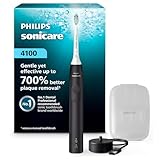
Philips Sonicare 4100
Soft bristles + a pressure sensor that warns when you press too hard

Affiliate links. Dental Roundup may earn a commission at no extra cost to you.
For deeper picks in each category, see our roundups of the best water flossers, the best soft-bristle electric toothbrushes, and the best antibacterial mouthwashes.
FAQ
How much is a dental implant for one tooth without insurance?
Without insurance, a single tooth implant generally costs between $2,800 and $5,600 including the crown, per Delta Dental; ClearChoice, an implant provider, lists $5,000–$7,500. The exact amount depends on your geographic area, provider, materials, and whether you need additional procedures like bone grafting. Asking for itemised quotes from multiple providers is the best way to find a competitive price.
Is a dental implant worth the cost compared to a bridge?
For many patients, yes. An implant often costs more upfront, but the Cleveland Clinic says it can often last a lifetime with good care, against five to 15 years for the average bridge, and a bridge means altering the healthy teeth beside it. Compare total cost over the years you expect to keep either. However, the best choice depends on your oral health, budget, and personal preferences, so consult your dentist for personalised advice.
Can I get a dental implant on a payment plan?
Absolutely. Many dental offices offer in-house payment plans or partner with third-party financing companies like CareCredit or LendingClub. If a plan offers a promotional period, read its terms carefully before signing. Some offices also accept monthly payment arrangements directly. Ask about financing options during your consultation so you can factor monthly payments into your budget.
How long does a single dental implant last?
With brushing, flossing and regular dental visits, the implant itself can often last a lifetime, per the Cleveland Clinic; the crown on top is the part that wears, and most last around 15 years. The American Academy of Periodontology says implants “require conscientious at-home oral care and regular dental visits”, so brush twice daily, floss, use an antibacterial mouthwash, and keep up professional cleanings. A water flosser is one way to clean around the implant post, and a soft-bristled electric toothbrush with a pressure sensor warns you when you brush too hard.
Does getting a dental implant hurt?
Your surgeon numbs your gums with anaesthesia, and the Cleveland Clinic says you shouldn’t feel any pain during surgery. Afterward, it says slight discomfort and swelling are normal, over-the-counter pain relievers can help, and you should feel like yourself within a week or so. Sedation is an option if you’re anxious, though it adds to the overall cost; ask your surgeon what to expect in your case.
Are cheap dental implants safe?
Extremely low-cost offers aren’t necessarily unsafe, but they warrant extra scrutiny. Verify that the provider uses FDA-cleared implant systems from reputable manufacturers, check their credentials through the ADA, and read patient reviews. A bargain price that excludes necessary components or uses off-brand implants could end up costing more in the long run if complications arise. Quality and transparency should always come before the lowest price tag.