
The short answer
The single-implant range covers the implant, the supporting structure for the crown, and the crown (Delta Dental, 2022 data). The full-arch range is ClearChoice's published price. Bone grafting and other prep procedures are separate.
Prices: Delta Dental (single implant, 2022 data), ClearChoice (full arch, 2025 data). Lifespan and fusion time: Cleveland Clinic. Overall duration: Mayo Clinic.
The Short Answer
A single dental implant in the United States costs $2,800 to $5,600 per tooth, including the crown, per Delta Dental (2022 data, without dental benefits); ClearChoice’s published guide, a provider’s own price list rather than a neutral survey, goes to $5,000–$7,500. Replacing one tooth? Our single dental implant cost guide breaks it down by component. Full-mouth fixed implants run $14,000 to $36,000 per arch in the same guide, depending on materials, clinical needs and case complexity. Where you live moves the price too: the average for the implant post alone runs from $1,790 in Alabama to $3,565 in Hawaii in CareCredit’s state-by-state study (all 50 states below). The dentist’s experience and prep work like bone grafting move it further. The Cleveland Clinic notes that with an experienced surgeon the risk of complications is minimal.
Dental Implant Price List
The main published prices on this page in one place. Each row is explained, with what it does and doesn’t include, in the sections below.
| What you’re pricing | Published price | Source |
|---|---|---|
| Single implant, complete (post, abutment and crown) | $2,800–$5,600 per tooth | Delta Dental, 2022 data |
| Implant post alone | $1,646–$4,157; national average $2,143 | CareCredit, 2024 study |
| Abutment (the connector) | $500–$1,000 | MetLife |
| Crown on the implant | $488–$3,254, depending on material | CareCredit |
| Implant-supported bridge | $5,195 national average | CareCredit |
| Snap-in implant denture | $8,289 per arch on average | Aspen Dental, its own patients, 2026 data |
| Fixed full arch (All-on-4 type) | $14,000–$36,000 per arch | ClearChoice price list, 2025 data |
| Both arches, fixed | About $28,000–$72,000 | Our arithmetic: twice the per-arch range |
| Bone graft, if needed | $549–$5,148 national range (socket grafts can start lower) | CareCredit, 2024 study |
What Are Dental Implants?
Dental implants are artificial tooth roots (typically titanium) that are surgically placed into the jawbone to support replacement teeth. According to MouthHealthy, the ADA’s consumer site, implants are a popular and effective way to replace missing teeth and represent one of the biggest advances in dentistry over the past 40 years.
An implant consists of three main components:
- Implant post: A small screw-like fixture surgically inserted into the jawbone, serving as the artificial root.
- Abutment: A connector piece that attaches to the top of the implant post and holds the replacement tooth.
- Crown (or prosthesis): The visible part that looks and functions like a natural tooth.
Understanding these components is important because dental implants cost is often quoted as a combined total, but your dentist may itemise each piece separately on your treatment plan.
Dental Implants Cost Breakdown by Type
Not every patient needs the same implant solution. Here is a detailed look at the most common types of implant procedures and their typical published price ranges.
Single Tooth Implant
A single dental implant replaces one missing tooth. The total cost generally includes the implant post, abutment, and crown.
Single implant cost breakdown
Source: Implant post and crown: CareCredit national cost data (2024 study). Abutment: MetLife (2025). All-in: Delta Dental (2022 data).
Don’t add the component extremes together: they come from different sources (CareCredit for post and crown, MetLife for the abutment), and the top of every range rarely lands on one bill. Delta Dental’s $2,800–$5,600 all-in figure is the better benchmark for a whole-tooth quote. Check whether your quote lists the abutment separately; the University of Maryland’s dental school bills a stock abutment at $437–$857.
Implant-Supported Bridge
When you’re missing two or more adjacent teeth, an implant-supported bridge may be recommended. Rather than placing an implant for every missing tooth, two implants support a bridge spanning the gap. For a direct comparison of costs and long-term outcomes, our guide on dental bridge vs implant walks through each option in detail.
- Published benchmarks: Humana and Guardian both put a bridge on two implants, spanning three or four teeth, at typically $5,000–$15,000; CareCredit’s national average for an implant-supported bridge is $5,195; ClearChoice lists $10,500–$13,500
- Depends on the number of teeth being replaced and the materials chosen
- For three teeth, that compares with $8,400–$16,800 for three separate implants at Delta Dental’s single-implant range (our arithmetic), because in a bridge two posts carry three or four teeth
Full-Mouth Dental Implants
Full-mouth (or full-arch) restorations replace an entire row of teeth with a fixed bridge on four to six implants (All-on-4, All-on-6). ClearChoice puts fixed full-arch implants at $14,000 to $36,000 per arch; Aspen Dental reports that its own patients pay $19,979 per arch on average. Doubling the ClearChoice range for both arches gives roughly $28,000 to $72,000 (our arithmetic). CareCredit’s All-on-4 national average is $15,176. Full detail in our full-mouth dental implants cost guide.
Implant Dentures (Snap-In Dentures)
An implant denture is a removable denture that snaps onto a few implants, so it stays put without adhesive and costs well under a fixed full arch. Aspen Dental’s patients pay $8,289 per arch on average for snap-in implant dentures, in a range of $7,628 to $13,297 (2026 data); ClearChoice’s pricing page lists custom-made implant dentures at $8,000 to $13,500 per arch.
How many implants you need varies. Aspen notes that some patients may need just two implants to secure a lower denture, while others do better with four or more. The two-implant lower denture has formal backing: the McGill consensus statement named it the first-choice standard of care for people with no lower teeth. Our dentures cost guide compares snap-in dentures with conventional ones.
Upper Teeth vs Lower Teeth
ClearChoice and Aspen Dental each publish one per-arch price, the same for a top or a bottom arch, so any difference comes from what your case needs. Some patients may need just two implants to hold a lower denture. In the upper back jaw, a sinus lift ($1,500–$3,500 at one Chicago practice, in the table below) is a procedure used when there is too little bone to hold an implant, a cost the lower jaw never carries. Ask each provider to quote the two arches separately.
Additional Procedures That Affect Cost
Many patients require preparatory work before implant placement, which adds to the overall dental implants cost:
Additional procedures that affect cost
Source: Bone graft: Zocdoc (Chicago-market) and CareCredit (national, 2024 study); sinus lift: Zocdoc (Chicago-market); extraction: Gentle Dental (surgical); CT scan: NYU College of Dentistry and CareCredit (2024 study); temporary tooth: Guardian.
Graft prices span Zocdoc’s $300 socket-preservation floor (from its Chicago guide) to the $5,148 top of CareCredit’s national range; our bone graft cost guide breaks down each tier. Two lines often appear separately on a quote: a 3D cone-beam CT scan ($466 national average per CareCredit; NYU’s dental school charges $200–$300; ClearChoice includes it in a free consultation) and a temporary tooth (a single-tooth flipper typically runs $300–$500 per Guardian). Ask for both up front.
What Patients Report Being Quoted
The published ranges above price the tooth. The estimate you are handed usually prices the whole job (extraction, graft, scan, sedation, a temporary tooth), which is why the totals patients post run higher than the $2,800–$5,600 benchmark. Three patterns from quotes patients have shared on Reddit, each one person’s report and not an average:
- One tooth, two bills. A patient on r/askdentists posted two quotes for a single front tooth: $4,475 from the surgeon (scan $475, extraction $300, implant placement $2,650, bone graft $650, components $400) and $3,350 from the dentist (custom abutment $1,200, crown $1,850, retainer $300). “When it’s all said and done, I’m on the hook for approximately $7,825.”
- An “implant” price that leaves out the tooth. A Chicago patient on r/Dentalimplant “had a quote for $4,672 EXCLUDING abutment and crown. So I’m looking at probably over $7,000 for the complete tooth.” A commenter who described themselves as a dentist put it this way in another thread: “I’ve seen patients think they’re comparing a $3,000 implant to a $5,000 implant, only to discover the lower quote didn’t include the crown or other necessary procedures.”
- The same work at very different prices. In an r/personalfinance thread, one patient was quoted $7,600 for an extraction, bone graft and implant on a plan that excluded implants. One widely upvoted reply: “I’d first shop around and make sure you ask for cash pricing. I just had an extraction, graft, and implant as well. Out of pocket/0% insurance coverage, it was $2800.”
The question that same dentist suggested asking every office: “Does this fee include the implant, abutment, and final crown, and are there any additional costs I should expect before treatment is complete?” If your plan is through an employer, check whether it excludes implants outright before you count on the 40–50% figure in the insurance section below.
Dental Implant Cost by State
Average price of a single-tooth implant in every state and the District of Columbia, from CareCredit’s cost study (research by ASQ360° in 2023–2024). These figures are for the implant itself: the crown, any extraction and office fees are extra. For a whole-tooth price, use the Delta Dental row at the top of the price list above. The national average on the same basis is $2,143.
Alabama ($1,790), Oklahoma ($1,806) and Arkansas ($1,825) are the least expensive states; Hawaii ($3,565), Massachusetts ($2,781) and California ($2,730) are the most expensive.
| State | Average implant cost (post only) |
|---|---|
| Alabama | $1,790 |
| Alaska | $2,595 |
| Arizona | $2,138 |
| Arkansas | $1,825 |
| California | $2,730 |
| Colorado | $2,161 |
| Connecticut | $2,230 |
| Delaware | $2,129 |
| District of Columbia | $2,518 |
| Florida | $2,130 |
| Georgia | $1,962 |
| Hawaii | $3,565 |
| Idaho | $2,165 |
| Illinois | $2,207 |
| Indiana | $1,903 |
| Iowa | $1,861 |
| Kansas | $1,891 |
| Kentucky | $1,930 |
| Louisiana | $1,932 |
| Maine | $2,191 |
| Maryland | $2,454 |
| Massachusetts | $2,781 |
| Michigan | $1,951 |
| Minnesota | $2,012 |
| Mississippi | $1,848 |
| Missouri | $1,866 |
| Montana | $2,092 |
| Nebraska | $1,909 |
| Nevada | $2,120 |
| New Hampshire | $2,232 |
| New Jersey | $2,255 |
| New Mexico | $1,939 |
| New York | $2,223 |
| North Carolina | $1,964 |
| North Dakota | $1,955 |
| Ohio | $1,989 |
| Oklahoma | $1,806 |
| Oregon | $2,294 |
| Pennsylvania | $2,067 |
| Rhode Island | $2,342 |
| South Carolina | $1,953 |
| South Dakota | $1,900 |
| Tennessee | $1,935 |
| Texas | $1,972 |
| Utah | $2,129 |
| Vermont | $2,241 |
| Virginia | $2,095 |
| Washington | $2,428 |
| West Virginia | $1,893 |
| Wisconsin | $2,001 |
| Wyoming | $1,980 |
A state average is a starting point, since fees differ from one office to the next inside the same city. For a figure closer to home, the FAIR Health Consumer estimator estimates dental costs for the location you enter, and Delta Dental members can price a procedure with the insurer’s cost estimator.
Factors That Influence Dental Implants Cost
Quotes differ widely even within one area (a federal GAO review of dental fees found fees “varied widely within communities”). The main drivers:
Geographic Location
State averages for the implant post differ by nearly $1,800 between Alabama and Hawaii (full table above), and prices move inside a state as well. The GAO’s fee review didn’t cover implants, but inside New York State it found the midpoint fee for a molar root canal at $1,400 in New York City against $1,000 in Elmira (2012 fees), so treat any average as a starting point and get local quotes.
If you live in California, our guide to the best dental insurance in California compares the plan types and carriers worth pricing before you commit to a quote.
Dentist’s Experience and Specialisation
Oral surgeons, periodontists, and prosthodontists (all of whom may place implants) have varying levels of training and fee structures. A specialist with advanced implant training and extensive experience may charge more, but may also offer greater precision and lower complication rates.
Implant Material
- Titanium implants are the most widely used and have decades of clinical data supporting their success. They tend to be the more affordable option.
- Zirconia (ceramic) implants are a newer, metal-free alternative that some patients prefer for aesthetic or biocompatibility reasons. They cost more: Delta Dental calls zirconia “a more expensive material than titanium.”
Crown Material
The type of crown placed on the implant also affects the price:
- Porcelain-fused-to-metal (PFM): A porcelain surface over a metal base; durable.
- All-ceramic or all-porcelain: Often preferred for front teeth due to their natural appearance.
- Zirconia crowns: Known for strength and aesthetics.
Material can move the price less than you’d expect: on Coast Dental’s fee schedule (one provider’s own prices), a porcelain crown and a porcelain-fused-to-high-noble-metal crown sit within $40 of each other, at $1,629 against $1,654 for the abutment-supported versions and $1,768 against $1,728 for the implant-supported ones. Ask for the crown material and its price as a separate line.
Complexity of the Case
Patients with significant bone loss, gum disease, or other oral health challenges will likely need additional procedures (bone grafts, sinus lifts, soft-tissue augmentation) that increase the total cost.
Does Insurance Cover Dental Implants?
The National Association of Dental Plans says some carriers now cover implants as a major procedure, sometimes limited to one per year, and major procedures are usually covered at the lowest percentage of any category. Choosing a plan with a strong annual maximum makes a real difference; our guide to the best dental and vision insurance bundles highlights plans that offer the highest coverage caps.
- Plans that include implants usually pay only part of the bill: Guardian says many full-coverage plans may cover 40–50% of implant costs after the deductible and up to the annual maximum, and MetLife says its PPO plan may cover 50%, depending on the plan.
- Annual maximums run $1,000–$2,500 on about four plans in five, per ADA News citing NADP data (32.8% of in-network maximums fall between $1,000 and $1,500, and 48.2% between $1,500 and $2,500), which may only cover a fraction of the total implant cost.
- Waiting periods can delay the benefit: Guardian says major work, implants included, may carry a wait of up to 12 months.
- A missing-tooth clause can rule the implant out altogether. In a plan that has one, Delta Dental of New Jersey explains, the insurer “will not cover the costs of replacing the tooth if the tooth was lost or extracted before the current dental coverage started.” That insurer says its own plans that cover restorative work don’t carry the clause; ask whether yours does before you switch plans for an implant.
- The maximum resets. An annual maximum “resets at the end of each benefit period, typically 12 months,” says Delta Dental. The implant surgery and the crown sit months apart, so ask your office and your insurer whether the two would be billed in different benefit periods, and what each would then pay.
- Ask for a pre-treatment estimate. Your dentist sends the treatment plan to the insurer, which replies with “an approximate idea” of the total cost and how it splits between you and the plan, in Delta Dental’s description; Delta Dental’s is free. It is the way to check the implant is covered at all, and the figure takes account of what is left of your maximum, before you commit.
- Medical insurance may cover implant-related expenses if the tooth loss resulted from an accident, trauma, or a medical condition, though this varies significantly by plan.
- Medicare doesn’t pay for implants in most cases: Medicare.gov lists “items like dentures and implants” among the dental services it doesn’t cover, with exceptions for dental work tied to certain covered medical treatments. Delta Dental notes that certain Medicare Advantage plans might cover implants.
- Medicaid depends on your state: states must provide dental benefits for children but choose whether to cover adults, and most provide only limited adult dental services, according to the National Institute of Dental and Craniofacial Research. Delta Dental says Medicaid usually does not cover implants.
- HSA and FSA money can help: Delta Dental describes an HSA as pre-tax money for qualified medical expenses “like dental implants”, and advises checking with your HSA, HRA or FSA that your procedure qualifies.
Discuss coverage with both your dental office and your insurer before treatment begins. Even insured patients cover most of the bill: on a typical plan, expect roughly $1,400 to $4,600 out of pocket for a single implant (our arithmetic from the insurers’ published figures, shown below).
How we got $1,400 to $4,600
Delta Dental’s all-in single-implant price is $2,800 to $5,600. Plans that include implants pay about half (Guardian: 40 to 50%), but only up to the annual maximum, which is $1,000 to $2,500 on most plans (ADA News, NADP data). At $2,800 the plan pays half, leaving about $1,400. At $5,600 the plan’s half would be $2,800, so the cap bites first and it pays $1,000 to $2,500, leaving $3,100 to $4,600. A live example is Delta Dental of Connecticut’s implant plan: 50% coverage, $2,500 plan-year maximum, $100 deductible. This is our arithmetic from those published figures, not a price any insurer publishes.
How to Save on Dental Implants Cost: A Step-by-Step Approach
Dental implants are a significant investment. Here is a practical, step-by-step approach to finding the best value without compromising on quality. For a deeper treatment of the affordability routes themselves—provider types, dental schools, assistance programs, and financing—see our dedicated guide to affordable dental implants.
Seven steps to finding the best value
Step 1: Get Multiple Consultations
Visit at least two or three implant providers. Many offices offer free or low-cost initial consultations, but not all: a Chicago patient on r/Dentalimplant reported that “the cost of a consultation+CT scan alone is $500” for a second opinion. Ask what the visit and the scan cost before you book, whether the fee comes off your bill if you go ahead, and what the office’s self-pay price is. Compare not just the bottom-line price, but what is included in each quote (imaging, abutment, crown, follow-up visits).
Step 2: Ask for an Itemised Treatment Plan
Request a detailed breakdown of every cost: implant post, abutment, crown, bone graft, anaesthesia, follow-up appointments. This makes it much easier to compare quotes accurately.
“Can I get an itemised breakdown showing the implant post, abutment, crown, bone graft, anaesthesia, and follow-up visits as separate line items?”
An itemised plan is the only way to compare quotes accurately across providers.
Step 3: Review Your Insurance Benefits Carefully
Call your insurance company and ask specifically about implant coverage, annual maximums, waiting periods, and whether the procedure needs pre-authorisation. Ask your dental office to submit a pre-treatment estimate to your insurer.
“Does my plan cover dental implants, what is the annual maximum, is there a waiting period, and do I need pre-authorisation?”
Ask your dental office to submit a pre-treatment estimate to your insurer.
Step 4: Explore Financing Options
Many dental practices offer in-house payment plans or work with third-party lenders such as CareCredit or LendingClub, and some plans come with a no-interest promotional period. Read the terms: ClearChoice advertises no interest on the CareCredit card if the balance is paid in full within 18 months, and says interest is charged from the purchase date if it isn’t. Spreading the cost over several months can make implants more manageable.
Step 5: Consider Dental Schools
Accredited dental schools offer implant procedures performed by supervised students and residents at reduced clinic rates. How much lower varies by school: the University of Colorado’s dental school, for example, lists its rates as typically 30–50% below area private practices. The saving is paid for in time: UT Health San Antonio says care in its student clinic costs about 60 percent less than private practice, “but appointments can take two to three times longer,” and that clinic takes no dental insurance. Schools differ: at UNC’s dental school, residents can provide implants, and its resident and student clinics accept Medicaid and Delta Dental. Ask who places the implant (a student or a resident), how many visits to expect, and whether your plan is accepted. The ADA’s Commission on Dental Accreditation keeps a searchable directory of accredited dental education programs.
Step 6: Look Into Dental Discount Plans
Dental discount plans (not insurance) cut fees at participating providers for an annual membership: Aetna Vital Savings, for example, claims 15–50% off in most cases. Whether implants are discounted depends on the plan and dentist, so check the fee schedule before joining. One network example: 1Dental’s plans start at $175/year (Affiliate link).
Step 7: Don’t Choose on Price Alone
While saving money matters, the cheapest option isn’t always the best value. Ask about the dentist’s implant success rate, the brand and quality of implant components used, and what warranties or guarantees are offered. A failed implant that needs to be redone is far more expensive in the long run.
Read the warranty before you sign, because the word covers less than it sounds. Aspen Dental backs a single-tooth implant with a 5-year limited warranty and an implant denture with a 7-year one, and excludes normal wear, accidents, poor hygiene, missed check-ups and unauthorised repairs by another provider. ClearChoice’s Lifetime Warranty, offered at participating locations, covers cracks and fractures in its zirconia full-arch teeth, and states that it does not cover “issues with implant integration”, which is the implant failing to fuse with the bone. Ask what happens, and what you pay, if the implant itself fails, and get the answer in writing.
“What is your implant success rate, which implant brand and components do you use, and what warranties or guarantees do you offer?”
A failed implant that needs redoing costs far more than the original procedure.
Dental Implants vs. Alternative Tooth Replacement Options
Understanding how implants compare to alternatives can help you make an informed decision.
| Option | Typical Cost | Lifespan | Key Pros | Key Cons |
|---|---|---|---|---|
| Dental implant (single) | $2,800 – $5,600 including the crown (Delta Dental, 2022 data) | Implant can often last a lifetime; crown around 15 years (Cleveland Clinic) | Looks and feels natural; preserves jawbone | Higher upfront cost; requires surgery |
| Dental bridge | $2,000 – $5,000 for one false tooth plus a crown on each neighbouring tooth (Humana); about $3,600 average out-of-network for a three-unit bridge (Delta Dental, 2025 data) | 5–15 years (Cleveland Clinic) | No surgery; faster process | Requires grinding adjacent healthy teeth |
| Partial denture | $1,425 – $2,785 for a partial upper or lower denture, average out-of-network (Delta Dental, 2024 data) | 7–10 years for dentures overall (Cleveland Clinic) | Non-surgical; lower upfront cost than implants | Less stable; may contribute to bone loss |
| Full denture | $1,115 – $2,540 for a full upper or lower denture, average out-of-network (Delta Dental, 2024 data) | 7–10 years (Cleveland Clinic) | Replaces full arch affordably | Can slip; contributes to bone resorption |
Implants have the highest upfront cost; whether they work out cheaper over a lifetime depends on how long the alternatives last for you, which is why the comparison above is priced against the years each option is expected to serve. If aesthetics are a major factor in your decision, it’s also worth exploring our comparison of veneers vs dental implants to understand when each approach makes clinical sense. However, the right choice depends on your individual oral health, budget, and preferences; consult your dentist for personalised advice.
What to Expect During the Dental Implant Process
Understanding the timeline can help you plan financially, since costs are often spread across several appointments over months.
- Initial consultation and imaging (Week 1): Exam, X-rays or CT scan, and treatment planning.
- Preparatory procedures (if needed): Extractions, bone grafting, or sinus lifts, which can add healing time before the implant goes in.
- Implant placement surgery (Day of): The titanium post is placed into the jawbone under local anaesthesia or sedation.
- Osseointegration / healing period (three to nine months, per Cleveland Clinic): The implant fuses with the bone. A temporary tooth may be placed during this time, usually for a front tooth.
- Abutment placement (After healing): A small procedure to attach the connector piece.
- Crown placement (Final step): The final custom crown is fitted and adjusted. Cleveland Clinic says attaching the abutment and final restoration usually takes about an hour and may need a second minor surgery.
Mayo Clinic says the whole process “can take many months from start to finish”, much of it healing: the jawbone-fusion stage alone takes three to nine months (Cleveland Clinic), the gums then need at least two weeks to heal around the abutment before the crown goes on (Mayo), and a bone graft first adds more. Some practices offer same-day implants: ClearChoice says they are available for select patients with excellent bone density, with teeth attached to the implants on day one and the final set made later.
Protecting Your Investment: Daily Care After an Implant
A dental implant is a multi-thousand-dollar restoration. Implants don’t get cavities, but the gum tissue around them can develop peri-implantitis, a gum-disease-like condition that erodes the bone supporting the implant, so daily plaque control around the implant site matters. Three tools cover that daily cleaning:
Daily Care to Protect a Multi-Thousand-Dollar Investment
A water flosser, a soft-bristle electric brush with a pressure sensor, and an antibacterial rinse for daily care around an implant.

Waterpik Aquarius WP-660
A countertop water flosser for cleaning around the abutment
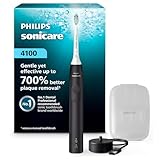
Philips Sonicare 4100
Soft bristles + a pressure sensor that warns when you press too hard

Affiliate links. Dental Roundup may earn a commission at no extra cost to you.
For a deeper look at each category, see our roundups of the best water flossers, the best electric toothbrushes for receding or sensitive gums, and the best antibacterial mouthwashes. On the rinse side, the ADA’s mouthrinse overview notes that antimicrobial ingredients such as cetylpyridinium chloride have been shown to help reduce plaque and gingivitis when combined with daily brushing and flossing.
FAQ
How much does a single dental implant cost?
A single dental implant typically costs between $2,800 and $5,600 including the crown in the United States, according to Delta Dental’s implant cost guide (2022 data). ClearChoice puts a single tooth higher, at $5,000–$7,500. The exact price depends on your location, the dentist’s expertise, the materials used, and whether you need additional procedures like bone grafting. Always ask for an itemised quote so you know exactly what’s included.
How much do dental implants cost per tooth?
Per tooth, a complete implant (post, abutment and crown) costs $2,800 to $5,600, on Delta Dental’s figures. The price per tooth falls when one restoration replaces several teeth: a bridge on two implants spanning three or four teeth typically runs $5,000–$15,000 (Humana), and a fixed full arch on four to six implants replaces every tooth in the jaw for $14,000–$36,000 at ClearChoice’s published prices.
Which states have the cheapest dental implants?
Alabama ($1,790), Oklahoma ($1,806), Arkansas ($1,825), Mississippi ($1,848) and Iowa ($1,861) have the lowest average prices for a single implant post in CareCredit’s state-by-state study; Hawaii is the highest at $3,565, against a national average of $2,143. Those averages leave out the crown. The full state table is above.
How much do implant dentures cost?
Snap-in implant dentures average $8,289 per arch at Aspen Dental (range $7,628–$13,297, 2026 data), and ClearChoice lists implant dentures at $8,000–$13,500 per arch. That is well under a fixed full arch; Aspen notes some patients may need just two implants to secure a lower denture.
Can I have the tooth pulled now and get the implant later?
Readers ask this when the quote is more than they can pay at once, and it is a question for your dentist at the extraction. The thing to ask about is bone: Cleveland Clinic notes that the jawbone shrinks following tooth loss, and separately that if there isn’t enough bone to support an implant, your provider may need to place bone grafts ($549–$5,148 in the price list above). Ask whether a graft in the socket would keep the implant option open, and how long you can reasonably wait.
Are dental implants covered by insurance?
Many full-coverage plans may cover 40–50% of implant costs after the deductible and up to the plan’s annual maximum, according to Guardian; that maximum runs $1,000–$2,500 on most plans per ADA News citing NADP data. Coverage varies widely between plans, so we recommend contacting your insurance provider directly and requesting a pre-treatment estimate. Medical insurance may also cover certain implant costs if the tooth loss resulted from trauma or a medical condition.
Does Medicare cover dental implants?
In most cases, no. Medicare.gov lists “items like dentures and implants” among the dental services Medicare doesn’t cover, and says you pay all costs for non-covered services; the exceptions are dental services tied to certain covered medical treatments, such as an exam before a heart valve replacement or an organ transplant. Certain Medicare Advantage plans might cover implants, Delta Dental notes, so check the plan’s dental benefit and its annual limit. Medicaid usually doesn’t cover implants either, Delta Dental says, and adult dental coverage is set state by state.
How long do dental implants last?
Cleveland Clinic says that with brushing, flossing and regular dental visits, implants can often last a lifetime, while most crowns and bridges last around 15 years, so the crown on top is the part most likely to need replacing. Good oral hygiene, regular dental check-ups, and avoiding habits like smoking can help maximise the lifespan of your implants. Our guide to how long dental implants last breaks down the long-term survival data and what actually ends an implant early. For daily care, the ADA’s mouthrinse overview notes that an antibacterial mouthwash with an ingredient such as cetylpyridinium chloride has been shown to help reduce plaque and gingivitis when combined with daily brushing and flossing. A water flosser cleans around the implant post and abutment with a stream of water rather than a strand of floss. If your gums are sensitive after surgery, a soft-bristled electric toothbrush with a pressure sensor warns you when you press too hard.
Are there cheaper alternatives to dental implants?
Yes. Dental bridges (about $3,600 on average out-of-network for a three-unit bridge, per Delta Dental) and dentures ($1,115–$2,540 for a full upper or lower denture and $1,425–$2,785 for a partial one, Delta Dental’s average out-of-network figures from 2024 data) are less expensive upfront. However, they generally don’t last as long as implants and may not preserve jawbone density the way implants do. Over the long run, an implant may actually be more cost-effective than repeatedly replacing bridges or dentures. Consult your dentist for personalised advice on which option best suits your situation.
Can I get dental implants at a lower cost through a dental school?
Accredited dental schools treat patients at reduced rates (University of Colorado’s dental school puts its care at typically 30–50% below area private practices), with work performed by students or residents under faculty supervision and usually on a slower timetable. Ask the school whether its clinics place implants. The ADA’s accreditation body lists programs by state and city.
Is it worth travelling abroad for cheaper dental implants?
Dental tourism can cut the bill: Patients Beyond Borders, a medical-tourism company cited by the Academy of General Dentistry, estimates savings on dental treatment of 40–65% in Mexico and 45–65% in Costa Rica. Weigh follow-up care and complications handled from a distance, different regulatory standards, and warranties that may not travel. Research the provider’s credentials, add travel costs and time off work, and talk it through with your local dentist.
This article is for informational purposes only and does not constitute medical or dental advice. Prices cited come from the published sources named beside each figure (data years vary by source) and may vary. Always consult your dentist for personalised advice regarding your treatment options and costs.