
This page is about loose whitening powder—the kind you dip a damp toothbrush into. If your goal is enamel remineralization rather than a brighter surface, our tooth powder roundup covers the hydroxyapatite-and-mineral end of the category, and if you want the paste form of purple color correction, that lives on our purple toothpaste page. Everyone else: whitening powder is a viral, marketing-heavy category, and the honest answer to “does it work” depends entirely on how a given powder claims to whiten. We researched the published evidence and the community discussion before ranking anything. Powder lifts surface stains as an add-on to your normal brushing rather than delivering the peroxide-driven shade change a complete system provides; for that, see our guide to the best at-home teeth whitening kits.
Does Teeth Whitening Powder Actually Work?
It depends on what you mean by whiten, and the distinction matters more here than in almost any other whitening product.
Most powders lift surface stains rather than bleaching. The American Dental Association separates two kinds of discoloration: extrinsic stains, which “result from an accumulation of colored compounds on enamel” from coffee, tea, wine and tobacco, and intrinsic stains, which “occur inside the tooth.” The ADA is explicit that over-the-counter surface products work mainly on the first kind: “Some OTC whitening products (e.g., toothpastes, chewing gums) are effective primarily in removing extrinsic (surface) stains on enamel, and will not have a significant impact on intrinsic stains,” and “whitening toothpastes primarily rely on abrasives for mechanical removal of extrinsic surface stains.” A powder can make stained teeth look cleaner and brighter. What it will not reliably do is change your underlying tooth color the way a peroxide gel does: the gel’s peroxide “diffuses easily through interprismatic spaces in the enamel” to reach the pigment inside. The PAP powders here are peroxide-free oxidizers rather than pure abrasives, so they act chemically in principle, but their ability to shift intrinsic shade is poorly evidenced, and they are best treated as surface-stain tools too.
So the real question is how each powder does its stain removal, and there are four mechanisms on this page:
- Abrasion. The powder physically scrubs stains off. Cheap and effective on surface stains, but the grit that does the scrubbing can also wear the tooth: a charcoal powder measurably damaged enamel in a 2024 lab study. This is the charcoal problem, covered in its own section below.
- PAP. Phthalimidoperoxycaproic acid is a peroxide-free oxidizer that several of these powders use. Brands sell it as a low-sensitivity alternative to peroxide, but the independent evidence is thin, and the community reports we found describe modest, gradual results rather than a dramatic change.
- Nano-hydroxyapatite (nHAP). A fine mineral polish that manufacturers say fills micro-scratches so enamel looks smoother and reflects more light, and that they market as a polish for surface stains. On this page nHAP is treated as a polishing-and-optical ingredient, not an enamel-repair claim.
- Purple pigment. Not whitening at all in the chemical sense. A violet tint neutralizes yellow tones optically for a few hours, the same trick as purple toothpaste.
The verdict: a whitening powder is a reasonable way to lift coffee-and-wine surface stains and make teeth look brighter, if you skip charcoal and gritty formulas and use it sparingly. It is the wrong tool if your teeth are naturally yellow or intrinsically discolored, because no powder reaches inside the tooth. For that, see our teeth whitening kit roundup, where the peroxide products live.
What Whitening Powder Cannot Do
Three boundaries are worth setting before you spend $20 on a jar.
It will not change your natural shade. If your teeth are white but stained, a powder helps. If they are evenly yellow with no surface buildup, the ADA’s extrinsic-versus-intrinsic split says a surface product has little to work with.
It is not permanent. Extrinsic stains come from what you eat, drink and smoke, so they return. Any brightening from stain removal fades as the stains re-accumulate, which is why these products are sold as an ongoing habit rather than a one-time treatment.
More is not better. The temptation with a powder that visibly removes stains is to use it harder and more often. That is exactly the wrong instinct for an abrasive product. The ADA notes that “temporary tooth sensitivity and gingival inflammation are the most common adverse effects” of whitening—its striking “up to two-thirds of users” sensitivity figure belongs to peroxide bleaching treatment, not powders, but a gritty powder brings a cost of its own: in the 2024 charcoal study covered below, the charcoal powder roughened and dulled enamel within a 28-day lab model and wore it the most in a 100,000-cycle abrasion test.
How We Evaluated
- Mechanism honesty. We sorted each powder by how it actually claims to whiten—abrasion, PAP, nano-hydroxyapatite or purple pigment—because that determines both how well it works and how much it might cost your enamel.
- Abrasivity and safety. We kept charcoal out of the lineup on the published evidence below and flagged each formula’s trade-offs. No listing here discloses a relative dentin abrasivity value, which is the number that would actually settle the safety question, so we say so rather than pretending otherwise.
- Rating and review base, shown as read. We list live ratings including the unflattering ones. Two products here sit below 4.0 stars, and they earn their slots on relevance, not on their score.
- Price. These powders cluster between $17 and $25 for a similar surface-stain job, so price is a real tiebreaker.
- Community signal, honestly. This is a viral category with thin organic discussion. Where a brand generated only unanswered buyer questions, we say that rather than inventing a consensus.
MySmile Teeth Whitening Powder
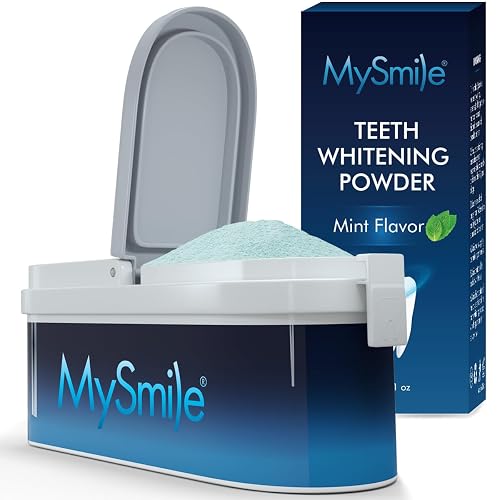
MySmile Teeth Whitening Powder (Sensitive Teeth, 40g)
Best for: A non-charcoal daily powder, sold for sensitive teeth, for people who want stain removal without coarse salts
- White, non-charcoal calcium-carbonate polishing powder, per the listing
- Marketed for sensitive teeth
- Fluoride-free, mint flavor
- No coarse abrasive salts, per the listing
- 40g jar, dip-and-brush
- +The lowest price on this page at around $17, and tied with Boka for the highest rating of the well-reviewed powders here, at 4.1 stars across 447 ratings
- +White, non-charcoal formula the listing describes as free of abrasive salts, though we found no published abrasivity figure for it
- +Sold in the same line as two nano-hydroxyapatite versions, so you can pick the formula that fits
- −Like every powder here, it lifts surface stains rather than bleaching the tooth, so it will not change your underlying shade
- −We found no discussion of it in the dental communities we researched, so there is no user experience beyond the Amazon reviews to weigh
(Affiliate link) · Free shipping on eligible Prime items
Why We Recommend It
If you want to try a whitening powder that skips charcoal, this is the one we would start with. It is a white, non-charcoal powder the brand positions for sensitive teeth, with no coarse salts in the formula per the listing, and at around $17 it is the cheapest option here while tying Boka for the highest rating of the well-reviewed powders, 4.1 stars across 447 ratings. It reads as the low-drama choice in a category full of loud claims.
MySmile sells this powder in three formulas, which is why it earns the top slot for flexibility rather than for any single dramatic claim. Alongside the original whitening powder reviewed here, there is a nano-hydroxyapatite version its listing describes as a low-abrasion surface polish (calcium carbonate with nano-hydroxyapatite), and a lower-cost glass-jar nano-hydroxyapatite version if you want the mineral-polish formula at the smallest outlay. All three lift surface stains; none of them bleaches, and none is a remineralization treatment. Links to both nano-hydroxyapatite versions are below the main one.
Potential Downsides
The honest limit applies to it as much as to any powder here: it removes extrinsic stains and will not touch your natural shade, per the ADA’s extrinsic-versus-intrinsic distinction. And its evidence is thin in a specific way. We found no discussion of MySmile’s powder in the dental communities we researched—only unanswered buyer questions about the brand’s whitening kit—so the 4.1-star rating rests on Amazon reviews alone, with no independent user experience behind it. The budget glass-jar nano-hydroxyapatite version also carries by far the smallest review base of the three formulas—74 ratings, where the other two share the main listing’s 447.
(Affiliate link) · Free shipping on eligible Prime items
If you would rather have a nano-hydroxyapatite mineral polish than the original white formula, MySmile sells two versions of it:
(Affiliate link) · Free shipping on eligible Prime items
(Affiliate link) · Free shipping on eligible Prime items
Made by Dentists Diamond PAP+ Whitening Powder
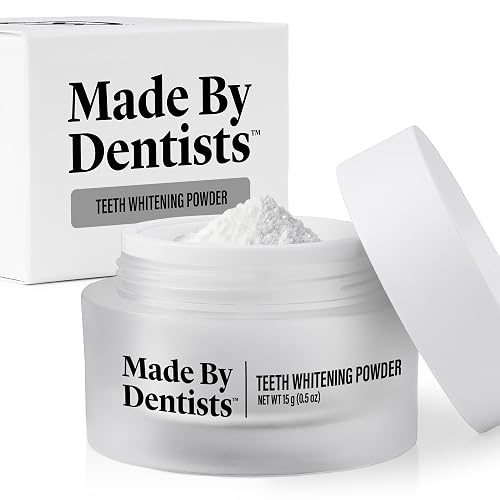
Made by Dentists Teeth Whitening Powder (Diamond PAP+)
Best for: People who want the most active formula and accept a higher sensitivity risk for it
- PAP, nano-hydroxyapatite and diamond powder, per the listing
- Also names hydrogen peroxide in the ingredients
- Mix into any toothpaste
- 1,017 ratings at 4.0 stars
- Around $25
- +A 4.0 average across 1,017 ratings, one of the larger review bases here
- +The only listing here that names a peroxide bleaching agent, hydrogen peroxide, rather than relying on abrasion or PAP alone
- −The most expensive powder on this page at around $25, and the listing's own copy is contradictory—one bullet says no harsh peroxides while another lists hydrogen peroxide
- −Peroxide raises the sensitivity risk the PAP-only powders avoid, and the concentration is not disclosed
(Affiliate link) · Free shipping on eligible Prime items
Why We Recommend It
This is the powder to reach for if you want the most active formula on the page and understand the trade-off. Its listing names PAP, nano-hydroxyapatite and diamond powder, and unlike every other product here it also names hydrogen peroxide—the bleaching agent the ADA describes as diffusing through enamel to reach the pigment inside the tooth, rather than only scrubbing the surface. At 1,017 ratings and a 4.0 average, it also has a large review base behind a solid score. The brand markets it as dentist-developed; we treat that as its own positioning rather than an independent endorsement, since we found no dental-community discussion of it.
Potential Downsides
The peroxide that makes it the strongest formula is also its main caveat. Peroxide is what drives the sensitivity the PAP-only powders are formulated to avoid, and the listing does not disclose the concentration, so you cannot judge how strong it is. The marketing is also internally contradictory: one bullet promises “no messy strips or harsh peroxides” while another lists hydrogen peroxide among the actives. At around $25 it is the priciest jar here. If you have sensitive teeth, this is the powder on the page to approach most cautiously.
(Affiliate link) · Free shipping on eligible Prime items
Boka BrightBoost Whitening Powder
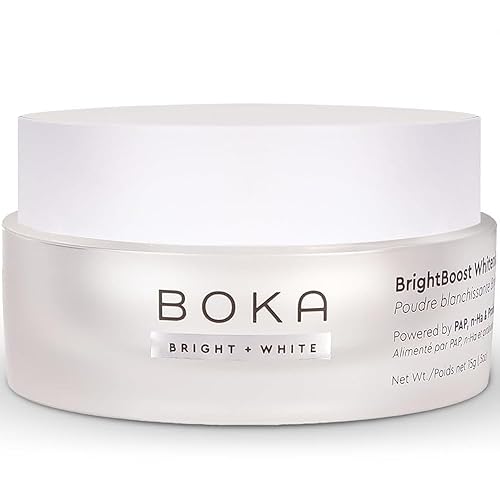
Boka BrightBoost Whitening Powder (PAP + nHAP)
Best for: Buyers who want a recognizable fluoride-free brand rather than a marketplace label
- Peroxide-free PAP plus nano-hydroxyapatite, per the listing
- Mineral polishers (perlite, kaolin, per Boka) and aloe
- Fluoride-free, multivitamin-infused
- From an established oral-care brand
- Around $21
- +The most established brand on this page, with a wider oral-care line and about 1,070 ratings at 4.1 stars
- +Peroxide-free PAP plus nano-hydroxyapatite and mineral polishers (perlite and kaolin, per Boka), with no hydrogen peroxide and no charcoal in the formula
- −Around $21, about a quarter more than the Editor's Pick, for a similar surface-stain job
- −The brand's nano-hydroxyapatite reputation rests on its toothpaste, not this powder, which has no separate community track record
(Affiliate link) · Free shipping on eligible Prime items
Why We Recommend It
Boka is the pick for buyers who would rather trust a known brand than a marketplace label. It is an established fluoride-free oral-care company with a full product line, and its BrightBoost powder pairs peroxide-free PAP with nano-hydroxyapatite and a mineral polishing base Boka lists as calcium carbonate, hydrated silica, kaolin and perlite, which keeps it free of hydrogen peroxide and charcoal alike. At about 1,070 ratings and 4.1 stars it has a solid, if not enormous, track record.
One honest clarification on the brand’s credibility: where we did find dental professionals speaking well of Boka, they were talking about its nano-hydroxyapatite toothpaste, not this powder. In one thread a dentist recommended “Boka or any other hydroxyapatite toothpaste” to a patient. That is brand-level goodwill about the toothpaste line, and it does not transfer automatically to the powder, which has no separate community record of its own.
Potential Downsides
At around $21 it costs about a quarter more than the Editor’s Pick for the same surface-stain job, and the nano-hydroxyapatite in it is a polishing-and-optical ingredient here, not the enamel-repair story Boka’s toothpaste is built on. If nano-hydroxyapatite for enamel support is actually what you are after, a toothpaste is the researched form of that ingredient—see our hydroxyapatite toothpaste roundup.
(Affiliate link) · Free shipping on eligible Prime items
PurelyWHITE Simply Purple Brightening Powder
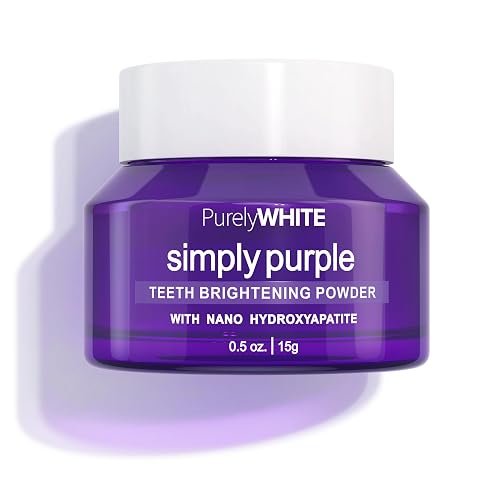
PurelyWHITE DELUXE Simply Purple Brightening Powder
Best for: A quick, temporary optical brightening before an event rather than gradual stain removal
- Purple pigment that neutralizes yellow tones, per the listing
- PAP-based, marketed as no-sensitivity
- Dip toothpaste-loaded brush into the powder
- 1,696 ratings
- Around $20
- +Does something different from the rest of the page: a purple tint that visually cancels yellow for a few hours
- +Large review base at 1,696 ratings, the purple option in our lineup
- −A 3.9 rating, below our usual 4.0 bar, which fits a viral product people either love or feel misled by
- −The effect is optical and washes off; it conceals yellow rather than removing stains or bleaching
(Affiliate link) · Free shipping on eligible Prime items
Why We Recommend It
This is the page’s odd one out, and it is here because it answers a different question than the others. Simply Purple uses color theory rather than stain removal: a violet tint sits on the teeth and optically neutralizes yellow, the same principle as purple toothpaste. For a same-day brighten before a photo or an event, that is a real, if temporary, effect, and this is the most-reviewed purple powder in our lineup, at 1,696 ratings.
Potential Downsides
Be clear about what you are buying. The headline effect is cosmetic and washes off within hours: the violet pigment conceals yellow rather than removing the stains underneath. The formula does list PAP, so there is a modest gradual stain-lift ingredient in the jar, but the product lives and dies on the temporary optical trick—if your teeth look whiter an hour after using it, that is the pigment, not a change in the stains. The 3.9-star rating is below our usual bar and reflects the split you would expect from a product people either enjoy as a quick fix or feel oversold by. If the purple approach appeals, the toothpaste form is a lower-effort way to get the same optical trick daily—our purple toothpaste roundup ranks that category properly.
(Affiliate link) · Free shipping on eligible Prime items
PurelyWHITE Deluxe Whitening Powder
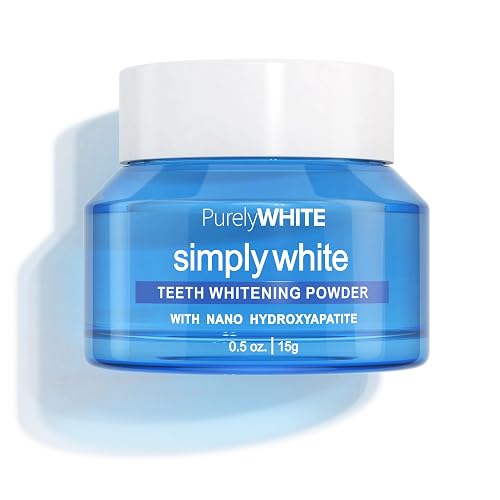
PurelyWHITE DELUXE Whitening Powder (PAP+)
Best for: Readers who arrived from the TikTok clips and want the actual most-reviewed listing
- Peroxide-free PAP formula, per the listing
- One of the category's most-reviewed powders
- Marketed as enamel-safe, no-sensitivity
- 4,663 ratings
- Around $20
- +By far the largest review base on this page at 4,663 ratings, so you are buying the listing people are actually talking about
- +Peroxide-free PAP formula at around $20
- −The lowest rating on this page at 3.7 stars, across that large review base, so the split reception is real rather than a small-sample fluke
- −As with every powder here, PAP lifts surface stains gradually; buyers expecting a peroxide-level shade change are the ones who leave the low reviews
(Affiliate link) · Free shipping on eligible Prime items
Why We Recommend It
Deluxe is on this page because it is the powder people are actually asking about. It is the most-reviewed whitening powder we found, with 4,663 ratings, and its PAP formula is the one that drove the category’s social-media traction. If a clip is what brought you here, this is the listing behind it, and buying the brand’s own listing rather than a lookalike is the practical point of including it.
Potential Downsides
This is the pick where the honest reading is least comfortable. At 3.7 stars across more than four thousand ratings, the low score is a real signal, not a small-sample wobble. The pattern in a viral PAP powder is predictable: PAP lifts surface stains slowly, buyers who expected a peroxide-level shade change feel misled, and the disappointment lands in the reviews. It also markets itself as enamel-safe and no-sensitivity, which is a manufacturer claim we cannot independently verify, since we found no published abrasivity figure for it. If you buy it, buy it for gradual surface-stain maintenance and nothing more.
(Affiliate link) · Free shipping on eligible Prime items
Should You Use a Charcoal Whitening Powder?
Charcoal is the most-searched corner of this category and the one the evidence treats most harshly, which is why we did not put a charcoal product in the lineup.
Activated charcoal “whitens” by scrubbing and by adsorbing pigment, but it does so at a cost. A 2024 laboratory study in the Journal of Dentistry found that activated charcoal powder “damaged the enamel surface, showing a higher deleterious effect on enamel roughness, gloss, and wear” over extended brushing, and that its stain-minimizing effect came largely from dye adsorption rather than from being more effective than ordinary toothpaste (da Silva et al., 2024). The broader picture is no kinder: a literature review in the Journal of the American Dental Association concluded there is “insufficient clinical and laboratory data to substantiate the safety and efficacy claims of charcoal and charcoal-based dentifrices,” with enamel abrasion among the reported harms, and advised clinicians to tell patients “to be cautious” (Brooks et al., 2017).
The caution in the discussions we researched was blunter still. One commenter, passing along their own hygienist’s advice, warned against “anything abrasive” because “you are essentially sanding down your enamel,” and the recurring point across the professional threads on abrasive whitening is that the surface brightening can reverse over time, as worn enamel exposes the darker dentin beneath. If you want the full breakdown, our charcoal toothpaste page covers the category in depth. The short version: if you use charcoal at all, treat it as an occasional thing, not a daily habit—and the PAP and nano-hydroxyapatite powders above take on the surface-stain job without charcoal.
Community Claims vs the Evidence
One table, because this category generates more marketing than evidence. Each row pairs a claim circulating in the ads and clips with what the record actually supports.
| The claim | What the record supports |
|---|---|
| “It whitens your teeth” | Powders remove extrinsic surface stains; the ADA states that OTC products such as whitening toothpastes “will not have a significant impact on intrinsic stains” (ADA). They make teeth look cleaner, not bleached. |
| “It’s enamel-safe, no sensitivity” | A manufacturer claim, not a verified one. PAP and nano-hydroxyapatite formulas avoid charcoal, but no listing here publishes an abrasivity value, and the ADA lists temporary sensitivity among the most common adverse effects of whitening generally. |
| “Charcoal whitens naturally” | A 2024 study found charcoal powder “damaged the enamel surface” with wear over time (da Silva et al., 2024); a JADA review found insufficient evidence and advised caution (Brooks et al., 2017). |
| “PAP is as good as peroxide, without the sensitivity” | PAP is peroxide-free and sold on low sensitivity, but independent evidence is limited and community reports describe modest, gradual results. Peroxide remains the agent the ADA credits with changing intrinsic color. |
| “Purple powder whitens” | Purple is optical color correction—it neutralizes yellow for a few hours. It does not remove stains or bleach. |
| “It replaces your toothpaste” | Most are dip-and-brush add-ons, and none of these lists fluoride, as is standard for the category, so using one alone drops fluoride’s cavity protection. |
How to Choose a Whitening Powder
Start with the mechanism, not the marketing
Every listing promises a whiter smile; what separates them is how. A PAP or nano-hydroxyapatite powder lifts surface stains by oxidizing or polishing them, though we found no published abrasivity figure from any maker here. A charcoal powder does it by scrubbing, and a 2024 lab study measured enamel damage from one. A purple powder does not remove anything—it tints. Decide which of those you actually want before you read another product claim.
Match your expectations to extrinsic stains
If your teeth are stained from coffee, tea, wine or tobacco, a powder has something to work on. If they are evenly yellow with no buildup, the ADA’s extrinsic-versus-intrinsic split says you need a peroxide product that reaches inside the tooth, not a surface powder. Buying the wrong tool for an intrinsic shade is the single most common reason people leave a one-star review.
Use it sparingly, and watch for sensitivity
The instinct to scrub harder is the wrong one. Sensitivity is the most common side effect of any whitening (ADA), and a gritty powder adds wear on top, as the charcoal study above showed. A few times a week is plenty for a stain-maintenance routine; daily aggressive brushing with an abrasive powder is how you end up worse off than you started.
One group should be most careful of all. If you have gum recession and exposed tooth roots, the exposed surface is root dentin rather than enamel, and the ADA’s toothpaste guidance notes that a lifetime of proper brushing with a toothpaste inside its abrasivity limit causes limited wear to dentin but virtually none to enamel. A gritty powder is a bigger risk for you than for most people, so brush lightly, skip anything that feels gritty, and ask your dentist before starting.
Keep your fluoride
None of these powders lists fluoride, which is standard for a category built around whitening rather than cavity prevention. That is fine as an occasional add-on, but if a powder becomes your main brushing product, you have quietly dropped the cavity protection the American Dental Association calls safe and effective, and recommends brushing with twice a day. Use the powder for stains and keep a fluoride toothpaste for cleaning, or alternate them.
Know when a powder is not enough
If you want a genuine shade change rather than stain removal, that is peroxide territory—our teeth whitening kit roundup covers the trays, strips and gels that do it. And if what you mainly want is your existing coffee, tea and wine stains gone rather than an ongoing home habit, the option to consider first is not on this page at all: a professional dental cleaning, which the ADA lists alongside whitening toothpaste as an effective way to reduce extrinsic stains, and which does not ask you to give up your fluoride toothpaste. If a tooth is discolored in a way that appeared suddenly or affects only one tooth, that is also a reason to see a dentist rather than reach for a jar of powder.
Frequently Asked Questions
Does teeth whitening powder actually work?
For surface stains, yes; for your natural color, no. The ADA states that some OTC whitening products, such as toothpastes, remove extrinsic surface stains but “will not have a significant impact on intrinsic stains.” So a powder can make stained teeth look cleaner and brighter, but it does not bleach the tooth the way a peroxide gel does. If your teeth are naturally yellow rather than stained, a powder has little to work on.
Is whitening powder bad for your enamel?
It depends on the powder. Charcoal and coarse abrasive powders are the concern: a 2024 study found activated charcoal powder “damaged the enamel surface” with wear over time (da Silva et al., 2024). PAP and nano-hydroxyapatite powders avoid charcoal, but we found no published abrasivity value from any brand here, so their wear on enamel is unknown, and the ADA lists temporary sensitivity among the most common adverse effects of whitening. Use any powder sparingly rather than scrubbing daily.
Does whitening powder whiten, or just remove stains?
Mostly they remove stains. Abrasion lifts the extrinsic buildup off the enamel surface and does not reach the pigment inside the tooth—the ADA is explicit that OTC surface products such as whitening toothpastes “will not have a significant impact on intrinsic stains.” PAP is a peroxide-free oxidizer rather than a pure abrasive, so it acts chemically in principle, but its ability to change your intrinsic shade is poorly evidenced independently, so expect surface-level results from it too. The one powder here that names hydrogen peroxide carries a peroxide bleaching agent, the one the ADA describes as reaching inside the tooth, which is the exception, and it trades that for a higher sensitivity risk.
Is PAP whitening powder effective?
PAP is a real, peroxide-free whitening agent, and brands sell it on low sensitivity. But the independent evidence is limited, and the community reports we found describe a modest, gradual change—one user went from about a shade 6 to a shade 5 with patience—rather than a dramatic one. Set your expectations to slow surface-stain maintenance and you will be happier with it.
Are purple whitening powders real whitening?
No, and that is not necessarily a criticism. Purple powder uses color theory: a violet tint optically neutralizes yellow tones for a few hours, the way a purple shampoo neutralizes brassy hair. It conceals rather than removes, and it washes off. It is useful as a quick pre-event brighten, not as a way to lift stains or change your shade.
How often can I safely use whitening powder?
For a PAP or nano-hydroxyapatite powder, a few times a week is a reasonable stain-maintenance rhythm. For charcoal or anything gritty, less is better: in the 2024 charcoal study, the powder roughened and dulled enamel within a 28-day lab model and produced the most wear in a 100,000-cycle abrasion test. Watch for sensitivity, which is the most common side effect of whitening, and stop if brushing starts to feel rough or your teeth get twingy.