
The short answer
The crown fee is usually billed on its own line; a core build-up, material fees, and other add-ons come on top.
Price range: Delta Dental (2023 data). Cash fee: a general dentist on Reddit. Lifespan: Cleveland Clinic. Coverage: Humana.
The Short Answer
A permanent dental crown costs $1,100 to $2,000 on average out of network, per Delta Dental’s 2023 data. Coast Dental’s fee schedule sits inside that range at $1,113 to $1,454 depending on material, and general dentists on Reddit quote crown fees within about $950 to $1,500 before add-ons, with high-cost metro offices running $2,000 or more.
The word “add-ons” is doing real work in that sentence. The single most consistent pattern in patient discussions of crown pricing is that the quote is a stack, not a price: the crown code itself, a core build-up, sometimes a lab fee or a material “upgrade” charge, and occasionally a gum procedure called crown lengthening—each on its own line, each billed separately. Patients who compare their treatment plan to a single “average crown cost” number online usually conclude they’re being overcharged, when what they’re really looking at is the stack. This guide breaks down each layer, what insurance actually pays (and the five-year replacement clause almost nobody reads), and the levers that reliably lower the total.
Two scope notes: if your crown follows a root canal, our root canal cost guide covers the full save-the-tooth package—this page prices the crown layer. And crowns on dental implants are priced with the implant itself; see our single-tooth implant cost guide for those.
Why the Quote Never Matches the “Crown Fee”
Here’s the anatomy of a real crown bill, line by line:
| Line item | Range and source | When it appears |
|---|---|---|
| Crown (the code itself) | $1,100–$2,000 out of network, per Delta Dental (2023 data); $950–$1,500 cash, one general dentist’s benchmark on Reddit, with other dentists there quoting their own fees at $1,100–$1,400 and more in high-cost metros | Always |
| Core build-up | $309 on Coast Dental’s non-member price list and $320 on Boston University’s dental clinics’ 2024 rate schedule; one general dentist on Reddit benchmarks it at $250–$400 | When decay or a fracture has removed too much tooth to hold a crown |
| Exam + X-rays | varies by office—one patient’s itemized bill for a front-tooth repair, posted on Reddit, showed a $95 exam plus $44 X-ray | New patients, or when imaging isn’t credited toward treatment |
| Material or lab “upgrade” fees | Humana’s Texas DHMO plan summary adds separate lab charges of up to $200, on top of the copay, for porcelain, ceramic and noble-metal crowns; only its base-metal crowns carry no lab charge; Coast Dental’s non-member list prices a porcelain-fused-to-base-metal crown at $1,127 and a zirconia crown at $1,454; patients on Reddit reported upgrade charges of $200, $250, $325 and $500 | Mostly HMO plans and some corporate offices—see the materials section |
| Crown lengthening (gum surgery) | $902 on Coast Dental’s non-member list, $1,032 (hard tissue) on Boston University’s clinics’ 2024 schedule, and $558 on Delta Dental of Colorado’s Patient Direct discount schedule (effective November 2025) at participating general dentists; on Reddit, one patient was quoted $650–$750 for one tooth and one self-described higher-end office charges $1,500 per tooth | When the tooth is broken too close to the gumline to grip a crown |
The core build-up generates the most confusion because it sounds like padding. It isn’t: when a tooth has lost structure to decay or fracture, the build-up rebuilds a foundation the crown can actually seat on, and dentists in patient communities consistently describe it as a legitimate, separately-coded procedure. It can also be the line insurance covers worst: one patient on Reddit was billed the full $420 for a build-up with $0 covered.
Crown lengthening is the add-on that most often arrives as a surprise, sometimes mid-treatment—patients describe quotes jumping several hundred dollars when a tooth turned out to be broken deeper than the X-ray suggested. If your tooth is badly broken down, ask before work begins whether lengthening might be needed and what it would cost. And if lengthening is on the plan alongside crowns, sequence matters: prosthodontists in patient communities note it belongs before the crowns are made—lengthening after crowns are placed means paying for new crowns.
“If my tooth is badly broken down, might crown lengthening be needed — and what would that cost on top of the crown?”
Reddit threads report crown lengthening at about $650 to $1,500 per tooth, and it sometimes surfaces mid-treatment as a surprise.
Get every quote itemized with procedure codes. An itemized treatment plan is the only way to see which layers you’re actually being charged for, and the only document another dentist can meaningfully second-opinion. It’s also how you spot the padding that does exist: patients in insurance-focused communities have flagged treatment plans carrying separate charges for PPE, “sterilization,” and desensitizing resin—line items that dentists from other practices, reviewing the plan, described as unusual.
Dental Crown Cost by Material
Material changes both the price and how long the crown lasts:
| Material | Cost pattern | Longevity notes |
|---|---|---|
| Zirconia | Now often the standard lab crown—not a premium | Ask about the failure modes rather than the headline number: in the systematic review, zirconia crowns were lost to fractured veneering ceramic, and lost retention, significantly more often than metal-ceramic |
| Porcelain-fused-to-metal (PFM) | Often the insurance-covered baseline | About 94.7% 5-year survival in the same systematic review; the long-track-record option |
| All-ceramic / e-max (lithium disilicate) | Similar to zirconia; sometimes an upcharge | Strong front-tooth choice; about 96.6% 5-year survival for leucite- or lithium-disilicate-reinforced glass-ceramic crowns (systematic review) |
| Gold | No longer the budget option—lab fees track gold prices | Metal crowns last the longest in terms of wear, per Cleveland Clinic |
| All-resin | Cheapest up front | Shortest-lived: about 3–5 years on average, per Cleveland Clinic |
Read those numbers as evidence that no mainstream crown material is fragile, not as a league table. They come from one pooled review of tooth-supported crowns, and the materials sit within a couple of points of each other. Zirconia is the exception worth knowing about (its survival figure in that review was later corrected, so we don’t quote one). What the review does say plainly is that zirconia crowns ran into technical problems more often than metal-ceramic ones, and that on those grounds it should not be the primary option. That is a conversation to have with your dentist about the specific crown, not a reason to refuse the material.
Two things in that table deserve expansion, because they’re where the money moves.
The zirconia “upgrade” fee is worth questioning. Zirconia has become the workhorse material—dentists in patient communities describe modern monolithic zirconia as extremely durable and say they rarely place PFM anymore. Yet patients keep reporting $250–$500 per-tooth “zirconia upgrade” charges on top of the crown fee. A practicing dentist explaining the mechanics in an insurance community put it plainly: zirconia used to be a premium material, but large-scale lab systems have since made it one of the cheapest to produce—the upgrade fee survives because insurance fee schedules haven’t caught up. Commenters add that some in-network contracts don’t permit the charge at all. If an upgrade fee appears on your plan, ask two questions: what material is the base fee for, and does your network contract allow the surcharge?
“What material is the base crown fee for, and does my network contract allow this upgrade surcharge?”
Zirconia is now one of the cheapest materials for labs to produce — the upgrade fee may not be permitted in-network.
Gold is a preference purchase now, not a saving. Gold crown lab fees move with the metal market, and patients have reported quotes rising hundreds of dollars between estimate and delivery. Dentists confirm the underlying costs are real—a gold crown’s lab bill can run about three times a zirconia crown’s—so choose gold for its genuine durability merits, not on the old assumption that it’s the economical choice.
One more pricing wrinkle: front-tooth crowns often cost more in practice than the same code on a molar. Matching a single artificial front tooth to its neighbors is, as dentists themselves describe it, one of the most difficult jobs in the profession—expect more lab time, more appointments, and in some offices a higher fee. Weighing a front-tooth crown against other options? Our veneers vs crowns comparison covers that decision.
For clinical background on what crowns are and when they’re needed, the ADA’s consumer page on crowns is a solid primer.
The Same-Day (CEREC) Crown Fee
Some offices mill your crown in-house and seat it the same day instead of sending impressions to a lab and fitting a temporary for two weeks. Convenient—but $200–$500 “same-day crown” fees are reported on Reddit, and it’s one of the few charges dentists openly argue about among themselves. In a professional dental forum thread on the practice, some dentists defended the fee as covering equipment costs or a service upgrade, while others called it indefensible—pointing out that the patient paying it could request a lab crown instead, costing the office more and often getting a stronger material.
The practical takeaway: if the fee matters to you, ask what the price is for a conventional lab crown. If the office is in-network with your insurance, it’s also worth asking whether the surcharge is permitted under the contract—dentists note that many plans don’t allow it, though some explicitly do.
Dental Crown Cost With Insurance
Crowns sit in the least generous insurance category. Plans that cover them classify crowns as major restorative care, and Humana’s coverage guidance notes that insurance “may pay as much as 50%” of the cost of major restorative work—which in practice means up to half, after your deductible, if your plan covers crowns at all. On a $1,400 crown (inside Delta Dental’s range), that’s roughly $700 out of pocket in the best case.
The caveats patients actually hit:
- The annual maximum is the real ceiling. Most dental plans cap yearly benefits at $1,000–$2,500: in NADP data reported by ADA News, 32.8% of in-network maximums fall between $1,000 and $1,500 and 48.2% between $1,500 and $2,500. A crown plus its build-up can consume most of a year’s maximum alone—and if your crown follows a root canal, the whole package frequently blows past the cap, leaving the remainder in cash.
- Waiting periods apply to new plans. Joining a new plan can mean a waiting period before major care like crowns is covered, as Humana notes. Buying insurance the week you need a crown usually doesn’t work.
- The five-year replacement clause. This is the crown-specific trap. Many plans cover a crown replacement only once every five years—and patients report discovering the clause only when a crown failed as little as two years in and the claim was denied. Insurance-community regulars note two things worth knowing: the clock follows the tooth’s history, not your current insurer, and a standard pre-treatment estimate often won’t catch a frequency exclusion. Ask your insurer directly: “when was a crown last billed on this tooth, and when am I eligible again?”
- Denials are worth appealing—with eyes open. An office-side insurance coordinator’s advice in a patient community: insurers count on patients giving up, and persistence genuinely changes outcomes. At the same time, frequency-clause denials are contractual and typically can’t be appealed away. Get the specific denial code from your EOB before deciding whether to fight.
Dental Crown Cost Without Insurance
Paying cash, plan on $950–$1,500 for the crown itself at a typical private practice (a general dentist’s benchmark on Reddit), plus the build-up and any add-ons above. Geography moves the number more than almost anything else: dentists reviewing patient quotes routinely describe the same crown as overpriced in a rural area and normal in New York or Los Angeles. Patient-reported cash quotes in community price threads run from about $1,100 in mid-cost markets to $2,500 per crown in coastal metros.
Readers in Los Angeles or another California metro can weigh coverage against those numbers with our California dental insurance guide, which compares the state’s main carriers and plan types.
Here’s the counterintuitive finding that recurs across “am I being ripped off?” threads: most crown quotes are ruled normal when patients post them for dentists to review. The quotes that do get flagged aren’t inflated crown fees—they’re stacked line items (the upgrade fees, lab fees, and miscellaneous charges covered above) or, occasionally, treatment plans recommending more crowns than other dentists thought necessary. That has a practical implication: your negotiating energy is better spent on an itemized breakdown and a second opinion on the treatment plan than on haggling over the crown fee itself. Many dentists in patient communities advise getting a second opinion before accepting any large treatment plan from a corporate chain—several volunteer to review treatment plans and X-rays for free online.
One rule of thumb from a general dentist that makes budgeting easier: a crown usually costs about the same as a root canal in the same area. If you know one local price, you can roughly predict the other.
Ways to Pay Less for a Crown
The seven steps at a glance
Step 1: Get an Itemized Quote With Procedure Codes
Crown, build-up, lab fee, material upgrade, lengthening—each on its own line. Every other step works from this document.
Step 2: Benchmark Against Local Fees
The FAIR Health Consumer Dental Cost Estimator shows typical fees for your ZIP code by procedure code—patients and dentists in cost discussions independently point people to it. A quote far above the local range is a negotiation starting point, not a verdict.
Step 3: Ask About Material Options
This is the crown-specific lever most patients don’t know they have. If the quote assumes a premium material, ask what the tooth-appropriate alternatives cost: a PFM or metal crown on a back molar is a clinically standard choice that insurance often prefers—one dental office manager’s advice to a patient facing all-zirconia pricing was exactly that: ask for porcelain-fused-to-metal or metal on the back teeth, at lower cost. (On front teeth, the aesthetic materials genuinely earn their price—this lever is for molars.)
Step 4: Ask for the Cash Rate, and Ask Early
Offices discount for upfront cash payment often enough that it’s always worth one question: ADA practice-management guidance says many dentists will give a cash discount for payment up front, and that some insurance contracts require an office to give plan members its lowest fee. Patients also report in-house payment plans at independent practices. Third-party financing (CareCredit and similar) is the option the front desk will offer instead: approvals aren’t guaranteed, patients report hitting credit limits exactly when a second crown appears, and the recurring warning in budget communities is deferred-interest promotions—miss the payoff window and retroactive interest erases everything the financing saved.
Step 5: Check Dental Schools, Community Clinics, and Medicaid
The consistently cheapest real-world routes. Dental schools (CODA program finder) place crowns at steep discounts under faculty supervision—dentists in patient communities endorse the quality, with the honest trade-offs of long appointments and waitlists. The University of Colorado’s dental school, for example, says its clinics typically charge 30–50% less than area private practices, and university graduate periodontics programs discount crown lengthening significantly (Colorado’s says up to 45% less). Community health centers charge sliding-scale fees by income (find one via HRSA). Medicaid adult dental benefits vary by state, per the National Institute of Dental and Craniofacial Research—and where crowns are covered, the covered material may be limited—dental staff in state-program threads describe plans covering resin or stainless steel only—which still beats paying rack rate.
Step 6: Use Pre-Tax Dollars
Dental treatment for dental disease is a qualified medical expense under IRS Publication 502—FSA/HSA funds typically apply to crowns. Confirm with your plan administrator.
Step 7: Price a Discount Plan Against Your Whole Treatment Plan
For a single crown with a healthy insurance plan and an untouched annual maximum, insurance usually wins. A discount plan earns its fee in exactly the situations this guide keeps flagging: the annual maximum is spent, a waiting period applies, the five-year clause excludes the tooth, or the treatment plan stacks a crown with a root canal, build-up, and more. Because discount plans are memberships rather than insurance, none of those exclusions exist—just a reduced negotiated rate at participating dentists. Aetna Vital Savings, for example, says it’s 15% to 50% off your bill “in most cases” and lists a porcelain-fused-to-high-noble-metal crown at $725 against a $1,342 average: the plan’s own figures, which it says vary by provider and area. Check the plan’s fee schedule for the exact codes on your quote, and confirm your dentist participates. One honest comparison note: if Step 4’s cash-rate ask already earned you a discount, weigh the plan against that negotiated price, not the rack rate—the plan’s marginal value is what it saves beyond what asking already saved.
How Long Crowns Last (and When You Pay Again)
Crowns are durable, not permanent—so replacement economics belong in the cost math. The Cleveland Clinic puts typical crown lifespan at 5 to 15 years, with well-maintained crowns lasting upwards of 30. The clinical literature is reassuring about the early years: a systematic review of tooth-supported single crowns put five-year survival at about 94.7% for metal-ceramic and 96.6% for leucite- or lithium-disilicate-reinforced glass-ceramic crowns. Dentists talking to patients put the honest range more bluntly: a good crown should last 10–15 years or more, some last decades, and an unlucky few fail early.
What that means for your wallet:
-
A crown that comes loose is usually a cheap fix. Re-cementing an intact crown is a minor procedure—patients report recementation fees from about $75 to $300, a fraction of a replacement. If a crown comes off, keep it, don’t chew on that side, and call your dentist promptly; over-the-counter temporary dental cement is a days-not-weeks stopgap until the appointment, not a repair.
-
A crown that fails early deserves a conversation, not just a bill. There’s typically no warranty on dental work, and professional norms genuinely vary—some dentists redo recent failures free, others don’t. Dentists reviewing early-failure cases in patient communities note that a crown failing within a year or two often points to a fixable underlying cause (commonly the bite), so ask why it failed and whether the office stands behind the work before paying full price for round two.
“Why did this crown fail, and does the office stand behind the work — will you redo it at reduced cost?”
An early failure often points to a fixable cause like the bite, not just bad luck.
-
Insurance re-covers on its own clock. Plans that pay for replacement crowns typically do so every 5–10 years, as one general dentist on Reddit puts it—if your crown fails inside the window, the five-year clause above applies and the replacement may be entirely out of pocket. That gap is worth pricing when you choose materials: a longer-lived crown isn’t just fewer dentist visits, it’s fewer uncovered replacements.
Crown, Root Canal, or Extraction: The Package Math
Crown decisions rarely arrive alone, so here’s how the packages compare. General dentists on Reddit put a root canal with build-up and crown at around $2,500 at their own offices—our root canal cost guide itemizes it—and dentists are emphatic that if you pay for the root canal, budget for the crown too: as one put it, the crown is there so you don’t “split your tooth in half” after paying to save it. Extraction is far cheaper on day one (about $70–$650 per tooth, per Cigna and Gentle Dental), but the replacement math flips the comparison: a single-tooth implant runs $2,800–$5,600 including the crown, per Delta Dental, and even a partial denture carries its own price tag and trade-offs. When the tooth is savable and the budget allows, the crown route usually costs less over a decade than extraction plus replacement.
When to See a Dentist
Cracked, broken, or heavily decayed teeth don’t hold their price—a tooth that needs a crown today can need a root canal, crown lengthening, or an extraction after months of waiting, each adding hundreds to thousands to the bill. If a dentist has told you a tooth needs a crown, get the itemized quote and work the playbook above now rather than after it breaks further. In active pain without coverage, our emergency dental care without insurance guide maps the lowest-cost urgent routes.
Protect a Costly Crown Until the Dentist Opens
If a crown comes loose on a weekend, temporary dental cement keeps it seated until you can get professional recementation.
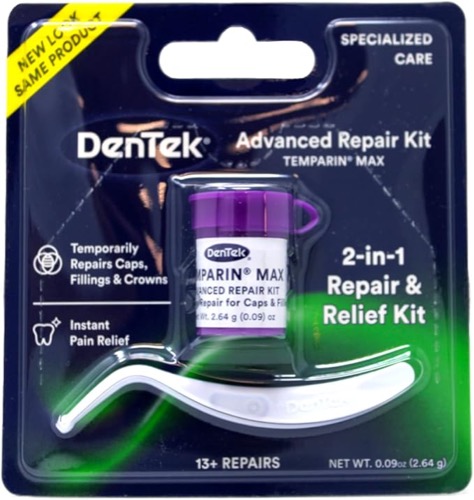
DenTek Temparin One Step Lost Filling Repair
An inexpensive drugstore fix that keeps a costly crown in place until you can get to the dentist for professional recementation
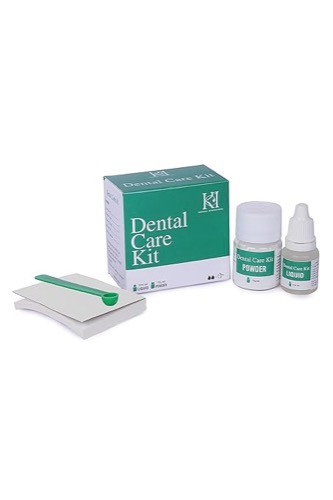
KI Zinc Oxide-Eugenol Dental Cement Kit
Stronger hold for a crown that needs to stay put over a long weekend or holiday — the same zinc oxide eugenol material dentists use for temporary restorations
Affiliate links. Dental Roundup may earn a commission at no extra cost to you.
FAQ
How much does a dental crown cost without insurance?
Plan on $950–$1,500 for the crown fee itself at a typical private practice (one general dentist’s benchmark on Reddit), before a core build-up ($309 at Coast Dental, $320 at Boston University’s dental clinics) and any material or same-day fees. Delta Dental puts the average out-of-network cost of a permanent crown at $1,100–$2,000, and dentists say geography drives much of the spread. Dental schools and community health centers reliably come in below private-practice rates.
Why is my crown quote so much higher than the prices I see online?
Because online averages price the crown code, and your treatment plan prices the stack: core build-up, exam and imaging, material “upgrade” fees, sometimes a lab fee or crown lengthening. Get the quote itemized with procedure codes, benchmark it on the FAIR Health estimator, and question the layers—especially upgrade fees, which in-network contracts often don’t permit—rather than the crown fee, which is usually the normal part.
Does dental insurance cover crowns?
Plans that include major restorative care typically pay up to 50% after the deductible, per Humana, subject to the annual maximum ($1,000–$2,500 on most plans, per ADA News citing NADP data), waiting periods on new plans, and a replacement frequency clause—commonly once every five years per tooth. Ask for a pre-treatment estimate, and ask the insurer directly about the tooth’s replacement-clock status, which pre-approvals often miss.
Which crown material is the best value?
For back teeth, zirconia or porcelain-fused-to-metal—a systematic review put metal-ceramic five-year survival at about 94.7%, and zirconia’s weak spots in that review were veneer fractures and lost retention, which cost more zirconia crowns than metal-ceramic ones, so ask how the lab is building it. Zirconia is now often the standard lab material rather than a premium (question any “upgrade” fee attached to it). All-resin crowns cost the least up front but average only 3–5 years, per the Cleveland Clinic. Gold lasts exceptionally long but is no longer the budget option; one dentist on Reddit puts a gold crown’s lab bill at about three times a zirconia crown’s. For front teeth, the aesthetic ceramics are worth their price—and the harder question is often crown versus veneer.
Is a same-day (CEREC) crown worth the extra fee?
The $200–$500 fee reported on Reddit buys convenience—one visit, no temporary crown, no second appointment—not a better crown; dentists themselves are split on charging for it, and some plans prohibit the surcharge in-network. If the fee stings, ask for the conventional lab-crown price. If your schedule makes a second visit genuinely costly, the fee can be worth it.
How long do dental crowns last?
Typically 5 to 15 years, per the Cleveland Clinic, and often much longer—pooled clinical data put five-year survival for the mainstream materials in the mid-90s, and dentists describe well-made crowns lasting decades with good hygiene and a managed bite. Budget-wise, note the mismatch: crowns are built to outlast the 5-year window after which insurance will pay again, so an early failure can fall entirely on you—which is why an unusually early failure warrants asking the office what went wrong.
This article is for informational purposes only and does not constitute medical or dental advice. Prices cited are estimates based on publicly available provider and insurer data and patient-reported costs; they vary by location, provider, and case complexity. Always consult your dentist for advice regarding your specific treatment options and costs.