


LivFresh is the toothpaste your feed keeps advertising at you; one user in our research described being “bombarded” by its ads and many others echo the saturation, and the question people keep typing into search is blunt: is this $25 gel a breakthrough or a well-marketed tube of EDTA? The short answer our research supports is that it’s neither. The gel produces an effect users feel on the first brush, it costs several times what proven alternatives cost, a meaningful minority of users report new tooth sensitivity, and the company’s marketing percentages don’t survive contact with the company’s own studies. We read every published trial, 17 Reddit threads across 7 communities, and all 51 Trustpilot reviews to sort out who this product actually fits, and which of the six versions to buy if it fits you. If you landed here comparing fluoride-free brands more broadly, our Boka review and hydroxyapatite toothpaste guide cover the other side of that shelf.
How We Evaluated LivFresh
The published evidence, not the marketing numbers. LivFresh’s site claims it “removes 250% more plaque” and reduces gum bleeding “400% better.” We traced both figures to their source studies, read the funding statements, and report what the papers actually measured.
Real buyer experiences, both directions. We collected verbatim quotes from 17 Reddit threads, Trustpilot, and Walmart reviews, from ten-year loyalists to people whose gum measurements got worse. Where reviews looked planted (and we found two near-identical promotional comments posted a day apart from different accounts), we excluded them.
Side-effect signal. Sensitivity reports recur often enough in the community record to be a pattern, not noise. We weighed how often they appear, whether they resolve after stopping, and what mechanism might explain them.
Value against what it was tested against. The brand’s own strongest study compared it to toothpastes that cost about $2 per ounce. We priced LivFresh per ounce, per month, and per year against those same comparators.
Fit, not verdict. A product with this many delighted long-term users and this many burned buyers isn’t simply good or bad. We tried to work out which camp you’re likely to land in before you spend the money.
LivFresh's reviews are unusually polarized. Counting all 51 Trustpilot reviews ourselves, 23 were 5-star and 21 were 1-star, with only 7 in between; one reviewer put it best: 'lots of 5s, lots of 1s, with almost nothing in between.' The pattern has an explanation. Most 5-star reviews are about the gel, and most 1-star reviews are about ordering from the brand's own website (billing, subscriptions, shipping). In the gum-health threads behind our research, the product and the company earn different grades, which is why where you buy it matters as much as whether you buy it.
Does the Science Hold Up?
LivFresh’s active idea is a chelating agent called activated edathamil, which is a form of EDTA, a common food and cosmetic preservative. Instead of scrubbing plaque off with abrasives, the gel is designed to weaken the bond between plaque and the tooth surface so brushing removes more of it and new plaque attaches more slowly. That mechanism is why, per LivFresh’s FAQ, the gel contains no abrasives at all, and it’s the source of the “squeaky clean” feel that shows up in nearly every user report, positive and negative alike.
The two studies worth taking seriously
Strip away the trade-press write-ups and small pilot studies, and two randomized controlled trials carry the evidence base. Both were published in the Journal of Periodontology, and both deserve an asterisk you should know about before the numbers.
The first, a 2021 six-month trial in 65 people with early to moderate periodontitis, found the fluoride-free gel reduced gum pocket depths by 1.18 mm versus 0.93 mm for a stannous fluoride comparison paste. Both groups improved substantially; the difference between them was 0.21 mm, which is statistically significant but roughly the width of two sheets of paper, on a measurement dentists typically record to the nearest millimeter. The gel also showed significant improvements on gum inflammation and bleeding measures. The result stands statistically; it is also smaller than the marketing suggests.
The second is the study behind the “400% better” claim: a 2023 five-arm trial in 150 people that tested the stannous fluoride version of the gel (now sold as Gum Protect+) against four toothpastes over three months. The LivFresh arm reduced gum bleeding by 47.4% from baseline, and it beat every comparator with strong statistical significance. Here’s the arithmetic the marketing leaves out: the 400% figure comes from comparing against the weakest arm in the study, a budget sodium fluoride gel that improved bleeding by 8.3%. Against Crest Pro-Health, the strongest comparator in the same table, the margin was about 1.7 times, not 5.7. Both are wins. Only one of them is the number on the box.
The asterisk on both trials: the 2023 study’s funding statement names Livionex, the company that makes LivFresh, among its funders (the paper’s own conflict-of-interest line states the authors report none), and its first author now appears as a featured endorser on the product’s sales page. The studies were run at credible universities and published in the field’s flagship journal, so this is disclosure, not disqualification. But no independent research group has replicated these results, and you should weigh a manufacturer-funded evidence base accordingly.
What the evidence doesn’t show
(The “250%” claim, for its part, traces to small early studies in a low-authority journal; the published figure in the cited crossover study is 45% less plaque, measured against a triclosan toothpaste that no longer exists on the US market.)
Three things the record is clear about. First, the brand’s own enamel studies found no remineralization advantage over ordinary fluoride toothpaste, and the sales page’s claim that it remineralizes better than nano-hydroxyapatite has no published study behind it that we could locate. Second, we found no published evidence that the fluoride-free gels prevent cavities; a completed 2020 clinical trial in children that measured cavity outcomes has never reported results, so the question stays open. Third, no LivFresh product holds the ADA Seal of Acceptance. We checked the ADA’s current Seal directory directly: the market-leading comparison pastes in the brand’s own 2023 study, including Crest Pro-Health and Colgate Total, hold the Seal, and no LivFresh product does. A former ADA president does personally endorse LivFresh, and that’s true as stated, but a personal endorsement is not an ADA endorsement, and the two are easy to blur at ad speed.
Professional opinion in our research also ran unfavourable on balance: a dental-hygiene instructor whose students studied the product reported negative takeaways, a board-certified periodontist objected to the advertising while relaying that colleagues found the clinical claims sound, and the dentistry-forum verdicts from 2020 were blunter still. Real counter-voices exist, including a hygienist who recommends it daily and users whose own hygienists confirmed improvement, but if you polled the professionals in our research, the product would lose the vote.
On the “is it FDA approved?” question the precise answer is: no toothpaste is FDA approved. The fluoride-free gels are cosmetics. Gum Protect+ is a registered over-the-counter drug under the FDA’s toothpaste monograph, because stannous fluoride is a recognized anticavity and antigingivitis active, which is a routine regulatory status, not an approval, and not unique to LivFresh.
Evidence Receipt
- The gel’s flagship result: a six-month randomized trial in the Journal of Periodontology found it reduced periodontal pocket depths by 1.18 mm versus 0.93 mm for a stannous fluoride paste, a between-group difference of 0.21 mm, alongside significant improvements on gum inflammation and bleeding measures.
- The “400%” source: a 2023 five-arm randomized trial, part-funded by the manufacturer, in which the stannous fluoride LivFresh formula cut gum bleeding 47.4% from baseline versus 8.3% for the weakest comparator and 28.0% for the strongest. The marketing quotes the ratio against the weakest.
- Seal status: no LivFresh product appears in the ADA Seal of Acceptance directory; comparison pastes in the 2023 study, including Crest Pro-Health and Colgate Total, hold the Seal.
- Community record: 17 Reddit threads, 51 Trustpilot reviews (counted: 23 five-star, 21 one-star), and Walmart’s reviews (1,747 ratings at 4.5 stars when we read them in August 2026; at our October check two different LivFresh listings on Walmart showed the same 4.2-star, roughly 19,300-rating count), quoted verbatim in our research files rather than paraphrased from memory.
LIVFRESH Dental Gel, Wintergreen — Editor’s Pick
LIVFRESH Dental Gel, Wintergreen
Best for: First-time buyers who want the flagship formula in its most popular flavor
- Activated edathamil (EDTA) plaque-control formula the brand says has no abrasives
- Wintergreen flavor with a light foam
- Free from SLS, triclosan, parabens, and sulfates
- Largest review base in the LivFresh range: about 10,400 ratings at 4.2 stars
- +The distinctive just-left-the-hygienist smooth feel is reported by fans and critics alike
- +Backed by its own 65-person, six-month randomized trial in the Journal of Periodontology, a stronger evidence base than most challenger brands
- +No SLS or parabens, and no abrasives by LivFresh's own ingredient statement
- −No fluoride, and we found no published evidence that it prevents cavities
- −Around $25 for a 1.75 oz tube is several times the per-ounce price of major-brand toothpaste
(Affiliate link) · Free shipping on eligible Prime items
Why We Recommend It
If you’re going to try LivFresh at all, this is the tube to try. The wintergreen is the flagship most reviewers are describing, it carries the largest validated review base in the range, and at around $25 on Amazon it’s meaningfully cheaper than the brand site’s $34.99 one-time price. What you’re testing is the sensation that made the brand: that unusually smooth, squeaky-clean feel after brushing. In our community research that experience was near-universal, reported by people who went on to buy it for years and by people who returned it. A commenter in r/NoStupidQuestions described teeth that “feel pressure washed”; a ten-year user in r/DentalHygiene wrote that it “makes my teeth feel squeaky clean like nothing else.”
The right frame for the purchase: the feel is consistent, the measured dental outcomes are not. Some users in our research came back from cleanings with shorter appointments and better gum readings. Others reported that neither their hygienist nor their dentist mentioned a noticeable difference. One user’s periodontal measurements got worse during their LivFresh month and recovered after switching back, and their dentist confirmed the improvement. Buy one tube as an experiment with a defined end: your next dental visit is the test that counts, not the first week’s mouthfeel.
Key Features
- Activated edathamil (EDTA) chelating formula; the brand says it has no abrasives
- Wintergreen flavor with a light foam
- SLS-free, triclosan-free, paraben-free, sugar-free
- 1.75 oz tube; the brand says a pea-sized dose lasts 4 to 6 weeks per tube
- About 10,400 Amazon ratings at 4.2 stars at our check
Who It’s Best For
People with recurring plaque and tartar buildup despite decent brushing, people with gum-bleeding complaints who want to try the one formula with head-to-head trial data, and anyone who specifically wants a paste its maker says contains no abrasives. It’s also the right first tube for the LivFresh-curious: the most reviews, the standard flavor, the lowest-risk entry.
Potential Downsides
There’s no fluoride, and unlike the hydroxyapatite brands, LivFresh’s fluoride-free gel has no cavity-prevention evidence of its own that we could find in print; most successful long-term users in our research alternate it with a fluoride or enamel-repair paste rather than using it alone. The most commonly reported side effect in our research is new tooth sensitivity, at least nine independent reports across the range, several resolving after stopping; treat it as a stop signal if it appears (more in the buyer’s guide below). The gel is also runny and slides off a wet brush, which is why the directions say to use a dry brush and skip the water; several buyers found that routine too fussy to keep up. And the price stings: per ounce it runs several times the cost of the toothpastes it was tested against. One r/PeriodontalDisease commenter’s verdict doubles as our summary: “Premium product at a very premium cost.”
(Affiliate link) · Free shipping on eligible Prime items
LIVFRESH Wintergreen 2-Pack — Best Value
LIVFRESH Dental Gel, Wintergreen 2-Pack
Best for: Committed users who want the lowest Amazon per-tube price without a subscription
- Two 1.75 oz tubes of the flagship wintergreen formula
- Lower per-tube price than buying singles on Amazon
- No subscription: a one-time purchase
- Same shared 4.2-star, ~10,400-rating listing base as the single
- +Cheaper per tube than buying singles, without touching the brand's subscription checkout
- +Long-term users report a tube lasting one to two months at the pea-sized dose, so two tubes lasts months
- +Same formula as the single: no guesswork if you already know you like it
- −A commitment purchase: try one tube first, because the no-rinse routine isn't for everyone
- −Still fluoride-free, so most long-term users pair it with a fluoride paste anyway
(Affiliate link) · Free shipping on eligible Prime items
Why We Recommend It
The 2-pack exists for one reason: it drops the per-tube price to about $22.50 versus $24.95 for singles, and it does it without going anywhere near the brand’s subscription checkout, which is where most of the 1-star Trustpilot stories start. Given how far a tube stretches at the pea-sized dose (the brand says 4 to 6 weeks; a Trustpilot reviewer using it twice daily reported about 10 months from one tube, and the flagship thread’s original poster made a 3-pack last a year using it once a day), two tubes covers several months of use, not a stockpile’s worth.
The sequencing rule from our Boka review applies unchanged: buy a single first, confirm the dry-brush no-rinse routine and the feel work for you, then move to the 2-pack for resupply.
Key Features
- Two 1.75 oz wintergreen tubes per order
- About $22.50 per tube versus $24.95 buying singles
- One-time Amazon purchase, no subscription mechanics
- Multi-month supply at the recommended pea-sized dose
Who It’s Best For
People who’ve finished a first tube and are staying. Households where two people both use it. Anyone who wants the lowest per-tube price available without creating an account relationship with the brand’s own store.
Potential Downsides
It’s the same product twice, so every flagship caveat carries over: no fluoride, the fussy dry-brush routine, and the premium price even at the pack discount. If you’re still in the trial phase, this is the wrong listing; sensitivity reports in our research typically surfaced in the first days to weeks, well before a second tube would matter.
(Affiliate link) · Free shipping on eligible Prime items
LIVFRESH Dental Gel, Peppermint — Best for Classic Mint
LIVFRESH Dental Gel, Peppermint
Best for: People who want the standard formula but find wintergreen too medicinal
- Same activated edathamil formula as the flagship
- Conventional peppermint flavor
- About 3,950 Amazon ratings at 4.2 stars
- Same 1.75 oz tube and pea-sized dosing
- +Identical formula to the flagship for people who simply prefer peppermint
- +Same base as the wintergreen, which LivFresh says contains no abrasives
- +Solid 4.2-star average across several thousand ratings
- −One reviewer reported new sensitivity strong enough to quit while using the peppermint version
- −Same price and same small tube as the flagship
(Affiliate link) · Free shipping on eligible Prime items
Why We Recommend It
Wintergreen is a divisive flavor, and this is the escape hatch: the same gel in a conventional peppermint. Flavor is worth taking seriously with this brand because the formula is unusual enough already (runny gel, dry brush, no rinse) that a flavor you merely tolerate becomes one more reason to quit before the tube is done. If peppermint is what a toothpaste is supposed to taste like in your head, start here instead of the flagship.
One caution we recorded that is specific to this variant: a Trustpilot reviewer who tried the peppermint reported sensitivity strong enough to stop, writing that the sensitivity “disappeared” after quitting, and advising others to buy through Amazon so returns stay simple. That’s one report, the sensitivity pattern spans all variants, and their returns advice is sound regardless.
Key Features
- Standard peppermint flavor of the classic edathamil gel
- Same formula, dose, and tube size as the wintergreen
- About 3,950 ratings at 4.2 stars at our check
- Same $24.95 Amazon price as the flagship
Who It’s Best For
Anyone sold on trying LivFresh who knows wintergreen isn’t for them. It’s the safest flavor guess for a household where more than one person will use the tube.
Potential Downsides
Everything true of the flagship is true here, at a third of the review base. There’s no functional difference to weigh, which also means no reason to pay more if one flavor is on sale and the other isn’t.
(Affiliate link) · Free shipping on eligible Prime items
LIVFRESH Dental Gel, Mild Peppermint — Best for Sensory Sensitivity
LIVFRESH Dental Gel, Mild Peppermint
Best for: People who need a non-foaming, low-flavor option and tolerate ordinary toothpaste poorly
- Non-foaming variant with the gentlest flavor in the range
- The version sensory-sensitive users in our research sought out by name
- Same activated edathamil formula
- About 2,000 Amazon ratings at 4.1 stars
- +The variant sensory-sensitive users in our research picked by name for its short ingredient list
- +Non-foaming and very mildly flavored, which some users find easier to tolerate daily
- +Same plaque-control formula as the louder flavors
- −The faint flavor reads as no flavor at all to some users, and one reported an odd aftertaste
- −Smallest review base of the three classic-gel flavors
(Affiliate link) · Free shipping on eligible Prime items
Why We Recommend It
This variant earned its slot through one of the more specific endorsements in our research: a commenter in the Ehlers-Danlos community, where finding tolerable oral-care products is a recurring struggle, recommended the mild peppermint by name after two years of use, calling it the option with the cleanest ingredient list and passing on the key usage tip that the gel “just melts away” if you wet the brush. For people who gag on strong mint, react to foaming agents, or manage sensory issues that make brushing hard, a non-foaming, barely-flavored gel with no SLS is a niche few mainstream pastes serve.
The trade-off is the same discovery in reverse: if you want a toothpaste to taste like something, this one mostly doesn’t.
Key Features
- Non-foaming, mildest flavor in the LivFresh range
- The pick of sensory-sensitive users in our community research
- Same edathamil formula and 1.75 oz tube
- About 2,000 ratings at 4.1 stars at our check
Who It’s Best For
People with sensory sensitivities, strong gag reflexes, or flavor aversions that have made toothpaste a daily negotiation. Also the natural pick if a previous strong-mint paste ever felt like burning.
Potential Downsides
One user of the gel in our research (variant unstated) reported a strange, worsening taste distortion over two months of use that eased after switching back to their old paste, and a dental-hygiene instructor whose students studied the product reported “weird taste” and sensitivity complaints in their cohort. Taste reactions are individual, but with this variant’s whole appeal being flavor-related, know that “mild” lands as “off” for a minority.
(Affiliate link) · Free shipping on eligible Prime items
LIVFRESH Gum Protect+ — Best With Fluoride

LIVFRESH Gum Protect+ (Stannous Fluoride)
Best for: Anyone who wants the LivFresh clean but won't give up fluoride cavity protection
- 0.454% stannous fluoride, the same anticavity active as major gum-health pastes
- Edathamil plaque control retained as a supporting ingredient
- The formula actually tested in the 2023 Journal of Periodontology trial
- Registered over-the-counter drug with a Drug Facts label
- +Closes the range's biggest gap: an FDA-recognized anticavity and antigingivitis active ingredient
- +This is the actual formula tested in the brand's strongest study, the 2023 Journal of Periodontology trial
- +Ends the alternation juggling act most long-term LivFresh users otherwise adopt
- −Rated 3.9 stars on a split verdict (62% five-star, 14% one-star across about 207 ratings at our check): the low ratings center on paying about $25 for a small tube of the same 0.454% stannous fluoride the drugstore pastes use, and on a runnier, bolder mint than the classic gel
- −Its label says to keep it away from children under 12, unlike the fluoride-free gels
(Affiliate link) · Free shipping on eligible Prime items
Why We Recommend It
Gum Protect+ answers the single most consistent professional objection to LivFresh: no fluoride. It pairs the edathamil plaque mechanism with 0.454% stannous fluoride, the same concentration used in Crest Pro-Health, Colgate Total, and Parodontax, which makes it a registered over-the-counter drug with recognized anticavity and antigingivitis uses rather than a cosmetic. And in a detail even the brand’s own website muddles, this stannous fluoride formula, not the classic gel, is the product that was tested in the 2023 Journal of Periodontology trial, where it beat four established pastes on plaque, inflammation, and bleeding measures, with the same caveat the science section applies: one manufacturer-part-funded trial, not yet independently replicated. If the science section convinced you there’s something here, this is the version the strongest study is actually about.
Some buyers have been confused to receive a tube listing stannous fluoride as the only active ingredient after ads emphasizing edathamil. That’s not a substitution: in this formula the fluoride is the FDA-recognized active and the edathamil is a supporting ingredient, which is exactly how the label is required to present it.
Key Features
- 0.454% stannous fluoride plus the brand’s edathamil system
- The formula tested in the 2023 five-arm randomized trial
- Registered OTC drug with a Drug Facts label
- 1.74 oz tube at around $25 on Amazon
Who It’s Best For
Anyone who liked the idea of LivFresh but couldn’t accept giving up fluoride, people with gingivitis or bleeding-gum complaints wanting the studied formula, and current classic-gel users tired of running a two-toothpaste rotation.
Potential Downsides
The Amazon listing is young, about 207 ratings at our check, and its 3.9-star average is a split verdict rather than a shrug: 62% of ratings are five-star and 14% one-star, and the ratings added since our August read have averaged roughly 3.5 stars. The low ratings center on price (about $25 for a 1.74 oz tube of the same 0.454% stannous fluoride the drugstore pastes use) and on a runnier, bolder-mint gel than the classic formula. The buyer-feedback record that de-risks the older tubes doesn’t exist here yet. Its Drug Facts label tells you to keep it out of reach of children under 12 and to have children under 12 consult a dentist before use, standard fluoride-drug labeling that nonetheless contrasts with the “safe for all ages” positioning of the fluoride-free gels; the two products carry different rules and shouldn’t be conflated. Stannous fluoride formulas in general can surface-stain teeth (the label says the formula is designed to reduce this), and like every LivFresh product it costs a multiple of the equally-Sealed drugstore competition.
(Affiliate link) · Free shipping on eligible Prime items
LIVFRESH Mouthwash — Best Add-On
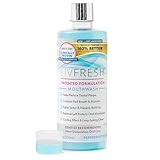
LIVFRESH Mouthwash, Peppermint Burst
Best for: Existing LivFresh users who want the matching rinse for the no-water routine
- Concentrated formula dosed at 10 mL per use
- 16.9 fl oz bottle
- Same no-SLS, no-paraben ingredient posture as the gels
- 4.5 stars across an early base of about 567 ratings
- +Highest star average in the lineup (4.4) on its early reviews
- +Concentrated dosing means the bottle stretches further than the size suggests
- +Answers a recurring routine question: what to rinse with if you skip water after the gel
- −A young base (about 567 ratings at our check, up from 329 in August) and two users in our research disliked the taste strongly
- −At around $30 it costs more than a tube of the gel itself
(Affiliate link) · Free shipping on eligible Prime items
Why We Recommend It
The gel’s directions say not to rinse with water after brushing, which leaves users asking what, if anything, goes in the glass. The brand’s answer is this rinse, and buyers in our research were already asking about it (“I guess you’d rinse with their mouthwash instead?”). At 10 mL per use, the 16.9 oz bottle covers roughly 50 uses, which softens the $30 price somewhat. Its early Amazon ratings run higher than any gel in the lineup, though on a much smaller base.
We rank it last on purpose: it’s an accessory to a routine you should validate first. Prove the gel works for you across a dental checkup before adding a matching $30 rinse.
Key Features
- Concentrated rinse, 10 mL per use
- 16.9 fl oz bottle, roughly 50 uses
- 4.5-star average on an early base of about 567 ratings
- Around $30 on Amazon at our check
Who It’s Best For
Established LivFresh users who want the routine’s matching second step, and anyone who found conventional alcohol-burn mouthwashes intolerable and wants a gentler rinse from a brand they already trust.
Potential Downsides
Taste is the risk. Two users in our research disliked it emphatically, one describing a mothball-like smell that sent them back to re-brush with a conventional paste, and the Trustpilot reviewer who warned others off the mouthwash did so in the same breath as praising returns via Amazon. With about 567 ratings at our check, the crowd is still arriving. Treat it as the lineup’s flyer, not its foundation.
(Affiliate link) · Free shipping on eligible Prime items
Where to Buy It: Amazon vs. the Brand Site
This is the section the rest of the internet skips, and for LivFresh it matters more than the flavor choice. The clearest pattern in the 51 Trustpilot reviews we read is that the product and the purchase experience earn different grades. The 1-star block is dominated not by gel complaints but by ordering ones: buyers reporting subscriptions they didn’t knowingly start, a cancellation flow that routes through a retention video and offers delays instead of a cancel button, charges billed before shipment, a cluster of December 2025 orders that sat unshipped for weeks, and daily marketing email that survived repeated unsubscribe requests. Several of those same reviewers say plainly that the toothpaste itself is good. The Better Business Bureau’s file on the company shows the same themes at low volume: eight complaints in three years, mostly delivery and refund issues.
On the brand’s own checkout, the subscription option arrives pre-selected, and one Reddit commenter reported the cart defaulting back to a subscription after choosing one-time purchase. None of this is unusual for direct-to-consumer brands, and the same Trustpilot record contains multiple detailed compliments for the company’s customer-service reps once reached. But the practical advice writes itself, and the community already wrote it: a burned 1-star reviewer’s all-caps advice was to buy on Amazon or Walmart instead of the brand site, and a 5-star fan said the same thing gratefully. An Amazon or Walmart purchase is a plain retail transaction: no subscription mechanics, standard returns, and at our check the Amazon single-tube price ($24.95) undercuts the brand site’s one-time price ($34.99). The 2-pack drops the per-tube cost further. The brand site’s edge is its multi-tube bundle pricing and 30-day guarantee, if you’re comfortable managing the subscription settings. And if you’re already stuck in an unwanted subscription there, the pattern in the reviews we read is that persistent emails to customer service eventually got cancellations confirmed, with a card-network dispute as the documented last resort.
Buyer’s Guide: Is LivFresh Worth It?
The price math, using live numbers
A LivFresh tube is 1.75 oz and costs $24.95 on Amazon, which is about $14 per ounce. Crest Pro-Health, the strongest comparator in LivFresh’s own 2023 study and an ADA-Sealed product, sells for about $9 for a 5.1 oz tube at big-box retail at our check, about $1.76 per ounce. That’s roughly an eight-fold per-ounce premium for the version of the comparison least favorable to LivFresh. The gap narrows in practice because the gel doses small: at the brand’s stated 4-to-6-week tube life, a year of LivFresh runs roughly $220 to $320 at Amazon single-tube prices, versus $20 to $30 for the drugstore paste. The fair summary: you’re paying a car-payment-sized annual difference for a plaque-control mechanism the drugstore paste doesn’t have, and whether that’s worth it depends entirely on whether plaque and gum trouble are your actual problem. If that math settles it for you, an ADA-Sealed stannous fluoride paste is the studied mainstream alternative; our gum-disease toothpaste roundup covers that shelf.
Who it fits, and who should skip it
The evidence and the community record point the same direction. LivFresh earns its price most plausibly for people with recurring plaque and tartar buildup despite decent hygiene, people with gum bleeding or early gum-disease complaints (the outcomes the trials actually measured), and people who want a formula its maker says is abrasive-free, or a low-sensory one. It’s a poor fit if your priority is cavity prevention (use a fluoride paste, or choose Gum Protect+ if you want LivFresh at all), whitening (the gel has no peroxide and, by the maker’s own statement, no abrasives, and multiple reviewers report no whitening effect), or budget (there is no framing in which this is the economical choice). And it is not a substitute for a dental cleaning: existing tartar is hardened mineral that no toothpaste removes, a point the periodontal-disease community makes to disappointed buyers again and again. If it’s been years since your last visit, our guide to going back after a long gap is the better first step; several people in our research were buying this gel in place of an appointment they were dreading, and a $25 tube can’t do a hygienist’s job.
How long-term users actually use it
The most consistent pattern among multi-year LivFresh users in our research isn’t devotion, it’s rotation. The gel has no fluoride, so long-term users alternate: LivFresh once a day (or a few times a week) for the plaque control, and a fluoride, hydroxyapatite, or enamel-repair paste for the remineralization side. Named partners in the community record include Sensodyne, Pronamel, Parodontax, Boka, and Davids. The technique matters too, and it’s the top usage mistake: apply a pea-sized amount to a dry brush and don’t rinse with water first, because water dissolves the gel before it works. Users who missed that instruction reported the gel vanishing off the brush. The rotation also handles the budget problem: a tube used once daily lasts twice as long.
The sensitivity signal, stated plainly
At least nine independent users in our research reported new tooth or gum sensitivity after starting LivFresh, several with the pattern that matters: the sensitivity appeared during use and resolved after stopping. A dental-hygiene instructor reported the same complaints recurring across a student research cohort. Users in our research proposed a plausible mechanism, chelation leaving dentinal tubules more exposed, though nobody has studied this for LivFresh specifically. And there’s a counter-consideration: plenty of multi-year users report no such problems, and some report sensitivity they already had improving. Our read: treat new sensitivity as a stop signal, not something to push through. If your teeth start aching in week one, stop, switch back, and see whether it resolves; if it doesn’t, that’s a dentist conversation, not a toothpaste one.
Set realistic expectations
The squeaky-clean feel arrives on day one and proves almost nothing by itself; it’s the product’s sensation, not its clinical endpoint. The test of whether LivFresh is doing anything for you is your next dental visit: pocket measurements, bleeding points, how much scraping the hygienist has to do. Give it one full interval between cleanings, then decide with data. That’s also the cheapest way to use it: one tube, one checkup cycle, one informed verdict. And on whitening, hold no expectations at all; the wintergreen gel’s stain removal is limited to what plaque control achieves indirectly, which several buyers found underwhelming next to a dedicated whitening toothpaste.
Frequently Asked Questions
Is edathamil just EDTA?
Yes. Edathamil is another name for EDTA (ethylenediaminetetraacetic acid), a chelating agent used widely as a food and cosmetic preservative. LivFresh’s formula uses what it calls “activated edathamil” at 2.6%, and the brand’s claimed novelty is the delivery and activation, not the molecule itself. A self-identified analytical chemist in our research made the same point: the ingredient is familiar, the application to plaque control is the new part.
Does LivFresh remove tartar that’s already on my teeth?
No toothpaste does. Tartar (calculus) is hardened, mineralized plaque, and removing it takes a professional cleaning with instruments. This is the most common misunderstanding among LivFresh buyers in our research, and the periodontal community’s most-repeated correction. What the studies support is prevention: less new plaque accumulating, which over time means less new tartar forming. If you can see built-up tartar now, book a cleaning first; the gel’s job is keeping you cleaner after the baseline is reset.
Is LivFresh FDA approved or ADA accepted?
Neither, precisely. No toothpaste is “FDA approved”: the fluoride-free LivFresh gels are cosmetics, while Gum Protect+ is a registered over-the-counter drug under the FDA’s fluoride toothpaste monograph, a routine status shared by every fluoride paste on the shelf. No LivFresh product holds the ADA Seal of Acceptance; we checked the ADA’s current directory directly. The former ADA president who appears in LivFresh’s marketing does endorse it, but that’s a personal endorsement, not an institutional one.
Does LivFresh have fluoride?
The classic gels (wintergreen, peppermint, mild peppermint) are fluoride-free. Gum Protect+ contains 0.454% stannous fluoride, the same anticavity active found in Crest Pro-Health, Colgate Total, and Parodontax. If cavity protection matters to you and you want LivFresh, Gum Protect+ is the version to buy; most long-term users of the classic gels alternate them with a fluoride paste instead.
Why do some users get tooth sensitivity from it?
New sensitivity is the most commonly reported side effect in our research, with several users describing it resolving after they stopped. Users in our research proposed a mechanical explanation, the chelating action leaving the tubules in exposed dentin more open for a while, which is the classic driver of sensitivity, though nobody has studied this for LivFresh specifically. Many users experience none at all. If you develop new sensitivity, stop using the gel and see whether it resolves; persistent pain is a reason to see your dentist.
Is it safe to swallow small amounts of EDTA every day?
This question comes up in nearly every long community thread about LivFresh, and the grounded answer is reassuring but not unlimited. EDTA is a common preservative already present in many foods and cosmetics; a self-identified analytical chemist in our research argued the amount briefly in your mouth while brushing is far below what people routinely ingest from food, though the same commenter later disclosed she eventually stopped using LivFresh herself after seeing no significant difference in her oral health. The company says its ingredients are food-grade, which is a brand claim. What nobody has published is long-term safety data for daily EDTA brushing specifically, so if you’re pregnant, managing a medical condition, or just cautious, this is a reasonable question for your dentist rather than a settled fact.
Is the LivFresh listing on Amazon legit?
The listings we link on this page are sold under the LIVFRESH brand name and were verified live (title, price, and US availability) on the date this page was last updated. Buying through Amazon also sidesteps the subscription mechanics that generate most of the brand’s 1-star direct-purchase reviews, and returns follow Amazon’s standard process, an advantage two different reviewers in our research raised unprompted. As with any Amazon purchase, confirm the seller and product title match what you expect before checkout.