
The short answer
Cost per tooth depends on impaction type, sedation choice, and insurance. Simple erupted extractions start at $70 per tooth (Cigna), and bony impactions run to $695 per tooth (Gentle Dental).
Per tooth and simple extractions: Cigna. All four: CareCredit (2023–2024 survey). Coverage: Delta Dental. Bony impaction: Gentle Dental.
The Short Answer
Wisdom teeth removal typically costs $120 to $800 per tooth in the United States, according to Cigna dental cost data, and $1,200 to $4,175 for all four teeth, according to CareCredit. For all four, Delta Dental’s 2021 member data puts the average out-of-network cost at $720 for non-surgical removal and $3,120 for surgical removal with up to an hour of general anesthesia, and CareCredit’s national average for basic removal is $2,685. Sedation is often billed as its own line on top of the extraction fee.
The wide range comes down to three factors: how deeply your teeth are impacted, what type of anesthesia you choose, and whether you have insurance. We break down each of these below so you can walk into a consultation knowing what questions to ask and what the numbers should look like.
Cost Breakdown by Extraction Type
Not all wisdom teeth extractions are the same procedure. The deeper and more complex the impaction, the more it costs. Here is a breakdown of typical per-tooth pricing based on provider data from Gentle Dental and Cigna.
Wisdom tooth extraction cost by type
Source: Simple and surgical: Cigna. Soft tissue and bony impaction: Gentle Dental.
The hardest cases cost more than the table shows: CareCredit prices a “complicated impaction” (a tooth fully encased in the jawbone or partially buried under gum and bone) at $639–$1,620 per tooth with local anesthetic only (average $835).
Impaction is what moves a tooth up that price table: the American Dental Association (ADA) describes impacted wisdom teeth as ones trapped in your jaw or under your gums. (Pricing for pulling a regular, non-wisdom tooth works differently—see our tooth extraction cost guide for that breakdown.) The ADA also lists the changes in the mouth that can mean wisdom teeth need to come out, including pain, infection, cysts, damage to neighboring teeth, and gum disease.
Additional Costs Beyond the Extraction
The per-tooth price above is just the extraction. These are common costs that can add to your final bill:
| Item | Estimated Cost | Notes |
|---|---|---|
| Dental exam | $70–$150 (Gentle Dental) | Initial consultation and evaluation |
| Panoramic X-ray or CBCT scan | $25–$750 (Gentle Dental); national averages of $200 for a panoramic X-ray and $466 for a cone-beam CT (CareCredit) | Required for treatment planning; 3D imaging costs more |
| Anesthesia / sedation | Sedation (oral, nitrous oxide or IV) $273–$675; general anesthesia $494–$1,253 (CareCredit) | Local anesthesia is often included in the extraction fee. See the sedation section below; this is the biggest variable |
| Prescription medications | About $30 (Cigna) | Antibiotics, pain medication |
| Bone graft (if needed) | $200–$1,000 (Gentle Dental) | Rarely needed for wisdom teeth; more common with implants |
In one patient thread about a wisdom teeth bill, a hospital that had quoted $0 with insurance billed $537 afterwards. Sedation is one place a gap like that can hide: CareCredit’s worked example prices it as its own line ($349 on top of $363 per tooth). Always ask for an itemized breakdown that includes every line item, not just a lump sum.
“Can I get an itemized breakdown that includes extraction fees, sedation, imaging, and prescriptions — not a lump sum?”
Sedation is frequently billed separately and omitted from initial estimates.
How Much Does Sedation Add?
Sedation is the single biggest discretionary cost variable for wisdom teeth removal. CareCredit names three typical choices on the day of surgery: a local anesthetic (laughing gas can be added), IV sedation, or general anesthesia. Listed separately, the options are:
- Local anesthesia: Numbs the extraction area only. You remain fully conscious. Least expensive option, often included in the base extraction cost.
- Nitrous oxide (laughing gas): Inhaled sedation that reduces anxiety while you stay awake. CareCredit prices it in the same sedation band as IV sedation; ask for its fee as a separate line.
- IV sedation: Administered through a vein; you are relaxed but still conscious. CareCredit: $273–$675 (average $349).
- General anesthesia: Renders you unconscious or unaware during the procedure. The most expensive option. CareCredit: $494–$1,253 (average $639).
Which option you need depends on the complexity of your case and your comfort level. Simple erupted extractions often require only local anesthesia. Surgical extractions of impacted teeth (especially multiple teeth at once) more commonly use IV sedation or general anesthesia.
In online discussions, bills swing widely with the sedation choice: one Reddit user paid $900 out of pocket (on about $2,000) for three teeth, two impacted, under laughing gas; another paid $660 after insurance for all four, IV sedation included. Sedation is frequently the line item that turns a manageable bill into a surprising one.
Wisdom Teeth Removal Cost With Insurance
If you have dental insurance, it will typically cover a portion of wisdom teeth extraction, but with significant limitations.
If you don’t have a plan yet and you’re in California, our guide to the California dental insurance options compares the state’s main carriers and plan structures before you shop.
What Insurance Usually Covers
- Coverage percentage: A Delta Dental plan typically covers about 50–80% of the total cost, depending on the plan and circumstances (Delta Dental).
- Annual maximums: Most plans cap annual benefits at $1,000–$2,500: ADA News, citing NADP data, puts 32.8% of in-network maximums at $1,000–$1,500 and 48.2% at $1,500–$2,500. On a large bill, such as surgical removal of all four, the plan stops paying at the maximum and you owe the rest.
- In-network vs. out-of-network: Going to an in-network oral surgeon means the provider has agreed to a negotiated rate with your insurer. Out-of-network providers charge their full fee, and your insurance covers a smaller percentage (or none) of the difference.
Real-World Examples From Patients
Patient-reported costs with insurance vary enormously:
- $400 out-of-pocket: 3 teeth, IV sedation, after insurance
- $660 out-of-pocket: 4 teeth, IV sedation, MetLife dental (Western Washington)
- $761 out-of-pocket: 4 teeth, total bill was about $6,000, insurance covered most
- About $5,000 out-of-pocket: 4 impacted teeth, even with insurance
The Medical Insurance Angle
Here is something many patients miss: impacted wisdom teeth removal by an oral surgeon may be partially covered by your medical insurance, not just dental. In health insurance communities, commenters frequently highlight this: when impacted wisdom teeth require surgical extraction, the procedure can sometimes be coded as oral surgery and submitted to medical insurance, which often has a higher annual maximum than dental.
Call both your dental and medical insurance carriers before scheduling. Ask your dental carrier about oral surgery benefits specifically: some plans have a separate oral surgery benefit that covers procedures dental insurance excludes.
“Does my plan have a separate oral surgery benefit, and can impacted wisdom teeth extraction be submitted to my medical insurance?”
Medical insurance often has a higher annual maximum than dental and may cover surgical extractions.
Wisdom Teeth Removal Cost Without Insurance
Without dental insurance, you are responsible for the full cost. Here is what published cost data shows:
- All 4, non-surgical (fully erupted): $720 average out-of-network (Delta Dental, 2021)
- All 4, uncomplicated surgical extraction plus sedation: $1,801 in CareCredit’s worked example ($363 average per tooth plus $349 sedation), which it calls the low end of the range
- All 4, national average: $2,685 for basic removal; state averages run from $2,191 (Maryland) to $3,256 (Colorado), per CareCredit
- All 4, surgical, with up to an hour of general anesthesia: $3,120 average out-of-network, per Delta Dental
Three Reddit patients span a similar spread: $550 for two teeth (uninsured) and about $1,200 for all four, both with local anesthesia only, up to a $5,800 New York quote for all four with sedation, above CareCredit’s top.
If you are uninsured, the most effective strategies to reduce your bill are:
- Dental schools: supervised resident care; the University of Colorado’s dental school says its fees typically run 30–50% below local private practices (see Step 5)
- Cash-rate negotiation: many dentists give a discount for payment by cash or check, per the American Dental Association (see Step 6)
- Dental discount plans: no waiting period, no annual maximum, reduced network rates; Aetna Vital Savings says members pay 15% to 50% less in most cases (see Step 7)
- Choosing local anesthesia over IV sedation: when your case allows, this skips the sedation fee ($273–$675 per CareCredit)
Delaying extraction to save money often backfires. Patients who wait frequently report infections that require emergency room visits, which cost significantly more than a planned procedure. If cost is the barrier, explore the options above before postponing.
Ways to Save on Wisdom Teeth Removal
Seven ways to lower your bill
Step 1: Get Multiple Quotes
Price variation for wisdom teeth removal is extreme. Patients in dental communities report quotes for all four from $750 to more than $7,000; even CareCredit’s state averages span $2,191 to $3,256. Visit at least two providers and request itemized breakdowns (not a lump sum), so you can compare extraction fees, sedation charges, and imaging costs separately.
Step 2: Understand Your Billing Codes
Wisdom teeth extraction billing uses CDT codes based on impaction type: a simple extraction (D7140) costs significantly less than a completely bony impaction (D7240). In one case reported on Reddit, a patient saved $2,000 on a $7,000 bill by catching a coding error: two teeth had been billed as surgical extractions when they were actually simple extractions. Request your itemized bill and verify each tooth’s billing code matches the actual procedure performed.
“Can I see the CDT code for each tooth on my bill — and does each code match a simple extraction (D7140) or a surgical/impacted extraction (D7210–D7240)?”
One patient on Reddit reported a coding error on two teeth that accounted for $2,000 of a $7,000 bill.
Step 3: Request a Predetermination of Benefits
Before scheduling, ask your dental office to submit a predetermination of benefits to your insurance carrier. This is different from the in-office estimate your provider gives you at the consultation. A predetermination is processed by your insurer and shows what the plan expects to pay for each procedure code before you commit. As one insurance commenter on Reddit put it: “Always tell people to ask for a predetermination of benefits. It’s separate from an estimate your provider gives you in office.”
Step 4: Check Both Dental and Medical Insurance
As noted above, impacted wisdom teeth removal may be covered under medical insurance when performed by an oral surgeon. Call both carriers and ask specifically about oral surgery coverage. One commenter in a health insurance community put it plainly: many people don’t realize wisdom teeth removal can be covered under medical insurance rather than dental.
Step 5: Ask About Dental School Clinics
Dental-school clinics charge less than private practices: the University of Colorado School of Dental Medicine says its fees typically run 30–50% below local private practices, and Penn Dental Medicine puts its costs 50–70% lower on average. Patients in dental communities report savings in the same range; ask the school for its fee schedule before booking. The work is done by residents under direct faculty supervision. The trade-off is longer appointment times and potentially a longer wait for scheduling. The ADA’s Commission on Dental Accreditation (CODA) maintains a directory of accredited programs. Community health centers listed at findahealthcenter.hrsa.gov may also offer reduced-cost dental care on a sliding scale.
Step 6: Negotiate a Cash Rate
Many dentists give a cash discount to patients who pay up front by cash or personal check, according to the American Dental Association; ask for the exact amount before treatment starts. Policies differ by office: some insurance contracts require a dentist to give plan members the office’s lowest fees, and discount rules vary by state. Some also offer in-house payment plans or partner with third-party financing (CareCredit, LendingClub). Be cautious with deferred-interest financing: if the balance is not paid in full before the promotional period ends, retroactive interest charges can apply.
Step 7: Consider a Dental Discount Plan
Dental discount plans (not insurance) provide access to a network of providers at pre-negotiated reduced rates. Unlike insurance, there is no annual maximum, no waiting period, and no claim forms. Aetna Vital Savings, one such plan, says members pay 15% to 50% less in most cases; commenters in insurance communities cite discounts nearer 15–25% off regular fees. A network example: 1Dental’s plans start at $175/year (affiliate link).
General Dentist vs. Oral Surgeon
One of the most common questions patients face is whether they need to see an oral surgeon or whether their general dentist can handle the extraction.
- General dentists can extract fully erupted wisdom teeth and some straightforward surgical extractions. Their fees tend to be lower.
- Oral surgeons (OMS) are specialists trained in complex surgical extractions, including fully impacted teeth near the inferior alveolar nerve or sinus cavity, and their fees are higher.
Your general dentist will typically refer you to an oral surgeon if your wisdom teeth are deeply impacted, positioned close to a nerve, or if you need all four removed under IV sedation. If your dentist says they can do it but you are unsure, getting a second opinion from an oral surgeon is reasonable: Gentle Dental puts a consultation at $85–$130.
Recovery After Wisdom Teeth Removal
According to the Cleveland Clinic, you should stay home for at least three to five days; most people are back to their daily routine by day 5, full recovery takes about two weeks, and the sockets can take more than a month to heal.
What to Watch For
The complication to know about is dry socket: when the blood clot that protects the extraction site becomes dislodged, exposing the bone underneath. The Cleveland Clinic says it affects about 2% to 5% of all tooth extractions and is more common after wisdom teeth removal. It causes significant pain and needs a follow-up visit. For detailed prevention and treatment guidance, see our how to fix dry socket guide.
Recovery Products That May Help
- Sensitive or antibacterial mouthwash: The Cleveland Clinic suggests gently soaking the extraction sites with an alcohol-free antibacterial mouthwash, tilting your head rather than swishing, since swishing can dislodge the clot; follow your surgeon’s timing on when to start. See our picks for the best mouthwash for sensitive teeth or best antibacterial mouthwash.
- Dry mouth relief: Post-surgical medication can cause dry mouth. If you experience this, our guide to the best mouthwash for dry mouth covers products that stimulate saliva production.
When to Seek Emergency Care
If you experience severe bleeding that does not stop, fever, difficulty breathing or swallowing, or numbness that persists beyond 24 hours after the anesthesia should have worn off, contact your oral surgeon immediately or visit an emergency room. If you lack dental coverage for follow-up care, our guide to emergency dental care without insurance covers your options.
Gentle Rinses for Your Recovery
Alcohol-free mouthwashes to ask your surgeon about once you are cleared to rinse after extraction.
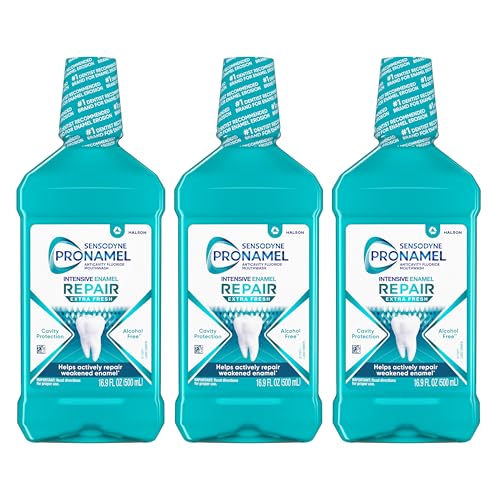
Sensodyne Pronamel Intensive Enamel Repair Mouthwash
An alcohol-free fluoride rinse that Sensodyne says helps repair weakened enamel; ask your surgeon before using any rinse on a healing extraction site
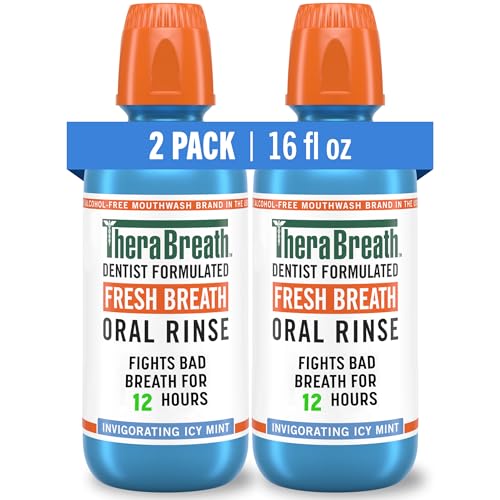
TheraBreath Fresh Breath Mouthwash, Icy Mint (2×16 oz)
Alcohol-free rinse for bad breath; ask your surgeon before using any rinse on a healing extraction site
Affiliate links. Dental Roundup may earn a commission at no extra cost to you.
FAQ
How much does it cost to have all 4 wisdom teeth removed?
For all four teeth, CareCredit puts the range at $1,200–$4,175; Delta Dental’s 2021 out-of-network averages are $720 non-surgical and $3,120 surgical with up to an hour of general anesthesia. Where you land depends on the type of extraction and sedation. Simple extractions with local anesthesia are at the lower end; fully impacted teeth with IV sedation or general anesthesia are at the upper end. Location adds another layer: CareCredit’s state averages run from $2,191 in Maryland to $3,256 in Colorado. Always request an itemized quote that separates extraction fees, sedation, and imaging.
Does dental insurance cover wisdom teeth removal?
A Delta Dental plan typically covers about 50–80% of the total cost, depending on the plan and circumstances (Delta Dental). But annual maximums, $1,000–$2,500 on most plans per NADP data cited by ADA News, cap what the plan pays in a year, and you owe the rest. For example, on Delta Dental’s $3,120 average for surgical removal of all four, 50–80% coverage would be $1,560–$2,496, so a plan with a $1,500 annual maximum stops at $1,500 and leaves you about $1,620. Check whether your plan requires prior authorization, and if you enrolled recently, check for a waiting period: one Reddit commenter who bought a plan six months before needing surgery found a one-year waiting period for oral surgery.
Should I see a dentist or an oral surgeon for wisdom teeth removal?
For fully erupted wisdom teeth, a general dentist can typically perform the extraction at a lower cost. For impacted teeth (especially those embedded in bone or positioned near the nerve), an oral surgeon is usually recommended. Your dentist will refer you to an oral surgeon if the case is beyond their scope. If you are paying out of pocket, know that general dentist fees tend to be lower than oral surgeon fees for comparable procedures.
Can I save money by skipping sedation?
Per the Cleveland Clinic, your surgeon numbs your teeth and gums with anesthesia either way and adds sedative medication only if you choose sedation, so you will not feel pain during the extraction. The question is whether you also need IV sedation or general anesthesia for comfort. Several patients report successful extractions under local anesthesia only, which removes the sedation fee (CareCredit: $273–$675 for sedation, $494–$1,253 for general anesthesia). However, for multiple impacted teeth, sedation is often recommended to keep you still and comfortable during a longer, more complex procedure. Discuss the options honestly with your surgeon—some cases require deeper sedation.
Is it worth delaying wisdom teeth removal?
If your dentist or oral surgeon recommends extraction, delaying typically increases both risk and cost. Impacted wisdom teeth can cause infections requiring emergency care (which costs significantly more than a planned extraction), damage adjacent molars, and develop cysts. The ADA notes that an impacted wisdom tooth can form a cyst that may damage the roots of nearby teeth or the bone that supports them. That said, not every wisdom tooth needs to come out—if your dentist says monitoring is appropriate, that is a valid approach. Regular X-rays can track whether the situation is changing.
What about getting wisdom teeth removed abroad?
Dental tourism can dramatically reduce wisdom teeth extraction costs. Patients in online forums report paying $180–$400 for all four teeth in countries like Mexico and Colombia, compared with CareCredit’s $1,200–$4,175 US range. For dental care in general, Patients Beyond Borders, cited by the Academy of General Dentistry, estimates US patients save 40–65% in Mexico. However, wisdom teeth extraction involves post-operative follow-up, and complications like dry socket or infection require prompt in-person care. If you pursue this route, factor in travel costs and have a plan for local follow-up care if complications arise. For most patients, domestic savings strategies (dental schools, discount plans, cash negotiations) offer a better balance of cost reduction and safety.
This article is for informational purposes only and does not constitute medical or dental advice. Prices cited are estimates based on publicly available provider data and patient-reported costs; they may vary by location and provider. Always consult your dentist or oral surgeon for advice regarding your specific treatment options and costs.