
Whitening gels used in custom trays from a dentist tend to work faster than over-the-counter options: one study the ADA cites found an over-the-counter method took 16 days to reach the result a seven-day at-home tray system achieved. The gel fills every contour of the tray, reaching between teeth and into crevices that flat strips miss entirely. But the category is confusing: carbamide peroxide versus hydrogen peroxide, concentrations from 10% to 44%, and wildly different wear times. We compared the top professional and consumer-grade gels to find the best option for every experience level, sensitivity threshold, and budget. Buying gel separately also lets you pick your own concentration and tray fit instead of accepting whatever’s bundled into a preassembled system; if you’d rather have trays and gel packaged together, see our guide to the best at-home teeth whitening kits. If you’re looking for other whitening approaches, see our guides to whitening strips and whitening pens.
How We Evaluated Whitening Gels
We focused on gels designed for use in dental trays—either custom-fitted trays from a dentist or boil-and-bite universal trays. We excluded whitening pens, strips, and LED-only kits since those are covered in separate guides. Our evaluation prioritized active ingredient concentration and type, sensitivity management (desensitizing agents like potassium nitrate, fluoride, or ACP), value per treatment, and consistency of user results across thousands of reviews.
Opalescence PF 20% Carbamide Peroxide
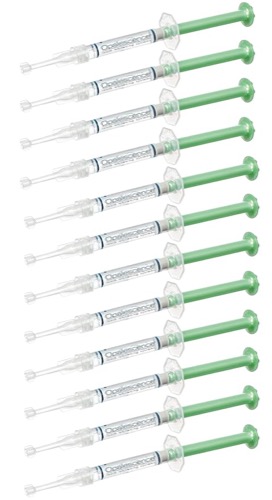
Opalescence PF 20% Carbamide Peroxide (12 Syringes)
Best for: Most people: built-in sensitivity protection from a long-running professional brand
- 20% carbamide peroxide (≈7% hydrogen peroxide equivalent)
- PF formula: potassium nitrate + fluoride to reduce sensitivity
- 2–4 hour daytime wear time — no overnight trays needed
- Compatible with Invisalign trays, aligners, retainers, and custom trays
- Made in the USA by Ultradent — 30+ years of clinical use
- +Trusted by over 20,000 dentists, with more than 30 years of use behind the formula
- +PF formula (potassium nitrate + fluoride) actively reduces whitening sensitivity
- +2–4 hour daytime wear means no sleeping in trays
- −Costs more per treatment than budget alternatives like EZGO
- −No trays included, and some users still report sensitivity in the first few days
(Affiliate link) · Free shipping on eligible Prime items
Why We Recommend It
Ultradent bills Opalescence as the #1-selling professional whitening brand, with more than 30 years of use behind it, and the 20% concentration sits in the lower half of the 10% to 38% carbamide peroxide range the ADA describes for at-home tray systems, with 2 to 4 hours of daily wear per the Amazon listing. The PF (potassium nitrate + fluoride) formula actively manages sensitivity during treatment rather than just whitening and hoping for the best. In a meta-analysis of bleaching trials, potassium nitrate and sodium fluoride lowered the odds of patients reporting sensitivity (pooled odds ratio 0.45), without a consistent effect on how much the teeth lightened.
The 20% carbamide peroxide concentration breaks down into approximately 7% hydrogen peroxide, which is strong enough to produce visible results in days but gentle enough for 2–4 hour wear sessions. This means you can whiten during the evening without sleeping in trays: a significant comfort advantage over overnight gels.
Key Features
- 12 pre-filled syringes in mint flavor
- Sticky, viscous gel that stays in the tray without leaking onto gums
- Results visible in as few as 3–5 days of daily use
- Shelf-stable formula that doesn’t require refrigeration
- Compatible with any dental tray, including clear aligners
Who It’s Best For
The 20% concentration is ideal for most adults who want reliable, professional-grade whitening at home. If you already have custom trays from your dentist, Ultradent’s listing says these syringes work with custom dental trays as well as retainers and aligners. It’s also a strong choice for Invisalign users who can simply load gel into their aligners.
Potential Downsides
At about $7.80 per syringe, Opalescence costs more per treatment than budget alternatives like EZGO. Some users report that the 20% concentration still causes noticeable sensitivity, particularly during the first few days: stepping down to the 10% version may be necessary for sensitive teeth. The 12-syringe pack also doesn’t include trays, so you’ll need to supply your own.
(Affiliate link) · Free shipping on eligible Prime items
Philips Zoom NiteWhite ACP 16%
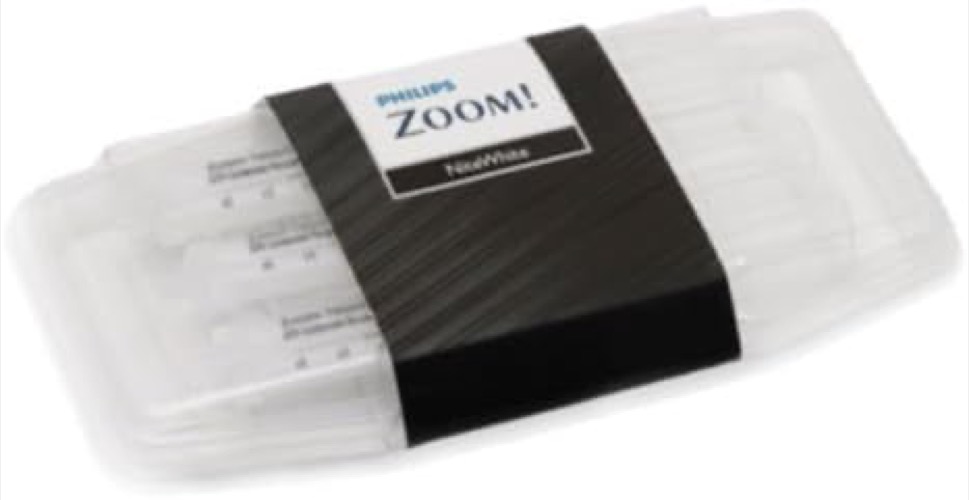
Philips Zoom NiteWhite ACP 16% (3-Pack)
Best for: People with sensitive teeth who want overnight whitening
- 16% carbamide peroxide — moderate strength for overnight wear
- ACP (amorphous calcium phosphate) actively remineralizes enamel during whitening
- Designed for 4–6 hour or overnight wear sessions
- Pre-filled syringes — no messy mixing or measuring
- Made by Philips, the maker of Sonicare, which took over the NiteWhite line when it acquired Discus Dental
- +ACP formula remineralizes enamel while whitening, strengthening teeth rather than masking discomfort
- +16% concentration designed for comfortable overnight wear without sharp sensitivity zingers
- +Pre-filled syringes need no mixing or measuring
- −3-syringe pack means more frequent reordering than larger packs
- −Slower results (7–14 days) and thinner gel that can leak from poorly fitted trays
(Affiliate link) · Free shipping on eligible Prime items
Why We Recommend It
Philips Zoom NiteWhite takes a different approach to sensitivity than Opalescence. While Opalescence uses potassium nitrate to block pain signals, NiteWhite’s ACP (amorphous calcium phosphate) formula actively deposits calcium and phosphate minerals back into enamel during the whitening process. This means you’re strengthening your teeth while whitening them—not just masking discomfort.
The 16% carbamide peroxide concentration is designed specifically for longer wear sessions, making it ideal for people who prefer to whiten overnight. It’s strong enough to produce noticeable results within one to two weeks but gentle enough that the longer contact time doesn’t trigger the sharp sensitivity “zingers” that higher concentrations can cause.
Key Features
- 3 pre-filled syringes per pack
- ACP remineralization technology unique to the Zoom line
- Suitable for 4–6 hour or overnight wear
- Also available in DayWhite (hydrogen peroxide) for shorter sessions
- No LED light required
Who It’s Best For
NiteWhite is the best choice for people who’ve tried whitening before and experienced sensitivity, or those who prefer the convenience of whitening while they sleep. The overnight format means you load your trays before bed and wake up to gradually whiter teeth without carving time out of your day.
Potential Downsides
The 3-syringe pack provides fewer treatments per purchase than the EZGO 10-pack or Opalescence 12-pack, which means more frequent reordering for extended whitening courses. Some users find the 16% concentration produces slower results compared to 20%+ options: expect 7–14 days for noticeable change rather than 3–5 days. The gel viscosity is also slightly thinner than Opalescence, which can lead to minor leaking from poorly fitted trays.
(Affiliate link) · Free shipping on eligible Prime items
EZGO Whitening Gel Refills 22%
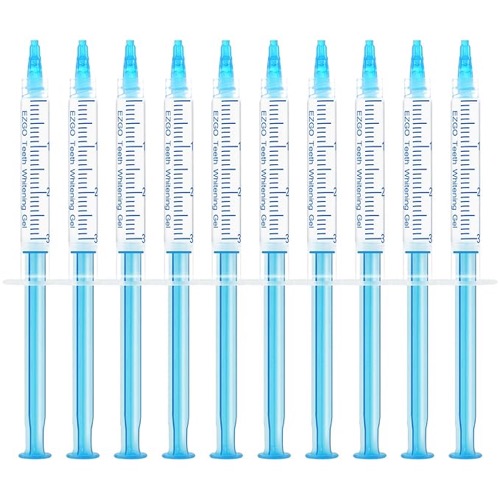
EZGO Whitening Gel Refills 22% (10-Pack)
Best for: Budget-conscious buyers who want a large supply
- 22% carbamide peroxide — effective mid-range concentration
- 10 syringes (3mL each) for about $2.40 per syringe
- Mint flavor with no harsh chemical taste
- Compatible with any whitening tray
- Over 7,000 reviews with consistent positive results
- +Lowest cost per treatment on the list: 10 syringes for under $25
- +22% concentration is a productive mid-range strength for experienced whiteners
- +Over 7,000 reviews report consistent whitening within 5–7 days
- −No built-in desensitizers, so sensitivity-prone users may need a desensitizing toothpaste first
- −Thinner gel can cause more gum contact in loose-fitting trays
(Affiliate link) · Free shipping on eligible Prime items
Why We Recommend It
EZGO delivers the most whitening gel per dollar on this list, with 10 syringes at 22% carbamide peroxide for under $25. The 22% concentration sits in a productive middle ground: stronger than the 10–16% beginner options but not as aggressive as 35%+ professional gels. For people who’ve whitened before and know they can tolerate mid-range concentrations, EZGO offers a way to maintain results without the premium price of Opalescence or NiteWhite.
The sheer volume of reviews (over 7,000) provides a reliable signal. Users consistently report visible whitening within 5–7 days, and the mint flavor is frequently praised as mild rather than chemical-tasting.
Key Features
- 10 pre-filled 3mL syringes
- Under $25 for the full pack
- Maker’s instructions call for 15–30 minute sessions once a day for about 10 days
- Works with custom trays, boil-and-bite trays, and aligners
- Kosher and vegan formula
Who It’s Best For
EZGO is the best pick for maintenance whitening: people who’ve already achieved their desired shade and want an affordable way to touch up every few months. It’s also a sensible lower-cost option for people who have used strips or pens without sensitivity and want to try tray whitening before paying for a professional-brand gel.
Potential Downsides
EZGO does not include desensitizing agents like potassium nitrate, fluoride, or ACP. If you’re prone to sensitivity, you may need to supplement with a desensitizing toothpaste for two weeks before starting treatment. The gel consistency is slightly thinner than Opalescence, which users report can lead to more gum contact in loose-fitting trays. As a lesser-known brand, there’s also less clinical literature backing EZGO specifically, though 22% carbamide peroxide is a well-studied concentration.
(Affiliate link) · Free shipping on eligible Prime items
Opalescence PF 10% Carbamide Peroxide
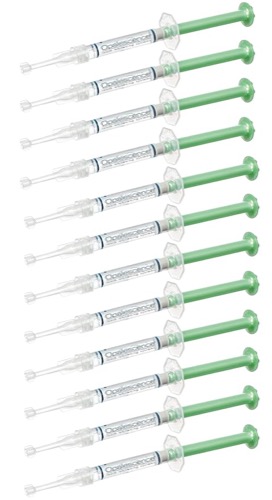
Opalescence PF 10% Carbamide Peroxide (4 Syringes)
Best for: First-time whiteners or people with significant sensitivity
- 10% carbamide peroxide, the low end of the usual at-home range
- PF formula with potassium nitrate + fluoride
- 8–10 hour overnight wear for gradual, low-sensitivity whitening
- Same Ultradent professional formula trusted by dentists worldwide
- Up to 10 shades whiter in 7–10 days
- +10% sits at the bottom of the 10% to 38% range the ADA gives for take-home tray gels
- +Same PF (potassium nitrate + fluoride) protection as the 20% version
- +Lowest strength in the Opalescence PF range, and the ADA notes whitening sensitivity is more common at higher concentrations
- −4-syringe pack is a third the size of the 20% version's 12-pack, and each syringe costs slightly more
- −Slower results (7–10 days) and requires sleeping in overnight trays
(Affiliate link) · Free shipping on eligible Prime items
Why We Recommend It
For people who are new to whitening or have a history of dental sensitivity, starting at 10% carbamide peroxide, the bottom of the 10% to 38% range the ADA describes for take-home gels, is the cautious choice. 10% carbamide peroxide works out to roughly 3.5% hydrogen peroxide, since carbamide peroxide releases about a third of its content as hydrogen peroxide, and the ADA notes that whitening sensitivity is more common at higher concentrations; the trade-off at this strength is time, with results arriving more slowly than at 20%.
The overnight wear format works with the lower concentration’s chemistry. Carbamide peroxide breaks down slowly over hours, so the extended 8–10 hour contact time compensates for the gentler formula. A cautious sequence is to start here and move up to 15% or 20% only if you tolerate the 10% without discomfort.
Key Features
- 4 pre-filled 1.2mL syringes in mint flavor
- Same PF (potassium nitrate + fluoride) protection as the 20%
- Designed for overnight tray wear
- Compatible with all tray types including aligners
Who It’s Best For
First-time whiteners, people with sensitive teeth, gum recession, or thin enamel, and anyone whose dentist has specifically recommended a low-concentration approach. Also a good choice for maintaining results between higher-concentration treatment cycles.
Potential Downsides
The 4-syringe pack is smaller than the 20% version’s 12-syringe pack, so each syringe costs slightly more (about $8.50 against about $7.80). Results take longer: expect 7–10 days of nightly use rather than the 3–5 days typical of 20%+ concentrations. And the overnight tray requirement means sleeping with a mouth guard, which some people find uncomfortable or difficult to adjust to.
(Affiliate link) · Free shipping on eligible Prime items
Cool Teeth Whitening 44% Gel Kit
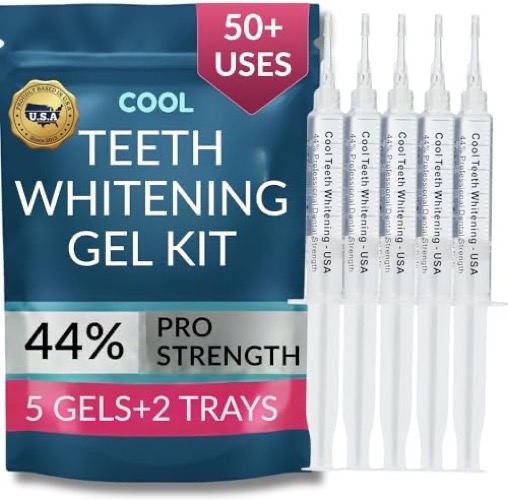
Cool Teeth Whitening 44% Gel Kit (5 Syringes + 2 Trays)
Best for: People who need trays included — a complete whitening system
- 44% carbamide peroxide — the strongest OTC concentration on this list
- 5 syringes (5mL each) providing approximately 50 treatments
- 2 moldable boil-and-bite trays included
- 15–30 minute wear time for fast results
- Formula the maker describes as enamel-safe, though the 44% strength can cause more sensitivity than lower gels
- +Includes two moldable trays, a complete system that skips the $300+ a dentist charges for custom trays
- +44% concentration delivers fast results in 15–30 minute sessions
- +5 syringes provide roughly 50 treatments
- −44% is above the 10% to 38% range the ADA describes for take-home gels and may cause more sensitivity
- −Boil-and-bite trays fit less precisely, allowing gel to contact gums and irritate tissue
(Affiliate link) · Free shipping on eligible Prime items
Why We Recommend It
Most whitening gels on this list are refill-only: they assume you already own trays. Cool Teeth Whitening solves that problem by including two moldable trays in the box, making it a complete whitening system for under $40. That skips the $300+ a dentist charges for custom trays, and the boil-and-bite trays are significantly better than no trays at all.
The 44% carbamide peroxide concentration is the strongest on this list, which means shorter wear times (15–30 minutes) and faster visible results. The five 5mL syringes provide roughly 50 treatments—enough for an initial whitening course plus several months of maintenance touch-ups.
Key Features
- Complete kit: gel syringes + moldable trays
- 50 total treatments from 5 syringes
- High concentration for short 15–30 minute sessions
- No LED light needed
- Made in the USA
Who It’s Best For
Anyone who has whitened before without trouble, doesn’t have custom dental trays, and wants to start without a dentist visit. The included trays and short wear time make this the most convenient all-in-one kit, though first-time whiteners should start with a lower strength such as the Opalescence PF 10%.
Potential Downsides
The 44% concentration sits above the 10% to 38% range the ADA describes for dentist-dispensed take-home gels, and users without whitening experience may encounter more sensitivity than expected. Boil-and-bite trays don’t fit as precisely as custom trays, which can allow high-concentration gel to contact gums: causing irritation or white spots on gum tissue. If you experience sensitivity, switch to every-other-day use and consider pairing with a sensitivity toothpaste. The trays also tend to be bulkier than custom-fitted ones, making them less comfortable for extended wear.
(Affiliate link) · Free shipping on eligible Prime items
Buyer’s Guide: How to Choose a Teeth Whitening Gel
Carbamide Peroxide vs. Hydrogen Peroxide
This is the single most confusing aspect of whitening gels, and getting it wrong leads to either disappointing results or unnecessary sensitivity. Carbamide peroxide (CP) breaks down slowly into hydrogen peroxide (HP) and urea over several hours. The conversion ratio is roughly 3:1: a 10% CP gel delivers about 3.5% HP in active whitening power.
| Concentration | Type | Wear Time | Best For |
|---|---|---|---|
| 10% CP | Carbamide Peroxide | 8–10 hours (overnight) | Beginners, sensitive teeth |
| 15–16% CP | Carbamide Peroxide | 4–6 hours or overnight | Moderate sensitivity |
| 20–22% CP | Carbamide Peroxide | 2–4 hours | Lower half of the ADA’s 10–38% at-home range |
| 35–44% CP | Carbamide Peroxide | 15–30 minutes | Experienced users only |
| 6–10% HP | Hydrogen Peroxide | 30–60 minutes | Daytime quick sessions |
CP gels are preferred for longer wear because they release peroxide gradually, reducing the peak concentration that contacts enamel at any given moment. HP gels act faster but cause more sensitivity; they’re designed for short daytime sessions.
Managing Sensitivity
Tooth sensitivity and oral irritation are the most common side effects of whitening, according to the ADA, though usually mild and temporary. These strategies are widely used to limit it; the ADA notes that more research is needed to confirm how well desensitizing pretreatments work:
- Use a desensitizing toothpaste containing potassium nitrate for 2 weeks before starting treatment
- Choose a gel with built-in desensitizers (Opalescence PF, NiteWhite ACP)
- Start with a lower concentration and increase only if tolerated
- Whiten every other day instead of daily if sensitivity occurs
- Apply desensitizing gel in your trays for 15–30 minutes after whitening sessions
Custom Trays vs. Universal Trays
Custom trays from a dentist ($300–500) provide the best gel distribution and the least gum contact. But if that’s not in your budget, boil-and-bite trays are a reasonable alternative: just be more careful about overfilling them, as gel that overflows onto gums causes irritation. A thin line of gel along the front surface of each tooth space is usually sufficient; overfilling is the most common application mistake.
How Long Do Results Last?
Initial whitening typically takes 7–14 days of consistent use. Results can last 6–12 months depending on diet and habits. Coffee, tea, red wine, and smoking accelerate restaining. Most people do a maintenance session (1–2 nights of whitening) every 2–3 months to sustain their shade. For daily maintenance between whitening cycles, a whitening toothpaste or whitening mouthwash can help slow stain buildup.
Frequently Asked Questions
Is whitening gel better than whitening strips?
Gel in trays provides more uniform coverage than strips, especially between teeth and along the gumline. Strips are flat and can’t conform to tooth contours, often leaving gaps. However, strips are more convenient for travel and require no tray fitting. Gel in custom-made trays is also the take-home format dentists dispense, which the ADA describes as trays made to fit comfortably and limit gel contact with the gums. If that convenience trade-off matters more to you, our whitening strips guide rounds up the strip options worth choosing from.
Can I use whitening gel with Invisalign trays?
Yes, both Opalescence and NiteWhite are compatible with clear aligners. Load a small amount of gel into the front surface of each tooth space in your aligner. This is actually one of the most convenient ways to whiten, since you’re already wearing the trays. Check with your orthodontist first, as some recommend waiting until treatment is complete.
How often can I safely whiten my teeth?
For an initial whitening course, daily use for 7–14 days is standard. After reaching your desired shade, maintenance sessions of 1–2 treatments every 2–3 months are considered safe. Overuse (daily whitening for months on end) can lead to chronic sensitivity and enamel weakening. If your teeth feel sensitive, take a break: the sensitivity typically resolves within 1–3 days.
What’s the strongest whitening gel I can use at home?
According to the ADA, dentist-dispensed take-home gels typically run from 10% to 38% carbamide peroxide, and sensitivity is more common at higher strengths. We’d use the top of that range only under a dentist’s supervision. The 44% CP gel on this list sits above that range: if you choose it, follow the short wear time instructions carefully and stop if you experience significant pain.
Do I need to refrigerate whitening gel?
Most modern whitening gels, including Opalescence and NiteWhite, are shelf-stable and don’t require refrigeration. However, storing them in a cool, dark place can extend shelf life. Avoid leaving gel syringes in a hot car or direct sunlight, as heat can degrade the active ingredients and reduce effectiveness.
Why do my teeth look uneven after whitening?
Uneven whitening usually results from poor tray fit (gel pools in some areas and misses others), existing dental work (crowns, veneers, and fillings don’t whiten), or natural variations in enamel thickness. Custom trays significantly reduce the uneven coverage problem. If certain teeth remain darker, they may have thicker enamel or deeper intrinsic staining that requires longer treatment or professional intervention.