


This page sorts six sprays and gels by the stretch of time each one is for: the next sentence, the first half of the night, the 3 a.m. wake-up. Two of the six sit outside the picks above: Allday’s thicker night gel, and Salivea’s enzyme spray for readers whose first bottle let them down. We have not tried any of them ourselves. We read the trials, the labels and 65 Reddit threads where people with dry mouth compare notes. If you would rather suck on something than spray, our dry mouth lozenges page covers lozenges and the adhering discs people wear overnight, and rinses are on the dry mouth mouthwash page.
The stopwatch: 27 minutes, and water got 26
Only one trial we found has put a clock on a dry mouth spray. In 2021, researchers gave 25 adults with low saliva flow a single dose of Biotene’s moisturizing spray and, in turn, a spray of plain water, with neither the participants nor the researchers knowing which was which. Biotene lasted 27 minutes on average, give or take 25. Water lasted 26, and the difference was not statistically significant.
The “give or take 25” matters as much as the 27. A spread that wide means the time varied a great deal from one person to the next, which is why reviews of the same bottle can read like reviews of different products.
| What the maker says | What a trial timed | |
|---|---|---|
| Biotene Moisturizing Mouth Spray | Up to 4 hours, footnoted to a 28-day clinical study | 27 minutes on average, one dose |
| Plain water, sprayed | 26 minutes on average | |
| Biotene OralBalance Gel | Up to 4 hours, same footnote | Not timed |
| Allday Dry Mouth Spray | “Relief duration varies by individual.” | Not timed |
| Spry and Salivea sprays | No hours claim | Not timed |
Commenters’ own clocks run from “lasts like 1 min” for Biotene and “about a minute or two” for Allday’s spray, to “a couple of hours” for Spry, to one gel user whose tube “gets me to about 1am”. Each of those is one person’s report, and for most of these products one person’s report is the only timing anyone has written down. Most of these voices have Sjogren’s or have been through head and neck radiotherapy (48 of the 65 threads come from those two communities), so they describe the hard end of dry mouth.
Two other findings sit beside the stopwatch, and they are the reason this page exists.
Given two weeks, sprays beat water alone. In a 2025 trial of 91 people at least six months past head and neck radiotherapy, Biotene’s spray and a competitor’s, HydraSmile, both improved dry-mouth scores against weeks on water alone, with no difference between the two sprays. HydraSmile’s maker supplied both products and paid the participants. A 2016 trial of 396 people points the same way over four weeks for a gel, a rinse and a spray its summary does not name, and it does not say who paid for the trial either: nearly every comparison favored them over water, including relief of discomfort two hours after a dose.
Which spray a person preferred predicted who got the most relief. That same trial reports that “individual product preference was predictive of greatest treatment benefit”. A Thai trial of three sprays in 29 people found symptom scores improved with all three, including the placebo spray, and that Biotene was “the most preferred”. The authors of a 2018 trial of two rinse-and-gel sets put it plainly: “symptomatic relief is temporary. Product selection will be based on personal preference.”
Pooling 36 trials and 1,597 people in 2011, Cochrane reviewers concluded: “There is no strong evidence from this review that any topical therapy is effective for relieving the symptom of dry mouth.” A 2025 review of 48 systematic reviews describes saliva substitutes and stimulants as acting mostly as moisturizers, “with short-term effect”. The American Dental Association’s page on dry mouth says saliva substitutes “do not cure dry mouth” but “can provide temporary relief of symptoms.”
Read together, the verdict on this shelf is short, and personal: these products help for a while, and which one helps you is something only your own mouth can settle. So the rest of this page is sorted two ways: by how long you need covered, and by the things that make people give up on a bottle they otherwise like, such as mint, sweetness, texture or a nozzle that clogs.
Daytime: a top-up for the next sentence
A spray is for the moment your tongue sticks mid-sentence: a meeting, a phone call, a classroom. You are buying something small enough to carry and quick enough to use without leaving the room, and you should expect to reach for it again before long. For a single top-up, the timed trial found plain water from a spray bottle lasted about as long, so a small bottle of water is a fair, free comparison to run first. What the sprays have that water does not is the two-week result above.
Biotene Moisturizing Mouth Spray: the discreet one, and it streams
Biotene Moisturizing Mouth Spray, 1.5 fl oz (Pack of 3)
Best for: A discreet top-up mid-conversation, from the only one of our four sprays with published trials
- Three 1.5 fl oz pocket bottles, about $9.20 each
- Gentle mint; water, glycerin and xylitol base
- Label: spray onto the tongue and spread; use as required; ages 12 and up
- Sold by a third-party seller, shipped by Amazon; a 2-pack and a 4-pack share the listing
(Affiliate link) · Free shipping on eligible Prime items
Try it if you need a top-up you can use without stopping the conversation. Pass if the purchase only makes sense to you with hours of relief, or if mint burns your mouth.
This is the spray the threads we read keep coming back to: 36 commenters named it, fans and critics both, across 28 of the 65 threads, more than any other spray. Those who like it keep a bottle in a bag or by the bed. A commenter with Sjogren’s wrote on r/Sjogrens: “as a therapist who has to speak for a full session with clients - Biotene spray has been an absolute God-send. A discreet spray and I can continue the appointment.” Another, two years clear of head and neck cancer, wrote that they “still keep a small spray bottle of Biotene dry mouth spray next to my pillow!”
It is also the only one of the four sprays with trials behind it, and they cut both ways. It is the spray the stopwatch trial timed at 27 minutes. It is also one of the two sprays that beat water-only weeks over a fortnight, and the one the Thai trial’s participants preferred. Commenters land on both sides too: “I think the relief provided by it didn’t last much”, one wrote, and another said of Biotene, “lasts like 1 min”. The maker’s “up to 4 hours” appears on Biotene’s site with a footnote to a 28-day clinical study, not in the spray’s own Amazon listing.
Three things to know before you buy. Amazon’s summary of its reviews says some buyers find “it comes out as a stream rather than a fine mist”, so expect to spread it with your tongue, which is what the label tells you to do anyway. A few commenters report that Biotene hurts: one could not use the spray or the rinse because “it causes like white patches on my tongue that feel like burns”, and the label’s own instruction is to stop if irritation occurs. And in a 2016 lab study this spray measured pH 6.1, mildly acidic; the section on the years ahead explains why that is worth a thought. The ingredient list also includes parabens, saccharin and cetylpyridinium chloride, an antibacterial.
(Affiliate link) · Free shipping on eligible Prime items
Allday Dry Mouth Spray: a different formula, with a fussy nozzle
Allday Dry Mouth Spray, 1.5 fl oz (Pack of 2)
Best for: People whose Biotene spray did little and who want a different formula, if they can live with a nozzle that clogs
- Two 1.5 fl oz bottles, about $9.25 each
- Xylitol is the first ingredient; mild mint
- Label: spray on the tongue, rub the tongue over teeth and gums for at least 5 seconds
- Sold by its maker, Elevate Oral Care; label warns to keep it away from dogs
(Affiliate link) · Free shipping on eligible Prime items
Try it if Biotene’s spray did little for you, or your dentist pointed you to this one. Pass if you are paying for the idea that more xylitol means more relief: nothing published tests that.
Allday comes from Elevate Oral Care, which also sells it to dental offices. In the threads we read, 21 commenters named Allday’s spray or gel across 22 threads, and two of them say a dentist pointed them to it. Flaired dental professionals name it as well, though they name Biotene’s products more often. A commenter flaired as a dental hygienist wrote on r/DentalHygiene: “Many of my patients use All Day Mouth Spray (has xylitol) and it works well for them. Two sprays on the tongue and wipe it all over your mouth wherever your tongue can reach.” A commenter flaired as a general dentist answered a question on r/askdentists with: “So check out All Day spray. My patients like it”. One commenter more than a year past radiotherapy keeps a bottle in a pocket: “A little goes a long way, and been able to ditch the water bottle.” Another wrote: “I’ve had the best success with Allday Dry Mouth spray and, compared to others, it is much better.”
The most useful review of it is also the most modest: “It’s like a gel spray and it’s fresh tasting. Only lasts about a minute or two, but it’s better than just water and when I need it I need it.” Elevate makes no hours claim at all. Its listing says “Relief duration varies by individual.”
What Elevate does claim is its own to back up: “44% xylitol”, a neutral pH of about 7, and that the spray “holds 24% more moisture than Biotene® Spray after 2 hours in laboratory tests”, footnoted “Data on file.” We found no published trial of Allday. The practical catch is the pump. Elevate’s own FAQ says that because of the high concentration of xylitol “some crystallization may occur and occasionally clog the nozzle”, and the listing’s fix is to rinse the nozzle under warm water and prime it again. Reviewers add that it can come out as a stream. It contains parabens and sucralose.
(Affiliate link) · Free shipping on eligible Prime items
Spry Xylitol Dry Mouth Spray: thin, light mint, least per ounce
Spry Xylitol Dry Mouth Spray, 4.5 fl oz
Best for: All-day re-sprayers who mind the cost: a water-first spearmint spray at the lowest price per ounce here
- 4.5 fl oz: a 3.5 oz bottle plus a 1 oz travel bottle, per the maker
- $3.51 per fluid ounce
- Water, xylitol, glycerin and aloe vera; spearmint; no parabens listed
- Label: hold briefly in the mouth, then swallow; use as often as needed
(Affiliate link) · Free shipping on eligible Prime items
Try it if you spray so often that the cost per bottle has started to matter, or the thicker sprays feel wrong in your mouth. Pass if lasting power is what you are short of: reviewers and three commenters say it fades fast. It is also mint, and states no pH.
If every spray is short-lived, the price of each refill matters, and Spry is the cheap one: $3.51 per fluid ounce against roughly $6 to $8 for the other three sprays here. The maker says the 4.5 ounces arrive as a 3.5 oz bottle and a 1 oz travel bottle. Texture is the other reason one r/Sjogrens commenter picks it: “I think it was cheaper than the Allday, and I love that it’s very thin and the mint flavor is very light”, they wrote, adding elsewhere, “I honestly can’t stand the thicker ones like Biotene or any really glycerin-heavy stuff.” A commenter three years past cancer treatment uses it in the small hours: “I use the Spry spray when I wake up during the night which is a lot, spray roll over and get back to sleep.”
It has the thinnest support of the six, and the support is split. Six commenters named the spray across nine of the threads we read. Three like it; one of those says a dose before lights-out lasts “about 2 to 4 hours”. The other three do not: “it only works for a couple of hours”, “the effects of the Spry spray do not last long enough to be useful, especially while sleeping”, and one who lists it among things that “did nothing/almost nothing for me”. We found no published trial, and the maker states no pH and no length of relief. Amazon’s summary of its reviews says buyers like the taste and how easily it travels, and report that “it doesn’t last long”. Amazon files it under breath fresheners, not dry mouth relief, and the same product has a second, older listing that holds 4.3 stars from 1,514 ratings; the 504 ratings on this card belong to this listing alone.
(Affiliate link) · Free shipping on eligible Prime items
Bedtime: gels for the first half of the night
Dry mouth is often worse at night. The ADA says symptoms “may also worsen at night because salivary output reaches its lowest circadian levels during sleep, and the problem can be exacerbated by mouth breathing.” Commenters often reach for a gel at bedtime, and a flaired dental hygienist names one for its staying power. How far into the night a gel carries you varies.
Biotene OralBalance Gel: the one to try first
Biotene OralBalance Moisturizing Gel, 1.5 oz
Best for: Bedtime and the first half of the night, and anyone who cannot take mint
- One 1.5 oz tube, sold by Amazon
- Flavor-free; glycerin, water, sorbitol and xylitol base
- Label: about a half inch on the tongue, as often as needed, especially at night
- Use within 60 days of opening, per the maker's label
(Affiliate link) · Free shipping on eligible Prime items
Try it if your worst hours are at night, mint burns, or you want the cheapest way to find out whether a gel suits you. Pass if sweetness is what put you off your last product.
This is our first pick for one plain reason: it costs the least to be wrong about. It is around $7, Amazon sells it directly, it is the only one of the six with no mint in it, and both its label and the commenters point it at bedtime. The directions say to use it “as often as needed for relief, especially at night”. Twenty commenters named it across 18 of the threads we read, mostly for the night, and the tube tends to live on the nightstand: “Works well for nighttime too & as it’s a tube I keep it by the bed & just squeeze some in my mouth if it’s dry during the night.” One commenter wears a dental guard at night and puts the gel in it, and another used to do the same with a mouth guard. A commenter flaired as a dental hygienist wrote on r/DentalHygiene: “As far as over the counter treatments go, Biotene gel has the best staying power, especially before bed.”
How far that staying power runs is the open question. For one commenter: “I woke up with my mouth moist which hasn’t happened for a while now.” For another: “Biotene gel gets me to about 1am, then I wake up, mouthwash, more gel”. A third uses this gel, Biotene’s spray and XyliMelts together and still wakes “every four hours”. The maker claims up to 4 hours, and its listing adds that a 28-day clinical study showed 44.8% fewer sleep interruptions from dry mouth than water; the listing does not name the study, and no trial we found has timed the gel.
It has more behind it than the other gel here. The Mayo Clinic names it as an example of a saliva substitute to try. In a 2018 trial of 40 people whose medicines dried their mouths, a Biotene OralBalance rinse and gel used together eased dryness scores over four weeks, as did the rival set it was tested against, with little between them. And in the 2016 lab study of seven moisturizers, this gel measured pH 6.6 and took no dentin off in 15 days of soaking, the same result as tap water.
The complaints are about taste. Flavor-free does not mean unsweetened, and some Amazon reviewers find it “way too sweet”; one commenter’s verdict was “it tastes gross but it does help”. Use the tube within 60 days of opening.
(Affiliate link) · Free shipping on eligible Prime items
Allday Dry Mouth Gel: thicker, and the label says don’t swallow

Allday Dry Mouth Gel, 1.5 oz (2 Tubes)
Best for: People who want a thicker gel at night, or one to wear in trays, which is the maker's suggestion
- Two 1.5 oz tubes in one box, about $8 each
- The Allday xylitol-first formula thickened with cellulose gum; mild mint
- Label: a small amount directly in the mouth, as often as needed
- Sold by its maker, Elevate Oral Care
(Affiliate link) · Free shipping on eligible Prime items
Try it if you want a thicker gel than Biotene’s, or something that will sit in a tray. Pass if a gooey texture puts you off, or you plan to fall asleep with a mouthful: its safety line reads “Do not swallow.”
Elevate describes this as a thicker “gel formulation great for nighttime use and more severe dry mouth”, and its own site adds that it can be used in trays. It is the same xylitol-first formula as the spray, thickened, with the same stated neutral pH and the same mild mint. In the threads we read it gets fewer mentions than the spray. One commenter on r/HeadandNeckCancer calls it “a great gel you use right before bed. Much better than xylamelts”; another, replying to a post in praise of thick, goopy products, offered it as theirs: “Allday Dry Mouth Gel. It’s really goopy.” No commenter in those threads complained about this gel. The complaints come from Amazon.
Amazon’s summary of its reviews says buyers find it effective and that it “works well at night”, and that they are mixed on the rest: some find it too sweet, some “describe it as gooey”, and reports of how long it lasts run from “up to 4 hours” to not long enough. Elevate itself states no hours. The line that needs a second look is on the listing’s safety panel: “Do not swallow. Avoid contact with eyes. If swallowed, seek medical attention immediately.” Elevate’s own FAQ, meanwhile, calls the gel “ideal before bedtime, during sleep”. Those two statements are the maker’s to reconcile. Use the small amount the directions call for, and if you are unsure how that squares with overnight use, ask your dentist.
(Affiliate link) · Free shipping on eligible Prime items
3 a.m.: the kit by the bed
For some commenters, one gel at bedtime was enough to reach morning. What people with severe dry mouth tend to describe is a kit: a gel or an adhering disc at bedtime, and something within reach for when they wake. One poster had already tried the obvious: “I already use Biotene gel, Biotene spray, and Xylimelts. But I keep waking up every four hours and it’s driving me insane.”
So the 3 a.m. question is smaller than “what lasts all night”. It is what you can find by feel, in the dark, and use without waking up properly. Commenters keep a spray bottle “next to my pillow” or a gel tube by the bed for exactly that, and a flaired dental hygienist describes patients doing much the same at bedtime: “The Biotene spray under the tongue right before bed has been a gamechanger for lots of my patients. They can keep it right on their nightstand so it’s easy and convenient.” If you want the disc that sticks to your gum and dissolves overnight, XyliMelts are on our dry mouth lozenges page.
Three label lines are worth checking before a bottle goes on the nightstand:
- Swallowing. Spry’s directions say to hold it briefly in the mouth “before swallowing”, and Salivea’s listing says “Safe to swallow”. Allday’s gel says “Do not swallow.” The labels of both Biotene products and of Allday’s spray do not say either way.
- The nozzle. Allday’s spray can clog as its xylitol crystallizes. Better to find that out at noon than at 3 a.m.
- The dog. All six products here contain xylitol, and the FDA warns that xylitol is dangerous to dogs. Allday’s spray and Salivea carry a pet warning on the label; the others do not, and the risk is the same. If a dog sleeps in your room, the nightstand is the wrong shelf.
Two things that cost nothing or little sit alongside the kit. The Mayo Clinic’s advice for nights is to “Add moisture to the air at night” with a room humidifier, and to seek treatment for snoring if it makes you breathe through your mouth. And the ADA notes that dry mouth from some medicines may ease if they can be taken during the day and not at night, which is a question for whoever prescribes them, not a change to make on your own.
When the first bottle let you down
Many people arrive here after a disappointment, and the trials have something useful to say to them: preference predicted relief. So a second purchase is worth making, and it is worth changing the one thing that put you off the first.
- Mint. After radiotherapy, one commenter wrote, “I cannot handle mint without burning”; another said “there’s no way that I can tolerate mint in the slightest”. The Biotene gel above is flavor-free, the only one of the six that is.
- Sweetness. Some Amazon reviewers call both gels too sweet. All six products are sweetened, with xylitol at the least, so if sweetness is what put you off, switching among them may not fix it.
- Texture. Allday’s spray is “like a gel spray”; Spry is “very thin”. If one felt wrong, try the other kind before giving up on sprays.
- Burning. If any of these stings or leaves sore patches, stop using it. Biotene’s spray label says the same: if irritation occurs, discontinue use.
- Xylitol. All six contain it. A commenter who describes having no saliva wrote that xylitol “leaves something like burn marks in my mouth”. If xylitol is the problem, none of these is the answer, and that is worth raising with your dentist.
And if the thing that let you down was Biotene itself, there is a formula story behind it.
SALIVEA Dry Mouth Spray: the enzyme formula, and a split on taste
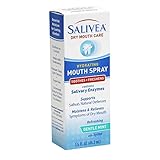
SALIVEA Dry Mouth Spray, 1.5 fl oz
Best for: People who miss the enzyme-era Biotene and will take a chance on the taste
- One 1.5 fl oz bottle; the maker counts 250 pumps
- Salivary enzymes: lysozyme, lactoferrin, lactoperoxidase
- Labeled safe to swallow; made without parabens; contains whey protein (milk)
- Sold by its maker, Laclede; label warns to keep it away from pets
(Affiliate link) · Free shipping on eligible Prime items
Try it if you used Biotene years ago, feel it changed, and want to try the enzymes it used to contain. Pass if you avoid milk ingredients, or a bad taste would make the bottle useless to you.
Biotene began as an enzyme formula made by a company called Laclede. GSK bought the brand, and a 2019 federal court opinion records that GSK then reformulated Biotene and “removed certain enzymes” from its products. Laclede launched Salivea around March 2018 with the enzymes in it. The opinion does not say which products changed or when, so the long-time users who say Biotene stopped working for them may be describing a real change of formula. What nobody has shown is that the enzymes are the reason: we found no published trial of Salivea, and a 20-person pilot of an enzyme rinse and gel found some gains while noting that “a placebo effect cannot be entirely discarded.”
What Salivea does have is a regulator’s file. The FDA cleared the spray in 2018 as an over-the-counter artificial saliva. Clearance means the agency accepted it as substantially equivalent to a product already on the market, which in this case was Biotene’s own spray. It is not a finding that it works better.
Its buyers are the most divided of the six. It holds 4.0 stars, with 11% of ratings at one star, and Amazon’s summary of its reviews says some find it “works better than Biotene” while several describe the taste as “tasting like mold”. In the threads we read, a commenter on r/Dentistry wrote, “It’s what our local oral path recommends. Patients who have used it have loved it”, and one r/Sjogrens commenter calls the spray their favorite. Ten commenters named Salivea products in all, and one of them wrote nearly half of those comments, so the support is thinner than the count suggests.
Two label facts to weigh. The maker’s ingredient list includes whey protein, which is a milk protein, along with sunflower and coconut oil. It also lists citric acid, and the maker states no pH; the next section explains why that matters for teeth. At about $12 for one small bottle it is the most expensive of the four sprays per ounce.
(Affiliate link) · Free shipping on eligible Prime items
The years: what no spray or gel covers
The clock runs past these products. A mouth with little saliva is at higher risk of decay, and none of the six has been shown to prevent that.
Acidity is the first thing to check. Saliva, the ADA notes, “serves as a buffer” against acids, so a product you put in a dry mouth many times a day should not be acidic itself. A 2016 lab study measured the pH of seven mouth moisturizers and soaked human dentin, the layer under the enamel, in each for 15 days:
| Product | Measured pH | Dentin lost in 15 days |
|---|---|---|
| Mouth Kote spray | 3.0 | 9.6% |
| Biotene Moisturizing Mouth Spray | 6.1 | 4.6% |
| Oasis spray | 6.3 | 3.2% |
| Biotene OralBalance Gel | 6.6 | 0% |
| Tap water | 6.99 | 0% |
That is dentin sitting in the liquid for 15 days in a lab, not a mouth using a few sprays a day, so read it as a ranking and not as a forecast. Still, the ranking is useful. The authors of a second lab study recommend that people with dry mouth who are at high risk of erosion choose thicker saliva substitutes and “avoid saliva substitutes with low pH or containing citric acid”. Of the six products here, Allday’s maker states a neutral pH for both its spray and gel, the two Biotene products were measured as shown, and Spry and Salivea publish no pH. Salivea lists citric acid among its ingredients.
Xylitol in a spray is not a cavity treatment. Cochrane’s 2015 review found the evidence that xylitol products other than fluoride toothpaste prevent decay “insufficient”, and we found no trial that tests xylitol delivered by a spray or gel. What the ADA does advise for people with dry mouth is fluoride: it describes daily use of a prescription-strength fluoride gel to help prevent decay. Our dry mouth toothpaste page covers the over-the-counter end of that, and your dentist the rest.
There is a prescription shelf. Pilocarpine and cevimeline are medicines that make the glands produce more saliva. The Mayo Clinic notes that pilocarpine may be prescribed when a very dry mouth comes from Sjogren’s or from head and neck radiotherapy, and cevimeline for Sjogren’s. Commenters with Sjogren’s often say that is what changed things: “The only thing I’ve found to actually work is the prescription drug Evoxac”, one wrote of the brand-name form of cevimeline.
And the cause is worth finding. The National Institute of Dental and Craniofacial Research puts it in two sentences: “Dry mouth is not a normal part of aging. If you think you have dry mouth, see your dentist or doctor to find out why your mouth is dry.”
Left off this page, and why
- Lubricity is a flavorless spray built on hyaluronic acid, around $19 for 2 oz. A few commenters swear by it, and one calls it the “best mouth moisturizer I’ve found so far”. It holds 3.9 stars from 959 Amazon ratings, just under the 4.0 we ask for, so it has no card here. If mint is your problem and you want a spray, it is the one to look at next, though Amazon’s summary of its reviews says some find it too sweet.
- Mouth Kote is one of two sprays the Mayo Clinic names, and it was the most acidic moisturizer in the 2016 lab study, at pH 3.0. Its ingredient list includes citric acid and ascorbic acid. The Amazon listings we read had 13 and 20 ratings.
- Oasis is the other spray Mayo names, and one commenter’s husband “prefers it over the Biotine spray, says it coats better and lasts longer”. The Amazon listing we found for it is a six-pack at around $50, which is a lot to spend on a first try.
- CariFree’s spray states a pH of 9, well on the alkaline side of neutral. Amazon listed it as currently unavailable when we looked.
- Aquoral is a prescription oil-based spray, sold by mail pharmacy at $65 a month. Trials of this type of spray are mixed: Cochrane’s 2011 review found it more effective than an electrolyte spray, and in a 2019 trial in palliative care its European version still held most of its effect at two hours, though patients preferred a plain glycerol solution; a 2025 review of trials in older adults found no difference from other over-the-counter products. One commenter says it “lasts longer than biotene etc. That said it doesn’t last nearly as long as they claim.” A 2025 lab study found oil-based substitutes, including the European version of the same formula, encouraged the growth of the yeast behind oral thrush, and its authors favor water-based products for people with a history of thrush.
How we researched this page
We read the Cochrane review of topical treatments for dry mouth, later reviews, and every trial we could find on the products here; the guidance pages of the American Dental Association, the National Institute of Dental and Craniofacial Research and the Mayo Clinic; the makers’ labels and product pages; a federal court opinion on Biotene’s history; and the FDA’s clearance letter for Salivea. We read 65 Reddit threads in full, 1,744 comments: 36 threads from r/Sjogrens, 12 from r/HeadandNeckCancer, 7 from r/DentalHygiene, 4 from r/CPAP, 3 from r/Dentistry, 2 from r/askdentists and one from r/Invisalign. Counts on this page are of distinct commenters who named a product, not of verified buyers, and a commenter is called a dental professional only where the subreddit’s flair says so.
A product got a card if it is a spray or gel that stays in the mouth, is sold on Amazon US, holds at least 4.0 stars from at least 100 ratings that belong to that product, and has some support outside Amazon: a published trial, a regulator’s clearance, or commenters in the threads we read. Star ratings are Amazon’s. We could not read each listing’s newest written reviews this time, so the review points here come from each listing’s star spread, Amazon’s own summary of its reviews and the excerpts it shows. The ADA’s Seal of Acceptance has a category for temporary relief of dry mouth, but its product list showed no dry mouth product when we looked in November 2026.
Frequently Asked Questions
How long does a dry mouth spray last?
Not long. The only trial we found that timed one measured a single dose of Biotene’s spray at 27 minutes on average, with a wide spread from person to person, and a spray of water at 26. Commenters report anything from a minute to a few hours. Makers’ claims of up to 4 hours are their own figures.
Is a dry mouth spray any better than water?
For one dose, the timed trial found no difference. Over two weeks of regular use, a trial in 91 people after radiotherapy found two sprays both improved dry-mouth scores compared with weeks on water alone. Which spray a person preferred predicted who benefited most, so it is worth trying a second product if the first disappoints.
Is a spray or a gel better for sleeping?
Commenters and a flaired dental hygienist on Reddit favor a gel at bedtime for its staying power, with a spray by the bed for when they wake. No trial we found compares the two overnight. People with severe dry mouth usually combine products, and many add the adhering discs covered on our lozenges page.
What helps dry mouth with a CPAP?
In the r/CPAP threads we read, the top-voted answer is about the air, not the mouth: a mouth that falls open in sleep lets the pressure leak out and dries. Commenters there suggest a chin strap, a humidifier and checking the mask for leaks, which are questions for your sleep clinic. For the dryness itself they use the same kit as everyone else on this page: an adhering disc at bedtime, and a spray in the nightstand, as one put it, “if I wake up in the middle of the night with dry mouth”.
Is there a dry mouth spray without mint?
Not among the sprays on this page: Biotene, Allday, Spry and Salivea are all mint flavored. The flavor-free one among the six is Biotene OralBalance Gel. Lubricity is a flavorless spray that fell just short of our rating bar at 3.9 stars.
Did Biotene change its formula?
Yes. A 2019 federal court opinion records that GSK reformulated Biotene after buying the brand and removed certain enzymes from its products, without saying which products or when. The company that developed Biotene now sells Salivea, which contains salivary enzymes. No published trial shows the enzyme formula works better.
Can I swallow dry mouth spray or gel?
It depends on the product. Spry’s directions tell you to swallow it and Salivea’s listing says it is safe to swallow. Allday’s gel says do not swallow. The labels of Biotene’s spray and gel and of Allday’s spray do not say either way, so follow the directions on the pack you buy.
Can a dry mouth spray damage teeth?
An acidic one might. In a 2016 lab study, Mouth Kote measured pH 3.0 and dissolved the most dentin of seven moisturizers, while Biotene’s gel measured 6.6 and dissolved none. That was 15 days of soaking in a lab, not normal use, but researchers advise people with dry mouth at high risk of erosion to avoid low-pH products and those containing citric acid.
Are these sprays and gels safe around dogs?
Keep them out of reach. All six products on this page contain xylitol, and the FDA warns that xylitol is dangerous to dogs. If you think your dog has eaten some, the FDA’s advice is to call your vet, an emergency clinic or an animal poison control center right away.
What if nothing over the counter works?
Commenters with Sjogren’s, or a dry mouth after head and neck radiotherapy, say so often, and it is the point to see a dentist or doctor. Prescription medicines that stimulate saliva exist, and the ADA describes prescription-strength fluoride to protect teeth in a dry mouth. The National Institute of Dental and Craniofacial Research is direct about it: dry mouth is not a normal part of aging.