
Gum disease affects nearly half of adults over 30 in the United States, according to the CDC, and finding the right mouthwash can make a meaningful difference as part of your daily oral care routine. Whether you’re dealing with early-stage gingivitis — the reversible inflammation phase — or trying to stay ahead of more advanced periodontitis, according to Cleveland Clinic, the right rinse may help with reducing harmful bacteria, soothing inflamed tissue, and keeping plaque in check between brushing and flossing sessions.
The key word, though, is part of your routine. According to the ADA, mouthwash is a supplemental tool, not a replacement for brushing twice daily and flossing. Pairing your rinse with the best toothpaste for gum disease and a quality toothbrush gives you the most complete daily defence. With that in mind, we’ve rounded up the best mouthwashes specifically formulated to support gum health, so you can have an informed conversation with your dentist and make the best choice for your mouth.
How We Evaluated
We assessed each mouthwash across several criteria that matter most when gum health is the priority:
- Active ingredients: We looked for clinically recognized antibacterial or anti-inflammatory agents recognized by the American Dental Association for gum health, including essential oils, cetylpyridinium chloride (CPC), chlorhexidine gluconate, hydrogen peroxide, and chlorine dioxide.
- ADA Seal of Acceptance: Products carrying the ADA Seal have demonstrated safety and efficacy through independent review. The Seal is a reliable marker that a product does what it claims.
- Alcohol content: Alcohol-based rinses can be effective but may cause dryness or irritation, particularly for people with sensitive gums or dry mouth. We flagged alcohol-free options throughout.
- Ease of use and taste: A mouthwash only works if you actually use it consistently, so palatability matters.
- Price and availability: We favored options that are accessible at most pharmacies or online without requiring a specialist visit (with one important prescription exception).
- Real-world user feedback and dentist mentions: We cross-referenced dentist-recommended lists from multiple sources to validate our selections.
Listerine Clinical Solutions Gum Health Mouthwash
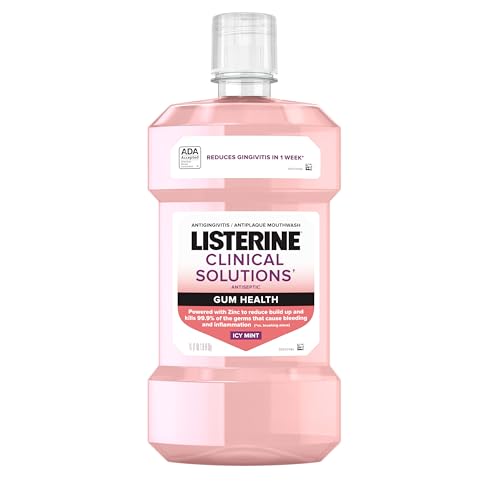
Listerine Clinical Solutions Gum Health Mouthwash
Best for: Early to moderate gingivitis without alcohol sensitivity
- ADA-accepted essential oil antibacterial blend
- 12-week continual use data supporting gum health
- Clinically reduces gingivitis in as little as one week
- Available widely at drugstores and online
✓ Free shipping with Prime · ✓ Amazon's price guarantee · Affiliate link
Why We Recommend It
Listerine Clinical Solutions Gum Health is one of the most well-researched over-the-counter options for gum disease support. Its formula uses the brand’s long-established essential oil blend — eucalyptol, menthol, thymol, and methyl salicylate — which according to the ADA may help with reducing the bacteria associated with plaque and gingivitis. Clinical data cited by Listerine suggests it can reduce gingivitis signs in as little as one week with consistent use.
Key Features
- ADA-accepted formula with essential oil antibacterial blend
- Alcohol-containing formula (not ideal for dry mouth sufferers)
- Available widely at drugstores and online
- 12-week continual use data supporting maintained gum health
Who It’s Best For
People in the early to moderate stages of gingivitis who want a proven, dentist-recognized formula and don’t have sensitivities to alcohol-based rinses.
Potential Downsides
The alcohol content can cause a burning sensation and may worsen dry mouth. The strong mint flavor isn’t for everyone, and the taste can feel medicinal.
✓ Free shipping with Prime · ✓ Amazon's price guarantee · Affiliate link
TheraBreath Healthy Gums Oral Rinse
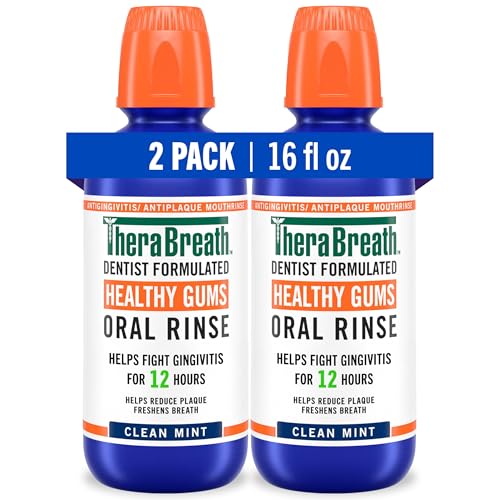
TheraBreath Healthy Gums Oral Rinse
Best for: Sensitive gums and those prone to dry mouth
- Alcohol-free, suitable for sensitive gums
- CPC (ADA-recognized antibacterial ingredient)
- Tea tree oil with antimicrobial properties
- Mild flavor for longer rinse times
✓ Free shipping with Prime · ✓ Amazon's price guarantee · Affiliate link
Why We Recommend It
TheraBreath’s Healthy Gums formula consistently earns high marks from both dental professionals and everyday users. Its alcohol-free formula relies on cetylpyridinium chloride (CPC) and tea tree oil — two agents that may help with reducing oral bacteria and supporting gum tissue health. It’s a gentler option that doesn’t sacrifice efficacy, and it carries solid real-world credibility with ratings consistently above 4.5 stars across major retailers.
Key Features
- Alcohol-free, making it suitable for people with sensitive gums or dry mouth
- Contains CPC, an ADA-recognized antibacterial ingredient
- Includes tea tree oil, which has shown some antimicrobial properties in preliminary research
- Mild flavor profile — easier to tolerate for longer rinse times
Who It’s Best For
People with sensitive gum tissue, those prone to dry mouth, or anyone who finds traditional alcohol-based rinses too harsh but still wants a meaningful antibacterial effect.
Potential Downsides
It tends to be priced slightly higher than drugstore-brand alternatives. Some users find the flavor too mild if they’re accustomed to intense minty rinses.
✓ Free shipping with Prime · ✓ Amazon's price guarantee · Affiliate link
Colgate Peroxyl Antiseptic Mouth Sore Rinse
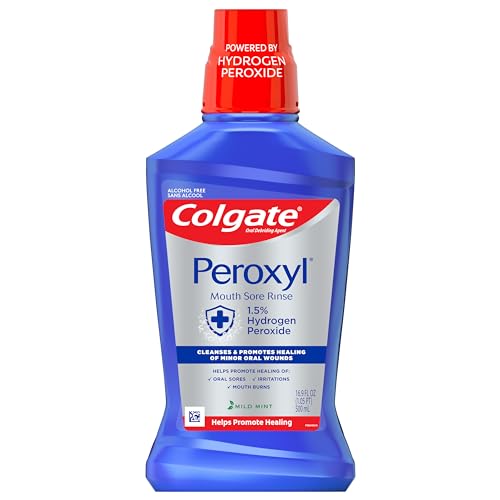
Colgate Peroxyl Antiseptic Mouth Sore Rinse
Best for: Irritated or bleeding gums and post-procedure care
- 1.5% hydrogen peroxide formula
- Alcohol-free and mild for regular use
- Oxygenates gum tissue to reduce anaerobic bacteria
- Often recommended post-dental procedure
✓ Free shipping with Prime · ✓ Amazon's price guarantee · Affiliate link
Why We Recommend It
When gum inflammation has progressed to visible irritation, swelling, or minor bleeding, hydrogen peroxide-based rinses like Colgate Peroxyl may help with soothing tissue and reducing bacterial load. According to Mayo Clinic guidance on gum disease, hydrogen peroxide is a gentle antiseptic that may help with controlling gum inflammation. Peroxyl uses a 1.5% concentration — low enough to be safe for daily use without damaging tissue.
Key Features
- 1.5% hydrogen peroxide formula
- Alcohol-free and mild enough for regular use
- Helps oxygenate gum tissue, which may help with reducing anaerobic bacteria
- Often recommended post-dental procedure for maintenance
Who It’s Best For
People experiencing visible gum irritation, minor bleeding, or recovering from a dental cleaning or procedure. Also worth considering if you want a whitening side benefit alongside gum support.
Potential Downsides
Hydrogen peroxide rinses should not be used undiluted at higher concentrations, and even at 1.5%, extended daily use without dental guidance isn’t recommended for everyone. Consult your dentist if you have open sores or significant gum recession.
✓ Free shipping with Prime · ✓ Amazon's price guarantee · Affiliate link
Crest Pro-Health Gum & Breath Purify Mouthwash
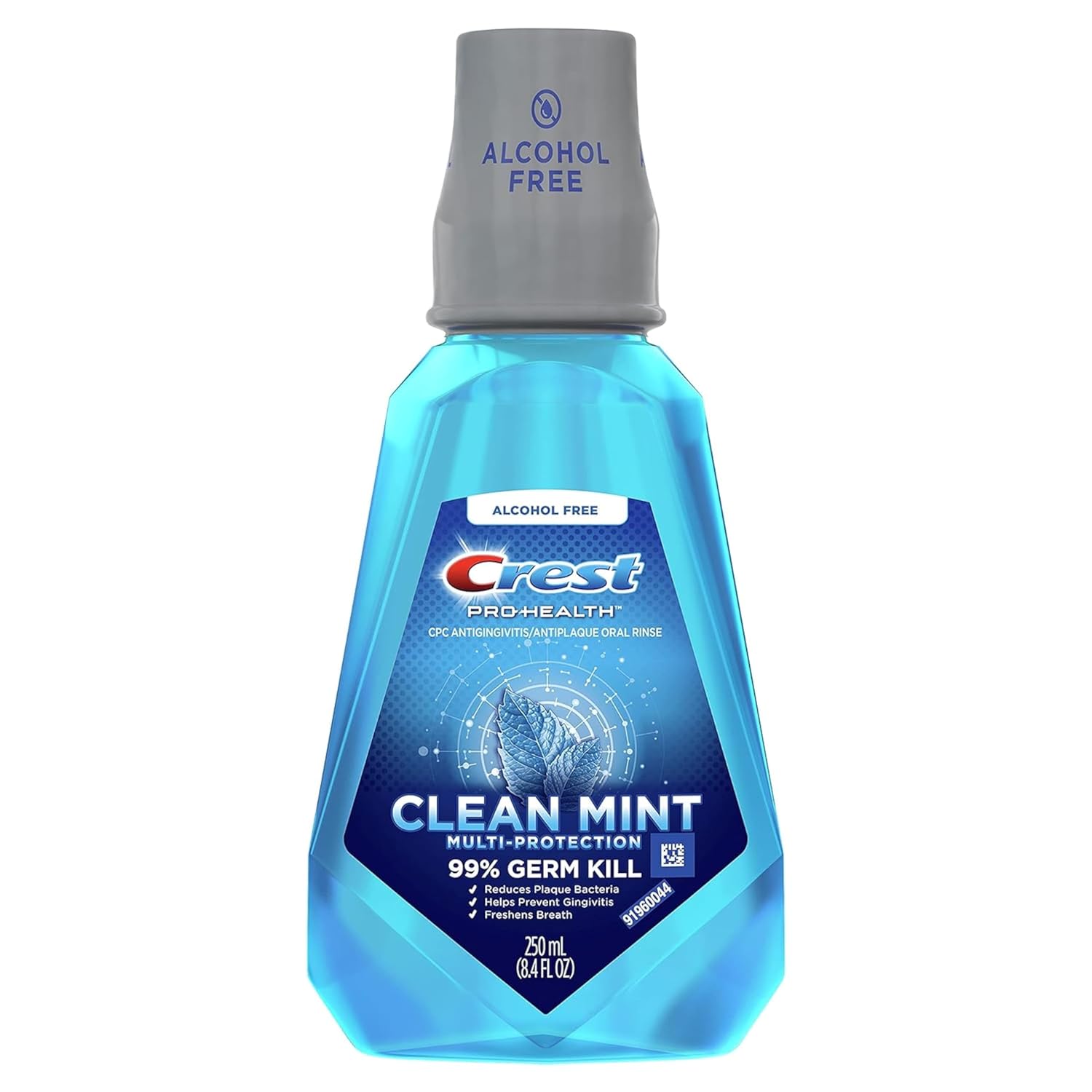
Crest Pro-Health Gum & Breath Purify Mouthwash
Best for: Affordable daily rinse for early gum disease prevention
- ADA-accepted with CPC as active antibacterial agent
- Alcohol-free formula
- Dual-action for gum health and breath freshening
- Widely available and competitively priced
✓ Free shipping with Prime · ✓ Amazon's price guarantee · Affiliate link
Why We Recommend It
Crest Pro-Health Gum & Breath Purify is one of the most accessible and budget-friendly options on this list. It uses cetylpyridinium chloride (CPC) as its active ingredient, which according to the ADA may help with reducing plaque and preventing gingivitis. It’s alcohol-free, offers noticeable breath-freshening, and is easy to find at virtually any drugstore. For people in the prevention or early-stage zone of gum disease, it’s a reliable everyday choice.
Key Features
- ADA-accepted with CPC as the active antibacterial agent
- Alcohol-free formula
- Dual-action positioning for gum health and breath freshening
- Widely available and competitively priced
Who It’s Best For
Those looking for an affordable, easy-to-find daily rinse that addresses early gum disease concerns without the intensity of prescription or clinical-strength formulas.
Potential Downsides
May cause temporary tooth or tongue staining with long-term use — a known side effect of CPC-containing rinses that is typically reversible with professional cleaning.
✓ Free shipping with Prime · ✓ Amazon's price guarantee · Affiliate link
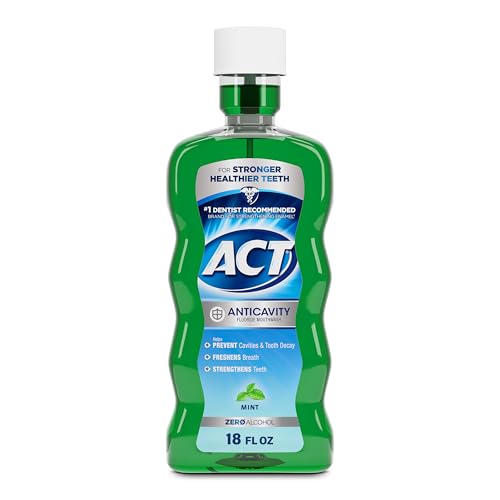
ACT Anticavity Fluoride Rinse
ACT Anticavity Fluoride Rinse
Best for: Gum disease combined with cavity protection
- ADA-accepted fluoride formula
- Alcohol-free version available
- Strengthens enamel at exposed root surfaces
- Affordable and widely available
✓ Free shipping with Prime · ✓ Amazon's price guarantee · Affiliate link
Why We Recommend It
While ACT is primarily known as a fluoride rinse for cavity prevention, it earns a spot here because many gum disease patients also face elevated cavity risk — particularly if gum recession has exposed root surfaces. If you’re dealing with significant recession alongside gum disease, our guide to the best mouthwash for receding gums covers rinses optimised for that specific concern. According to the ADA, fluoride rinses may help with strengthening enamel and reducing decay risk, making ACT a smart dual-purpose option for patients managing gum disease alongside cavity vulnerability.
Key Features
- ADA-accepted fluoride formula
- Alcohol-free version available
- Strengthens enamel at exposed root surfaces, which is common in gum disease
- Affordable and widely available
Who It’s Best For
People who have gum recession exposing root surfaces, or who want a single rinse that addresses both gum health support and cavity prevention simultaneously.
Potential Downsides
ACT is not specifically formulated as an antibacterial gum-disease rinse, so it works best as part of a broader routine that includes a dedicated gum-health-focused product, rather than as a standalone solution for active gingivitis.
✓ Free shipping with Prime · ✓ Amazon's price guarantee · Affiliate link
Peridex Chlorhexidine Gluconate 0.12% (Prescription)
Peridex Chlorhexidine Gluconate 0.12%
Best for: Active periodontal disease under dental supervision
- 0.12% chlorhexidine gluconate — most potent OTC-adjacent antiseptic
- Prescription only, used post-procedure
- Substantivity: binds to tissues for extended release
- Backed by extensive clinical research
✓ Free shipping with Prime · ✓ Amazon's price guarantee · Affiliate link
Why We Recommend It
If your dentist has diagnosed active periodontal disease, chlorhexidine gluconate is widely considered the gold standard prescription-strength antiseptic rinse. According to the ADA and multiple periodontal studies, chlorhexidine may help with significantly reducing bacteria associated with gum disease, and it’s typically prescribed following deep cleaning (scaling and root planing) procedures. It works by binding to oral tissues and releasing antibacterial agents over time — a property known as substantivity.
Key Features
- 0.12% chlorhexidine gluconate — the most potent OTC-adjacent antiseptic for gum disease
- Prescription only; requires a dentist or periodontist visit
- Typically used in short-term courses (1–2 weeks) post-procedure
- Supported by extensive clinical research
Who It’s Best For
Patients who have been diagnosed with moderate to severe gum disease and are under the active care of a dentist or periodontist. This is not a routine daily rinse — it’s a targeted treatment tool.
Potential Downsides
Chlorhexidine is known to cause significant tooth, tongue, and restoration staining with extended use. It can also alter taste perception temporarily. It is not intended for long-term daily use and should only be used under dental supervision.
✓ Free shipping with Prime · ✓ Amazon's price guarantee · Affiliate link
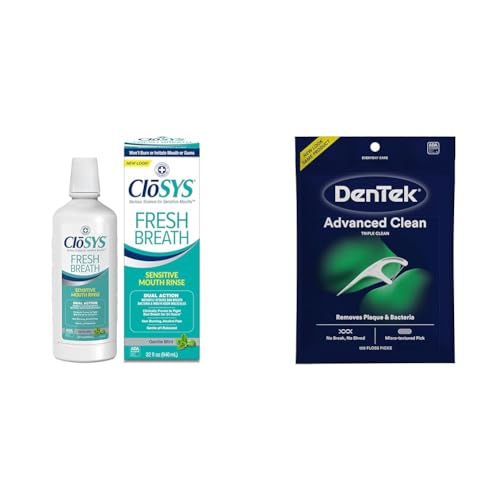
CloSYS Ultra Sensitive Mouthwash
CloSYS Ultra Sensitive Mouthwash
Best for: Highly sensitive gum tissue and gentle daily maintenance
- Stabilized chlorine dioxide formula
- Alcohol-free and sulfate-free
- pH-balanced for gentle tissue care
- Flavor-adjustable with included mint drops
✓ Free shipping with Prime · ✓ Amazon's price guarantee · Affiliate link
Why We Recommend It
CloSYS uses stabilized chlorine dioxide as its active ingredient — a compound that may help with neutralizing volatile sulfur compounds and reducing oral bacteria without the harshness of alcohol or the staining risk of chlorhexidine. It’s pH-balanced, flavor-adjustable (it comes with an optional flavor dropper), and extremely gentle. Dental hygienists frequently recommend it to patients with tender, easily irritated gum tissue.
Key Features
- Stabilized chlorine dioxide formula
- Alcohol-free and sulfate-free
- pH-balanced to be gentle on sensitive tissues
- Flavor-adjustable with included mint drops
Who It’s Best For
People with highly sensitive gum tissue, those who have experienced reactions to other rinses, or patients looking for a gentle maintenance rinse to use between professional cleanings.
Potential Downsides
Chlorine dioxide is a milder antibacterial agent compared to chlorhexidine or even essential oils, so it may not be sufficient as a standalone treatment for active, significant gum disease. Think of it as a gentle daily maintenance tool rather than an aggressive treatment option.
✓ Free shipping with Prime · ✓ Amazon's price guarantee · Affiliate link
Buyer’s Guide: What to Look For
Active Ingredients Matter Most
The ingredient list is the most important thing to check. Look for:
- Chlorhexidine gluconate (prescription only) — according to Mayo Clinic, this is the strongest option for advanced gum disease and is typically prescribed under dental supervision
- Cetylpyridinium chloride (CPC) — a widely used OTC antibacterial recognized by the ADA
- Essential oils (eucalyptol, thymol, menthol, methyl salicylate) — the basis of Listerine-type formulas with strong clinical backing
- Hydrogen peroxide — mild antiseptic and anti-inflammatory
- Chlorine dioxide — gentle bacteria neutralizer suitable for sensitive users
Alcohol vs. Alcohol-Free
Alcohol-based mouthwashes can be effective but may cause dryness, burning, or irritation — especially if your gums are already inflamed. According to the ADA, there’s no evidence that alcohol-containing mouthwashes are superior to alcohol-free alternatives for gum health. If you have dry mouth, are in recovery, or simply prefer a gentler experience, alcohol-free is a perfectly sound choice.
Look for the ADA Seal
The ADA Seal of Acceptance indicates that a product has passed independent review for both safety and the effectiveness claims on its label. It’s the most reliable shorthand for “this product does what it says.”
Mouthwash Is Supplemental, Not a Cure
This bears repeating: according to the ADA, mouthwash works best as a complement to brushing and flossing, not a replacement. If you have active gum disease, mouthwash alone is not a treatment plan. Regular professional cleanings and dentist oversight are essential. For a full picture of how to address gum disease at home, our guide on how to fix gingivitis walks through every step of an effective daily routine.
FAQ
Q: Can mouthwash alone reverse gum disease?
No. According to the ADA, mouthwash is a supplemental oral hygiene tool. It may help with reducing bacteria and inflammation, but reversing gum disease requires consistent brushing, flossing, and professional dental cleanings. For moderate to advanced cases, your dentist or periodontist may recommend additional procedures.
Q: How often should I use mouthwash for gum disease?
Most over-the-counter antibacterial mouthwashes are formulated for twice-daily use, typically after brushing. Prescription chlorhexidine rinses follow a specific protocol set by your dentist, often twice daily for a limited period. Always follow product instructions and your dental provider’s guidance.
Q: Is it safe to swallow mouthwash?
No — mouthwash is not intended to be swallowed. This is especially important with chlorhexidine rinses and fluoride-containing formulas. Keep all mouthwash out of reach of children.
Q: Should I use mouthwash before or after brushing?
The ADA suggests that using fluoride mouthwash immediately after brushing may wash away the concentrated fluoride from your toothpaste. Many dental professionals recommend rinsing at a separate time — such as after lunch — or following specific product instructions. For antibacterial gum-disease rinses, after brushing and flossing in the evening is a common recommendation.
Q: What’s the difference between gingivitis and periodontal disease?
Gingivitis is the early, reversible stage of gum disease characterized by inflammation, redness, and occasional bleeding. According to the ADA, gingivitis can typically be reversed with improved home care and professional cleaning. Periodontitis (periodontal disease) is a more advanced condition involving damage to the bone and connective tissue supporting the teeth, and requires professional treatment. If your dentist has already confirmed periodontitis, check out our dedicated guide to the best mouthwash for periodontal disease for options tailored to that stage.
Q: Are natural or herbal mouthwashes effective for gum disease?
Some natural ingredients like tea tree oil and aloe vera have shown antimicrobial properties in preliminary research, but the evidence base is considerably smaller than for established active ingredients like CPC or essential oils. If you prefer a more natural formula, look for products that still carry the ADA Seal and discuss your options with your dentist.
Our Methodology
The Dental Roundup Editorial team compiled this guide through a combination of ingredient research, cross-referencing with dentist-recommended lists from multiple independent dental sources, review of ADA guidance on oral health products, and analysis of verified consumer feedback across major retail platforms. We do not accept products for review in exchange for favorable coverage. Where affiliate links are present, they are disclosed transparently and do not influence our editorial recommendations.
We prioritize products with:
- Clinically recognized active ingredients
- ADA Seal of Acceptance where available
- A track record of professional endorsement
- Transparent labeling and accessible pricing
We update this guide periodically to reflect new product releases, formulation changes, and evolving clinical guidance. If you have specific concerns about gum disease, we always recommend consulting a licensed dentist or periodontist — no roundup article replaces a professional evaluation.