
The Short Answer
The Invisalign cost for most patients in 2025–2026 falls between $3,000 and $8,000, with a national average around $5,000. Simple cases involving minor crowding may start closer to $3,000, while complex full-arch treatments can reach $8,000 or more. Your final price depends on the severity of your case, your geographic location, the experience of your provider, and whether you have dental insurance or orthodontic benefits. We always recommend consulting your dentist or orthodontist for personalised advice and an accurate quote.
Understanding Invisalign Pricing: Why the Wide Range?
If you’ve ever searched for Invisalign cost online, you’ve probably noticed an enormous price range and felt frustrated. The reason is straightforward: Invisalign isn’t a one-size-fits-all product. It’s a treatment system, and your provider tailors it to your unique dental anatomy, bite issues, and cosmetic goals.
Here’s a quick overview of typical pricing tiers:
| Case Complexity | Typical Cost Range | Approximate Treatment Length |
|---|---|---|
| Minor / Invisalign Lite | $3,000 – $4,500 | 3 – 6 months |
| Moderate | $4,500 – $6,500 | 6 – 12 months |
| Comprehensive / Complex | $5,500 – $8,000+ | 12 – 18+ months |
These figures are drawn from multiple provider estimates and align with pricing reported across dental practices nationwide. Consult your dentist for personalised advice, as your quote may fall outside these ranges.
Key Factors That Affect Invisalign Cost
1. Case Complexity and Treatment Length
This is the single biggest driver of price. A patient who needs slight crowding fixed on the upper arch will require far fewer aligners — and fewer office visits — than someone correcting a deep overbite with spacing issues on both arches. More aligners and more refinement stages mean a higher overall fee.
2. Geographic Location
Dental care costs vary significantly by region. Practices in major metropolitan areas like New York City, San Francisco, or Los Angeles typically charge more than those in smaller cities or rural areas. Cost-of-living differences, office overhead, and local market competition all play a role. For example, some Long Island providers report ranges from $4,500 to $8,000, while practices in the Midwest may quote $3,500 to $6,500 for comparable treatment.
3. Provider Experience and Credentials
Invisalign assigns tier levels to providers — from Bronze through Diamond Plus — based on how many cases they’ve completed. Highly experienced providers often charge a premium, but they may also deliver more predictable results and handle complex cases with fewer refinements. Whether the premium is worth it depends on your specific needs.
4. Invisalign Product Tier
Invisalign offers several product lines:
- Invisalign Comprehensive – The full treatment for moderate to complex cases.
- Invisalign Lite – Designed for mild cases, typically limited to 14 aligners per arch.
- Invisalign Express – For very minor corrections, usually 7 aligners per arch.
- Invisalign First – Designed for younger children with mixed dentition (Phase 1 treatment).
Naturally, Lite and Express options cost less because they involve fewer aligners and shorter treatment times.
5. Retainers and Post-Treatment Costs
Many quotes include retainers, but some do not. Vivera retainers (Invisalign’s branded retainer) typically cost $300–$600 for a set. Since retainers are essential for maintaining your results — the ADA emphasises that retention is a critical phase of orthodontic treatment — make sure you understand whether they’re bundled into your quoted price.
6. Pre-Treatment Work
If you need extractions, gum treatment, cavity fillings, or other dental work before starting Invisalign, those costs are separate. Your provider should outline any prerequisite procedures during your consultation.
Invisalign vs. Traditional Braces: Cost Comparison
Many patients weigh Invisalign against traditional metal braces. Our detailed Invisalign vs braces comparison covers not just cost but also treatment outcomes, comfort, and which cases each option handles best. Here’s how the costs generally compare:
| Treatment | Average Cost Range | Key Advantages |
|---|---|---|
| Metal Braces | $3,000 – $7,000 | Effective for complex cases; no compliance required |
| Ceramic Braces | $4,000 – $8,000 | Less visible than metal; effective for most cases |
| Lingual Braces | $8,000 – $13,000 | Hidden behind teeth; fully invisible |
| Invisalign | $3,000 – $8,000 | Removable; nearly invisible; easier oral hygiene |
For mild to moderate cases, Invisalign and metal braces often cost about the same. The price gap tends to widen for complex cases, where traditional braces may sometimes be less expensive — or may be the only clinically appropriate option. Your orthodontist can help you determine which treatment is best suited to your needs.
How to Get an Accurate Invisalign Quote: Step-by-Step
Getting a reliable price for your treatment doesn’t have to be complicated. Follow these steps to make sure you’re comparing apples to apples.
Step 1: Schedule a Consultation (Often Free)
Many orthodontists and Invisalign-certified dentists offer complimentary initial consultations. During this visit, they’ll examine your teeth, take X-rays or 3D scans, and discuss your goals.
Step 2: Ask for a Detailed Treatment Plan
Request a written breakdown that includes:
- The specific Invisalign product (Comprehensive, Lite, Express)
- Estimated number of aligners
- Number of included office visits
- Whether refinement aligners are included
- Whether retainers are included in the fee
Step 3: Verify Your Insurance Benefits
Contact your dental insurance provider before your consultation to understand your orthodontic coverage. Ask specifically:
- Is there an orthodontic benefit, and does it cover clear aligners?
- What is the lifetime maximum for orthodontics?
- Is there an age limit on coverage?
- What is the waiting period, if any?
Step 4: Compare Multiple Providers
We recommend getting quotes from at least two or three providers. Prices can vary by $1,000 or more for the same case in the same city. However, don’t choose solely based on price — experience, reviews, and communication quality matter, too.
Step 5: Review Payment and Financing Options
Before committing, make sure the payment plan works for your budget. Many offices offer interest-free in-house financing, which can make a significant difference in affordability.
Ways to Reduce Your Invisalign Cost
Use Dental Insurance
According to the ADA, many dental insurance plans now include orthodontic benefits that apply to Invisalign, not just traditional braces. Typical orthodontic benefits cover 25%–50% of the treatment cost, up to a lifetime maximum (often $1,000–$2,500). If you’re shopping for a plan that includes strong orthodontic coverage, see our roundup of the best dental and vision insurance bundles to compare annual maximums and lifetime orthodontic limits. Check your specific plan for details.
Flexible Spending Accounts (FSA) and Health Savings Accounts (HSA)
If your employer offers an FSA or you have an HSA, you can use pre-tax dollars to pay for Invisalign. This effectively gives you a discount equal to your marginal tax rate — often 20%–35% savings on the amount you allocate.
In-House Payment Plans
Many orthodontists offer monthly payment plans with zero interest, spreading the cost over your treatment period. Some practices even offer discounts for paying in full upfront.
Dental School Clinics
University dental schools and orthodontic residency programmes sometimes offer Invisalign treatment at reduced fees. Treatment is provided by supervised residents, which can result in savings of 30%–50%. The trade-off is often longer appointment times and less scheduling flexibility.
Seasonal Promotions and Provider Specials
Some practices run promotions during slower months or offer discounts for new patients. It doesn’t hurt to ask if any specials are currently available.
What’s Included in Your Invisalign Cost?
Not all quotes are created equal. Here’s what a comprehensive Invisalign fee should typically cover:
- Initial consultation and diagnostic records (X-rays, 3D scans, photographs)
- Custom treatment plan using ClinCheck® software
- All aligner trays for the duration of treatment
- Refinement aligners if needed (some plans cap these)
- Attachments and elastics if your plan requires them
- Progress check-up appointments throughout treatment
- Retainers (at least one set, though this varies by practice)
If any of these items are not included, factor the additional expense into your total budget.
Is Invisalign Worth the Investment?
Cost is only one part of the equation. When evaluating whether Invisalign is worth it, consider:
- Aesthetics during treatment – Clear aligners are far less noticeable than metal brackets and wires.
- Convenience – Aligners are removable, so you can eat and drink whatever you want and maintain your normal oral hygiene routine.
- Comfort – While all orthodontic treatment involves some discomfort, many patients report that aligners cause less irritation to the cheeks and gums than traditional braces.
- Oral health benefits – The ADA notes that properly aligned teeth are easier to clean, which can reduce the risk of decay and gum disease over the long term. Using a toothpaste formulated for braces and aligners during treatment helps protect enamel around attachments.
- Long-term value – Straight teeth and a corrected bite can prevent uneven wear, TMJ issues, and more costly dental work down the road.
- Budget-friendly alternatives – If Invisalign feels out of reach, mail-order aligner brands may be worth exploring. Our Byte vs Invisalign and SureSmile vs Invisalign comparisons outline the trade-offs between price, oversight, and clinical scope.
Ultimately, the best orthodontic treatment is the one that’s clinically appropriate for your case and fits your lifestyle. Consult your dentist or orthodontist for personalised advice.
Caring for Your Aligners
Your Invisalign trays need regular cleaning to prevent discolouration, odour, and bacterial buildup. Rinsing alone isn’t enough — a dedicated cleaning tablet dissolves the biofilm that brushing can miss.
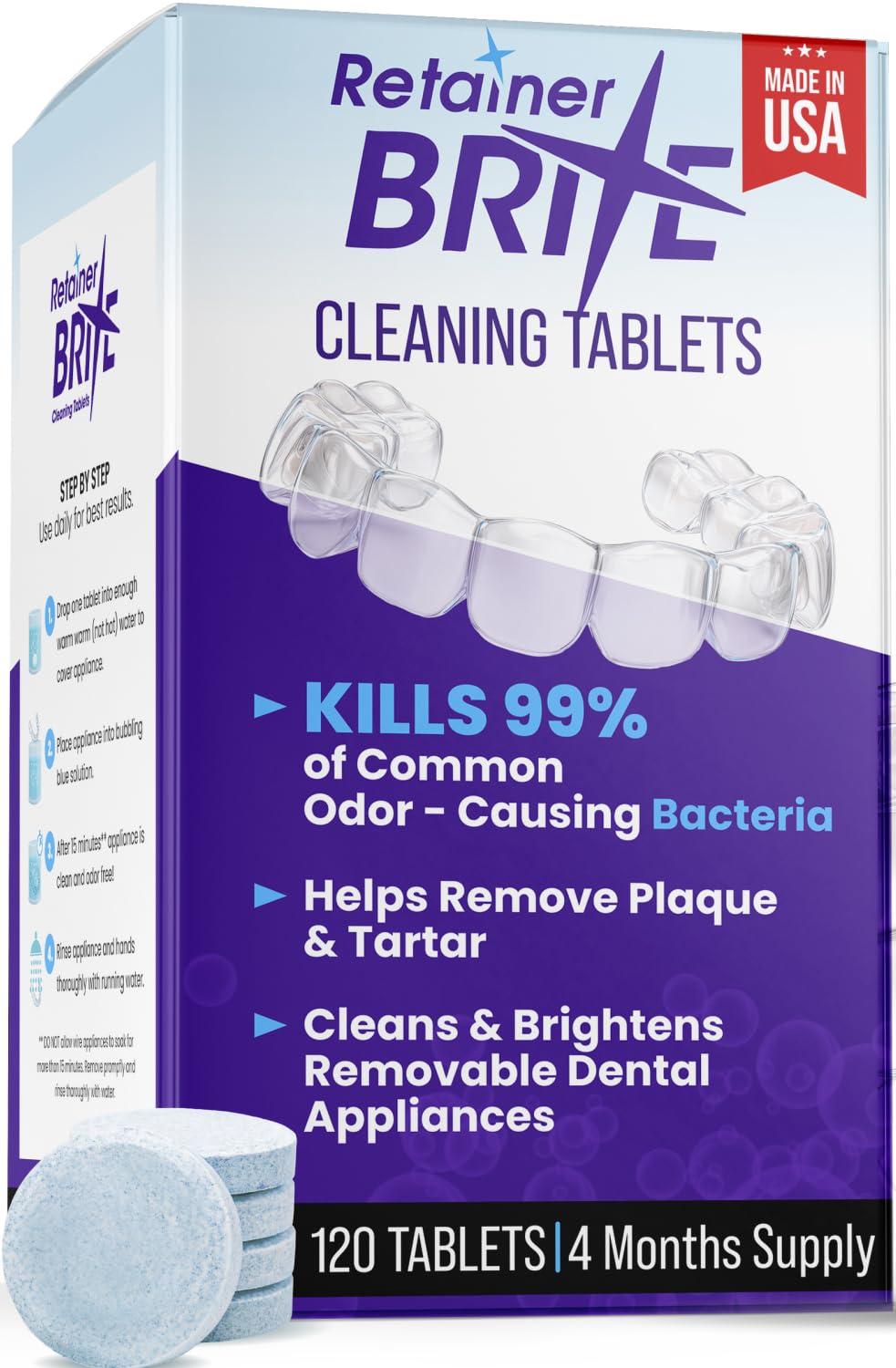
Retainer Brite Cleaning Tablets
Best for: Keeping aligners clean and odour-free
- Removes plaque, stains, and odour from clear aligners
- FDA-registered, made in the USA
- 120-tablet pack — a 4-month supply
- Works in 15 minutes with warm water
✓ Free shipping with Prime · ✓ Amazon's price guarantee · Affiliate link
✓ Free shipping with Prime · ✓ Amazon's price guarantee · Affiliate link
FAQ
How much does Invisalign cost without insurance?
Without insurance, most patients pay between $3,000 and $8,000 out of pocket. The exact amount depends on your case complexity, location, and provider. Many practices offer in-house financing with monthly payments to make treatment more manageable.
Does dental insurance cover Invisalign?
Many dental insurance plans with orthodontic benefits do cover Invisalign, often at the same rate as traditional braces. The ADA notes that orthodontic coverage typically has a separate lifetime maximum, commonly between $1,000 and $2,500. Contact your insurance provider directly to confirm your specific benefits before starting treatment.
Is Invisalign more expensive than braces?
For mild to moderate cases, Invisalign and metal braces often cost about the same — roughly $3,000 to $7,000. For complex cases, traditional braces may sometimes be slightly less expensive, but the gap has narrowed significantly in recent years. Ceramic and lingual braces tend to cost as much as or more than Invisalign. If you’re also weighing the visual appeal of clear aligners against fixed appliances, our clear braces vs metal braces guide goes deeper on aesthetics, durability, and suitability by case type.
Can I use my HSA or FSA to pay for Invisalign?
Yes. Invisalign is considered a qualified medical expense under most HSA and FSA plans. Using pre-tax dollars can effectively reduce your cost by 20%–35% depending on your tax bracket. Plan your contributions at the start of the benefit year so funds are available when you need them.
Are there hidden costs with Invisalign I should know about?
Potential additional costs include pre-treatment dental work (fillings, extractions, gum treatment), replacement aligners if you lose a tray, retainers if they aren’t included in your quoted fee, and any additional refinement stages beyond what the plan covers. Always ask your provider for a comprehensive written quote that specifies exactly what is and isn’t included.
How can I find the cheapest Invisalign provider near me?
Start by getting quotes from multiple Invisalign-certified providers in your area. Compare not just the bottom-line price, but what’s included in each quote. Check whether local dental schools offer discounted clear aligner treatment. And remember, the lowest price isn’t always the best value — provider experience and included services matter significantly for your outcome.