
The American Dental Association’s guidance is the right starting point: mouthwash is not recommended for children younger than 6 unless a dentist directs it, because swallowing reflexes may not be well developed at that age and a child can swallow a large amount of rinse. The ADA’s mouthrinse topic review carries the same rule with the same reason. It’s also worth saying plainly: not every child needs a rinse at all. If your child brushes twice a day with fluoride toothpaste, gets help cleaning between teeth, and has no cavity history, their dentist may see no reason to add one; in the one community thread we found asking exactly this question, every reply was some version of “just brush and floss.” Where a rinse earns its place is with cavity-prone kids old enough to swish and spit reliably: it delivers extra fluoride (or xylitol, in the fluoride-free option) to surfaces between brushings. We checked every product below against its FDA Drug Facts label and the ADA’s live Seal of Acceptance roster, then compared cavity protection, ingredients, taste, and price. If you’re also picking a paste, see our guide to the best toothpaste for kids.
ACT Kids Anticavity Fluoride Mouthwash — Editor’s Pick
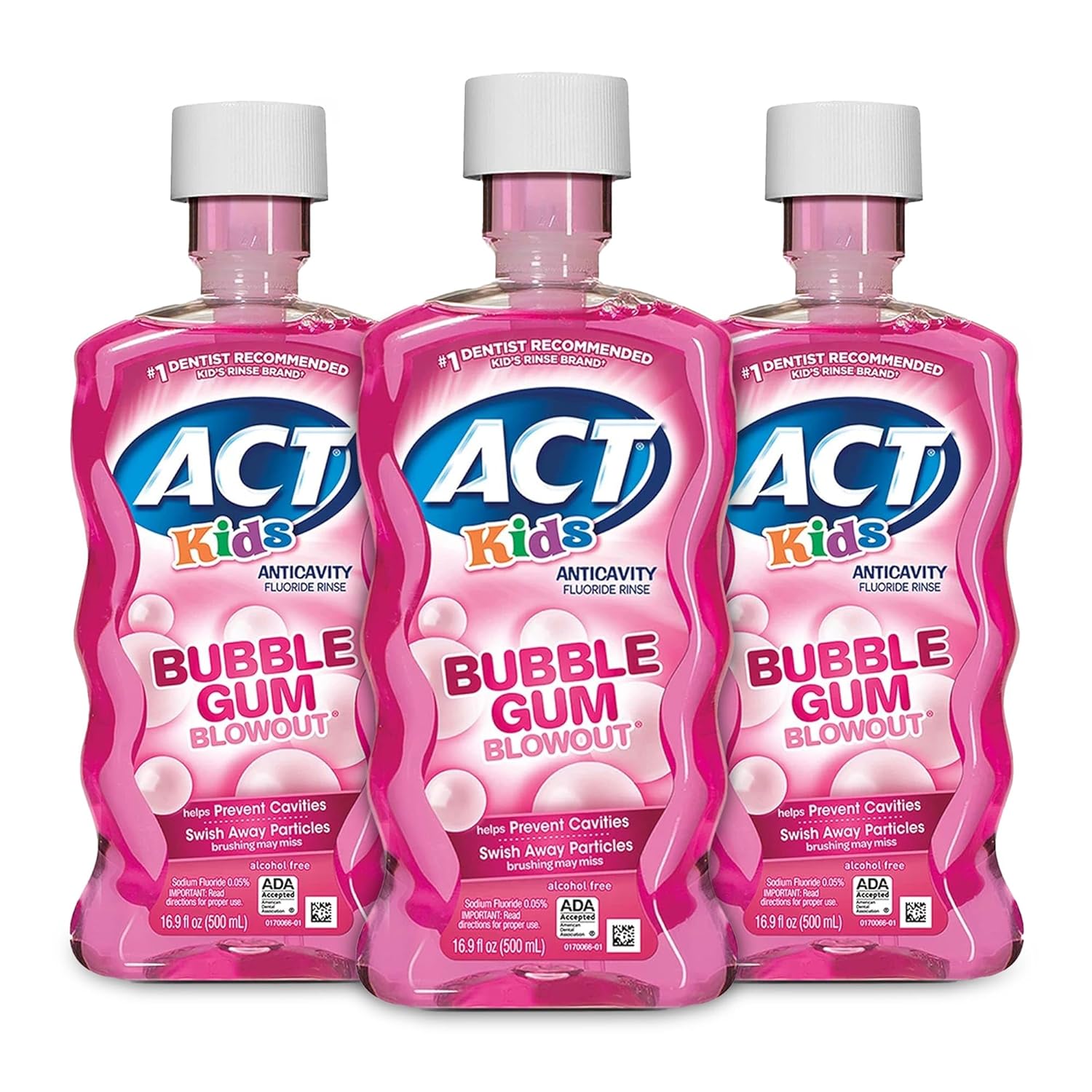
ACT Kids Anticavity Fluoride Mouthwash
Best for: Most kids 6 and up who can rinse and spit reliably; the strongest fluoride rinse in this lineup, dosed once daily
- 0.05% sodium fluoride, the highest concentration here
- Once-daily label with exact-dose dosing cup
- Sugar-free and alcohol-free
- Multiple kid-friendly flavors
- +Strongest fluoride concentration in this lineup: 0.05% sodium fluoride on the Drug Facts label, in a once-daily dose
- +The rinse brand dental professionals most often named in the community threads we reviewed
- +Built-in exact-dose cup takes the guesswork out of measuring, and the alcohol-free formula doesn't sting
- −No ADA Seal of Acceptance; as of August 2026 no ACT product appears on the ADA's Seal roster
(Affiliate link) · Free shipping on eligible Prime items
ACT Kids is the rinse dental professionals most often named in the Reddit threads we reviewed, and the most-reviewed kids’ fluoride rinse in this lineup by a wide margin: about 15,900 ratings at a 4.8-star average. The Drug Facts label lists 0.05% sodium fluoride, used once a day. That makes it the strongest fluoride rinse in this lineup, and it clears up a point of real confusion: several of the other kids’ rinses here carry less fluoride, not more, because their labels call for twice-daily use. Dental professionals in the highest-voted thread we found on this question explained the balance directly: once-daily rinses are formulated at roughly double the strength of twice-daily ones, and children’s higher cavity risk is exactly why a kids’ anticavity rinse isn’t watered down.
The exact-dose dosing cup built into the cap takes the guesswork out of measuring: per the label, only the correct 10 mL dose pours out. Flavors include Bubble Gum and Wild Watermelon, among others, and the alcohol-free formula means no burning or stinging to put a child off the habit. At around $4.50 a bottle, it’s also one of the least expensive options on this list.
The honest limitation: ACT Kids does not carry the ADA Seal of Acceptance, and as of our August 2026 read of the ADA’s Seal roster no ACT product appears there at all. Its active ingredient is the same sodium fluoride used in the Accepted rinses on this page, at the highest labeled strength of the group, but if the Seal itself matters to you, the Listerine and Tom’s picks below carry it.
(Affiliate link) · Free shipping on eligible Prime items
Listerine Total Care Kids Mouthwash — Best ADA Accepted
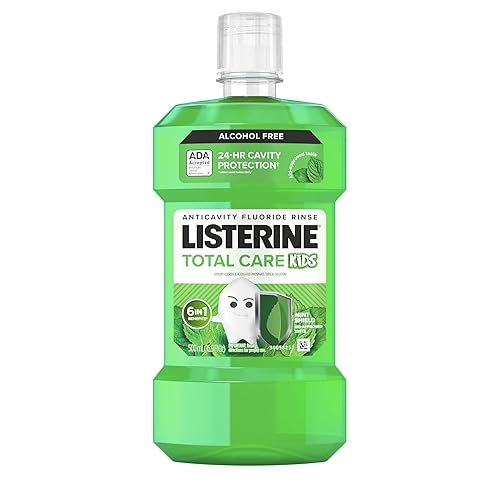
Listerine Total Care Kids Mouthwash
Best for: Parents who want the ADA Seal of Acceptance; the Seal covers helping to prevent tooth decay
- ADA Accepted for cavity prevention (the Seal's full scope)
- Alcohol-free kid-safe formulation
- 0.02% sodium fluoride, twice-daily label
- Milder Mint Shield flavor
- +Carries the ADA Seal of Acceptance: independently verified safe and effective in helping to prevent tooth decay
- +Alcohol-free with a milder Mint Shield flavor most kids over six tolerate well
- +Marketed as a 6-in-1 formula; the label's active ingredient is cavity-fighting sodium fluoride
- −Much smaller review base than ACT Kids (about 1,700 reviews vs 15,800+)
- −Lower fluoride concentration than ACT Kids (0.02% sodium fluoride, dosed twice daily)
(Affiliate link) · Free shipping on eligible Prime items
Listerine Total Care Kids is one of two rinses on this list that carry the ADA Seal of Acceptance. It’s worth being precise about what the Seal covers: the ADA’s roster entry, which we checked in August 2026, states that Acceptance is based on the product being “safe and has shown efficacy in helping to prevent tooth decay, when used as directed.” The packaging markets a 6-in-1 benefit list (cavities, enamel, bad breath, germs, fresh breath, clean feeling), but the Seal’s verified claim is cavity prevention; the Drug Facts label lists one active ingredient, sodium fluoride at 0.02%, used twice daily.
The Mint Shield flavor is milder than adult Listerine products, and one parent report we found is instructive: a child who had rejected bubblegum and strawberry products handled the mild mint without complaint. At around $5 per 500 mL bottle it’s priced right alongside ACT Kids. If you remember Listerine’s “Smart Rinse” kids’ line, note that it does not appear on the ADA’s Seal roster as of August 2026, and one user we found reported its red dye tinting the inside of a tooth; Total Care Kids is the current Accepted product.
The tradeoff versus ACT Kids is a smaller review base (about 1,700 vs 15,800+) and less than half the labeled fluoride concentration per dose (0.02% vs 0.05%), balanced by the twice-daily schedule and the third-party validation of the Seal.
(Affiliate link) · Free shipping on eligible Prime items
Crest Kid’s Anti Cavity Fluoride Mouthwash — Best Value
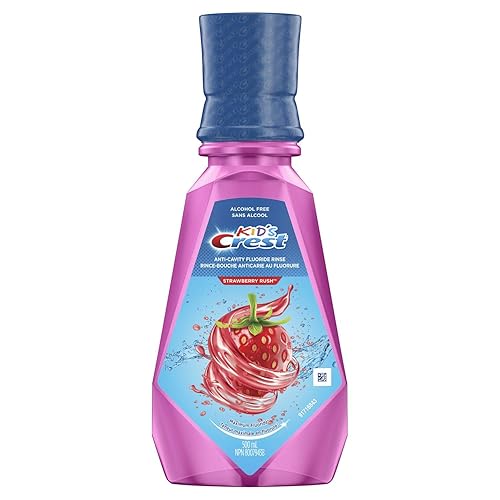
Crest Kid's Anti Cavity Fluoride Mouthwash
Best for: Families stocking up: the 4-pack brings the per-bottle cost down to about $3
- 0.02% sodium fluoride anticavity formula
- Twice-daily label, alcohol-free
- Strawberry Rush flavor
- Sold as a 4-pack
- +Lowest per-bottle cost on the list at about $3 per bottle in the 4-pack
- +Strawberry Rush flavor gives mint-averse kids a real option, in an alcohol-free formula
- +Straightforward fluoride anticavity label from a major oral-care brand
- −Only sold as a 4-pack, no single-bottle option to try first
- −Lower fluoride concentration than ACT Kids or Tom's (0.02% sodium fluoride)
(Affiliate link) · Free shipping on eligible Prime items
If you’re buying for a family with multiple kids or just want to stock up, the Crest Kid’s 4-pack brings the per-bottle cost down to about $3 each, the lowest on this list. The Drug Facts label lists 0.02% sodium fluoride used twice daily: the same concentration and schedule as Listerine Total Care Kids, and lower per dose than ACT Kids or Tom’s. The formula is alcohol-free, and the Strawberry Rush flavor is a genuine option for the many kids who reject mint.
One honesty note that separates this pick from ACT: we found essentially no parent discussion of this specific product in the community threads we reviewed (the Crest conversations are all about toothpaste or adult rinses), so this recommendation rests on the label and the brand rather than documented parent experience. The label is simple and does what it says: fluoride for cavity protection, no alcohol, no complicated ingredient list. Crest’s kids’ toothpastes hold ADA Seals; this mouthwash does not appear on the roster as of our August 2026 read.
The 4-pack format is the main practical drawback: there is no single-bottle option to trial first. If you want one bottle to test a flavor, ACT Kids or Listerine Total Care Kids are better starting points.
(Affiliate link) · Free shipping on eligible Prime items
Tom’s of Maine Children’s Anticavity Fluoride Rinse — Best Natural
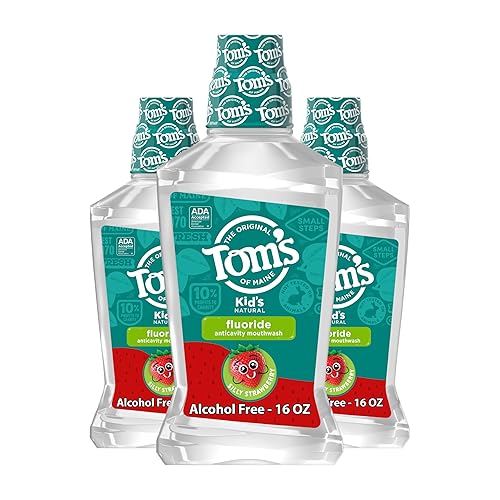
Tom's of Maine Children's Anticavity Fluoride Rinse
Best for: Parents who prefer natural ingredients — ADA Accepted with no artificial dyes, sweeteners, or preservatives
- ADA Accepted natural formula
- No artificial colors, flavors, or preservatives
- 0.04% sodium fluoride anticavity protection
- Silly Strawberry flavor from natural sources
- +ADA Accepted with sodium fluoride but no artificial dyes, sweeteners, flavors, or preservatives
- +Second-strongest fluoride rinse here at 0.04% sodium fluoride on the Drug Facts label
- +Clean-label, natural Silly Strawberry flavor from a certified B Corp
- −Costs more per bottle than ACT or Crest (about $6.60 per bottle in the 3-pack)
- −Natural flavor is less sweet, so kids used to candy-flavored rinses may need a transition period
(Affiliate link) · Free shipping on eligible Prime items
Tom’s of Maine is the pick for parents who want fluoride cavity protection without artificial ingredients. This children’s rinse is ADA Accepted: its roster entry, which we checked in August 2026, lists it under the name “Tom’s of Maine Alcohol-free/Natural Children’s Anticavity Fluoride Rinse” and names the Silly Strawberry flavor specifically. The Drug Facts label lists 0.04% sodium fluoride, making it the second-strongest fluoride rinse in this lineup, and it skips the artificial dyes, sweeteners, flavors, and preservatives found in most conventional kids’ mouthwashes.
At about $6.60 per bottle in the 3-pack (around $20 at checkout), it costs more per bottle than ACT or Crest. Tom’s of Maine is a certified B Corp, which matters to some families. As with Crest, we’ll be straight about the community record: parent discussion of Tom’s kids’ products in the threads we reviewed is almost entirely about the Silly Strawberry toothpaste, which is well liked; the rinse itself has essentially no documented community track record, so the case here is the label, the Seal, and the ingredient policy.
The 4.5-star average across roughly 850 ratings is solid but the lowest in this lineup, and the natural flavoring is noticeably less sweet than candy-flavored rinses. If your child is used to those, expect a transition period.
(Affiliate link) · Free shipping on eligible Prime items
Spry Natural Xylitol Mouthwash — Best Fluoride-Free
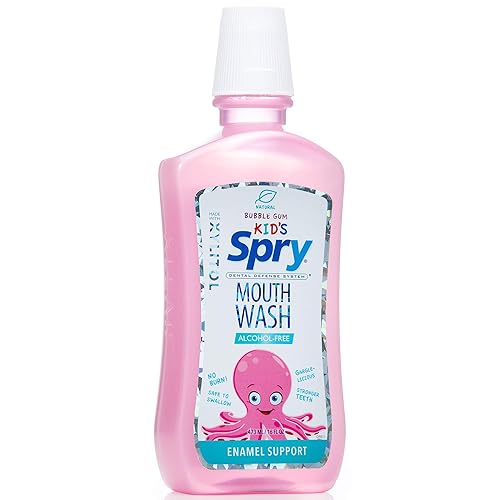
Spry Natural Xylitol Mouthwash
Best for: Parents set on avoiding fluoride who still want an honest option: xylitol is an adjunct, not a fluoride substitute
- Xylitol-based cavity-prevention adjunct
- Fluoride-free and alcohol-free per the current listing
- Non-GMO formula
- Kid-friendly Bubble Gum flavor
- +About 4,900 ratings at a 4.7-star average, a larger review base than three of the four fluoride rinses here
- +Alcohol-free, non-GMO, with a kid-friendly Bubble Gum flavor
- −Evidence for xylitol in a rinse is weak: the Cochrane review found too little evidence to show a benefit, and fluoride remains the standard for cavity prevention
- −Costs more per ounce than the fluoride rinses on this list
(Affiliate link) · Free shipping on eligible Prime items
Some families avoid fluoride by conviction, on a dentist’s advice about total fluoride exposure, or because their child cannot yet be trusted not to swallow. For them, Spry’s kids’ rinse, sold as Spry Natural Kids Mouthwash, has about 4,900 ratings at a 4.7-star average, a larger review base than every product here except ACT. The linked listing is the kids’ bubble-gum bottle, and its current listing states it is alcohol-free; we checked because the adult Spry rinse has historically listed alcohol on its label.
The evidence case deserves honesty rather than enthusiasm. The Cochrane review of xylitol products for preventing cavities (Riley 2015) found only low-quality evidence of benefit, and that was for a fluoride toothpaste containing xylitol; for other xylitol products, including rinses, it judged the evidence insufficient to determine any benefit. The professional voices in the community threads we reviewed land the same way: the one dentist who addressed xylitol rinse directly saw no benefit to xylitol in a mouthwash, and a hygienist who does recommend xylitol attached a demanding condition of around five exposures a day, spread through the day, while stressing it is not a substitute for fluoride or brushing.
So the honest framing is this: if your child already gets fluoride from toothpaste and tap water and you want a pleasant, alcohol-free rinse habit without adding more fluoride, Spry is a reasonable pick with a flavor kids accept. If your child is cavity-prone, fluoride remains the evidence-backed choice, and that conversation belongs with your pediatric dentist. At about $13 for a 16-ounce bottle (about 80 cents an ounce, versus under 30 cents an ounce for ACT or Listerine), it also costs the most per ounce here.
(Affiliate link) · Free shipping on eligible Prime items
Evidence Receipt
- The ADA advises against mouthwash for children under 6 unless a dentist directs it, because swallowing reflexes may not be developed and swallowed rinse can cause nausea, vomiting, and, with alcohol-containing rinses, intoxication: ADA MouthHealthy, mouthwash and the ADA mouthrinse topic page.
- Both ADA Seal claims on this page were verified against the ADA’s live Seal roster in August 2026: Listerine Total Care Kids and Tom’s of Maine Children’s Anticavity Fluoride Rinse. Both Seal statements cover helping to prevent tooth decay.
- Every fluoride concentration stated on this page comes from the product’s FDA Drug Facts label on DailyMed: ACT Kids 0.05%, Tom’s 0.04%, Listerine Total Care Kids 0.02%, Crest Kid’s 0.02%.
- Fluoride mouthrinse works in children: the Cochrane review of 37 trials in 15,813 children and adolescents found supervised fluoride rinsing reduced decayed, missing, and filled tooth surfaces by 27% (moderate-quality evidence, mostly supervised school programs) (Marinho 2016, PMID 27472005).
- Xylitol’s evidence is far weaker: the Cochrane review found low-quality evidence for a xylitol fluoride toothpaste only, and insufficient evidence to show benefit from other xylitol products, including rinses (Riley 2015, PMID 25809586).
- For children under 6 at cavity risk, the evidence-backed intervention is professionally applied fluoride varnish, a Grade B recommendation from the U.S. Preventive Services Task Force, not mouthwash.
Buyer’s Guide: Choosing the Right Mouthwash for Your Child
When Should Kids Start Using Mouthwash?
The ADA’s line is age six, unless a dentist directs otherwise, and the reason is swallowing: younger children may swallow large amounts of rinse rather than spitting. In practice, parents in the threads we reviewed apply a more useful test than a birthday: can your child already spit reliably? A child who still swallows toothpaste and then mimes spitting is not ready for mouthwash at any age, and a newly-six-year-old who passed that stage long ago probably is. The product labels themselves back this competence framing: all four fluoride rinses here instruct parents to teach children under 12 good rinsing habits to minimize swallowing, and to supervise until the child can manage alone.
Two practical notes from real households. First, at least one parent in the threads we reviewed dilutes a kids’ rinse with water as a swallow-safety hedge; no label on this page directs dilution, and a diluted dose is no longer the dose the label’s cavity-prevention claim was tested at, so if swallowing is still a worry, the better answer is waiting, not watering down. Second, keep the bottle out of reach between uses. The labels say it, poison-control data backs it (the AAPD’s fluoride guidance notes over 20,000 fluoride-ingestion reports a year, more than 80% involving children under 6), and kid-opens-the-mouthwash stories are common enough in parenting forums to treat the cap as a real line of defense.
If you have a toddler, skip rinse entirely and focus on brushing with a rice-grain smear of fluoride toothpaste: see our best toothpaste for toddlers guide.
Not All Kids’ Fluoride Rinses Are the Same Strength
This is the single most misunderstood fact in the category, and Google has been documented giving people the backwards answer by assuming kids’ products must always be weaker. Per the FDA Drug Facts labels:
| Product | Sodium fluoride | Label schedule |
|---|---|---|
| ACT Kids | 0.05% | Once daily |
| Tom’s of Maine Children’s | 0.04% | Twice daily |
| Listerine Total Care Kids | 0.02% | Twice daily |
| Crest Kid’s | 0.02% | Twice daily |
| Spry Kid’s (xylitol) | None | Cosmetic rinse |
The usual pattern, explained by a dental professional in the highest-voted thread we found on this: once-daily rinses like ACT run roughly double the strength of twice-daily ones, and children’s higher cavity risk is why kids’ anticavity rinses aren’t weaker in the first place. It’s a rule of thumb rather than a law (Tom’s runs 0.04% on a twice-daily label), so follow whichever schedule is on your bottle.
Fluoride vs. Fluoride-Free: What the Evidence Says
Fluoride rinses (ACT, Listerine, Crest, Tom’s of Maine) have the evidence: across 37 trials in over 15,000 children and adolescents, supervised fluoride rinsing cut cavities in permanent teeth by about 27% (Cochrane, 2016). If your child is cavity-prone, fluoride is the effective choice, and it’s worth knowing that topical fluoride, applied to the teeth and spat out, is precisely what pediatric guidance favors when parents worry about fluoride ingestion.
Fluoride-free xylitol rinses (Spry) do not have comparable evidence: the Cochrane xylitol review found the data insufficient to show a benefit from xylitol rinses. They are a reasonable habit-building choice for low-risk kids who already get fluoride from toothpaste and water. Talk to your child’s dentist about which side of that line your child is on.
What the Community Says vs. What the Record Shows
| What parents commonly hear | What the labels and evidence say |
|---|---|
| “Kids’ mouthwash is weaker than adult mouthwash because of swallowing risk” | The kids’ anticavity rinses here run 0.02% to 0.05% sodium fluoride; ACT Kids’ 0.05% once-daily label is stronger per dose than many twice-daily adult rinses. The safety control is spitting competence and supervision, not a watered-down formula. |
| “Every kid should be using mouthwash” | When parents ask whether their kids should rinse at all, the community’s default answer is no; low-risk kids who brush with fluoride toothpaste and floss may not need one. Rinse earns its place with cavity-prone kids who can spit reliably. |
| “Xylitol works instead of fluoride” | The only dentist we found addressing xylitol rinse directly saw no benefit in that format, and Cochrane found the rinse evidence insufficient. Xylitol is an adjunct at best, on a demanding multiple-exposures-per-day schedule. |
What to Look For
Alcohol-free formula: non-negotiable for kids, and all five products here are alcohol-free. The ADA’s warning about swallowed rinse specifically flags intoxication from alcohol-containing mouthwashes, and alcohol’s burn is also the fastest way to end the habit.
ADA Seal of Acceptance: the ADA independently verifies a Seal product’s claim. On this list, Listerine Total Care Kids and Tom’s of Maine carry the Seal as of our August 2026 roster check, in both cases for helping to prevent tooth decay. Absence of the Seal doesn’t mean a product is unsafe or ineffective; ACT Kids uses the same active ingredient at the highest labeled strength here, without a roster entry.
Kid-friendly flavor: the best mouthwash is the one your child will actually use. Bubblegum and fruit flavors usually beat mint with kids, though the mild-mint Listerine has won over children who rejected fruit flavors. If your child resists their current rinse, switch flavors before giving up.
Exact-dose cup or cap: ACT Kids’ built-in measuring cup dispenses the right amount every time, which is genuinely useful with younger rinsers.
How to Use Kids’ Mouthwash Effectively
Mouthwash works best as the final step: brush, clean between teeth, then rinse, so the fluoride stays on the teeth longest. Follow the bottle’s schedule, not a generic rule: ACT Kids’ label is once daily, while the Crest, Listerine, and Tom’s labels call for twice daily. Have your child swish for the label’s stated time (about a minute), spit completely, and skip food and drink for 30 minutes afterward. Supervise until you’re confident in the spit, per the labels’ own instruction for children under 12.
Mouthwash does not replace brushing or flossing. Think of it as an extra layer of protection, not a shortcut.
Frequently Asked Questions
Is mouthwash safe for a 4-year-old?
No, not as a routine product. The ADA advises against mouthwash under age 6 unless a dentist directs it, because children that young may swallow large amounts. There’s also a specific reason to be careful with fluoride swallowing in this age range: dental fluorosis, the faint white streaking caused by too much swallowed fluoride, can only develop while teeth are still forming under the gums, which is exactly where a 4-year-old’s permanent teeth are. If your young child is cavity-prone, the evidence-backed alternative is in-office fluoride varnish, which the U.S. Preventive Services Task Force recommends for children from the first tooth onward (Grade B), applied professionally a few times a year.
What happens if my kid swallows fluoride mouthwash?
Take the label seriously rather than shrugging it off. Every fluoride rinse on this page carries the same FDA warning: if more than the rinsing amount is swallowed, get medical help or contact Poison Control right away. Routine small-scale swallowing is also worth preventing, not just the big gulp: repeated swallowing while permanent teeth are developing contributes to dental fluorosis, which is why the labels tell parents to teach good rinsing habits and supervise children under 12. This is the whole case for the spit test: a child who can’t reliably spit isn’t ready, whatever their age.
Why does ACT Kids have more fluoride than some adult rinses?
Because dosing schedule and concentration trade off. Once-daily rinses like ACT Kids are formulated at 0.05% sodium fluoride; rinses labeled for twice-daily use typically run about half that, so daily exposure often comes out similar. The professionals we found frame this as the usual balance rather than a law; Tom’s, for instance, runs 0.04% on a twice-daily label. Children also carry higher cavity risk than adults on average, which is why pediatric anticavity rinses aren’t formulated weaker. The safety control for kids is competence and supervision (rinse, spit, don’t swallow), not a diluted bottle.
How often should kids use mouthwash?
Whatever the bottle says, which differs by product: ACT Kids is labeled once daily, while Crest, Listerine Total Care Kids, and Tom’s are labeled twice daily. Bedtime after brushing is the classic slot for a once-daily rinse. If your child’s dentist gives a different instruction for your child’s cavity risk, the dentist wins.
Is fluoride-free mouthwash effective?
The honest answer is that the evidence is thin. The Cochrane review of xylitol products found low-quality evidence of benefit for a xylitol-containing fluoride toothpaste and insufficient evidence for other xylitol products, including rinses. Professional opinion in the community threads we reviewed matches: xylitol can help reduce cavity-causing bacteria, but it takes multiple exposures a day and is not a substitute for fluoride. Fluoride-free rinses make sense mainly for low-risk kids who already get fluoride from toothpaste and water.
What’s the difference between ACT Kids and Listerine Total Care Kids?
Both are alcohol-free anticavity rinses for children. The differences that matter: ACT Kids carries 0.05% sodium fluoride on a once-daily label, has about nine times the review base, and is the brand dental professionals most often named in the threads we reviewed; Listerine Total Care Kids carries 0.02% on a twice-daily label and holds the ADA Seal of Acceptance for cavity prevention, which ACT does not. Prices are similar, at roughly $4.50 to $5 a bottle. Flavor may decide it: ACT is fruit-flavored, Listerine is a mild mint that some fruit-refusing kids accept.